
Prophet Song

Paul Lynch
One World (2023)
Review by Suzanne Harrington
Eilish, a Dublin woman – a scientist, a mother of four, married to Larry, a teacher – opens her door one night to find the Garda National Service Bureau on her doorstep, looking for her husband. The GNSB are the newly formed secret police. They make people disappear on behalf of Ireland’s totalitarian National Assembly. The party rules a country falling apart economically and vulnerable to tyranny. They’ve come for Larry, a trades unionist, their eyes ‘remote yet scrutinising’, their faces ‘waxen and correct.’
Irish dystopias have always already happened. The Troubles in the north. Dead babies in the south. The world portrayed in Brinsley MacNamara’s 1918 novel Valley of the Squinting Windows, or Frank McCourt’s classic misery memoir Angela’s Ashes (1996). The horrifying, official reports into how the Catholic church – with state collusion – treated women and children. In Occasions of Sin (2009), historian Diarmaid Ferriter presents a vast analysis of a post-colonial population controlled by unelected morality police. It’s an Ireland we’d rather forget. An Ireland that Millennials and Gen Z won’t ever know, now that we are shiny and modern, progressive and secular. And very, very capitalist.
Paul Lynch, in his fifth novel, which has been shortlisted for the 2023 Booker Prize (an annual literary award for the best novel written in the English language) takes us into an Irish dystopia that’s happening in a future so relatable it could be the week after next, in this modern, secular place we recognise as contemporary Ireland. Eilish and Larry are profoundly ordinary people bringing up their children – teens Mark and Molly, ten year old Bailey, toddler Ben – in a middle class Dublin suburb. School runs and supermarket trips in the family Touran, laundry and packed lunches, an elderly father with the early signs of dementia, teenagers demanding more autonomy; the Stack family is unremarkable, unexceptional, standard. As are their friends and neighbours. They’re largely ignoring the changing political landscape; they’re busy child-rearing and bill-paying. Until Larry is called into Kevin Street Garda Station. ‘Your behaviour looks like the conduct of someone inciting hatred against the state,’ the GNSB tell him. Larry’s reaction of disbelief is entirely believable: ‘Officers, surely you’re having me on?’ Within days, he is disappeared.
Lynch takes us into an increasingly claustrophobic tunnel of creeping totalitarianism, reflected on the page by an absence of paragraph breaks or speech marks; the language, lucid and lyrical, is compressed, without space. You lose your place. It’s disorientating. Eilish loses her place too, from respectable, respected colleague and neighbour to becoming a pariah, her status tainted by her connection to Larry.
A scene in the butcher’s shop is chilling. The butcher blanks her as she waits to be served. ‘She feels her heart grow sick, watching the hanging meaty face of the butcher, the blunt red hands, the way he stands before her with no face.’ Again, she experiences disbelief: ‘Come off it, Paddy. I’ve been standing here all this time, are you not going to serve me?’
With each creeping signifier of tyranny, Lynch presents a totalitarian dystopia which happens to be set in Ireland; the reality is that it could be anywhere. Eilish’s father Simon, in a moment of clarity, summarises this colonisation of the mind: ‘If you change ownership of the institutions then you can change ownership of the facts, you can alter the structure of belief.’ Black is white. Eilish begins wearing a white scarf, echoing the Damas de Blanco movement, which began in Cuba in 2003, as a visual protest against the state practice of making citizens disappear. A tiny, seditious gesture.
There is no single catastrophic event, but the freedoms of ordinary life are chipped away, until Eilish and her family are trapped. She has resisted her sister in Canada’s pleadings to leave, until it’s too late; Lynch takes us into war zones, until recently dull suburbs, where domestic life carries on, brokenly. Mattresses dragged downstairs; the terror of going out for milk. Nobody is safe or exempt, not even children.
It is this build up from unease to terror, as Eilish copes by normalising the abnormal until she can’t anymore, which makes the novel so believable. A life she thinks can only happen in faraway places on the news is now hers, bringing its forced choices, its desperation.
Usually, when we read about people escaping hellish situations, it’s through real-life accounts, like journalist Mattieu Atkin’s The Naked Don’t Fear The Water (2022), it’s about ‘them’. In Prophet Song, ‘we’ are ‘them’, as Lynch invites us to witness the dismantling of ordinary life until it becomes untenable, and the radical actions taken by ordinary people to survive. In the end Prophet Song is about forced displacement. It is a masterclass in empathy. For this alone, I hope it wins the Booker Prize.
https://oneworld-publications.com/work/prophet-song/
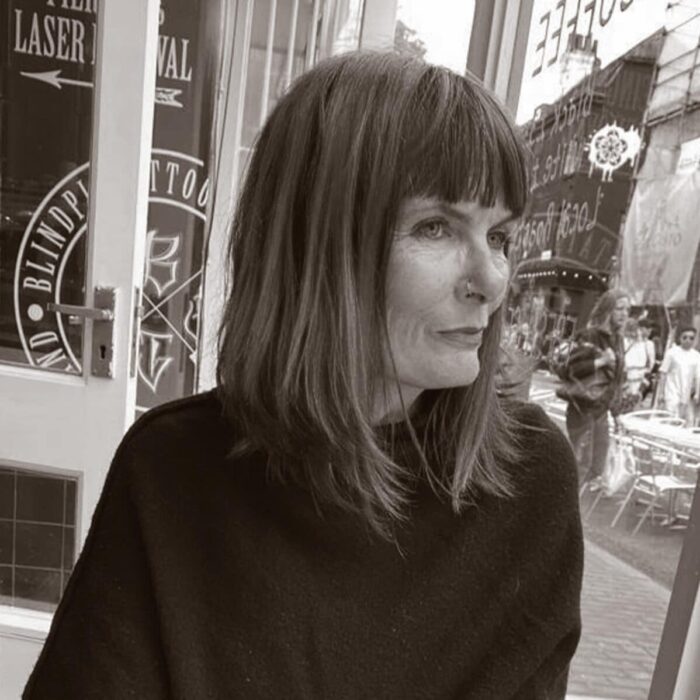
Photo by Basso Cannarsa
WritersMosaic monthly
Get new reviews in your inbox
One email monthly, unsubscribe anytime
Pressure
What's missing from the latest 'untold story behind D-Day'?
A Trial
An examination of theatre’s complicity in post-truth politics

The Complex
The unraveling of a dynasty



Marlon James: a Jamaican reckoning
'A return to a home I barely knew'

The name of this wallpaper is ‘Childhood’
A luminescent bubble of memory

What’s in a feminist? Holding on to Gloria Steinem
Is Gloria Steinem's feminism still relevant today?





Illuminating, in-depth conversations between writers.
Listen to all episodes
SpotifyApple Podcasts
Amazon Music
YouTube
Other apps

The series that tells the true-life stories of migration to the UK.
Listen to all episodes
SpotifyApple Podcasts
Amazon Music
YouTube
Other apps
WritersMosaic interrogates the notion of ‘staying in your lane’ by asking writers how they attempt to think beyond the parameters of their cultural identity.
Listen to all episodes
SpotifyApple Podcasts
YouTube