
Tomorrow Someone Will Arrest You

Meena Kandasamy
Atlantic Books (2023)
Review by Shara Atashi
Tomorrow Someone Will Arrest You is a poetry book with attitude and backbone. Like the ocean – now turbulent, now whispering, but never voiceless – it will take you through the defiance and fragility of a woman who gives her all and risks everything to create equilibrium.
The book is well structured. It reads like a memoir. Events that shaped a human and a poetic body, although they arise from the particular situation of the Tamil population, carry universal insights. The story matters to any part of the world that is troubled, to any place where fascism and censorship are slowly creeping in. You’ll meet the dramatis personae of a female poet, her comrade, lovers, friends and country. And you will learn from Kandasamy how to address horrifying historical events in poetry that crystallises what’s exciting and painful, and how you can make people listen.
Kandasamy uses everything at her disposal – voice, language and form – to interweave documented reality and to prove that poetry is present in everything, even in true horror. In ‘A Poem on not Writing Poems’, she uses poetry as a stage on which the true story of a lynching, both in its unutterable cruelty and the fear instilled by persecution, threatens to obliterate any purpose for the artist. But, to re-establish purpose, she rewords Wittgenstein’s philosophical aphorism (‘whereof one cannot speak, thereof one must be silent’) through the question ‘why show the scar on your thigh to strangers?’ Horror stories scar us for life, whether we tell them or not.
Kandasamy invents and reinvents forms through her voice. Sometimes the form dominates, sometimes the voice rushes with momentum to take its own form as water does. Where she uses non-rhyming iambic meters, the poems are absorbed by the reader’s whole body, by instinct, by the guts, just like lullabies. ‘A Cat Closing Her Eyes’ recycles the Tamil proverb ‘when a cat shuts its eyes, the world does not turn dark’. The musicality of the original, ‘poonai kanmoodi kondaal’, and its repetition in every stanza, soothes like a villanelle and clings to memory immediately. That’s an example of how Kandasamy, as a poet, knowingly plays with her reader.
The poem that gives the book its title ‘Tomorrow Someone Will Arrest You’ is dystopian and scary without subsuming the many facets of the book as a whole. Unlike revolutionary poetry calling masses to the arena, this one cautions to go underground. It’s about total darkness. About fascism using cowards, guns and prisons for money and power. Those who protest loudly will be exterminated, including ‘your children, and your children’s children’, and no one will be left to preserve humanity, therefore ‘Long Live Silence.’
Kandasamy has explored silence before. In her celebrated poem ‘Aggression’, she observes:
Ours is a silence
that waits. Endlessly waits.
…
Sometimes,
the outward signals
of inward struggles takes colossal forms
And the revolution happens because our dreams explode.
Kandasamy has not been silent; she has somehow got away with holding up a mirror to hidden rebels and scarred women so they can, as in the poem ‘Finding You’, ‘build back the patchwork dolls’ they have become, to be full people again.
https://atlantic-books.co.uk/book/tomorrow-someone-will-arrest-you/
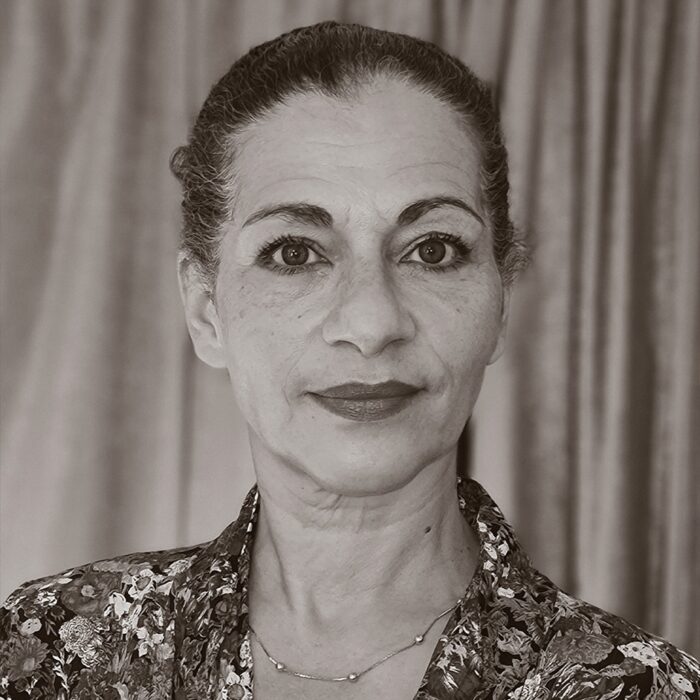
Shara Atashi
Shara Atashi is an Iranian-born writer and translator now living in Aberwystwyth, Wales.
WritersMosaic monthly
Get new reviews in your inbox
One email monthly, unsubscribe anytime
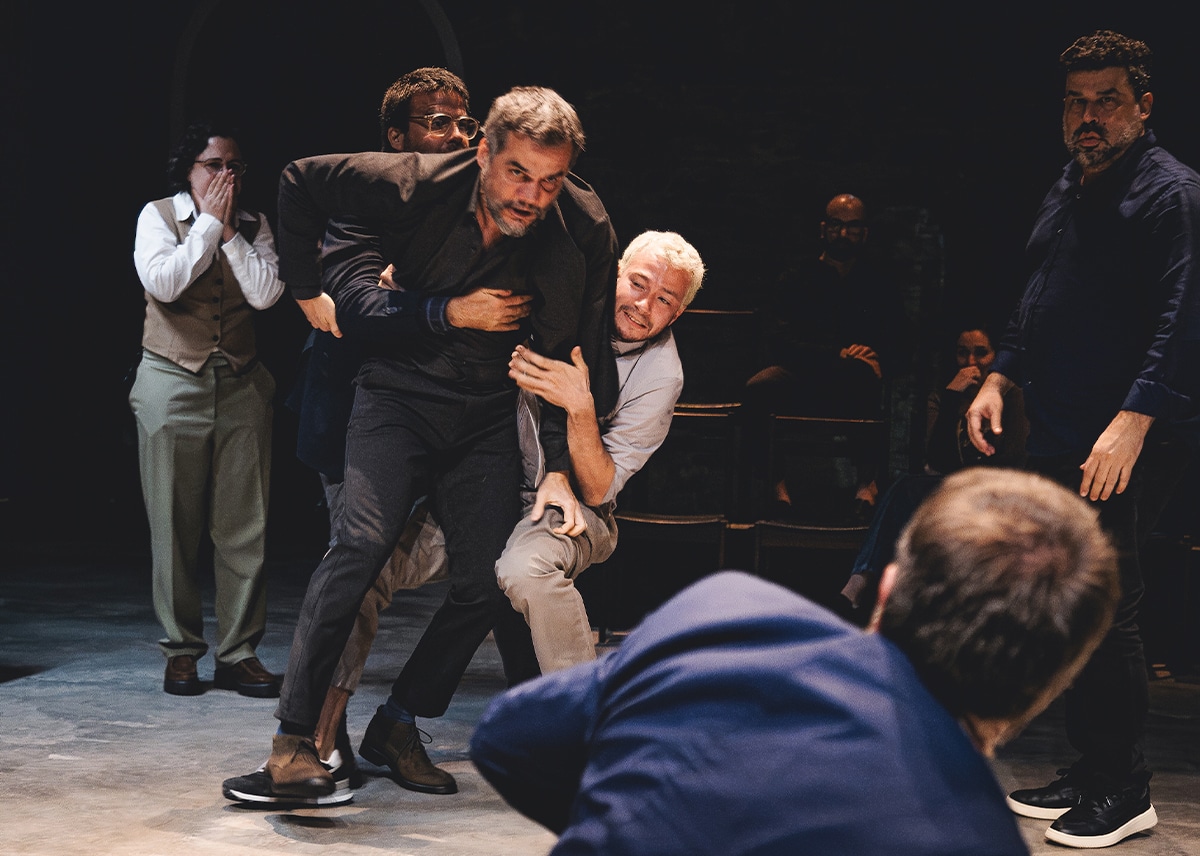
A Trial
An examination of theatre’s complicity in post-truth politics

The Complex
The unraveling of a dynasty

Disappearing Images
A festival of ephemeral art and the impermanence of our current world
The name of this wallpaper is ‘Childhood’
A luminescent bubble of memory

What’s in a feminist? Holding on to Gloria Steinem
Is Gloria Steinem's feminism still relevant today?
Coats
The unexpected cost of acquiring two Italian leather coats in Rome


Free Will
Will Harris reads his poem, 'Free Will'. Directed by Matthew Thompson and commissioned by the Adrian Brinkerhoff Poetry Foundation.

Half Written Love Letter
Selina Nwulu reads her poem, 'Half Written Love Letter'. Directed by Matthew Thompson and commissioned by the Adrian Brinkerhoff Poetry Foundation.

Illuminating, in-depth conversations between writers.
Listen to all episodes
SpotifyApple Podcasts
Amazon Music
YouTube
Other apps

The series that tells the true-life stories of migration to the UK.
Listen to all episodes
SpotifyApple Podcasts
Amazon Music
YouTube
Other apps
WritersMosaic interrogates the notion of ‘staying in your lane’ by asking writers how they attempt to think beyond the parameters of their cultural identity.
Listen to all episodes
SpotifyApple Podcasts
YouTube
In the first series of poems commissioned by Hannah Lowe, six poets explore how ritual gives meaning to our lives.
Listen to all episodes
SpotifyApple Podcasts
YouTube