
We Were There

Lanre Bakare
Penguin Random House, 2025
Review by Max Farrar
In less than 300 pages of his history of Black Britain’s recent culture outside of the M25, Lanre Bakare has made a very good job of redressing the excessive concentration on England’s capital in most of the writing about Black Britain. We Were There is unique in providing in one book a close account of the cultural achievements of Black Brits in Wigan, Bradford, Birmingham, Liverpool, Wolverhampton, Manchester, Cardiff and Edinburgh. Another fine surprise is a focus on the Black presence in the English countryside, giving full credit to the important works of Julian Agyeman and Ingrid Pollard. Bakare moves the conventional narratives of Black British history away from accounts of unremitting racism, concentrating instead on the huge achievements, despite the odds, of Black people of every class.
Because this story is still unfolding, and background materials are sparse, it is impossible for Bakare’s decisions to satisfy everyone. However, the omission of Caribbean carnival culture is hard to comprehend as it’s one of the greatest gifts to the UK from Black people, exhibiting in every major city artistic creativity, joie de vivre, conviviality and the ability to move seamlessly between pleasure and politics. Participating for almost 50 years in the Leeds West Indian Carnival (the first in Europe) has been one of my life’s most enjoyable learning experiences.
I am delighted that the book opens with an exemplary story I’d not heard before. Bakare describes Steve Caesar’s journey from St Kitts to Chapeltown in Leeds, to become one of Northern Soul’s biggest stars at Wigan Casino. Bakare quotes Idell Kamari as saying ‘everyone seemed to be equal’ in this predominantly white scene. One of Steve’s older brothers had made it clear that he strongly objected to my participation, as a white man, in Chapeltown’s politics in the early 1970s, so it was fascinating to see that Steve had decided not to follow his sibling’s radical trajectory. Instead, Steve found a new identity for himself and experienced a ‘sense of belonging’.
Another Leeds personality appears towards the end of the book. I didn’t know how influential the musician, producer and youth worker Homer Harriott had been in the Bleep and Bass scene in the late 1980s. (His uncle Joe Harriott’s innovative contributions to the development of jazz across the British isles deserved a mention, too.) Bakare points to the ‘acceptance, belonging, respect’ that black people found in Northern Soul, and Homer has a similar point, telling me that in Bleep and Bass: ‘We were meeting and making friends from different backgrounds and cultures and being creative – we were collaborating, sharing ideas, sharing equipment, making beats together.’
Ellery Hanley, also born in St Kitts, is key to the fascinating discussion of rugby league’s move from the margins to the mainstream. Thanks to Professor Tony Collins (who gets a mention but, unfortunately, his books aren’t cited), Hanley has been inserted into sporting history. Bakare shows how, excluded from mainstream schools in Leeds, Hanley added to his sporting talent a shrewd business sense, insisting on being very well paid for the success he brought to various clubs and to the British team. Bakare effectively contrasts rugby league’s welcome of Black players to rugby union’s (and cricket’s) racism. When he pulls out some compelling adjectives from descriptions of Hanley – a ‘grim, driving figure’ of terrible intensity, ‘fearsome, smouldering, utterly unforgiving’ – Bakare might have added ‘That’s what racism can do to you.’
It’s on these contextual issues that this book needed more development. Bakare provides some detail on the depredation inflicted from the early 1980s by Margaret Thatcher’s deflationary economics, although he does appreciate her Enterprise Allowance scheme. But the politics of ‘race’ in the 1950s, ‘60s and ‘70s are underdeveloped. David Kynaston, a premier historian of post-war Britain, has written that there was no debate in Parliament about the consequences of ‘open door migration’ during the passage of the 1948 Nationality Act. It then took a concerted effort, led by Enoch Powell, over the subsequent twenty years to make Black people’s immigration into the persistent flashpoint of Britain’s racialised politics. Instead of fighting racism, Labour Party leader Hugh Gaitskell adopted a pusillanimous position in the early 1960s towards the rights of Black Britons. In contrast, it was the politically marginalised Liberals who recognised the need for equal opportunity legislation and who were the first to promote the UK’s multiculturalism that this book rightly celebrates.
Bakare’s emphasis is on culture and there’s a tendency to divorce this from politics. We need more attention to the continuous revolt by Black Britons against the mounting racism that came to a head in 1958 when whites launched their violent attacks on Black citizens in Notting Hill and Nottingham. Responding to structural disadvantage, Black youth rose up in 1975 (Leeds) and 1976 (Notting Hill) and there were Black-led violent urban protests in 42 separate localities in 1981. These startled the establishment into reform, providing just enough space for additional Black creativity to flourish.
Throughout the 1970s, and especially after 1982, an emancipatory cultural thrust was being made by organisations like Creation for Liberation, linked to Race Today, led by Linton Kwesi Johnson, and by The International Book Fair of Radical and Third World Books led by John La Rose, Jessica Huntley and Darcus Howe. These, while based in London, organised inspiring Black Book Fairs in the north and Liberation events all over the country.
The book’s cover quotes David Kynaston applauding Bakare’s ‘genuinely pioneering and transformative’ history and he’s right, but then my friend Dave tells me that the section on Manchester’s Reno club would have benefited from more contrast with its competitors (The Edinburgh, The Nile, The Russell). This important book will throw up conversations of this sort all over the country, stimulating much needed further investigation into the myriad cultural and political interventions that have forged the creative, resilient and radical Black populations that so thoroughly enrich the UK.
https://www.penguin.co.uk/books/453942/we-were-there-by-bakare-lanre/9781847927477

WritersMosaic monthly
Get new reviews in your inbox
One email monthly, unsubscribe anytime
The Disappearers
A sprawling visceral experience that drops you in head first
The Lady Imam
Is the world ready to catch up with amina wadud?
Pressure
What's missing from the latest 'untold story behind D-Day'?


Complex antihero: an interview with Arthur Hughes
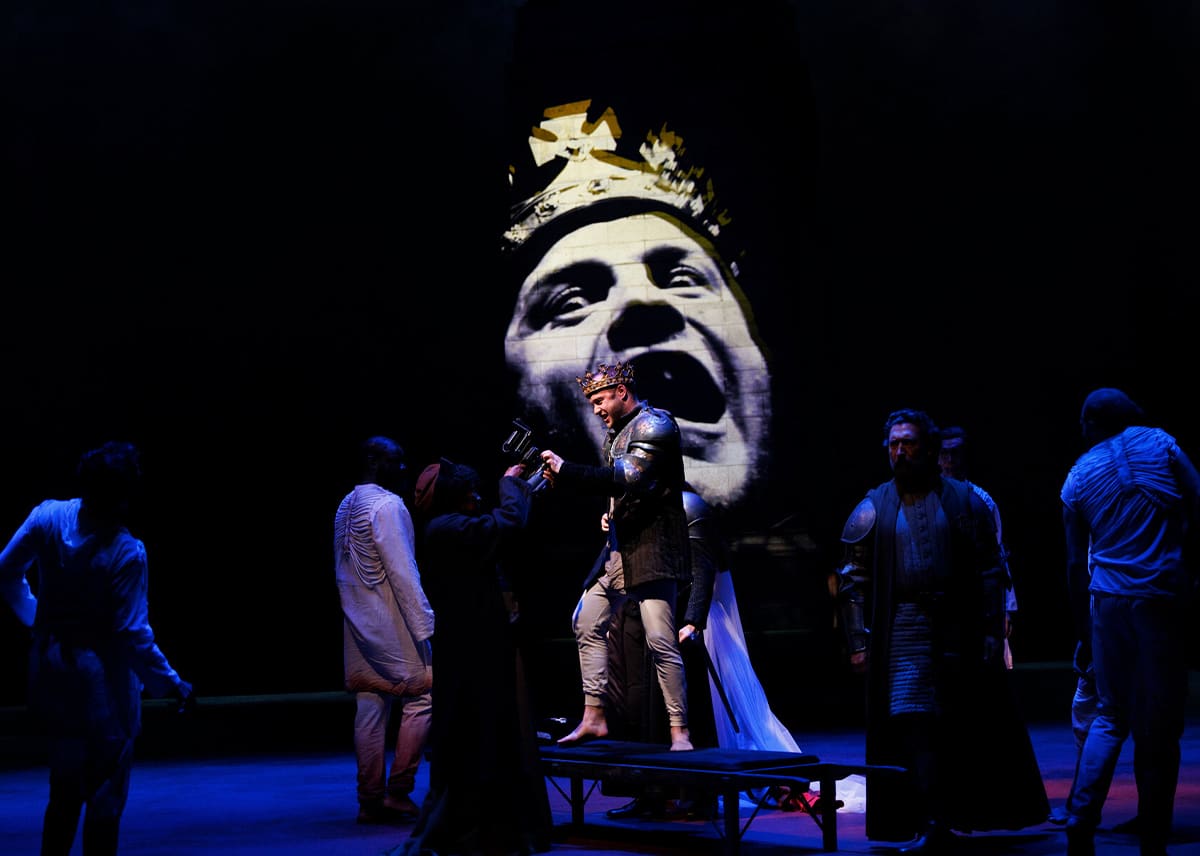
Unravelling Authur Hughes' Richard III
Marlon James: a Jamaican reckoning
'A return to a home I barely knew'
The name of this wallpaper is ‘Childhood’
A luminescent bubble of memory



Illuminating, in-depth conversations between writers.
Listen to all episodes
SpotifyApple Podcasts
Amazon Music
YouTube
Other apps

The series that tells the true-life stories of migration to the UK.
Listen to all episodes
SpotifyApple Podcasts
Amazon Music
YouTube
Other apps
WritersMosaic interrogates the notion of ‘staying in your lane’ by asking writers how they attempt to think beyond the parameters of their cultural identity.
Listen to all episodes
SpotifyApple Podcasts
YouTube