
Naneh Hovhannisyan’s cultural highlights
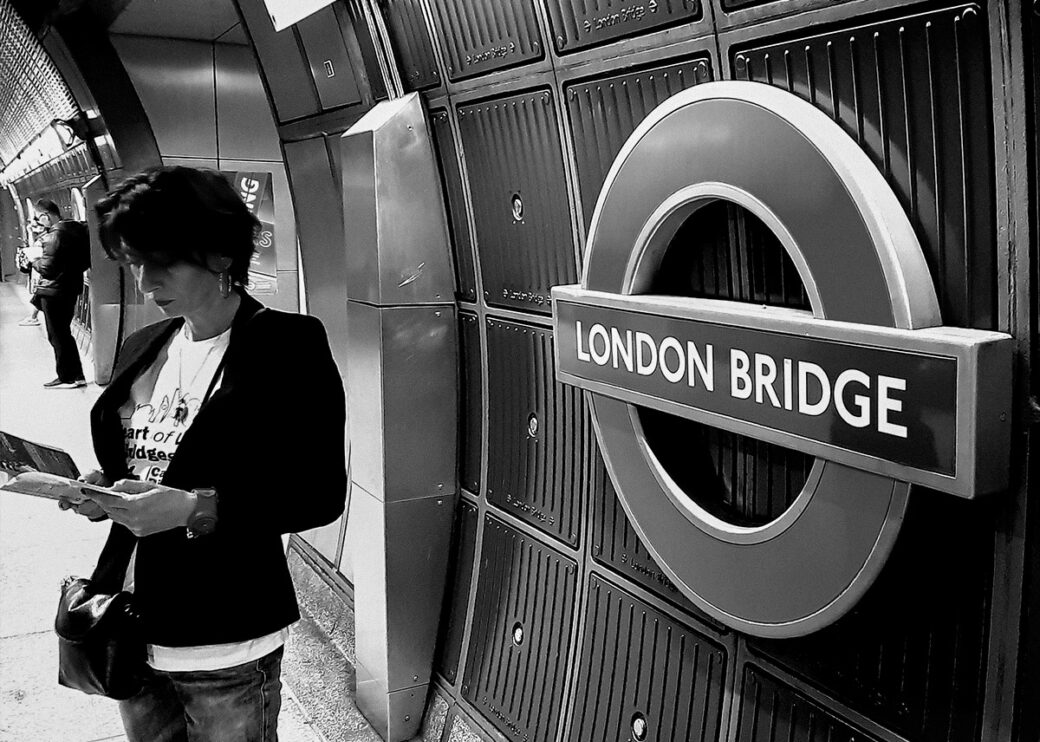
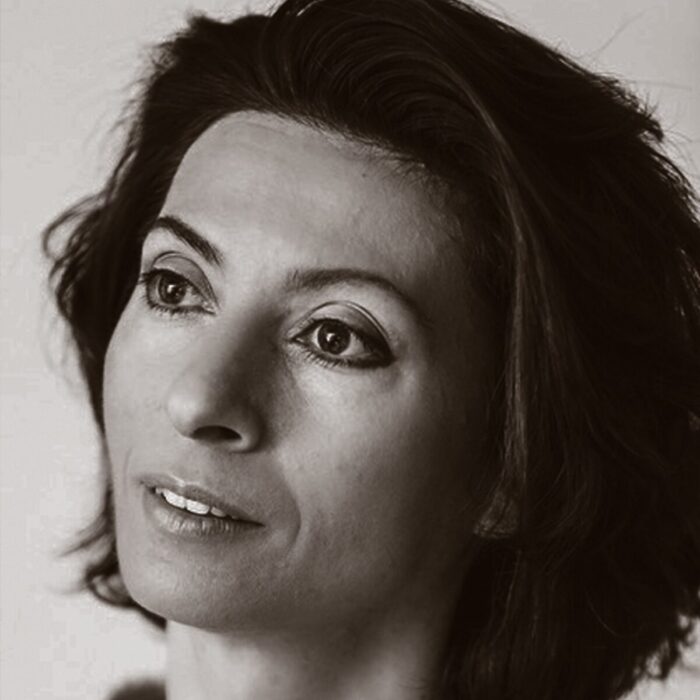
Naneh was born in late-Soviet Armenia and worked in broadcast media in post-Soviet Yerevan. She writes essays, reviews and memoir in English, her third language. Through her work – whether on art, food, travel, or exile – she explores cross-cultural identity, memory and belonging. Her writing has been published by EVN Report, The New Welsh Review, The Oxford Review of Books and Armenian Institute London amongst others. In 2024, she guest co-edited the Special Issue of Wasafiri Magazine for International Contemporary Writing (#120, Armenia(n)s: Elevation). She lives in the heart of England, where she runs a small bookshop.
Performance: The Artist is Present (2010) by Marina Abramović, MoMA
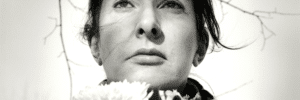
It is a quick YouTube search away: Abramovic Ulay MoMA. The clip is from a performance, yet the only non-performance part of Marina Abramović’s The Artist is Present at the Museum of Modern Art in New York. Abramović is sitting at a table in the centre of the gallery, closing her eyes before a silent time – motionless – with the next stranger. He walks up. Sits down. Opening her eyes, she recognises him. Ever so gently smiles. Ulay, her former partner in love and in art. They hadn’t seen each other since 1988.
Gradually, her eyes fill up. Tears run down her face – this was unplanned. While he twitches his head as if to say yes, I know, what can I say, it’s a strange life. Then, in violation of her own rules, she leans across, stretches her arms, and they clasp hands while not averting gazes – to applause and shouts. Then, time is up, he stands up and walks off, and she returns to work. The most human thing about humans? That they cannot transcend their humanness.
https://www.moma.org/calendar/exhibitions/964
Theatre: English (2024) by Sanaz Toossi, Royal Shakespeare Company/Kiln Theatre co-production
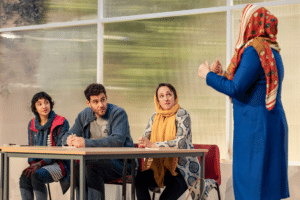
English, a play by Iranian-American playwright Sanaz Toossi, had its European premiere at The Other Place in Stratford-upon-Avon in 2024 and then played at the Kiln Theatre, London. Set in an English-language classroom in Iran, English gradually reveals the lives and aspirations of a diverse group of learners. The climax, when it arrived, was indecipherable to most of us: closing the play, one female protagonist says something to another in Persian, for the first and only time in the play. As a speaker of a minor language, living in English, I was excited: there had to be an element of Iranians talking among themselves. On another level, especially for the language enthusiasts among us, it was frustrating. I want to know what they said!
In one interview, Toossi acknowledged this curiosity but refused to satisfy it. The finale, she explains, demonstrates how it is for immigrants to experience alienation borne out of linguistic barriers. That’s how we learn English in the West, one indeciphered dialogue after another.
https://www.rsc.org.uk/english
Documentary film: 1489 (2023) directed by Shoghakat Vardanyan
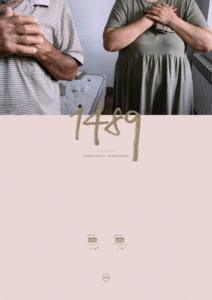
It’s only a number: 1489. But this cultural highlight is a mesmerising, devastating, stunning blow from Shoghakat Vardanyan, the debut filmmaker behind it. 1489 follows the search for her 21-year-old brother missing in action during the Second Nagorno-Karabakh War, otherwise known as the 44-Day War. Shot entirely on her mobile phone with no commentary and no music except a brief track from her musician brother’s life, the film takes us into the vortex that engulfs her and her parents, as the three of them trace Soghomon’s remains (the title of the film is serial number given to them).
I saw 1489 at the Armenian Film Festival in London after it had been shown at Yerevan’s Golden Apricot Film Festival and just before it won the main prize at the Rome International Documentary Festival 2024. The film has also taken The International Federation of Film Critics (FIPRESCI) award and Best Film at International Documentary Film Festival Amsterdam (IDFA). It’s well deserved, as this raw story of an emerging nightmare is also a tale of dignified faith and a monument to love.
https://www.imdb.com/title/tt29680897/?ref_=mv_close
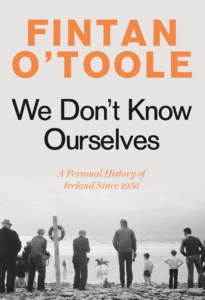
Book: We Don’t Know Ourselves: A Personal History of Ireland Since 1958 (2022) by Fintan O’Toole
How do you form meaningful connections to places you haven’t seen? Personally, I associate with unfamiliar countries or cultures through people and art. Fintan O’Toole is my guide to Ireland. While there is no shortage of distinguished writers and artists from Ireland, this author and commentator both elevates and brings Ireland down to earth for me in a special way. We Don’t Know Ourselves is a deep dive into the Irish experience since 1958. It weaves history, memoir and journalism in what is a master class in creative nonfiction writing. What struck me also was how much commonality I found with Armenia, as with other small nations – the colonial past, the tradition of emigration, the historical role of the Church (Armenian Apostolic/Irish Catholic), as well as the creative nerve, especially with music.
https://www.bloomsbury.com/uk/we-dont-know-ourselves-9781784978341/
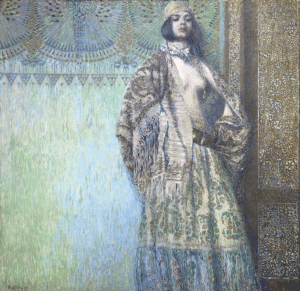
Art: ‘Salome’ (1907) by Vardges Surenyants
She is standing, leaning actually (against a wall and a door), calm and proud. Yet, is that the pain of doubt or regret written on her face? And in a rare depiction, she is without a tray or an attendant or, crucially, the head (John the Baptist’s). In ‘Salome’ by Vardges Surenyants, there is no gore and blood, like with Caravaggio. Surenyants was no Baroque hooligan. He was a Renaissance man in a Victorian world: a translator, art critic, sculptor, but above all, the daddy (or dandy, judging by the photos) of Armenian History painting. They don’t come more cosmopolitan than him: born in present-day Georgia; mentored by another Armenian painter, Hovhannes Aivazovsky; educated in Moscow’s esteemed Lazarian Armenian school and later Munich; finally, died in Crimea.
Salome is one of the historical femmes fatales he depicted. Semiramis is another, but it is his 1907 painting of Salome that’s the emblem of the National Gallery of Armenia. Yet the picture was nearly lost to Armenia. While touring Europe, including the Venice Biennale in the early 20th century, it wasn’t returned to the polymath painter in the heat of the first world war. Thanks largely to Martiros Saryan’s appeal to the Soviet authorities to intervene, the masterpiece eventually arrived in Yerevan in 1929. I saw her recently, after a four-year restoration, hanging in her oversized glory, shimmering at once in gold and silver.
https://commons.wikimedia.org/wiki/File:Vardges_Surenyants_Salome.jpg
Favourite WritersMosaic writer: Eva Hoffman
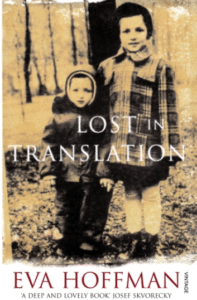
Eva Hoffman’s Lost in Translation was my window into the world of transcultural writing. It blew my mind with its emotionality and intelligence. This memoir of emigrating from Poland to Canada and then the US richly illustrates the idea of translating yourself as a social being. The book demonstrates that constructing an identity as an emigrant involves a process, often painful, whereby the previous self undergoes some kind of metamorphosis in order to make room for and adapt to life exilic. In short, re-rooting yourself is creative work. And it reminds me that language isn’t just words but it is bound with meaning, context and emotional associations with place.
https://www.penguin.co.uk/books/356927/lost-in-translation-by-hoffman-eva/9780099428664
Naneh Hovhannisyan
Naneh is a memoirist and reviewer, whose work explores the reflection of historic events on the social and cultural makeup of late-Soviet and independent Armenia.
WritersMosaic monthly
Get new cultural highlights
One email monthly, unsubscribe anytime
At Sea
Bearing witness in the face of dismissal
Ai Weiwei: Button Up!
A journey through the dangerous world of human tragedy
Do You Love Me
To love a city is to know it deeply

My tomorrow is today
'I clasped my hands together, not in prayer but to stop them from shaking'
Ballet Black at 25
Cassa Pancho: 'It’s a miracle that we are still here in some way'
From Fruity to Raffell
A retreat of solitude, community and creative stimulation

Free Will
Will Harris reads his poem, 'Free Will'. Directed by Matthew Thompson and commissioned by the Adrian Brinkerhoff Poetry Foundation.

Half Written Love Letter
Selina Nwulu reads her poem, 'Half Written Love Letter'. Directed by Matthew Thompson and commissioned by the Adrian Brinkerhoff Poetry Foundation.

Illuminating, in-depth conversations between writers.
Listen to all episodes
SpotifyApple Podcasts
Amazon Music
YouTube
Other apps

The series that tells the true-life stories of migration to the UK.
Listen to all episodes
SpotifyApple Podcasts
Amazon Music
YouTube
Other apps
In the first series of poems commissioned by Hannah Lowe, six poets explore how ritual gives meaning to our lives.
Listen to all episodes
SpotifyApple Podcasts
YouTube