
Remembering Ngũgĩ wa Thiong’o

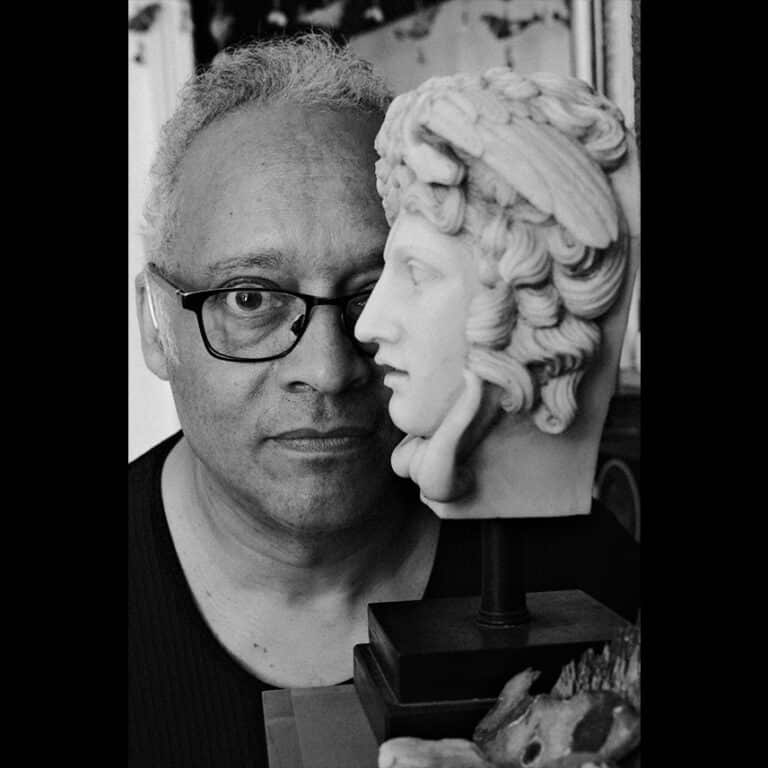
Photo of Ngũgĩ wa Thiong’o by Niccolò Caranti
Clementine Ewokolo Burnley
The aphorism ‘A language is a dialect with an army and a navy,’ is often credited to the linguist and cultural historian Max Weinrich. When James Ngugi was born in 1938 to Thiong’o wa Ngugi and Wanjiku wa Ngugi, the British navy was larger than most. James’s life was to span the Mau Mau Uprising of the 1950s, and five presidents of the Kenyan republic. As a writer and activist his relationship with language was to prove central to his work and life.
To exist in a colonial relationship is to enter a room where what you know doesn’t count. The speakers of languages without armies can be scattered, their leaders judicially murdered, and their knowledge dispersed. English has shaped, suppressed, and eclipsed uncountable ways of thinking. The Celtic nations of Britain know this lesson well. At the most ordinary level, codeswitching individuals will adapt their accents or language use to fit into contexts they were not born into.
In choosing an English name of Hebrew origin, James’s parents were following a widespread pattern of adapting to foreign rule even as they struggled to free themselves from the British. James Ngugi learned to write in both Gĩkũyũ and English at the local village school in Kamĩrĩĩthũ. Kamĩrĩĩthũ Primary was run by the Church of Scotland Mission. His 1986 book Decolonising the Mind refers to schooling as a force which formed Ngugi but also deformed the mission-educated child.
Chinua Achebe’s 2010 essay ‘The Education of a British-Protected Child’ sheds light on the complex choices that parents faced during colonial rule. Like Achebe’s father, my grandparents on both sides were mission children, and converts to Christianity. They were raised to be obedient African catechists, clerks, and teachers. They adapted to and went against the plan.
Kamĩrĩĩthũ was a Kĩkũyũ village and members of the Kĩkũyũ communities were active in the resistance to the British. Kenya bled for its sovereignty. James Ngugi’s nuclear family suffered one fatality, one shooting and imprisonment. In 1961, when the Kĩkũyũ Jomo Kenyatta became the first president of the Republic, Ngugi was twenty-nine.
James Ngugi met Chinua Achebe, whose novel Things Fall Apart was to become the classic African text, at a black writers’ meeting held in Makerere University, Uganda in 1962, along with Wole Soyinka and other prominent African literary figures-to-be. They were all writing in English, but there was unease about what that meant. Linguists know that we are produced by language. Writers pay great attention to the language they use.
The British Empire had ended, but the English language had stayed on. A radical act was needed to interrupt it. The new governments of recently independent African states would prove as dangerous to literary activists as the imperial regime. By 1967, Soyinka would be in solitary confinement. Achebe would continue to mould the colonial language to express his unique sensibilities, and James Ngugi would take a contrasting path.
In the 1970’s the people of Kamĩrĩĩthũ had reanimated an existing Community Education and Cultural Centre and built a Community Theatre. By 1977 Ngũgĩ wa Thiong’o had discarded his Christian name. James didn’t go along with his Kĩkũyũ identity. What the Kĩkũyũ had been before English began to uproot their Gĩkũyũ words. He’d co-written a play, Ngaahika Ndeenda, or ’I Will Marry When I Want’ with another Kĩkũyũ theatre maker, Ngũgĩ wa Mĩriĩ. For six weeks the performances were well attended by a Gĩkũyũ-speaking audience. This success attracted the attention of an unethical postcolonial state. Both playwrights were locked up by the government of President Daniel Arap Moi.
A yearlong period of detention led to the notes on toilet paper that became a Gĩkũyũ redraft of Caitaani Mũtharabainĩ, or ‘Devil on the Cross’ and the 1982 nonfiction book Detained: A Writer’s Prison Diary. President Daniel Arap Moi’s social and cultural repression only led to literary counterforce. Caitaani Mũtharabainĩ is a surrealist firework of a book, one scene of which features a cannibalising elite using its citizens for spare parts. The book shares its despairing take on a postcolonial social order with Soyinka’s much later work Chronicles from the Land of the Happiest People on Earth.
Caitaani Mũtharabainĩ harshly criticised the restrictions of patriarchal indigenous culture as well as imperial literary tastes. Wa Thiong’o’s audacity in writing prose fiction in an East African language for the speakers of that language overstepped the mark for some of his critics. Judgement was swift and severe, but the writer didn’t seem moved.
As a linguist and poet, I know how language shapes the speaker’s world. The violences of foreign languages are multiple, pervasive and yet they are hard to recognise because they are embedded in my own way of thinking. If I had learned the indigenous language of my birth region, I would have been able to bypass both French and English and still be able speak to most rural people in my ancestral lands. Instead, as pidgin prefect of my school, I wrote down the names of dialect speakers on a punishment list. Since I didn’t think of patois as a language, it seemed quite natural not to speak patois to my children.
Ngũgĩ wa Thiong’o understood the relationship between language and psyche. Either English or Gĩkũyũ would constitute your inner dialogue, self-awareness. Either language would become the one in which you remember, feel, and make sense before you act. Either you would be James Ngugi, or Ngũgĩ wa Thiong’o. Without the dominion of English, it would be absurd to classify writing in your language as radical.
Perhaps that is what determines a mother tongue. It’s not the language of the person who suckled you. It’s the language in which you choose to renegotiate who you are. It takes some time before new patterns form. And then your thoughts follow a new order.
James Ngugi had evolved from mission-educated child to the Makerere University lecturer, writer, translator Ngũgĩ wa Thiong’o, and the political prisoner; Detainee K6,77. At that stage it was not clear that he would become Kenya’s literary giant-in-exile or go on to teach in English at universities in the United States of America. He would both reflect and create a truly African literature, in a truly African language. In so doing, he would decolonise the Kĩkũyũ mind.
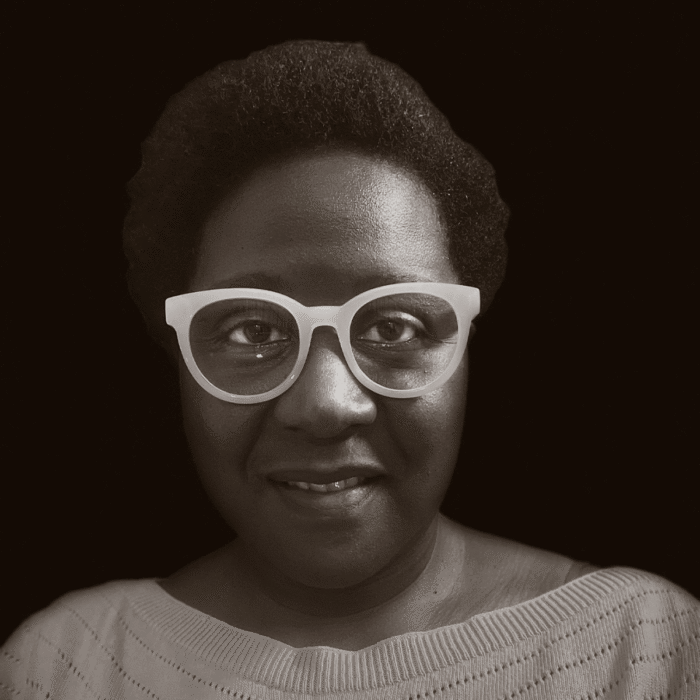
Clementine Ewokolo Burnley
Clementine Ewokolo Burnley is a multilingual author, writer of poems, short stories and non-fiction works.
WritersMosaic monthly
Get new writing in your inbox
One email monthly, unsubscribe anytime
It’s being published I get paid for; the writing I would do for free
‘Any advance [...] for your novel is to compensate you for the horrors of being published'
Complex antihero: an interview with Arthur Hughes
Unravelling Authur Hughes' Richard III
Marlon James: a Jamaican reckoning
'A return to a home I barely knew'





Haunting the Black Air
Poetic freedom across space and time
The Disappearers
A sprawling visceral experience that drops you in head first
The Lady Imam
Is the world ready to catch up with amina wadud?



Illuminating, in-depth conversations between writers.
Listen to all episodes
SpotifyApple Podcasts
Amazon Music
YouTube
Other apps

The series that tells the true-life stories of migration to the UK.
Listen to all episodes
SpotifyApple Podcasts
Amazon Music
YouTube
Other apps
WritersMosaic interrogates the notion of ‘staying in your lane’ by asking writers how they attempt to think beyond the parameters of their cultural identity.
Listen to all episodes
SpotifyApple Podcasts
YouTube