
Fabulous Islam
Hamza the Ayyar

Dye me in your hue, my love,
You are my man, O Beloved of God,
Dye me in your hue.
My scarf, and my lover’s turban,
Dye them both in the hue of spring;
Whatever be the price for dyeing, ask for it,
Take my youth as collateral;
Dye me in your hue.
Amir Khusro, 12-13th century Indo-Persian Sufi poet
1.
A page from the Hamzanama, or Book of Hamza, an orally composed and circulated epic of adventure tales about the fabled warrior Hamza which was written down in multiple illustrated volumes by order of the Mughal emperor Akbar, is on display at a gallery in Milton Keynes. It forms part of an exhibition of Indian miniature and album paintings, with traditional works and contemporary legacies carefully juxtaposed to trace a story of influence – a condensation of the history and geography of the South Asian Islamic world. I travel the hour from London by train, speeding through suburbs whose names I can dimly connect with the cartography of English novels and detective stories I read years ago, 5000 miles from here, in Karachi. The page has traveled, too, from its home in the Victoria and Albert Museum in South Kensington, carefully supervised and on loan for just a few months before it returns to safe storage, hidden from the ravages of light and air – and perhaps of time itself, if we understand time (outside the hermetic and controlled atmosphere of the museum) to be erosion, decay and contamination.
An ‘encounter’ with an object, a work of art, a piece of music, a lover – of the kind that some artists and writers describe – is just such a meeting of velocities, such a collision with the unexpected that comes to take on the sense of a meeting with fate itself. This moment of chance, an eruption of the timeless into the most ordinary place, on the most routine visit (to a gallery, for example), is often transformative. Amir Khusro, running home from seeing the face of the man who would become his teacher (and his beloved, the ‘mehboob’ of his ecstatic, erotic poetry) spoke of this sudden, violent love to his mother: ‘there is colour today’, he said (or in another rendition, ‘today is colour’). This colour (rung) blinds him to all else from now on, renders him abject in his devotion – and so he begs to be dyed in it, to become a form inseparable from its hue. Shaken by such events, frightened by an unhealthy excess of joy, artists and lovers can wake up one day, or run home one day, as different people who bear only a family resemblance to who they were before.
But here, in Milton Keynes, in the cool glow of the gallery lights, with this painted page against a concrete wall, I experience no immediate transformation. Surprise leads to curiosity, and I return to the image, weaving back only once or twice through the hundreds of competing paintings and sculptures, half-consciously noting that I should look at it again, in a catalogue or online, in the privacy of home, away from the polite behaviours and attentions that an exhibition demands. I buy the catalogue from the gift shop, head back home, and forget about it for the next few months.
2.
Akbar is looking at these images somewhere in his red sandstone City of Victory, Fatehpur Sikri – or one of the other capitals of the Mughal Empire, in Lahore or Agra. We are told that the illustrations meant a great deal to him as the illiterate son of a warrior family, raised on horseback and in the military camp rather than in a court surrounded by scholars and tutors and libraries. At night, as a child, he had stories read to him – of the parrot who entertains his owner to divert her and prevent her from having an affair in her husband’s absence (the Tutinama, or Tales of a Parrot); or one of the seven riddle tales in quest of a beautiful woman by the Arab poet-chieftain Hatim Tai (the Qissa-e-Hatem-tai, Tale of Hatemtai); or of Hamza the legendary warrior, who had been transformed in the retelling from a schismatic Kharjite rebel and adversary of the Abbasid caliphs into a mythical version of the Prophet Muhammad’s uncle of the same name.
What satisfaction is Akbar searching for when he commissions these albums? Surely, the pleasure of stories is their hold on the imagination, the demands they make on our capacity to visualise. As with a beloved novel turned into a television series or film, other people’s representations are as likely to disappoint as they are to extend the pleasure of the original. Then, too, fables draw on a deep and ever widening reserve of archetypal stories, expertly manipulated, stretched, distorted, turned upside down, reflected, by the storyteller. Do they not congeal here, in this album, into a single narrative, an authoritative version? Did Akbar soon tire of the delights of these images and return to the vivid and endless detail of the storyteller’s craft?
Or perhaps, like very many people who cannot internally visualise objects that are not present, he suffered from aphantasia: listening to stories, understanding their structure, following their narrative arc, perhaps suggesting an addition here, a bold action befitting a hero (such as himself) there, but unable to populate these scenes with swords and fairies and blood and mythical creatures? In the Shahnameh (Book of Kings) of the Persian poet Ferdowsi, the three-fingered bird Simurgh rescues Prince Zal, and rears him as her own; when he is grown to manhood and his wife is suffering terribly in childbirth, the Simurgh teaches him to surgically remove the infant, saving both the mother and the child Rustam. How does the aphantasiac picture this bird? Golden-feathered and three-fingered, a female that suckles her young; what representation stands for the image of this impossible creature in their mind?
3.
The tale of Hamza is a hero’s journey, but it is always the vehicle for the real story, the tale of the ayyar, the rootless mercenary warrior, traveller and magician, the trickster who crosses borders and kingdoms as easily as he changes allegiances, changes form, changes the very shape of the story. The fable is a plastic form, and the trickster is its agent of change. Many cultures have tricksters, shape-shifting characters that move between animal and vegetal realms, the natural and the supernatural, deceiving conventional humans and defying conventional laws. Loki, Anansi, Br’er Rabbit, in more or less humorous registers, exemplify the ease with which laws and norms can be transgressed, indeed how elegant this existence without a hero’s quest can be, breaking in and out of prisons, in and out of the main narrative. Unlike Amir Hamza, Umro Ayyar is a thief and a magician, whose only redeeming feature might be his lovability (and his helping the poor, although even then we suspect that he gives money away because he cannot hold on to it, as many such rogues can’t, because the high of the theft and the confidence trick is far better than the chores of accountancy and investment).
Does the Emperor, by candlelight, a day’s work of statecraft and war done, dream of the life of Umro instead? To be born and to die outside the bounds of the story must be an unimaginable horror to one raised to emulate the achieved glories of his ancestors and the recorded feats of Hamza – and in that horror perhaps lay a vertiginous pull towards the anonymity of the bazaar, the ubiquitous poverty of the renter, the easing of life towards a death unburdened by meaning.
4.
The pages of the Hamzanama were found by an Englishman, a museum curator at the Victoria and Albert Museum in 1881, plastered over the windows of some humble houses or huts in the Kashmiri city of Srinagar. At some point in time the images had been defaced (quite literally, the faces of humans and angels and fairies, and animals too, were rubbed to the raw surface or smeared with brown paint). Was it simply the Islamic or Mosaic injunction against images and idols that caused this act of destruction? And tellingly, an act not just of destruction, but of preservation in being transformed into ordinary, domestic ornaments? (Did a generation grow up wondering at these faceless figures, idly picking out shapes and inventing stories around them, like bored children looking at a pattern of wallpaper?) Or was it the intrusive blasphemy of a face looking back from the walls and windows of one’s home, or out into the street at passing strangers, in a time when such images, or even clear reflections in a mirror, were not in common circulation?
A culture that has fables – remembers them, memorises them, embellishes them, transmits them – has no need for the image of the face, for the individual soul and its particular features, for the finely drawn face of Hamza, the fierce expressions of his companions, the dull power of the elephants. In such a culture, as Walter Benjamin said of Kafka’s fables and parables, a gesture takes on infinite significance. A motion described, an action undertaken, moves along the surface of the story, between the allegorical and educational, the contingent and concrete. The face, especially the ‘real’ face or body of naturalistic painting, of photography and cinema, takes us directly to the depth of the soul, the psyche, the individual ego (that other great myth of our time). Can we imagine, today, a world uncluttered by such images and such souls, such egos? Surrounded and followed by images, in an aphantasiac’s fantasy, we forget the sharp thrill of rung, of being dyed in the colour of the beloved.
© Adnan Madani

Fabulous Islam

Fabulous Islam – the journey of fable in the Muslim world
Shahrukh Husain


A fabulously transformative journey
Jasmine Shackle

The fable of the naked faqir
Shueyb Gandapur

The Chenab River
Khaldoon Ahmed

Balancing patience, knowledge and humility
Salma Raheen

Illuminating, in-depth conversations between writers.
Listen to all episodes
SpotifyApple Podcasts
Amazon Music
YouTube
Other apps

The series that tells the true-life stories of migration to the UK.
Listen to all episodes
SpotifyApple Podcasts
Amazon Music
YouTube
Other apps
Nine writers with migrant backgrounds reveal the secrets of their talismans of migration.
Listen to all episodes
SpotifyApple Podcasts
YouTube

Free Will
Will Harris reads his poem, 'Free Will'. Directed by Matthew Thompson and commissioned by the Adrian Brinkerhoff Poetry Foundation.

Half Written Love Letter
Selina Nwulu reads her poem, 'Half Written Love Letter'. Directed by Matthew Thompson and commissioned by the Adrian Brinkerhoff Poetry Foundation.


On seeing Iran in the news, I want to say
A poet reflects on what it's like to be of Iranian descent and to witness terrible news coming out of Iran.

Sad Song of Plantain poem
'I lie as quiet as death in this ‘three for two pounds’ cardboard box'
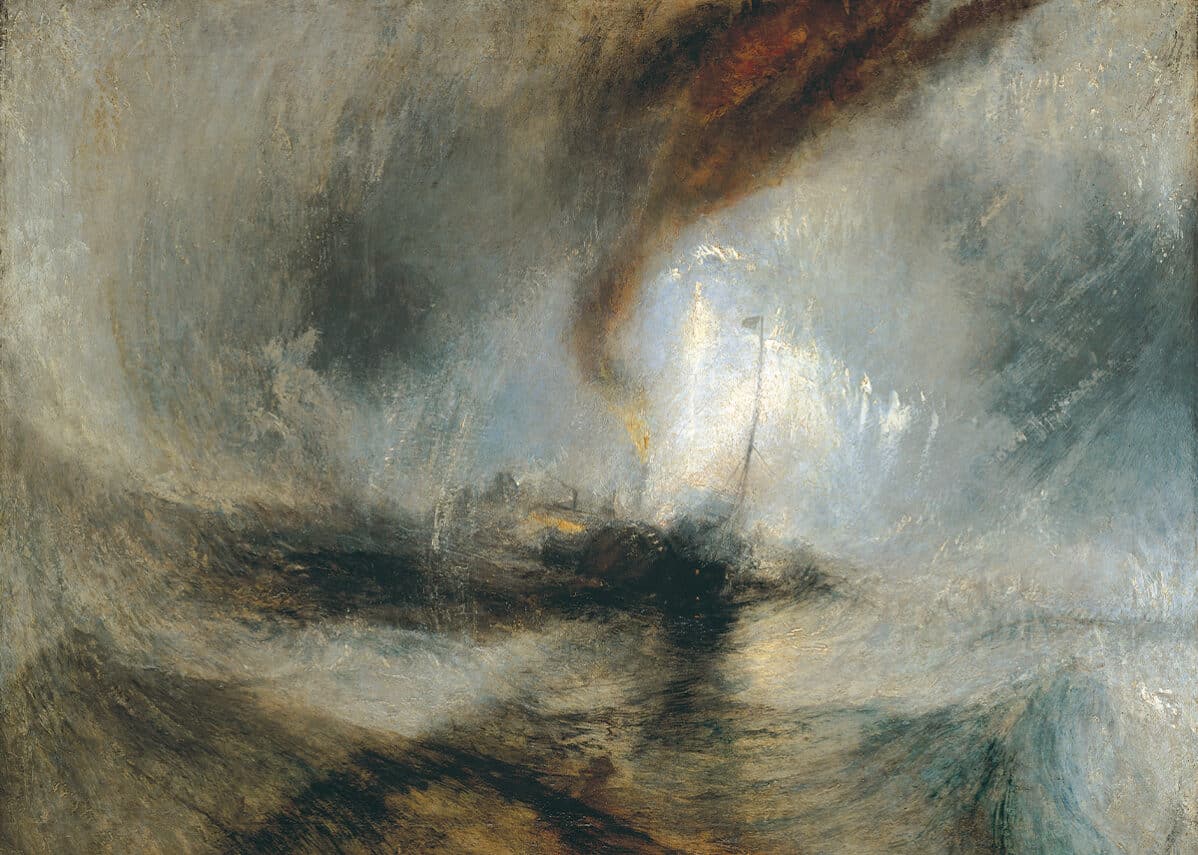
Regarding Turner
What does knowing of the revered British artist's investment in chattel slavery mean for his legacy?



The Secret Agent
A film as much about the contemporary moment as its period setting
Sinners
A soulful, blues-soaked explosion of music centres this Southern Gothic and slasher horror
