
Anatomy of a Fall

Directed by Justine Triet
Review by Z. K. Abraham
Anatomy of a Fall (2023), the fourth feature film from director Justine Triet, is based on a screenplay co-written by Triet and her partner Arthur Harari. The film is a grounded, subtle, delicately balanced examination of a fraught marriage, a mysterious death, and one woman’s internal complexity. Its matter-of-fact realism both grounds the story and elevates it. These events and characters feel entirely authentic. This is a film that manages to be quiet and slow, while escalating tensions underneath the surface.
Anatomy of a Fall centres around a nuanced, controlled performance from Sandra Hüller as Sandra Voyter, a German woman who is living in a remote part of Switzerland with her French husband and young son. After her husband’s sudden death from a fall from the top floor of the house, investigators soon find irregularities that throw the cause of his death into question. The film follows Sandra’s initially dazed, subdued reactions to her husband’s death, her conversations with investigators and the old friend she has called in as her lawyer, Vincent (Swann Arlaud). As her story shows inconsistencies, Sandra seems both honest and concealing. She is charged with murder, and the film skips to a year later; we watch her trial unfold and the details of her relationship are brought to judgement.
Both the script and Hüller’s understated performance convey the truths of a love that has curdled to animosity. The trial unpacks the power dynamics, anger, regret, and righteousness of both Sandra and her husband. Sandra must defend her character and explain a fraught but intimate relationship that is difficult to explain and is distorted by lawyers, her husband’s psychiatrist, and the public. Hüller manages to embody the frustrated, vulnerable and obscured emotional state of her character. Sandra and her marriage are judged in the context of second-hand information. Other characters speak in French while Sandra struggles with the language; when she decides to take control part-way through the trial by speaking in English, she is more comfortable but her words must now be translated. Her relationship is judged by messages, audio recordings, and others’ biased impressions. No one can fully understand her. When the trial culminates with the lawyers for the prosecution playing a recording of an intense argument between Sandra and her husband, it is an explosion of the film’s tensions; when we finally see the couple fight, their anger, resentments and thwarted longings are riveting.
Swann Arlaud, as Sandra’s friend/lawyer Vincent, gives a similarly complex performance, one in which a subtle change in expression conveys gentleness or a distrusting acuity. Milo Machado-Graner, as Sandra’s son Daniel, is entirely believable and heartbreaking as a boy caught between grief and the overwhelming reality of his mum’s trial; during his testimony at a critical juncture of the trial, he grapples with his mother’s potential guilt, and the possibility of never really knowing the truth.
The musical cues in the film are effective and simple. A dramatic, classical refrain plays on repeat in certain scenes, heightening the tension. In the first scene of the film, Sandra’s husband blasts a bright, beach mix instrumental of 50 Cent’s P.I.M.P. from upstairs. He is out of shot but his rageful presence is felt and Sandra, who is being interviewed by a journalist, passive-aggressively ignores the cacophony. The couple’s mutual feelings of bitterness become immediately visceral.
Triet and her cinematographer mimic 35mm film with a digital device, using an anamorphic lens which produces a softness and mild distortion. Long shots dispassionately follow characters walking across the snowy crime scene, the camera sometimes wobbles or slides between characters when speaking, and grainy police or news footage heighten the sense of judgmental observations.
Although many critics disagree, the film suggests a potential answer but never truly lets us know whether or not Sandra is guilty. Some might cite that withholding and the slow narrative to be pretentious, or willfully murky. While the film may occasionally frustrate, this gradual revealing and holding back is what makes Anatomy of a Fall a sophisticated, compelling study of a character and of the nature of a broken marriage.
Photo courtesy of NEON
The Secret Agent
A film as much about the contemporary moment as its period setting
Sinners
A soulful, blues-soaked explosion of music centres this Southern Gothic and slasher horror

Belgrave Road
Big questions about ‘home’ haunt the silences between the star-crossed lovers


On seeing Iran in the news, I want to say
A poet reflects on what it's like to be of Iranian descent and to witness terrible news coming out of Iran.

Sad Song of Plantain poem
'I lie as quiet as death in this ‘three for two pounds’ cardboard box'
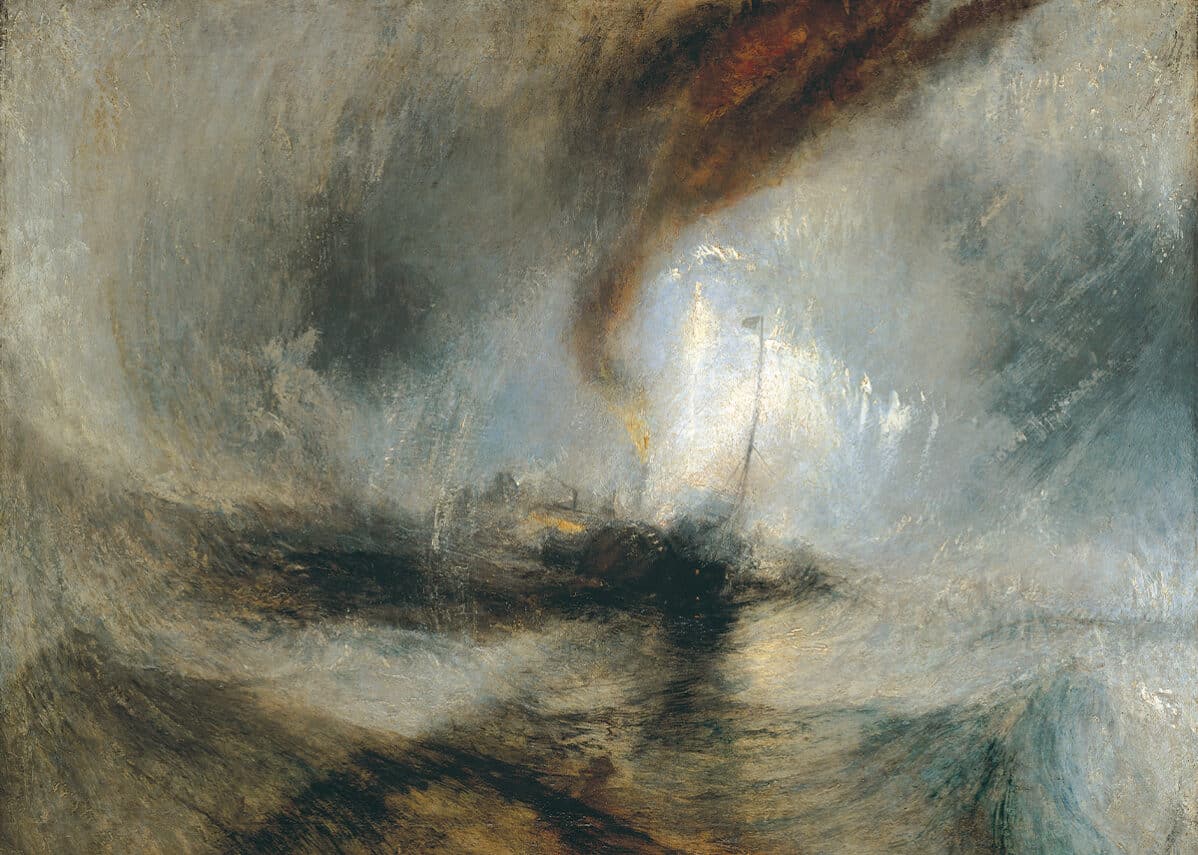
Regarding Turner
What does knowing of the revered British artist's investment in chattel slavery mean for his legacy?


Free Will
Will Harris reads his poem, 'Free Will'. Directed by Matthew Thompson and commissioned by the Adrian Brinkerhoff Poetry Foundation.

Half Written Love Letter
Selina Nwulu reads her poem, 'Half Written Love Letter'. Directed by Matthew Thompson and commissioned by the Adrian Brinkerhoff Poetry Foundation.

Illuminating, in-depth conversations between writers.
Listen to all episodes
SpotifyApple Podcasts
Amazon Music
YouTube
Other apps

The series that tells the true-life stories of migration to the UK.
Listen to all episodes
SpotifyApple Podcasts
Amazon Music
YouTube
Other apps
Nine writers with migrant backgrounds reveal the secrets of their talismans of migration.
Listen to all episodes
SpotifyApple Podcasts
YouTube