
My Father’s Shadow

Directed by Akinola Davies Jr., 2025
The absent black father, the kind of man once controversially criticised by President Obama as ‘missing in action’, who casts a pall over his dependents, figures prominently in Africa and the African diaspora. Notably in the past decade in the UK, poets such as Raymond Antrobus in The Perseverance and Yomi Ṣode in Manorism, have movingly articulated the debilitating impact of fatherly absence, especially on sons.
An interrogation of ruptured father-son relationships also lies at the heart of the British-Nigerian director Akinola Davies Jr.’s quietly accomplished début feature, My Father’s Shadow, recently awarded a Bafta for outstanding debut by a British writer, director or producer. Set in 1993, at a hopeful time when Nigeria’s presidential elections were meant to bring an end to a decade of military rule, Davies Jr.’s film, with its up-close, intimate cinematography by Jermaine Edwards, captures the great hope for change coupled with fear and uncertainty about the likelihood of the country’s democratic transformation. Those heightened expectations were eventually dashed when the elections were annulled, leading to violence and political upheaval, and the film focuses on the emotional cost of that loss on an individual family.
Davies Jr.’s artful approach, both subtle and nuanced, is aided by stunning performances from Ṣọpẹ́ Dìrísù, playing the father, Fọlárìn, and the real-life brothers Chibuike and Godwin Egbo who, with an easy naturalism, play the sons, toggling between grudging tolerance and blinding petulance towards each other.
At the start of the film, Fọlárìn has unexpectedly returned home following a lengthy sojourn in Lagos, from his frustrating factory job; his salary has only intermittently been paid. As he recovers like a worker from a heavy night shift, his hushed boys tiptoe warily around him as if they didn’t even realise he was at home. Their stillness and awe at the surprising presence of their father is underscored by the kind of lyrical, slow-panning camera work adopted by Terence Malik in many of his films; it suggests something amiss, something that is impossible to detect and just out of view. It evokes a feeling that the boys are out of sync, both temporally and emotionally, with their father, a strangely spectral figure inhabiting the bedroom.
The mother of the boys is nowhere to be found, and Fọlárìn surprises his sons by gathering them and folding them into an impromptu plan for a road trip back to Lagos. His primary mission is to get paid by a supervisor who seems to be permanently on leave. Fọlárìn will not be thwarted, though; he is determined to return to the office until he is properly remunerated.
In pre- and post-colonial Nigeria, the fortunes of the population, politically and domestically, have largely rested on powerful men whose favour, if not love, is courted by those trapped in their wake. In My Father’s Shadow, it’s echoed in the roiling arguments between strangers on buses that routinely break down and in cafés on streets teeming with resentment. More passively, it reverberates in the shocked and muted responses to newspaper and radio broadcast accounts of an atrocious military crackdown committed with impunity in a remote district (cynically denied by the authorities), which shadows the day-long odyssey that the boys make with their father from their sleepy village to the bustling chaos, the empire of dust and dirt of Lagos.
Davies Jr.’s finely wrought script, co-written with his brother Wale, is sparse and serious, with greater emphasis on character development and the oftentimes supernatural atmosphere than on plot. Behind Fọlárìn’s sons’ bickering is their earnest desire to bridge the gulf between them and their father. Curiously though, for much of the story the mother’s non-appearance also leaves a lingering and unsettling question: has she, in fact, left home and reversed roles with her feckless spouse?
On the surface, perhaps, Barack Obama might not be impressed by a character like Fọlárìn, but the film excels as a modern parable of an estranged father’s conscious attempt to reconnect with his children and honour his parental responsibilities, standing both as critic of, and proxy for, the state.
Lagos brings a rapprochement between the father and his boys, but there are intimations of betrayal of, as well as loyalty to, his sons, who marvel at an aspect of Fọlárìn’s character that has long been hidden, or at least obscured from them.Their father, who exudes a strangely ethereal quality, moves gracefully through old haunts in Lagos; his charm elicits reciprocal warmth from almost all those with whom he comes into contact, armed military personnel aside. His tender interactions with past colleagues and relations – even the veiled exchanges with an angry waitress (a confusing intimacy glimpsed by the elder son) – have the suggestion of a homecoming, a revisiting of his past.
Dirisu’s unshowy performance ably conveys the flattening of an intelligent man with outsized ability; one who is frustrated by the limitations of a world he has no choice but to inhabit. Slights to his dignity, manhood and fatherhood that are beyond his control unfold over the day, with the growing realisation that he is without influence even to protect his family, whom he can barely support. His embarrassment and growing dejection are reminiscent of the father’s mounting despair in Vittorio De Sica’s The Bicycle Thief. Here, though, there is the sense not just of foreboding but that the worst may already have happened.
Surely no son should bear witness to his father’s humiliation.Think again. In one harrowing scene, a soldier at a checkpoint becomes increasingly agitated in his conviction that he recognises Fọlárìn as having been present among the villagers at the scene of the recent mass murder that the soldier took part in, and the soldier drags him from the car. No one should have, or could have, survived the massacre.
The film’s pacing and images, sculpting time, beat incrementally to Lagos’ slow-drumming descent into a vortex of certain violence. But viewers are sometimes wrong-footed. A machete-wielding crowd rushes not towards some unseen enemy bent on vengeance but rather descends on a dead whale washed up on the beach, hacking away at the unexpected bounty to feed their hungry families. And in one of the most poignant scenes, when reunited with a fairground attendant, Fọlárìn listens – attentive as a sympathetic priest at confession – as the old man’s lament for not having fully conveyed to his wife his love of her before she died – morphs into a mournful folk song: ‘It’s such a pity, I went to the river to wash clothes/ When I returned home I didn’t see my loved one.’
That sentiment reinforces Fọlárìn’s steadfast commitment to his sons, not just to show his love through labour and sacrifice, but to leave them in no doubt that their brief adventure is a long overdue act of paternal devotion.
Is it possible for the family to escape their plight or is their future predetermined? To the filmmakers’ credit, it’s tantalisingly difficult to reach a reliable conclusion. Clues to the denouement are seeded throughout the film but purposefully obscured in dialogue that seems pregnant with meaning yet is still unreliable, and through the repetition of snatches of imagery, possibly motifs, that can’t quite be confirmed. It’s a confident and risky strategy but ultimately becomes an affecting thing of beauty.
My Father’s Shadow is an extraordinarily elegiac film, but there is no room or cause to pity the boys at the end; would that we all had fathers like the valorous and inestimable Fọlárìn.
This review was first published on 6 March, 2026 in the TLS
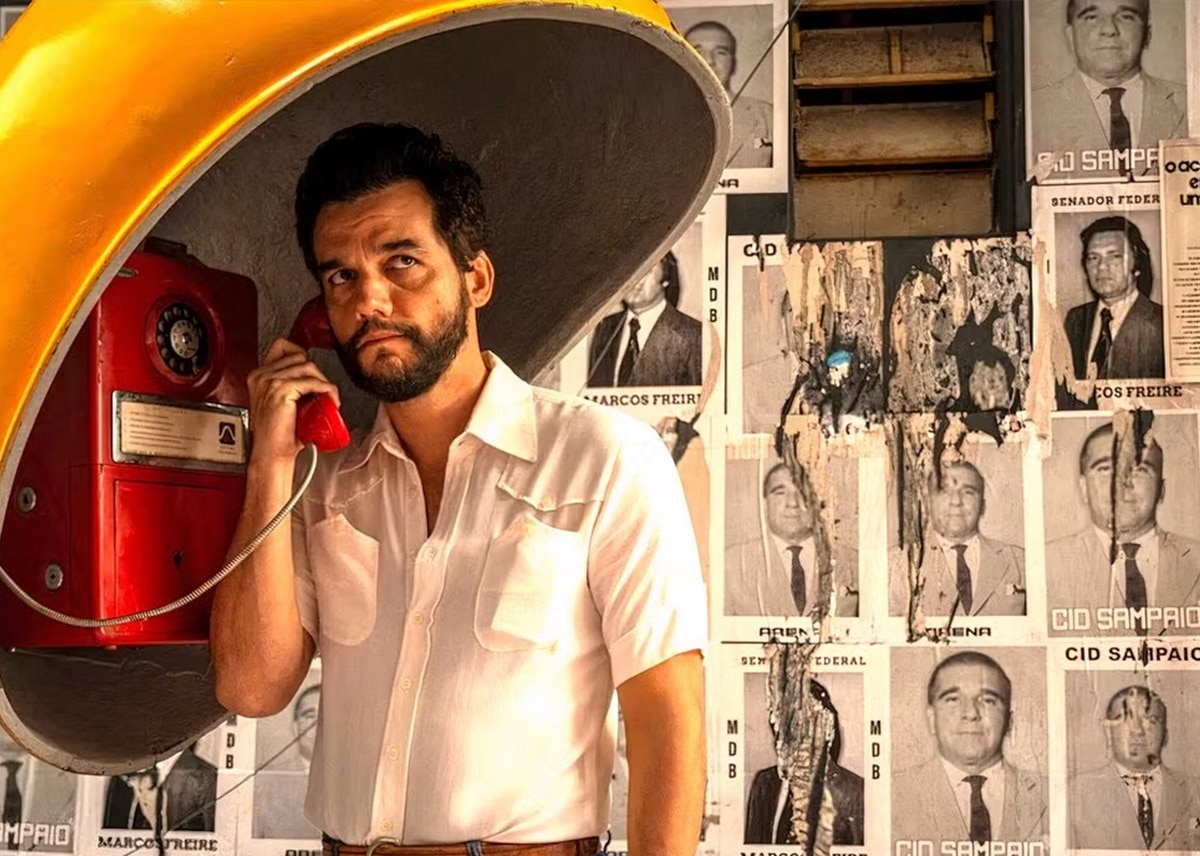
The Secret Agent
A film as much about the contemporary moment as its period setting
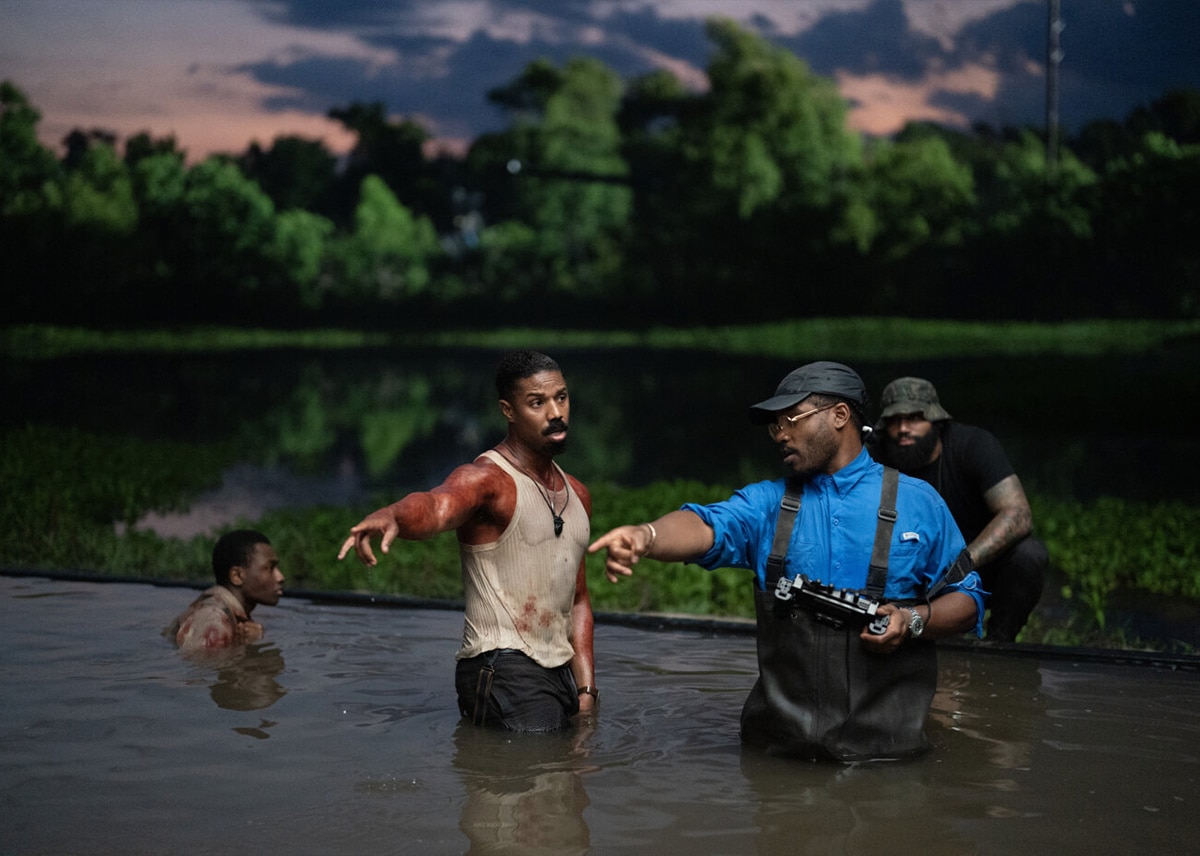
Sinners
A soulful, blues-soaked explosion of music centres this Southern Gothic and slasher horror

Belgrave Road
Big questions about ‘home’ haunt the silences between the star-crossed lovers



On seeing Iran in the news, I want to say
A poet reflects on what it's like to be of Iranian descent and to witness terrible news coming out of Iran.

Sad Song of Plantain poem
'I lie as quiet as death in this ‘three for two pounds’ cardboard box'
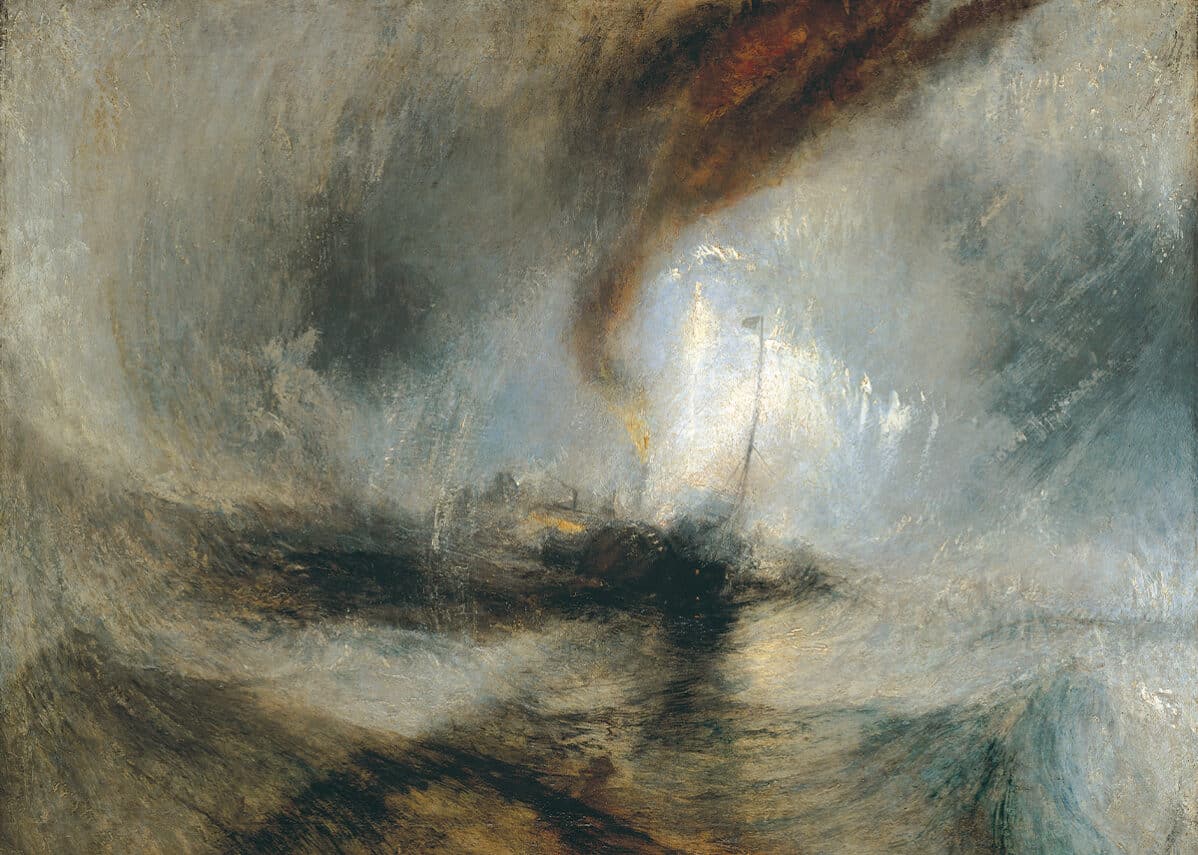
Regarding Turner
What does knowing of the revered British artist's investment in chattel slavery mean for his legacy?


Free Will
Will Harris reads his poem, 'Free Will'. Directed by Matthew Thompson and commissioned by the Adrian Brinkerhoff Poetry Foundation.

Half Written Love Letter
Selina Nwulu reads her poem, 'Half Written Love Letter'. Directed by Matthew Thompson and commissioned by the Adrian Brinkerhoff Poetry Foundation.

Illuminating, in-depth conversations between writers.
Listen to all episodes
SpotifyApple Podcasts
Amazon Music
YouTube
Other apps

The series that tells the true-life stories of migration to the UK.
Listen to all episodes
SpotifyApple Podcasts
Amazon Music
YouTube
Other apps
Nine writers with migrant backgrounds reveal the secrets of their talismans of migration.
Listen to all episodes
SpotifyApple Podcasts
YouTube