
The Complex

Karan Mahajan
Viking, 2026
In Karan Mahajan’s sprawling novel, The Complex, a family once great and powerful comes undone in nearly every possible way: through affairs, poverty, crime and an increasingly intimate relationship with right-wing politics. At the novel’s centre are the descendants of the influential (and entirely fictional) SP Chopra, a man who once lent money to freedom fighters and became, in the process, a minor architect of Indian independence. His descendants still occupy the house he once lived in, A-19 of Modern Colony, a fictional neighbourhood in Delhi, trading increasingly faded memories of him like currency, each hoping to recognise some of his greatness in themselves. It is no spoiler to acknowledge that their search fails spectacularly.
The Complex opens with an admission of the family’s fall from grace: the narrator, whose identity stays hidden for much of the book, waits for the return of their father, Brij, released from Tihar jail after serving time for murdering his own uncle, Laxman, one of SP’s sons. Though the novel shifts between points of view often, one of its clearest throughlines traces the life of Laxman: a pleasure-seeking man whose failed ventures seem to confirm his own foolishness, driving him deeper into a life of infidelity, whisky and right-wing Hindutva politics.
The novel also follows Sachin, another of SP’s grandsons, and his wife, Gita. Though they live in the US for much of the novel, the pull of A-19 proves irresistible, and after a series of immigrant frustrations – a sense that their employers see them as outsiders, the alienation of growing distance from one’s own country, and a cascade of familial drama – they move back to India, trying to find room for themselves in their cramped and overcrowded ancestral home.
Covering roughly 20 years between the 1970s and the mid-1990s, The Complex traces the emergence of the right-wing politics that would come to shape contemporary India. SP Chopra’s history with the RSS – the Rashtriya Swayamsevak Sangh, a real-life paramilitary extremist Hindutva organisation founded in 1925 – allows his son Laxman an easier entry into power. Through an association with a temple near his colony, and later a herbal balm ‘medicos’ enterprise, he slowly builds a reputation as the kind of Hindu patriot the BJP could make use of.
Yet Laxman’s real interest lies in the women of the large Indian family. As the narrator says, ‘Laxman’s time became filled again with lust. Where there is no History, Desire rushes in. Desire being another way of remaking History.’ Laxman, completely lacking in any personal history, falls deep into the clutches of lust and begins an affair with Karishma, the wife of his own nephew Brij (who is Sachin’s brother). If the family tree is already confusing, the novel offers little relief. The confusion is part of the point, thrusting the reader into the complicated and messy world of extended Indian families.
Divided into three parts, the first section of the novel is from the point of view of Gita and follows her as she tries to navigate her new life as a member of the Chopra clan. Early on, she is sexually assaulted by Laxman. When she tries to bring it up with Vibha, Laxman’s sister and her new aunt, she is told that she has misunderstood the situation and that ‘roughhousing’ is in the blood of the Chopras. Worse still is the implication that Vibha might have arranged Laxman’s actions in order to give Gita the opportunity to conceive if she failed to do so with her husband. In an accurate reflection of the time and context, there is no accountability for Laxman, yet slowly and subtly, Gita builds a life beyond the incident.
The novel spends its 450 pages moving back in time, tracing the relationships of the Chopras that might explain both the murder of Laxman and set the emotional context of Brij’s return from jail. The plot, when noticeable, is more focused on understanding the personal stakes that made the return of right-wing politics in India possible, and more importantly, profitable. Yet much of this history of the BJP falls flat: too generalised to spark interest in an international audience, and too familiar to any South Asian. The novel’s highest points lie in its depiction of the messiness of relationships, yet even those often feel a tad dull, or too quickly dropped, to carry the emotional weight that Mahajan might have intended. Gita, arguably the novel’s most interesting character, reappears only in minor flashes beyond part one. Much of her inner life remains entirely unknown as she moves back to India, disconnecting the reader and lessening Gita’s emotional stakes. Ultimately, the Chopras of The Complex feel like distant neighbours: it’s fun to gossip about them over drinks, but by morning, most of their trials are forgotten.

WritersMosaic monthly
Get new reviews in your inbox
One email monthly, unsubscribe anytime
Pressure
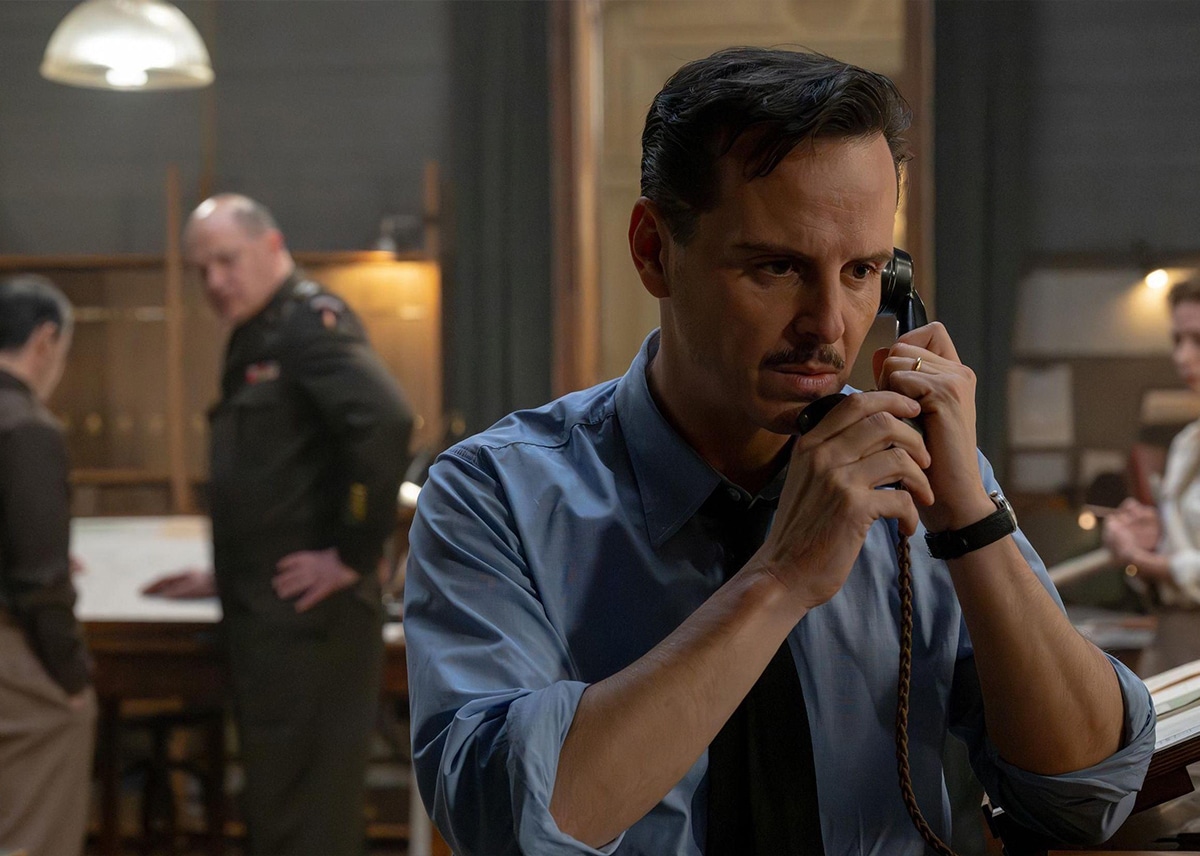
What's missing from the latest 'untold story behind D-Day'?

A Trial
An examination of theatre’s complicity in post-truth politics

Disappearing Images
A festival of ephemeral art and the impermanence of our current world





Marlon James: a Jamaican reckoning
'A return to a home I barely knew'
The name of this wallpaper is ‘Childhood’
A luminescent bubble of memory

What’s in a feminist? Holding on to Gloria Steinem
Is Gloria Steinem's feminism still relevant today?





Illuminating, in-depth conversations between writers.
Listen to all episodes
SpotifyApple Podcasts
Amazon Music
YouTube
Other apps

The series that tells the true-life stories of migration to the UK.
Listen to all episodes
SpotifyApple Podcasts
Amazon Music
YouTube
Other apps
WritersMosaic interrogates the notion of ‘staying in your lane’ by asking writers how they attempt to think beyond the parameters of their cultural identity.
Listen to all episodes
SpotifyApple Podcasts
YouTube