
Yinka, Where Is Your Huzband?

Lizzie Damilola Blackburn
Viking Penguin, 2022
Review by Maame Blue
‘Lord,’ Aunty Debbie rattles on. ‘Yinka is thirty-two –’
‘Thirty-one,’ I mutter under my breath.
‘There is no reason why, at the age of thirty-two, a woman of her calibre should still be single.’
‘God forbid!’ Mum inserts.
‘In the same way you brought Kemi a huzband, Lord, bring Yinka a huzband of her own. Don’t delay your blessing. Bring him this year.’
Not unlike Aunty Debbie’s prayer, this book makes demands that are not always met. As a Black woman of West African descent raised in a Christian household, I saw myself in some parts of this book, but in many others, I did not. There were moments of laugh-out-loud humour, a familiarity that made me cringe but also want to read more, and a collection of characters I liked.
Yinka’s mother is especially well crafted; overzealous, overbearing and always with her eyes on the prize – to see both her daughters married off with children and therefore succeeding in life. There was no Plan B for Yinka’s mother – and by extension, there isn’t one for Yinka, either. Don’t get me wrong, Yinka has her own mind; she has a successful career behind her, owns her own home, and is open about her Christian faith being an anchor. But there were gaps within her character that I struggled to fill as a reader.
Even though we meet Yinka at a point of difficulty, where things that were once certain become less so, she never quite becomes undone by the difficulty. Instead, the story takes us through a collection of mishaps and over-explained moments that feel strategically placed to attract a reader very unlike myself.
And yet, there were so many aspects of the book that I was sold on: Yinka’s distaste for a certain type of performative church service; her choice not to have sex before marriage that isn’t preachy but personal and wonderful; and even a proclivity to tell little white lies that become bigger as she tries to avoid embarrassment. These things make Yinka an unlikely heroine, with a nerdy sense of humour that jumps off the page and endears her to you.
Yinka’s story also engages with heavy topics like colourism and grief, but these issues carry a weight that feels out of balance with the more light-hearted narrative of finding a date for a wedding that persists throughout the book. In the end I found myself asking, where is Yinka? Where is the strong advocate for her own beliefs, for those of her friends? She seems instead to disappear halfway through the book behind all the things that happen to her and those around her. And when she does reappear through the filter of a few counselling sessions, she is fixed again, neat, tidy and not quite the flawed force I wanted to root for at the beginning.
Yinka, Where Is Your Huzband? is an easy read, with prose that felt contemporary and accessible, but it left me with more questions than answers.
https://www.penguin.co.uk/books/442/442993/yinka–where-is-your-huzband-/9780241504598.html
WritersMosaic monthly
Get new reviews in your inbox
One email monthly, unsubscribe anytime

Ever Land
A layered and haunting view of daily life in occupied Palestine
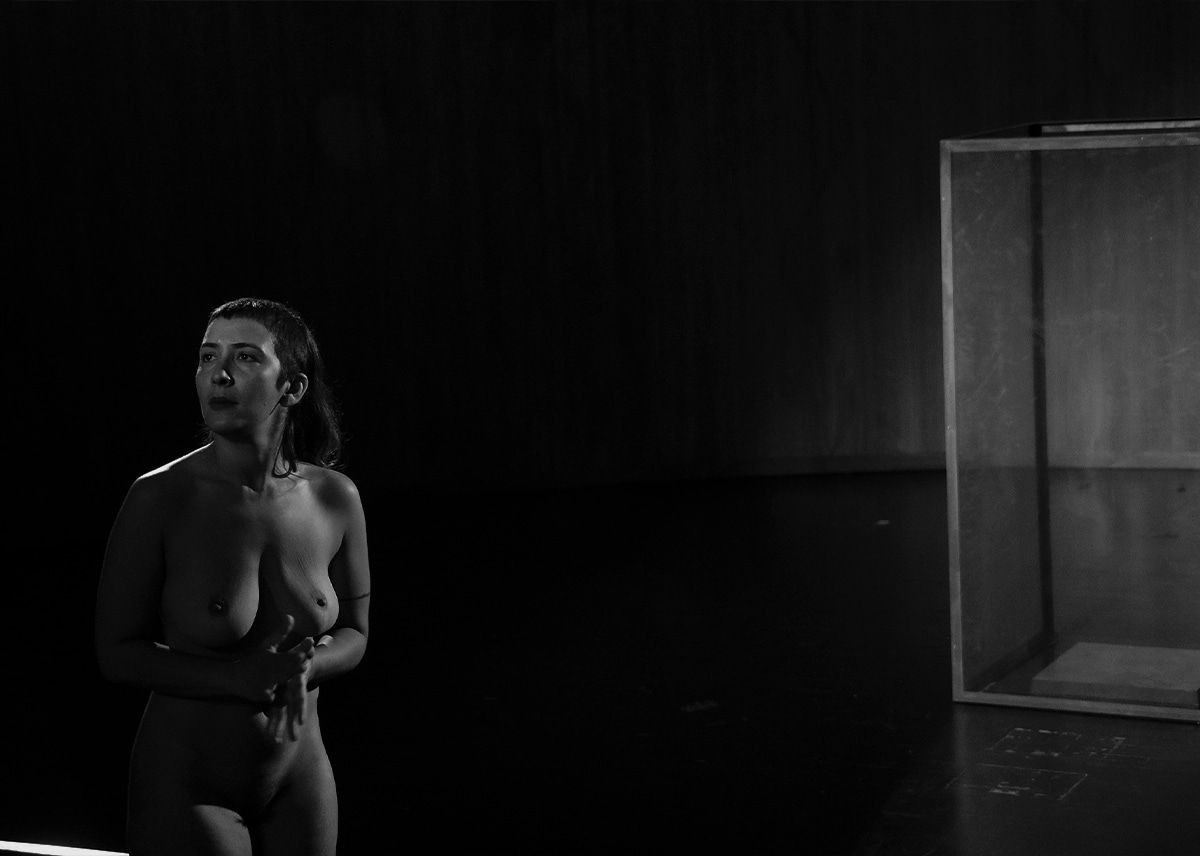
Mahsa Salali’s Naqqāli
'Salali positions the female body... as an active agent'

At Sea
Bearing witness in the face of dismissal

Triage
A response to the endless spiral of worldwide conflict and tragedy
My tomorrow is today
'I clasped my hands together, not in prayer but to stop them from shaking'
Ballet Black at 25
Cassa Pancho: 'It’s a miracle that we are still here in some way'

Free Will
Will Harris reads his poem, 'Free Will'. Directed by Matthew Thompson and commissioned by the Adrian Brinkerhoff Poetry Foundation.

Half Written Love Letter
Selina Nwulu reads her poem, 'Half Written Love Letter'. Directed by Matthew Thompson and commissioned by the Adrian Brinkerhoff Poetry Foundation.

Illuminating, in-depth conversations between writers.
Listen to all episodes
SpotifyApple Podcasts
Amazon Music
YouTube
Other apps

The series that tells the true-life stories of migration to the UK.
Listen to all episodes
SpotifyApple Podcasts
Amazon Music
YouTube
Other apps
WritersMosaic interrogates the notion of ‘staying in your lane’ by asking writers how they attempt to think beyond the parameters of their cultural identity.
Listen to all episodes
SpotifyApple Podcasts
YouTube
In the first series of poems commissioned by Hannah Lowe, six poets explore how ritual gives meaning to our lives.
Listen to all episodes
SpotifyApple Podcasts
YouTube