
Ladies of the Rachmaninoff Eyes
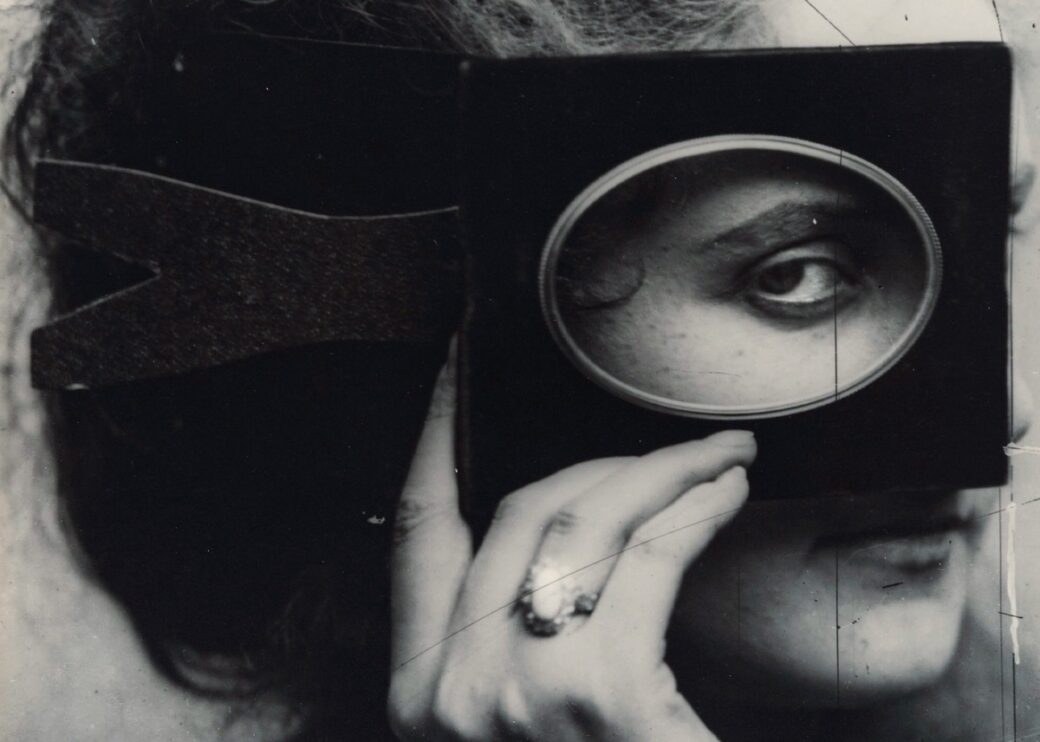
Two people die in the first five lines of Henry Van Dyke’s Ladies of the Rachmaninoff Eyes (1965), yet it’s immediately obvious that we’re allowed to find this funny. Aunt Harry has beaten a man to death, causing her own expiration; yet Mrs Klein orders: ‘Run, Oliver, her medicine! Run!’
Oliver, from our point of view, is an unusually urbane seventeen-year-old lover of Rachmaninoff and Baudelaire. (The American introduction to this novel, republished in the UK by Faber Editions, describes it as ‘a portrait of the artist – Van Dyke – as a young gay man.’) Oliver’s parents are deceased, so he lives with his aunt Harriet. Aunt Harry, in turn, has been living for thirty-something years with Etta Klein at her home in a house called Green Acorns, in rural Michigan. One can imagine the curtain rising in a theatre to reveal this tableau: Aunt Harry and Maurice LeFleur splayed out dead, Mrs Klein all a-fluster, Oliver, bemused, knowing it’s too late.
Etta and Harry’s arcane bickering is that of an old married couple who hate each other but can’t be apart; their mutual antagonism reminds them they are alive. They have both been mothers, in their own ways, to Mrs Klein’s late son Sargeant, who, five years prior to the beginning of the novel, was found dead in a New York bathtub, having taken his own life after being rejected by a young black man from Harlem. Oliver has taken Sargeant’s place in Mrs Klein’s heart; she is paying for him to go study at Cornell.
Maurice LeFleur, described as ‘a warlock’, arrives at Etta and Harry’s invitation to make contact with the dead Sergeant. LeFleur’s arrival disrupts what the reader has already accepted as an unusual social set-up for the time; he assumes, for example, Aunt Harry, a black woman, to be a maid of some sort, prompting the revelation that Etta, a white Jewish woman, considers her roughly an equal. Van Dyke keeps the point of view consistent. Oliver’s retelling of Sargeant’s last days, as a young gay man who perhaps does not know or is not ready to accept that he is a young gay man, carries the gossipy sensationalism of the news as it was told to him. He has not yet internalised the tragedy. The novel is not a murder mystery, as such, because the act happens at the beginning and in full view of the cast, but in its delivery, it carries some of that genre’s reader involvement, not least its domestic setting and off-kilter humour.
At the same time, as a Civil Rights-era novel (completed in 1961 but not published until ’65), Ladies of the Rachmaninoff Eyes is the debut of a politicised, but not politically-motivated, African American writer. Van Dyke, born, raised and educated between Michigan and Alabama, was a child of educated parents who played background roles in the Civil Rights Movement, but did not involve himself as such. A talented musician, he wished to become a concert pianist; his father insisted he enrol in pre-med and in defiance, Van Dyke joined the draft and was stationed in Heidelberg. He cruised the city’s famous Philosopher’s Walk and quickly came to realise, as a six-foot-tall, handsome, black American GI, how in demand he was. The freedom of exile allowed him to pursue piano with rigour, but not only was his teacher a Nazi party acolyte, Van Dyke soon came to see that the piano, as an elevated discipline, was already out of reach.
On returning to the US, he began to form connections that would open doors for him in the literary world, most notably to Carl Van Vechten, to whom Ladies of the Rachmaninoff Eyes is dedicated. Van Vechten was an iconic photographer and impresario, and it is tempting to think of him as a model for LeFleur as a self-made, self-styled maverick. Van Vechten was problematic on race, taking advantage of his proximity to and patronage of the Harlem Renaissance and titling his 1926 novel Nigger Heaven. Of the many writers to accept Van Vechten’s advice, the English modernist Ronald Firbank changed the name of Sorrows of Sunlight to Prancing Nigger. Firbank’s work appears to be a touchstone for Van Dyke’s novel in its form as a drawing room romp. Partly due to the muted reception Rachmaninoff received, Van Dyke’s subsequent novels would delve more intentionally into race relations. In the meantime, and more usefully, Van Vechten’s advice to Van Dyke was to write the way he spoke, and if the cutting asides and dialogue in Rachmaninoff are anything to go by, he must have had quite the acidic tongue.
As I’ve touched upon, one of the narrative strengths of this novel lies in the space it creates between what is happening on and off the page. This is Michigan in the 1950s, and so, yes, the North and not the South, but it was still Jim Crow America, and there is a tension alive throughout in terms of Oliver’s apparent freedom of social movement and the backstage reality faced by black male bodies in the wake of Emmett Till. More plainly, the tensions are between acceptance and rejection. You fear for Oliver when, at 17, he makes a hurried visit to the home of a lone white woman, looking for Mrs Klein’s surviving elder son, Jerome. The lack of hierarchies among white and black, male and female are striking for the time, yet there is a telling moment when, within a few lines, a racial slur is hurled, quickly followed by a homophobic one; the former tears through the room, while the latter lands with a whimper.
Della, the actual house maid, clings to LeFleur as her hope of escaping to Chicago once he has trained her to ‘become a whore’. She is young and naïve, and again, one fears for her out there alone under the auspices of so ethereal a man as LeFleur. It is Della who raises the question of Oliver’s sexuality when she throws herself at him and he rejects her. She consoles herself that he, anyway, is too white for her, with his ‘longhair music’ – presumably Rachmaninoff – yet he is too black for the aforementioned white woman who, apropos of nothing, rejects him.
Van Dyke was careful to signify Oliver’s sexuality without making him too precocious. He can experience the shock of desire grappling with Jerome’s sopping wet, paralytically drunk naked body, squirting toothpaste and all, but not enough that it would reveal same-sex experience that he does not yet have – not that we are told about, at least. The relationship between Mrs Klein and Aunt Harriet, two seething older women circling each other in a big old rural pile complete with pet peacocks, reads sapphically but is never made explicit. One of Van Dyke’s literary crushes was Iris Murdoch, whose relationship with Brigid Brophy might well have been an inspiration. In all its duality, this is a fascinating curio of a novel that deserves new readership, for what it is not – the expected ‘problem’ novel, as James Baldwin might have put it – as much as for what it is.

WritersMosaic monthly
Get new writing in your inbox
One email monthly, unsubscribe anytime
Complex antihero: an interview with Arthur Hughes
Unravelling Authur Hughes' Richard III

On Snow
'The mind inevitably seeks a reenactment of the teal light I associate with home'
It’s being published I get paid for; the writing I would do for free
‘Any advance [...] for your novel is to compensate you for the horrors of being published'







Some Sacred Harbour
As much a book of joy as of anger
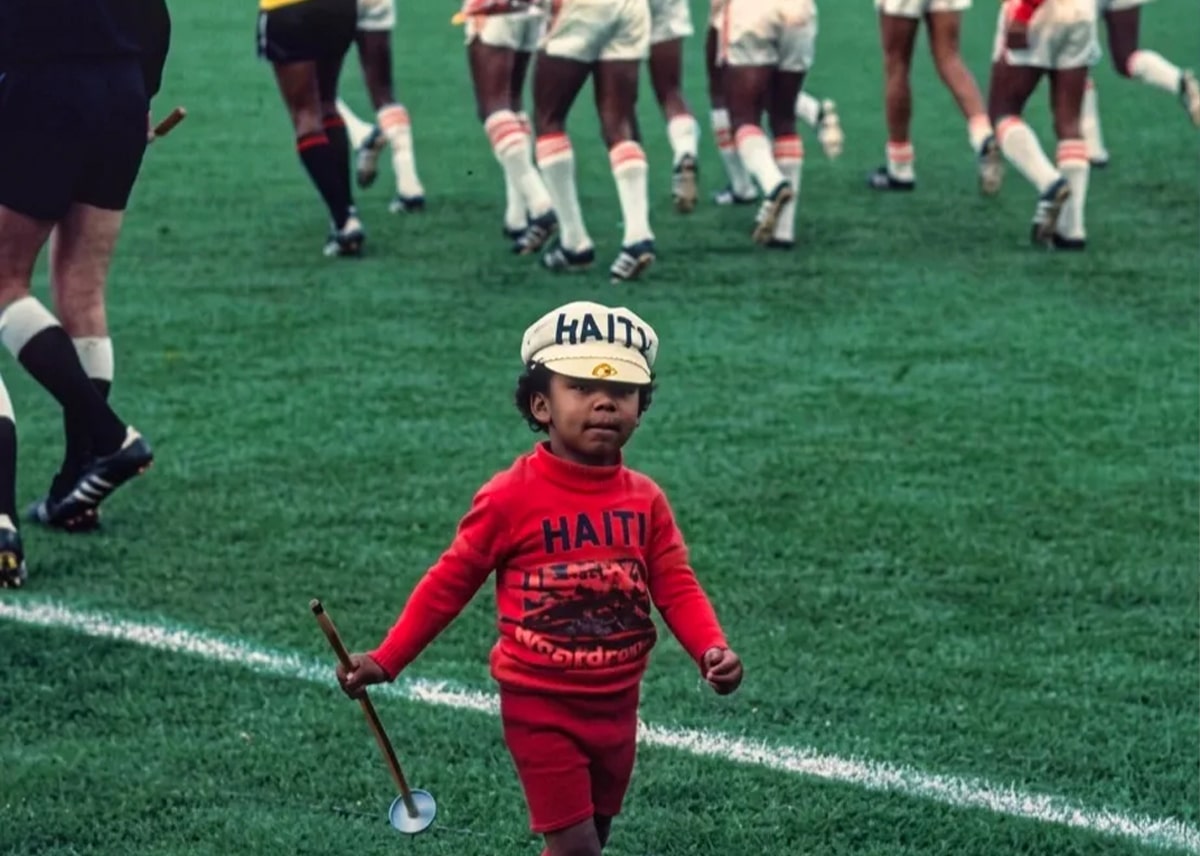
Death of the Soccer God
The 'uneven' novel on the disappeared Haitian footballer, Joseph Edouard Gaetjens
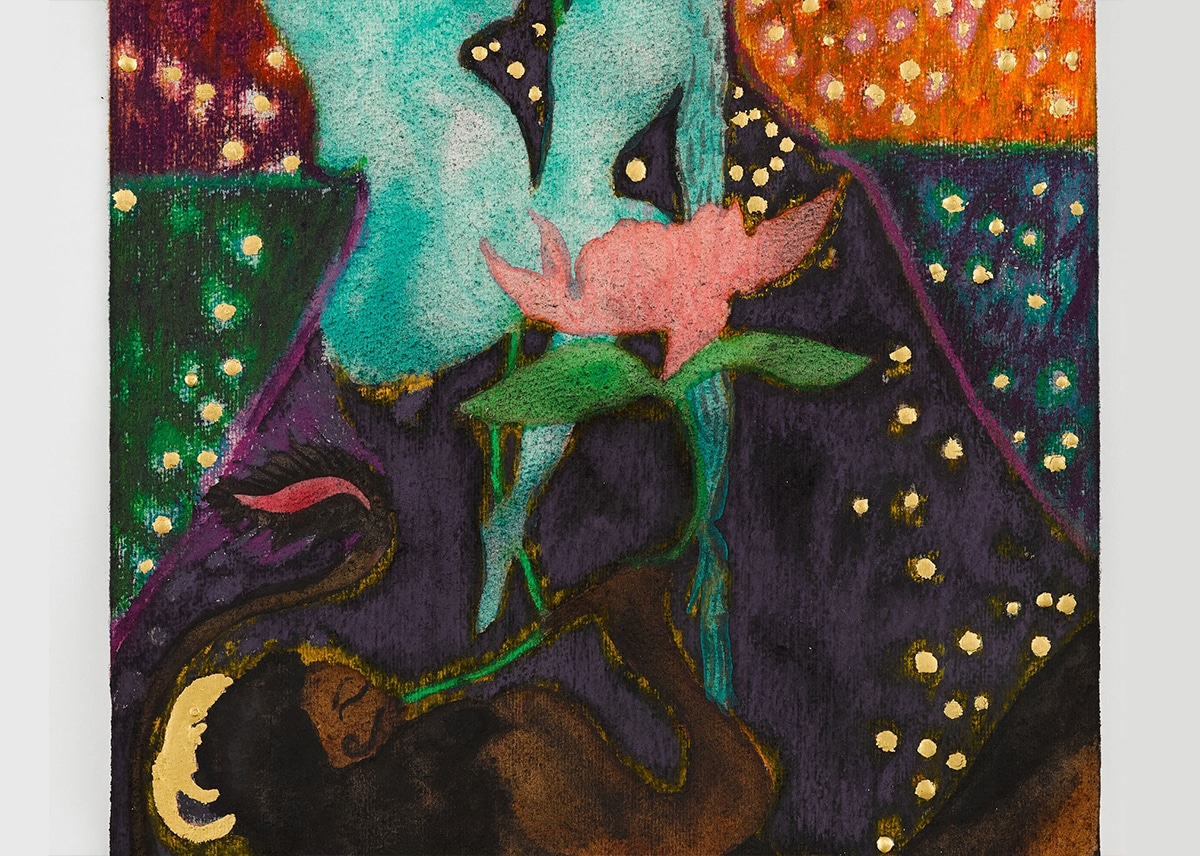
Haunting the Black Air
Poetic freedom across space and time



Illuminating, in-depth conversations between writers.
Listen to all episodes
SpotifyApple Podcasts
Amazon Music
YouTube
Other apps

The series that tells the true-life stories of migration to the UK.
Listen to all episodes
SpotifyApple Podcasts
Amazon Music
YouTube
Other apps
In this second series of poems commissioned by Hannah Lowe, six poets explore the theme of surveillance.
Listen to all episodes
SpotifyApple Podcasts
YouTube