
Cristina Rivera Garza: Re-membering Violence

Cristina Rivera Garza might have lived and taught in the US for the past several decades, having founded the PhD programme in creative writing in Spanish at the University of Houston (the first and to date only such course in the US). But in her writing she has frequently returned to her birth country of Mexico, documenting and interrogating the acts of violence that have left marks both in public and in private, on the body and in the mind.
Death Takes Me, first published in 2007 as ‘La muerte me dá’ attests powerfully to that focus. Out this month in the UK (Bloomsbury) in an English translation by Sarah Booker and Robin Myers, the novel first appeared as ‘news of femicides … mostly in the north of Mexico was capturing our attention on an almost daily basis’, Rivera Garza tells me during a visit to Trinity College, Oxford. The novel, her fifth, was ‘my way of trying to face, of trying to think through, that violence. I wanted to create an artefact that would take the numbness out of us, and the indifference, which was growing’, she adds.
Death Takes Me follows a female detective, who is a recurring character in Rivera Garza’s fiction, as she grapples with perhaps her most difficult case yet: a string of murders of men who have also been castrated. The first cadaver is found by a professor named Cristina Rivera Garza, setting in motion a complex spin on the classic detective novel that takes a bit of time to get into but ultimately pays off.
Rivera Garza’s prose is, by any definition, not ‘easy‘, stacked with staccato sentences that frequently pass into a near-stream of consciousness, taking in and reflecting back to us the strangeness of the world and individual thought processes. Take, for example, the moment when Cristina Rivera Garza finds the first body: ‘My knees yielded to the weight of my body, and the vapor of my faltering breath clouded my vision. Trembling. There are trembling leaves and bodies. Seldom the thundering of bones.’
Rivera Garza, who believes ‘the main character of every single book has to be language itself’, says the prose was styled carefully: ‘I wanted to find the kind of sentence that could embody the specific, sexual nature of the violence … Since the crimes explored in the book involve cutting, I wanted my sentences to embody that movement, that sensation of being cut off, not only to replicate the violence but to invite a critical reaction against it.’
‘Unfortunately I would say this is a good time for the book,’ she adds. ‘Gender violence has increased not only in Mexico but worldwide.’
Liliana’s Invincible Summer: A Sister’s Search for Justice (2023), which won the Pulitzer prize for memoir in 2024, encourages responses to the impact of violence on a more intimate scale. A ‘genre-bending account … stitched together with a determination born of loss’, in the words of the Pulitzer jury, the book traces the murder of Rivera Garza’s sister by a former boyfriend on July 16 1990 and its aftermath. It also, importantly, tells of the life Liliana led before she was killed, insisting that we come to know her as more than just a victim of femicide.
‘It is always puzzling and important at the same time that, when you are writing a book, you know some things about it – you’ve written it – but you never know what is going to happen with it [once published]. Readers, as the saying goes, are often the ones to tell you what the book is about. That is something that is extremely true in the case of Liliana’s Invincible Summer,’ Rivera Garza reflects, describing the book that appeared in English in 2023 as a ‘version’, rather than a ‘translation’, of El invincible verano de Liliana, which came out two years earlier.
‘I had to train myself – or detrain myself – to become the writer it needed in order to exist,’ she concludes. ‘In doing so I learned very important lessons about the craft and life, and more about death…Of the many gifts that this book has brought me, that’s perhaps the most important.’
https://www.bloomsbury.com/uk/death-takes-me-9781526649430/
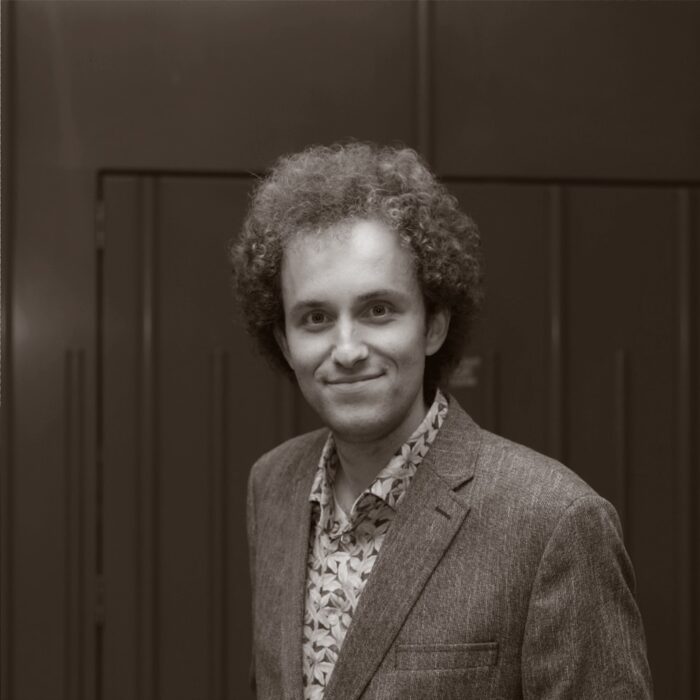
Franklin Nelson
Franklin Nelson works for the Financial Times, commissioning and writing on UK politics, the economy and society as well as books and the arts.
Ideas are like rabbits
‘Ideas are like rabbits, you get a couple and learn how to handle them, and pretty soon you will have a dozen.’

Soundsystem as pedagogy
'You left recalibrated. Heartbeat altered. Shoulders lowered.'
Bad Signal
'All language use can be seen as extending a hand; words and their corresponding meanings are always about relationships'

Minor Black Figures
Making art without looking over your shoulder
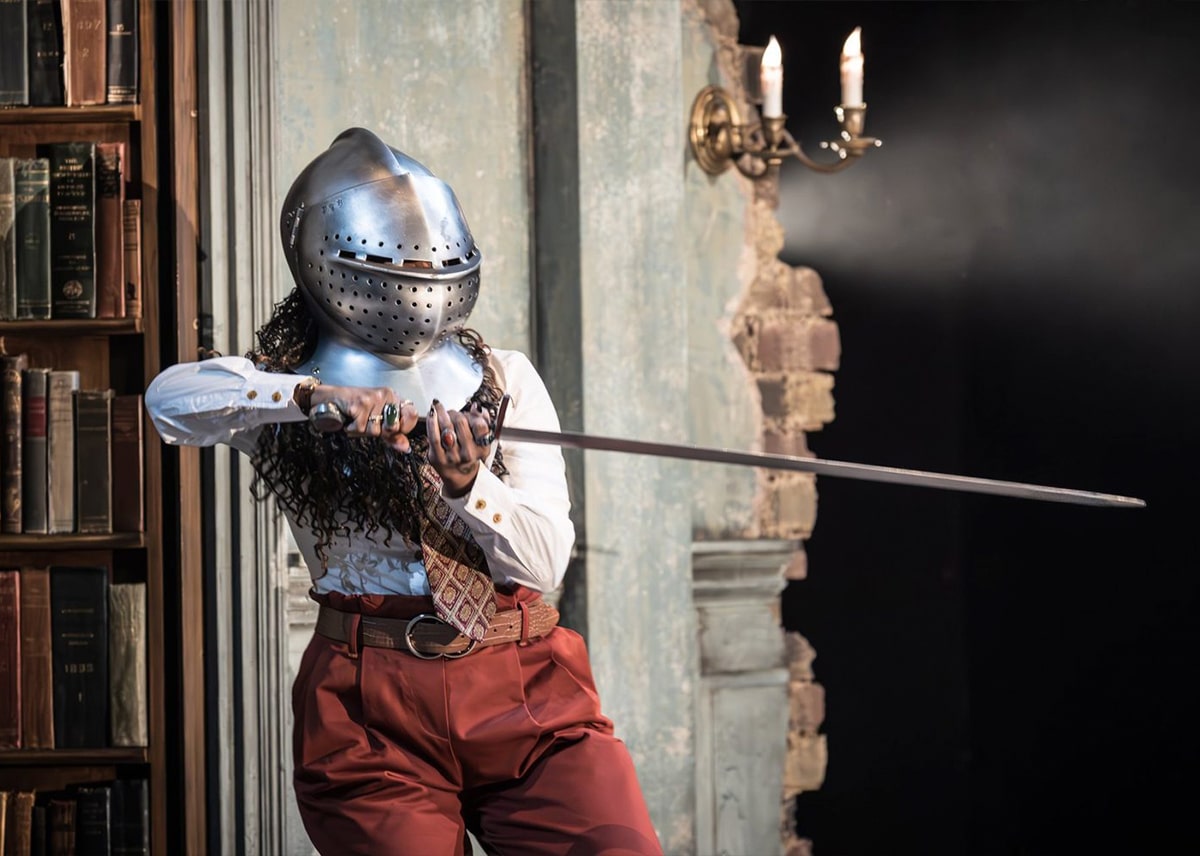
The Authenticator
Painful truths hidden in the shadows of history

Hedda
An imperfect description of humanity

Free Will
Will Harris reads his poem, 'Free Will'. Directed by Matthew Thompson and commissioned by the Adrian Brinkerhoff Poetry Foundation.

Half Written Love Letter
Selina Nwulu reads her poem, 'Half Written Love Letter'. Directed by Matthew Thompson and commissioned by the Adrian Brinkerhoff Poetry Foundation.

Illuminating, in-depth conversations between writers.
Listen to all episodes
SpotifyApple Podcasts
Amazon Music
YouTube
Other apps

The series that tells the true-life stories of migration to the UK.
Listen to all episodes
SpotifyApple Podcasts
Amazon Music
YouTube
Other apps
Nine writers explore the elusive emotional truth behind narratives and storytelling.
Listen to all episodes
SpotifyApple Podcasts
YouTube