
The Beginning Comes After the End
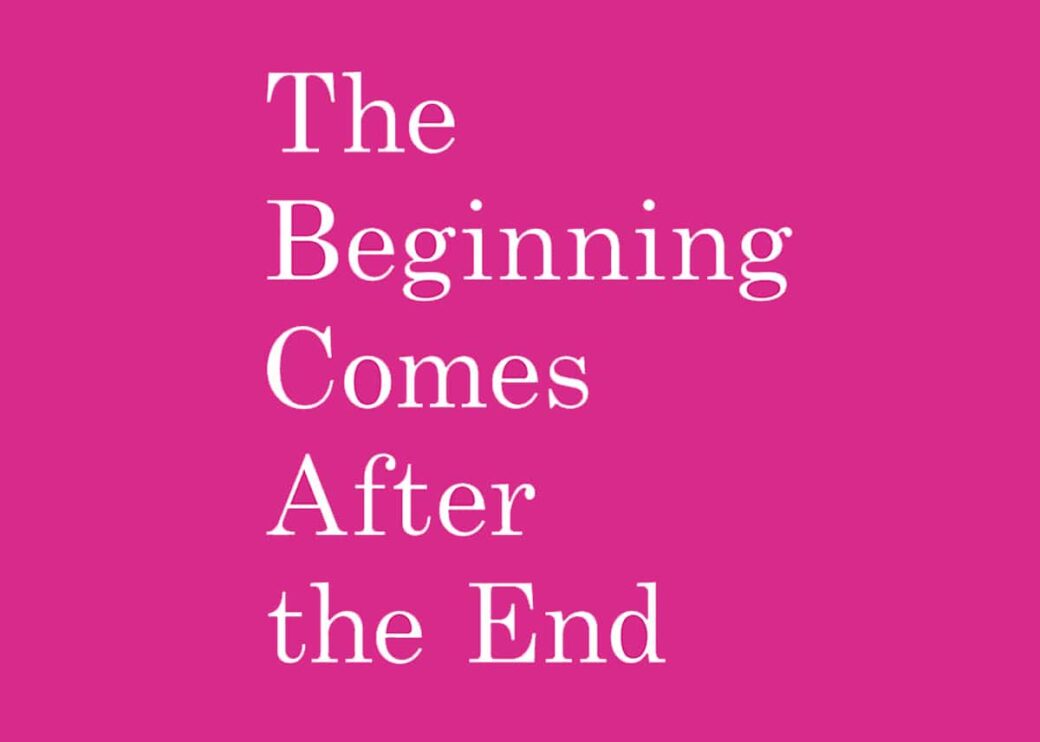
The Beginning Comes After the End: Notes on a World of Change
Rebecca Solnit
Granta, 2026
It’s been 22 years since the American writer, activist, and historian Rebecca Solnit first made the case for hope. That small but mighty book, in which hope was not naive optimism but active, radical resistance – ‘the ax you break down doors with in an emergency’ – was written against the immense despair Solnit and so many felt at that particular moment: the height of the Bush administration and its ‘war on terror’, the disastrous invasion of Iraq. Hope in the Dark, reissued in 2016 when the dark got darker, was an embrace of the unknown; a book carried in back pockets on protests and quoted on rally podiums with raised fists. Reading its epic successor, a couple of decades into that future none of us could have predicted, I started wondering if it also marked the beginning, or rather one of many beginnings, of a sea-change that has yet to be charted, and a tide that has already turned.
This is the exhilarating, expansive, and galvanising thinking born out of The Beginning Comes After the End. It’s a beautifully conceived ‘long essay in the form of a short book’ by a writer at the top of her game. The Beginning Comes After the End feels like the culmination of several decades of thinking, writing, looking, and doing: a book conceived in the aftermath not just of the circumstances that led to Hope in the Dark, but all the tiny incremental moments, so many of them unmapped, unacknowledged, deliberately obscured, and brutally suppressed, that have brought us to our present moment. It is this vast mosaic of changes – what a lesser writer might call the past – that Solnit illuminates in this landmark work, often by amplifying the less audible voices of others. ‘We inhabit and inherit a world that has changed bit by bit,’ she writes in the first chapter, ‘Swimming Upstream’, ‘in ways so vast and so varied, in so many spheres of everyday life, that the transformation has hardly been described’.
That chapter opens with Solnit standing on a hilltop 60 miles north of San Francisco. It’s October 17, 2024, one month before the 47th US president became the first convicted criminal in history to win the White House, and Solnit is at a land-back ceremony marking the return of 466 acres of ranchland that had been in the hands of white people since the nineteenth century to the Federated Indians of Graton Rancheria, something that would have been unimaginable in the 1960s California of her childhood. That same month, a few hundred miles along the coast, decades of campaigning by local tribes concluded in the biggest dam removal in US history. For the first time in a century, Chinook salmon swam upstream all the way to Oregon. There may be other ways to write about what was happening in America in the fall of 2024, Solnit notes, but this happened too. How we begin matters. ‘Deeper currents of change are at work,’ she writes. And so, in her characteristically sinuous and pristine prose, Solnit flows with them.
So much width and breadth is covered in nine compact, potent, and interwoven chapters – across time, space, ideas, lifeforms, and cultures. If hope was the seed Solnit planted 22 years ago, its fruit in The Beginning Comes After the End is interconnectedness. Each chapter hooks onto the next, just as the small, seemingly disparate actions of individuals are fused across time. We forget too easily, Solnit writes, that ‘the present is a radical departure from the past’, and one of the ways in which this book functions as a tool of resistance is to remind us of what has already happened.
In ‘Winged Seeds’, she opens with the forgetfulness of squirrels begetting forests and closes by planting the seed of an idea, that colonial industrial capitalism was an anomaly, a few centuries long, and ‘at least some of us are embarked on an epic course correction’. She alights on Antonio Gramsci’s famous quote, offering a poetic translation from an Italian friend: ‘The old world is dying. The new one is slow in appearing. In this light and shadow, monsters arise.’ But the idea of one old world is isolationist, she continues, and ‘there are always many stories subjugated under the one story’. What we’re also seeing in the dissolution of now – and in ‘The Disconnecters’ she directly addresses the brutal authoritarian politics of our current moment – is the rise of many stories. The book, which draws deep wells of hope and resourcefulness from the past, tracks the global turn towards older, more multifarious and communal stories that have long existed in Asian, African, and Indigenous cultures, against which the monsters are desperately trying to push back. This is not exactly a narrative we’re currently hearing in the mainstream media of the global North.
In order to demonstrate how the world has changed beyond imagination from the one into which Solnit was born, she gathers voices from intersectional movements across environmental science, climate justice, Indigenous rights, Black civil rights, LGBTQI rights, and feminism. She draws a beautiful analogy between Rachel Carson, the marine biologist and author of Silent Spring, and Martin Luther King Jr., riffing on how they were both, within their own movements, guided by principles of interdependence: what Carson called ‘the whole closely knit fabric of life’, King termed ‘a single garment of destiny’. Mohandas Gandhi, Arundhati Roy, Zadie Smith, the Buddhist monk and peace activist Thich Nhat Hanh – all are voices in this book, but so too are the scores of activists alongside whom Solnit has campaigned and by whom she has been profoundly influenced over decades.
In ‘Shadows of the Past’, she ranges over socio-cultural moments – watching the Prince film Purple Rain, the Berlin Wall going up, the unforeseen collapse of the Soviet satellite states in 1989 – demonstrating how easy it is to forget how far we have come, and reminding us of the durability of ideas. ‘You can take rights away,’ she observes in the final essay, ‘but you can’t so easily take ideas away, including people’s belief in their own rights.’ Stories are critical, as is the language and perspective from which we tell them. Metaphors matter too, and Solnit’s are invariably from nature, of which, of course, we are part. She resists Margaret Thatcher’s right-wing maxim about there being no such thing as society with an ode to the vibrant community of a forest, describes the democracy of a beehive, and compares our current geopolitical turmoil to the chrysalis of a butterfly. ‘A butterfly is the end of a caterpillar,’ she writes, ‘and in between comes a lot of falling apart.’
The multitudinous ways in which the long arc of history bends towards justice have been Solnit’s lifelong preoccupation. ‘I have seen history itself unfold,’ she writes, ‘and this witness has been one of the things that brings purpose and exhilaration to my life as a writer and a citizen of this earth. I have seen change.’ The Beginning Comes After the End invites the reader to witness this change, shoulder to shoulder with one of the great thinkers of our age, and to share in the collective purpose and exhilaration. In that way, and in so many others, the revolution has already begun.
WritersMosaic monthly
Get new reviews in your inbox
One email monthly, unsubscribe anytime
A Trial
An examination of theatre’s complicity in post-truth politics

The Complex
The unraveling of a dynasty

Disappearing Images
A festival of ephemeral art and the impermanence of our current world

The name of this wallpaper is ‘Childhood’
A luminescent bubble of memory
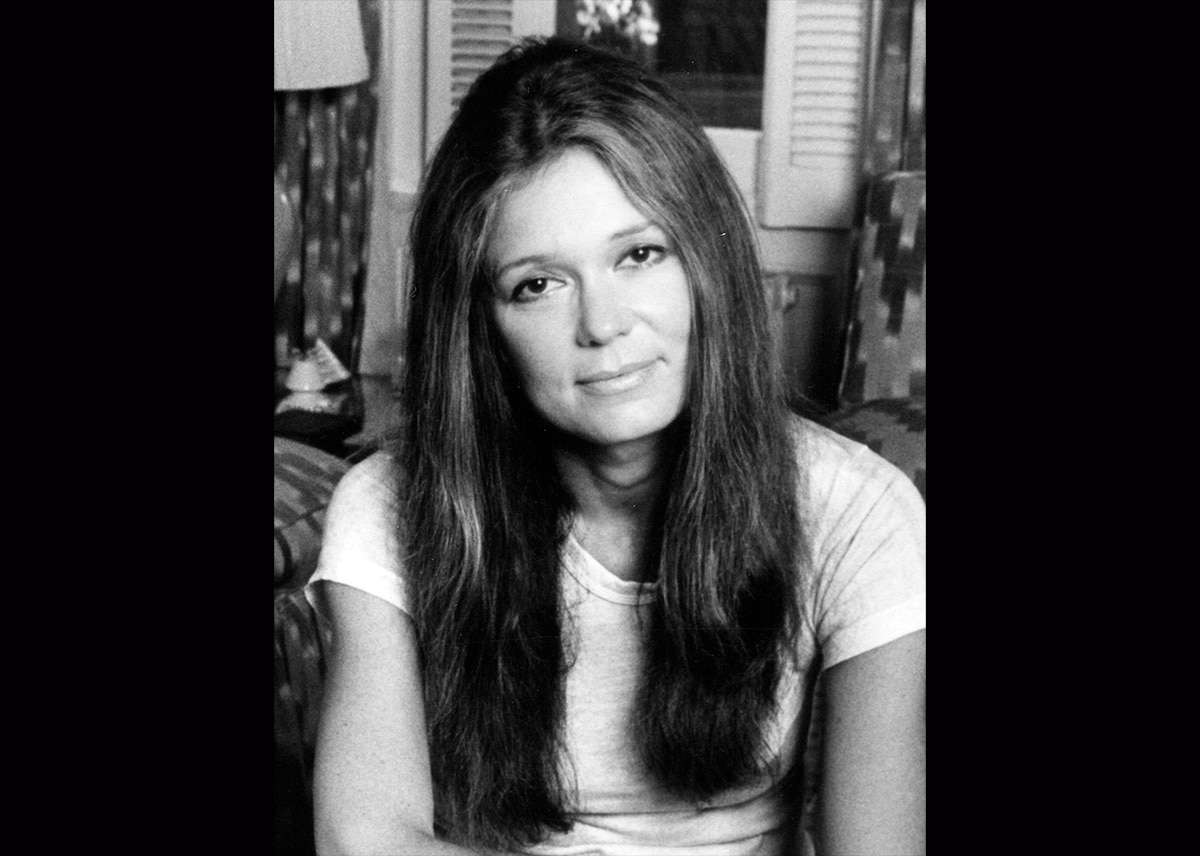
What’s in a feminist? Holding on to Gloria Steinem
Is Gloria Steinem's feminism still relevant today?
Coats
The unexpected cost of acquiring two Italian leather coats in Rome


Free Will
Will Harris reads his poem, 'Free Will'. Directed by Matthew Thompson and commissioned by the Adrian Brinkerhoff Poetry Foundation.

Half Written Love Letter
Selina Nwulu reads her poem, 'Half Written Love Letter'. Directed by Matthew Thompson and commissioned by the Adrian Brinkerhoff Poetry Foundation.

Illuminating, in-depth conversations between writers.
Listen to all episodes
SpotifyApple Podcasts
Amazon Music
YouTube
Other apps

The series that tells the true-life stories of migration to the UK.
Listen to all episodes
SpotifyApple Podcasts
Amazon Music
YouTube
Other apps
WritersMosaic interrogates the notion of ‘staying in your lane’ by asking writers how they attempt to think beyond the parameters of their cultural identity.
Listen to all episodes
SpotifyApple Podcasts
YouTube
In the first series of poems commissioned by Hannah Lowe, six poets explore how ritual gives meaning to our lives.
Listen to all episodes
SpotifyApple Podcasts
YouTube