
A Good House

Amy Jephta
Royal Court Theatre, 11 Jan – 08 Feb 2025
Review by Gabriel Gbadamosi
In Amy Jephta’s amusing satire on contemporary South African social mores, A Good House, class has edged out race as the cutting-edge social conflict of our times. Reminiscent of the ITV sitcom Love Thy Neighbour – for those of us who lived through its uncomfortable comedy of UK race relations in the 1970s – the scenario brings together a black couple and two white couples as uneasily socialising neighbours in a swanky new development. Their gated community is attempting to feel good about itself to the exclusion of less affluent undesirables.
The problem is not, on the face of it, anything to do with race; the younger white couple are struggling to afford the bills, the black couple are upwardly mobile and international in outlook, holidaying in Italy, with a taste for fine wines and Afro-chic modernity in their décor, while the older white couple court their black neighbours to keep up an appearance of solidarity against intruders. The problem is a vacant piece of land on which a makeshift shanty dwelling not only appears but mushrooms, growing a satellite dish and endless extensions in a representation of thrusting, irrepressible township life.
The unnervingly fixed smile of the black corporate professional Sihle (played by Sifiso Mazibuko), who has outpaced his roots in the desperation of the shanty townships, and the studied ease of his wife Bonolo (Mimî M Khayisa), who grew up black-righteous in protected bourgeois comfort in Cape Town, both give away the underlying tensions and contradictions of contemporary South Africa, as it attempts to turn its back on the racism, segregation and violence of the past towards a more peaceful and prosperous future. Their gated community is a microcosm – and internalisation – of apartheid, an attempt to shut out the poor, usually black, undesirable phantoms of a past that hasn’t gone away, and which in the visible, twisting growth of the rusting shack still forces itself into the present.
For all the characters in A Good House – alert to the need to police their public behaviour and speech in a new South Africa, or pointedly reminded to do so – there is an undercurrent of fear and insecurity. It is a fear which corrodes and runs as fault lines of both race and class within people and between them. Certain scenes temporarily abandon the dominant naturalism in acting, tone, language and lighting to go for a more subjective probing into the trenches, ditches and sinkholes of feeling. The shift offers a directness of address which throws the social artifice of the staged comedy into sharp relief. One such moment came, whether planted by the production or not, when an audience member called out ‘Shame!’ to a character realising his own racial prejudice. Audience members held their breath, wondering whether their own complicated internal game of self-policing was up.
A Good House is a co-production between the Royal Court Theatre and Bristol Old Vic in association with the Market Theatre in Johannesburg, which was once the laboratory of anti-racist performance. Internationally toured shows such as Woza Albert! (1981) and Asinamali! (1983) demonstrated an alertness to their audiences in matters of censorship and self-censorship – asking if there were perhaps secret policemen in the house? To watch those shows was to feel sadness for us as people, but exhilaration at the energy and life of the performances. With Jephta’s play, the exhilaration has gone, the feeling that we can do better, but the sadness remains, along with the intelligence to explore it.

WritersMosaic monthly
Get new reviews in your inbox
One email monthly, unsubscribe anytime
Haunting the Black Air
Poetic freedom across space and time
The Disappearers
A sprawling visceral experience that drops you in head first
The Lady Imam
Is the world ready to catch up with amina wadud?



It’s being published I get paid for; the writing I would do for free
‘Any advance [...] for your novel is to compensate you for the horrors of being published'
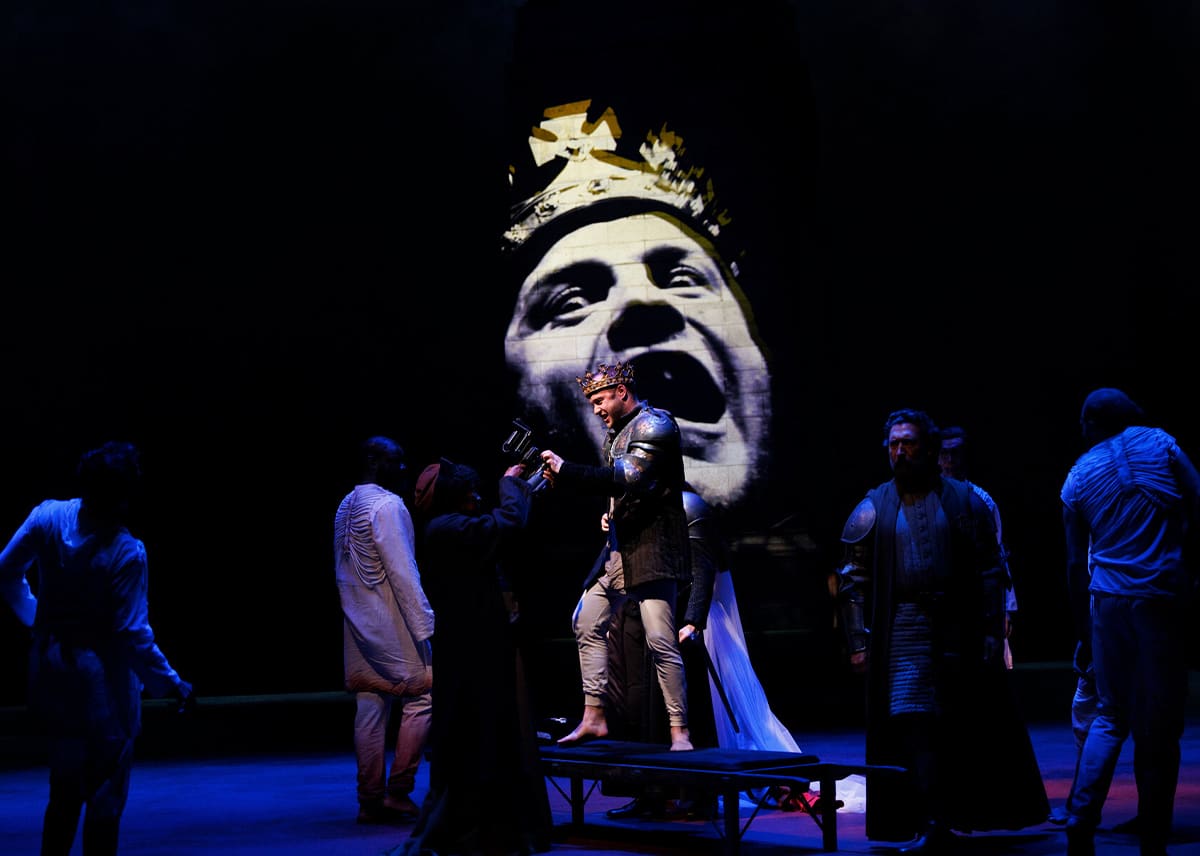
Complex antihero: an interview with Arthur Hughes
Unravelling Authur Hughes' Richard III

Marlon James: a Jamaican reckoning
'A return to a home I barely knew'




Illuminating, in-depth conversations between writers.
Listen to all episodes
SpotifyApple Podcasts
Amazon Music
YouTube
Other apps

The series that tells the true-life stories of migration to the UK.
Listen to all episodes
SpotifyApple Podcasts
Amazon Music
YouTube
Other apps
WritersMosaic interrogates the notion of ‘staying in your lane’ by asking writers how they attempt to think beyond the parameters of their cultural identity.
Listen to all episodes
SpotifyApple Podcasts
YouTube