
Marlon James: a Jamaican reckoning
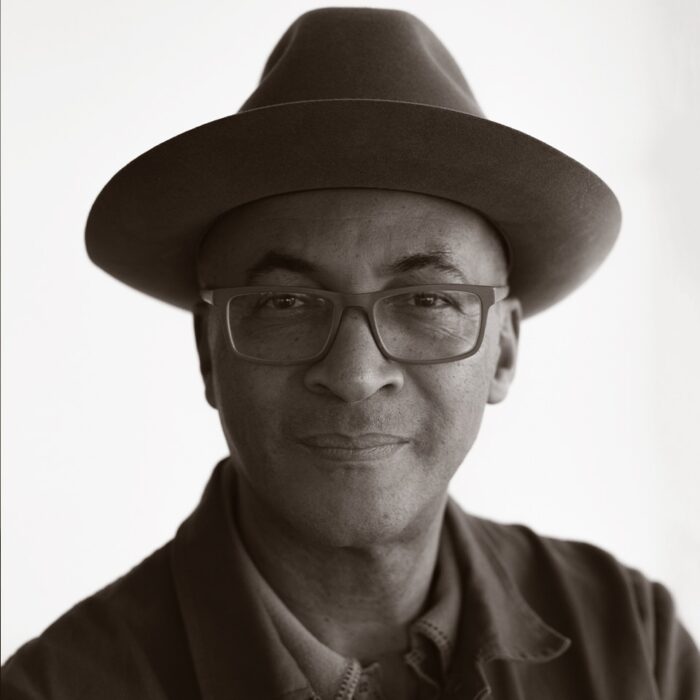
An elegant, framed photo of a nude man with his back to the viewer is mounted on the wall behind Marlon James in his New York City apartment. It’s a picture of ‘somebody’s very fit butt,’ says the author. On the zoom call, I ask James whether the photo is the work of Robert Mapplethorpe, whose portraits line the hallway of Paul Royale, a debauched connoisseur and the chief villain of the novelist’s latest work. Marlon James laughs easily at my ridiculous suggestion: ‘I can’t afford that! [But] I have a lot of Mapplethorpe books.’
Beneath the photo are postcard-sized drawings of nudes, arranged on the wall as if they were part of a storyboard for a film. Before becoming a writer, James was an artist, working, among other jobs, as an art director in the music industry. ‘I left that field because I just got tired of it. And I was like, screw this shit, I’m going to write books.’ The delicate artworks are a return to life drawing for James, a practice that he’ll have more time for now his new book, The Disappearers, is published. Marlon James has the air of someone demobbed, happy after the exhausting challenge of creating a 600 page novel, now long-listed for the 2026 Booker Prize, which James won in 2015 for A Brief History of Seven Killings.
Spanning the years between 1988-2005 and set mostly in Kingston, Jamaica, The Disappearers marks another audacious performance from James, who describes it as ‘a return to a home I barely knew.’ By that, he means that he grew up in a country where gay culture was covert and a mystery to him.
Jamaica remains punitive in its attitude towards homosexuality. It is not illegal to identify as gay but consensual sexual intercourse between same-sex partners can still lead to prosecution and up to 10 years in prison. James keeps a home in Jamaica but left in 2007, when offered a teaching position in Minnesota, to settle in the US with the hope of living unashamedly and fearlessly as a gay man. Though he has previously written, ‘whether it was in a plane or coffin, I knew I had to get out of Jamaica’, James clarifies that he had never felt physically threatened. Even so, I doubt he’d deny that an atmosphere of violence is palpable throughout the island.
The Disappearers starts in 1988, just a few years on from a time of terrible bloodshed when Jamaica came close to civil war. Politically-inspired killings may have abated, but a pall of violence still covers the land. The novel’s main characters, gay men, a section of society widely derided as sodomising ‘battymen’, are increasingly the target of violence. The culture has taken a step back from the golden days of reggae’s socially-conscious lyric-writing to revel in the naked homophobia of Dancehall stars, exemplified by James’ character Streggeh Don with his hit song ‘Batty Is Not Pussy’.
James believes it’s important to remember it wasn’t always thus. He highlights a little-known historical fact gleaned from his research. ‘At one point, there were four or five gay bars in Kingston, but by the time my book opens, the gay bar, the gay club [scene] here in Jamaica is already over.’
What caused the decline, I wonder. ‘AIDS, fear,’ James answers without hesitation. ‘In the ’80s, between the churches stoking the whole “It’s God’s punishment” and the “bisexuals are going to kill women” [mantra], a lot of those bars closed and went underground. It didn’t help that we’re still a country that gets electrified by homophobic reggae.’ James shakes his head: ‘I know people who wrote homophobic songs, and they’re not even homophobic!’
Anxiety over male identity is hardly new in Jamaica. James cites anthropologist Edith Clarke’s 1957 survey, My Mother Who Fathered Me, which emphasises the population’s ongoing struggle with absent fathers and the evolution of toxic masculinity. Evidently, the goalposts keep shifting in Jamaica: today, gay-adjacent campness is also part of the culture. ‘Now gangsters wear skintight jeans. Back when I was a kid,’ James remembers, ‘there was no way in hell you could walk down the street [in skintight jeans] without somebody calling you a “batty man”.’
The Disappearers is not autobiographical, but it’s James’s first book in which, he says, ‘the characters’ stakes mirror my own.’ The novel centres on a disparate group of gay men in Kingston, embarking on a covert production of a play set in a prison. Having answered a casting call, they’ll audition for, rehearse and then act in Fortune and Men’s Eyes. ‘[M]asculine sexualities,’ says the director, ‘that could never happen outside in the normal world, flourish in there all the time.’ The premise might sound fanciful, but in his research at the Jamaican Gay Freedom Movement archive in Harlem, James found coded advertising flyers, such as one for ‘Dirty Hearts: A One Night Adult Comedy’, that would have only been recognised by the gay cognoscenti. Coding won’t be necessary, suggests one of the auditioners in The Disappearers: ‘No need code. “Drama audition” already weed out normal man.’
Given the nation’s virulent homophobia, the outrage generated by staging Fortune and Men’s Eyes would probably be extreme, but the jeopardy sparks in Eddy Porteous (a fictional stand-in for James) ‘the kind of thrill that would come closest to what wiping your backside with a US thousand-dollar bill must feel like.’ An eighteen-year-old, Eddy exhibits the kind of bravura that would have been alien to James at a similar age.
‘There is a certain alchemy to homosexual communication, where certain messages never have to be spoken,’ argues the splendidly-named Havelock Titus, the play’s director. But when James was growing up, even though he recognised he was probably gay, he didn’t fully know how to read the signs; he was versed only in the language of despair – a condition mirrored by Eddy, when he’s not putting on a blasé front. James conjures up the dark times of his own youth for me, which was characterised by suicidal ideation: ‘nobody’s threatening my life, nobody’s harming me, but I’m still at the downtown pier about to jump off.’ One day, Eddy replicates that fugue-like journey downtown and finds himself ‘waiting for the sea to whisper, Just come.’
Coming out seemed as huge a milestone for James as it does for Eddy and for Jordan Brown, the other teenager in the cast. Jordan has been kicked out of his home by his parents and essentially lives on the street in his car. But in James’ case it was his parents’ imagined shame that he agonised over if he was ever to reveal he was gay.
Counterintuitively, James says, ‘church is the first place you come out because you have to be honest to your pastor and so on. And because they’re going to fix you, you don’t worry about it. But there is, in a weird way, a sort of relief, a sort of feeling you’re living in some sort of truth.’ Later, James went to another church for a kind of cleansing ritual with two preachers, ‘with the laying of hands’ on him to drive out the demons. ‘And you vomit, you vomit, you vomit […] it went on for three hours, and I thought I was free. A few months later, when I saw somebody I was attracted to, for the first time I didn’t actually have guilt over it. So I always thought either the exorcism didn’t work or Jesus is way cooler than people think and it did. […] [A]fter 2007, I was caught in this sort of struggle […] I couldn’t get rid of the temptation, sin, or guilt, and I thought, what if I get rid of the church? And that worked wonderfully, honestly.’
The liberation that James felt is matched by the unguarded prose in the novel. There’s a lot of sex in The Disappearers, sometimes matter-of-fact and at other times darkly comic. When a sexual novice asks why he’s being given an enema, Jordan fires back, ‘Nobody want any brown Snickers surprise in the middle of sex.’ But what notes did James give to himself in his approach to writing about sex?
‘[T]here’s a very fine line between restraint and failure of nerve,’ he says. ‘And to me, it’s really more a matter of being frank than necessarily being explicit. […] Some of [the drafts of sex scenes] were explicit—some of them did fall into pornography. There’s a scene where someone’s talking about ejaculating all over the place, but the room is pitch dark; how would they have seen it? So, I cut stuff like that out. When it started to slide into “this is no longer believable”. But I also did want a queer novel that was queer.’
The Disappearers is an epistolary novel that includes diary entries, police reports, newspaper interviews and letters because it is ‘just too big for one character [to tell],’ says James. The novelist’s solution, switching protagonists throughout the book, is rooted in his admiration of the film Rashomon. ‘I almost trust the story more when more people are telling it and there are deviations in it: […] every book I’ve written, I’ve had a Greek chorus of some sort. But the Greek chorus in this one is killing people.’
In the novel, a mob enraged by their fevered imaginations of a gay orgy of sodomites in their midst, descends on the rehearsal space armed with clubs. By the end of the heinous attack, one cast member is dead, one has his eyes gouged out and others are grievously wounded:
‘[W]e hear sound that me can’t even call scream. Human can’t make them sound deh. Me did think the skinny man sound bad when the mopstick fuck him. But this…”/“I could make a charm bracelet out of all the teeth scattered on the floor.”/ “Two small wet holes that seem big like outer space; two bloody black holes where him eyes supposed to be.’
The violence is distressing to read, and I confess to James that I rushed through the passage. James thinks it’s fine for readers to be uncomfortable, though ‘there’s a reason why it’s the shortest section,’ he admits. ‘It was a lot longer, but again, slid into pornography. Even I was being numbed by it. The scene where the person says, “Kill this. Kill that.” The original version of that went on six pages. It is supposed to read like it’s too much.’
James’ book describes a time when gay Jamaicans lived in fear of disclosure and of targeted violence. It seems a more murderous time now but the author is upbeat and strikes a note of optimism, albeit with caveats. ‘I don’t feel unsafe there, but that might also be a privilege of some measure of fame, I guess. Jamaicans are still fleeing the country and seeking asylum. At the same time my lesbian friends tell me men threaten to rape them every week. It is a kind of better times/worse times[…] that’s where I am, where I feel very, very at ease, but sometimes I think I still sleep with one eye open.’
For all of its brutality, The Disappearers is a tender and poignant novel. At its heart is a meditation on disappearance and loss – both welcome and unendurable. James interrogates how we disappear through negligence and acts of violence, but also through internal migration and even through intimacy in sex. It’s a masterful work, at times electrifying and reflective, with an elegiac quality that is captured in one of its many beautiful and truthful lines: ‘Loss always struck as a page that one turns, never to return to.’
A version of this feature is published in The Observer
WritersMosaic monthly
Get new writing in your inbox
One email monthly, unsubscribe anytime
It’s being published I get paid for; the writing I would do for free
‘Any advance [...] for your novel is to compensate you for the horrors of being published'
Complex antihero: an interview with Arthur Hughes
Unravelling Authur Hughes' Richard III
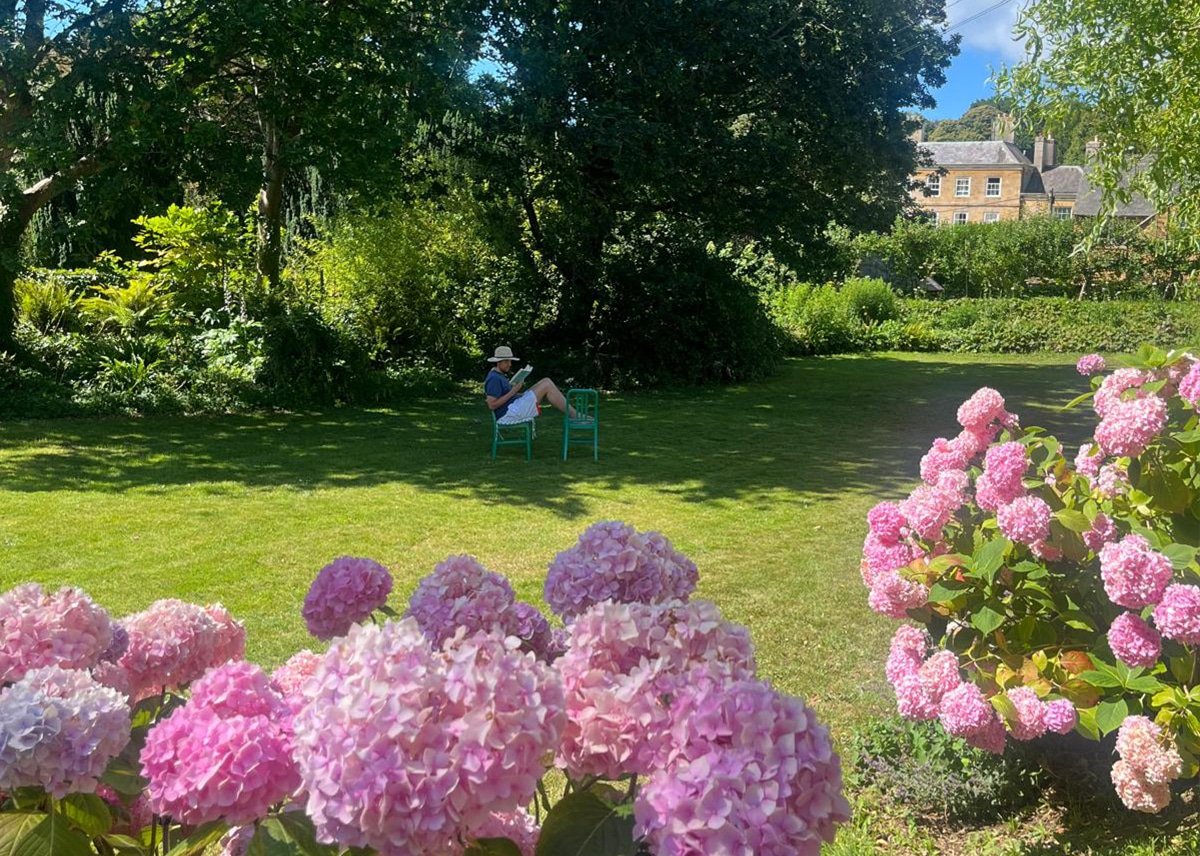
The name of this wallpaper is ‘Childhood’
A luminescent bubble of memory


Haunting the Black Air
Poetic freedom across space and time
The Disappearers
A sprawling visceral experience that drops you in head first
The Lady Imam
Is the world ready to catch up with amina wadud?


Illuminating, in-depth conversations between writers.
Listen to all episodes
SpotifyApple Podcasts
Amazon Music
YouTube
Other apps

The series that tells the true-life stories of migration to the UK.
Listen to all episodes
SpotifyApple Podcasts
Amazon Music
YouTube
Other apps
WritersMosaic interrogates the notion of ‘staying in your lane’ by asking writers how they attempt to think beyond the parameters of their cultural identity.
Listen to all episodes
SpotifyApple Podcasts
YouTube