
Zakazane pamiątki: Forbidden keepsakes
Maria Jastrzębska
Everything was a secret. I drank secrets in with my mother’s milk. Or later, breathed them in with the adults’ smoke, as they talked and drank into the night. As I grew up, I found secrets of my own. On some secrets, lives depended; others were kept for fear of reprisals, social censure, prejudice or simply embarrassment. Added to that was the adults’ view that children were too young to be told anything. So it’s no wonder there are huge gaps in my knowledge and understanding of our family’s history, or my own. Luckily for me, on my explorations of our house – a West London semi my parents, Ewa and Leo, bought in the 1960s – I found things which proved to be clues, unlocking some of the secrets.
‘Psiakość! I detest all this untidiness!’ my mother proclaims, marching round the house, glaring and picking up after us all. On the rare occasions we have guests, everything has to look perfect; tiles polished, rugs hoovered, cut glass sparkling. Ornaments like an engraved, miniature basket, a Lalique duck and a silver tray, pictures of the Virgin Mary, all are dusted, the best china brought out. Marshal Piłsudski, military leader and statesman, has pride of place among the family photographs; not a relation, but a hero in my parents’ eyes. Since so much has to be done in order for us to entertain, it has put my mother off having guests so we seldom have visitors. I wish we had more of them. Once they are here, probably with the generous helpings of vodka and wine, there’s much more laughter in the house.
Mama wishes to preserve everything. This is at odds with her desire for order in the house. My grandmother from Warsaw, my father’s mother, Babcia Żenia, and my great aunts whom we also call Babcie, bring over as much as they can of my parents’ possessions left behind in Poland: kilims, canvases, jewellery and icons, which are rolled in their clothes. Luckily, since they are older women, no border official bothers searching them. Heavy customs charges, or the more likely pocketing of items by less than scrupulous officials, can be more easily avoided. Mama’s mother who lives here, Babcia Kicia, is an old hand at auctions and takes my mother along. Wardrobes, tables and chairs, mostly in dark mahogany soon furnish the entire house. She constantly donates bargains she has found to us, mirrors, velvet curtains, side chairs, bone-handled cutlery, gardening tools which include a sieve, hoe and spade.
Our Victorian semi has three and a half rooms downstairs: my parents’ bedroom, mine and my brother’s and what we call brekfastrum – the breakfast room – once a kitchen next to what would have been a scullery with a larder, which is now our kitchen. The previous owners altered little in the house, all the old mouldings and fireplaces remain. The row of pewter bells hanging in our brekfastrum once used to call the servants upstairs. We all use the outside toilet and we mainly use the kitchen for strip washes. Upstairs, there are two more floors, which Mama rents out to lodgers. There is also one bathroom shared by us all, family and lodgers, where once a week we have baths, another separate toilet we occasionally use too and a kitchenette on each floor for the lodgers. The top kitchen is a tiny, windowless nook.
We need beds for the lodgers. When all the rooms are filled, there are five men living upstairs. My mother, under Babcia Kicia’s instruction, only rents to single men. Women, they both agree, are too much trouble, being more domesticated. They would be doing lots of cooking and washing clothes all day. Men do a bare minimum and hardly ever cook for themselves. There is much less mess. Babcia Kicia finds a job lot of metal frame beds for everyone. The only exception is a baby blue divan bed for me which is bought brand new from a department store later on when I reach my teens. By then, my father has a proper job in engineering rather than odd jobs painting and decorating. An extra wardrobe has to go in the corridor outside my parents’ bedroom. On top of it are their suitcases, including a leather necessaire travel case gathering dust. You can never be sure when they might be needed.
Tata is less sentimental about possessions than Mama but he hates waste and believes every rubber band, every tobacco tin, each round, grey Ilford metal box that stores camera film can always come in useful. I like the walk-in cupboard off our brekfastrum room where he keeps his tools because there are torches of various sizes kept there. In the cellar, there are piles of Polish newspapers – mostly The Polish and Soldier’s Daily, the Polish community’s main paper – delivered to our house each morning. It is a miracle they never catch fire, especially once we get a boiler down there. For a long time, we use paraffin heaters to my mother’s chagrin, given that Tata is working for a company which manufactures central heating systems. Cans of paraffin are stored in the cellar which also houses our fridge – a wooden container with compartments for ice which, like the paraffin, gets delivered.
I live mostly in my own imagination. I’m happiest outdoors riding imaginary horses but when the weather’s bad I roam indoors and the house is a backdrop to my adventures. The dark stairway is a mountain ridge to climb or ski down in pursuit of baddies. I am often a detective tracking down criminals. Sometimes I’m a soldier leading others to victory, at other times a cowboy. I creep round corners, whispering ‘Cover me!’ to my invisible companion. Invariably I’m the leader of any expedition. Hunting, tracking, searching for clues, buried treasure.
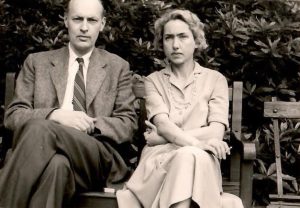 Photo of Maria’s parents, courtesy of the author
The most interesting parts of the house for me are not those on display; not the vases or lace tablecloths or holy pictures: they are the cupboards and drawers and wardrobes, crammed to the brim, an unseen domain, which I love exploring.
Nothing is ever thrown away. Mama keeps small, empty perfume bottles, Guerlain or Dior, given to her as presents by my father or grandparents. Under their stoppers the scent is a reminder of another life, the one she thought she was going to have. These are the broken promise of femininity, elegance, a life in high society. On rainy days when I can’t play outside, I ask if I can tidy the drawer of her dressing table and she says yes. Invariably she ends up having to put everything away when I can’t fit it back in. Somehow she doesn’t seem to mind and doesn’t scold me.
I pull everything out, including the painted Christmas biscuit tins with their snow scenes; one with gold bells and holly, another with church steeples and snowflakes, where villagers in cowls and tunics are pulling a log, carrying lanterns while a small whippet runs beside them. These tins are full of buttons, jewellery, a silver thimble, a tiny broken gold watch on a worn leather strap. I hold up Mama’s jewels to the light, squinting at them closely with one eye while I shut the other. The costume jewellery, which she considers beneath her to wear and views with suspicion, even semi-precious stones; ‘a real lady wears jewels that are szlachetne’ – the word for precious and noble being the same in Polish. What I love best are the gaudy fake jewels as they’re the shiniest.
On the first floor landing, opposite the bathroom and toilet, there is a fitted pine cupboard, painted chocolate brown. The doors don’t close very well. It has to be opened with a small key and then closed again with it, otherwise the door swings open. Spare woollen blankets and bedding, folded by my mother, and boxes of candles in case of a power cut are kept in there along with clothes not in everyday use, such as her summer sandals in winter and her fox stole. I like taking out the fox stole and stroking it. It doesn’t occur to me to dress up in it as I never pretend to be my mother. She is a lady and ladies don’t have adventures like the ones I imagine I’m in. If I wrap the stole around myself, it is to feel the fur – velvet soft and smooth – against my neck. I stroke it over and over again with my fingers. I’ve never seen a live fox. Now I gaze at its small, quiet face, its neat, closed mouth, shiny, glass eyes.
Both my parents’ cameras are on another shelf: two Leica’s, one larger, one smaller. These pre-war cameras are also things the Babcie have brought over in their luggage. As I grow older, I’m allowed to borrow my mother’s camera, and I suppose my brother uses my father’s. Mama never uses hers anymore. The cameras are rusty, hard to load and my parents buy a Kodak automatic for holidays. My mother’s old camera fits into my hand. I pretend to take pictures of the landing and stairs like a spy and wonder what my mother photographed with it. But there are other discoveries I make about my mother, a private person not given to confidences about herself.
As a teenager rifling through layers of bedding at the back of a shelf in the upstairs cupboard, I feel a harder, rectangular object. I reach my hands deeper under the layers of some Indian bedspreads until I can pull it out. It’s a black photo album with leather edging, bound with ties. I open it, though I’m not especially excited by the small black and white photographs inside: some pictures of a lake surrounded by birches and willows, some pictures of my grandparents – on my mother’s side – and a few faces I don’t recognise. There are no pictures of me or my brother. I flip through the album, not especially interested in the older generation. I’m about to put the album back but then, as I turn a page over, under the tissue paper, I find a page of photos I have never seen before.
I see my mother outside a church in what is clearly a horse-drawn wedding carriage.
The carriage is drawn by two white horses, driven by highlanders in regional costume – white wool trousers embroidered and edged with braid, pompoms on the end of the legs woollen embroidered jackets, black felt hats with a band of seashells and a single feather. This is my favourite of the Polish costumes I’ve learnt about in Polish Saturday school. The shells are unexpected and represent those collected by highlanders during long voyages carrying timber by barge to sell on the shores of the Baltic sea. The feathers come from birds of prey, of course, eagles, hawks. If only I could wear this costume instead of the floral skirt and sequined bodice we girls have to wear for folk dancing. All the seats of the carriage are decorated with swathes of white flowers. There are mountains in the background. Under the page in the album, a place name, Rabka, a town I have heard of somewhere between Kraków and Zakopane in a valley on the slopes of the Górce Mountains. The date is 1937. You can see it’s summer. In one photograph Mama sits next to my grandfather, who is wearing a dark suit and black homburg hat, and she holds a bridal bouquet of white roses. She wears a white two-piece suit of crepe de chine over what looks like a silk blouse, a wide brimmed hat and heeled court shoes – all in white. She’s smiling.
But what makes me sit down on the linoleum floor in front of the upstairs cupboard and look through all the pictures from beginning to end, several times over, is the handsome young man beside her in these wedding photos. Here, next to the bride, is the groom in his peaked cap with a crowned eagle emblem and uniform, a dress sword at his side. He isn’t tall. He is not my father.
With excitement and a kind of glee, I make my way downstairs to confront my parents about this discovery. For all their insistence on being proper, my parents have guilty secrets! And I have caught them out! I am so pleased with myself. My mother has not always been the good girl I am forever being told to be. They are both in brekfastrum, drinking black tea. Mama shifts uncomfortably in her seat.
‘Oh yes,’ she says drawing in a breath, ‘that was my first husband’. She picks up her teacup, sees that it’s empty, puts it down again on its saucer distractedly , as if the conversation is of no consequence.
My father looks down, doesn’t say anything. It is not his secret but he starts fiddling with the Woodbine packet on the table. He reaches for his lighter and lights a cigarette. Mama pushes her cup and saucer away with finality, saying: ‘It was all a very long time ago.’
I stare at her, still expecting to hear more.
Gallantly coming to her aid, Tata says: ‘He was an officer’, as if that explains everything.
I don’t manage to get the whole story out of my mother that day. Over the years, I gradually piece it together, wearing her down with all my questions: husband number one had been an officer in the air force. They were married less than a year and somehow my grandmother managed to arrange for their marriage to be annulled, which was no mean feat back then and really the only grounds according to the Catholic Church was to state that the marriage had never been consummated. I imagine money changing hands, a generous donation to the church to smooth things over. They are not entirely smoothed however, as my mother never takes the sacraments again. She is no longer permitted to. Suddenly, I understand why when in church we all went up for holy communion, she always remained seated. Her status as a divorcee was also the reason my father’s parents had not been thrilled to see him marry her; the stigma in those days of having ended a previous marriage being particularly borne by the woman. It has set my mother apart from the rest of the Polish community. At that time, the Polish community and the Polish church congregation in Ealing are one and the same thing. If anyone is not an avowed Catholic, they keep their head down. It’s not until I visit Poland years later that I meet Polish people who are non-churchgoers; some are atheists or believers of different faiths. With the discovery of that album, I begin to understand that my mother carries her own secrets. She isn’t exactly ashamed of her first marriage and speaks with some fondness of her former husband but, equally, it is not something she wants people to know about. I think she feels badly for having left him. Yes, it was her decision. No, he did not ill treat her. He was a gentleman, for heaven’s sake. Why then? It was just… It just didn’t work. They were too young. Their apartment, provided by my grandparents, had been lovely, with such beautiful furniture, a mix of modern and old, a low backed sofa upholstered in geometric stripes and an old-fashioned dark walnut sideboard which she chose. She loved arranging it all. But something was missing. Yes, she fell for someone else. No, that was not my father either, not then. My mother rises greatly in my estimation. For the first time, I begin to see her as something other than my mother, the person picking up after us all, muttering Psiakrew! as she does so. Not merely as my mother, who spends evenings checking over the laundry lists from the service washes of lodgers’ bedding, towels, my father’s shirts and my school uniform. Not merely my Mama who curses and asks me to help her write a letter in English when the White Knight Laundry fails to deliver a vital item; a pillowcase, my father’s vest or underpants, as they invariably do.
The second discovery about my mother comes a few years later and adds even more to my new understanding of who she is. Once again, I find myself looking in the cupboard on the landing, when I come across something I’ve not seen or been shown before. What I find is a woman’s handbag made of black leather, which I’ve never seen my mother use. It isn’t especially elegant, more like an everyday bag than one of her glittery lamé evening clutch bags, and the leather looks worn. I’m not expecting this bag to change anything and I start to shove it back. But at that moment, Mama comes upstairs to see what I’m doing. I tell her I haven’t found what I was looking for – a favourite jumper of mine in storage – but I’ve found this old handbag. Was it one of hers? I ask. This time, unexpectedly, her eyes light up and she looks pleased that I have pulled out something from her past.
‘Give it here!’ she says cradling it, pressing it tightly to herself. She is smiling down at it the way she does when she holds the cat in her arms. It’s almost as though she has forgotten it was even there. She turns it over and over in her hands like the most precious object.
‘I can still remember how to do it!’ she exclaims and shows me what she is doing. There, at the bottom of the bag, is a tiny clasp. She flicks the mechanism open to reveal another layer, an entire, secret compartment. ‘Look!’ she says, showing it to me.
This is the bag my mother used to carry documents and messages for the resistance during the Nazi occupation and the Warsaw Uprising, like other women in the resistance who carried handbags with false bottoms to deliver orders and communications. Did Mama bring it with her when we first arrived in England? In Warsaw, she’d have had to be careful who knew about it. Anyone who’d taken part in the resistance was treated with suspicion by the communist authorities after the war. Along with that, my mother doesn’t believe you should ever blow your own trumpet. It only makes you look ridiculous. Samochwała w kącie stała. She likes to recite this satirical poem of Jan Brzewcha’s about a child who boasts all day.
I’ve heard about my father and his brother, my uncle, both fighting in the Uprising as soldiers in the Home Army. My father has never been one to boast about his wartime experiences either, or even mention them. But my mother has made sure we know, so I’ve heard from her about my uncle, Tata’s younger brother, being killed on the second day of the Uprising. My father never speaks of him. It is Mama who has told me about my father being wounded in the shoulder by a piece of shrapnel as he pulled a wounded friend to safety. All through my childhood, I have heard about the older generation’s courage. Mama has told me about Tata’s courage as an insurgent. But I’ve never been told about my mother’s. I’ve never really known what it means to be that brave. Was she scared all the time? What did it take to do what she did?
I am trying to imagine her, a young woman in her twenties in an occupied city where not only insurgents but the whole civilian population including elderly people and children are being killed in huge numbers daily. In my mind I see her setting off for her first assignment and meeting the commander of her platoon in the underground army:
*
‘Have you ever done any acting?’ Staszek asks.
‘No,’ Ewa laughs. But he isn’t joking. She’s used to men flirting with her, but Staszek is always serious. He can’t be much older than her but he is their commander and has taken his role to heart.
‘I mean, I played Balladyna in lyceum.’
‘Good’, he says. ‘A woman of action.’
‘Well, she’s a tragic figure, a Slavic queen, ruthless, entirely driven by her ambition but also in the end Słowacki shows she’s tormented…’
Staszek cuts her off: ‘Yes, yes. Nevermind the torment. Just be her. Single-minded and purposeful when you go on any assignment. Don’t appear nervous or uncertain. Work out your story and stick to it, no matter what. If they stop you, if they somehow find the papers, burst into tears. That sometimes helps if they are young.’
‘I can’t cry on demand.’
‘Well you might not have a choice anyway. Whatever happens, you don’t know anything. Actually, that bit will be true. Say we coerced you. Say you were too scared to refuse.’
Ewa listens carefully. She’s not to deviate from her route, not to get side-tracked into any other actions or contact or to draw attention to herself. She’s just a young woman walking across town, as countless others do, to visit family. If stopped, she is to say that she is carrying some medicine for her elderly aunt and be willing to open her bag nonchalantly and show the bottle of tablets.
‘You’ll be fine. You’re so blonde – they’ll think you’re one of them!’
As Ewa is walking down a street, one half of which has been demolished so that it looks like a mouth with missing teeth, she sees a cat lying at the side of the road. Without thinking, in seconds, she has broken one of Staszek’s rules. She’s bending down to see the cat more closely. A tabby with white paws now caked in dust. One of its legs sticking out at the wrong angle. It is lying on its side, panting in a series of small, ragged bursts, clearly unable to get up. She reaches out her hand and stokes its head. Poor kitty, she murmurs. Through its fur she feels it trembling, then realises it is purring. I can’t help you, she wants to say when she hears a woman’s voice shouting:
‘Lady, have you gone out of your mind? There’s our boys dying on every street corner and you’re fussing over some animal. Have you nothing better to do? Go and make yourself useful.’
Ewa knows she has broken the second rule, drawing attention to herself in the middle of a mission. She can’t be sure who the woman is or what she might mention to someone else. Balladyna would never have stopped in the middle of the road like this. She wants to explain that the cat is suffering too, that she doesn’t know how to help it.
She straightens up and mumbles ‘I’m sorry, I’m sorry’, whether to Staszek or to the woman or the tabby, she isn’t sure.
Eventually she reaches Różana Street and finds the entrance to the cellar, just as Staszek described it. She has to walk under what is left of a gate and across the courtyard first. Since there is so much rubble, it is hard to make out the exact address. She remembers not to look over her shoulder or to waver. She tries to appear as though she knows exactly where she is going. A woman called Dorota, not her real name, of course, any more than Staszek’s was, is waiting for her. Ewa recognises Staszek’s description. Dark fringe, upturned nose, slightly gappy front teeth, ‘not a looker like you but not half bad’.
‘You took your time,’ she greets Ewa sharply.
‘I’m sorry, Ewa says again.
‘Anyone stop you? Any patrols?’
‘No’.
‘Good.’ Dorota relaxes. She offers Ewa a cigarette.
They both light up and, as Ewa exhales, tension she hadn’t even known she was holding leaves her body.
‘Your first time? Don’t worry, you get used to it. Actually, you didn’t look scared at all coming down the steps. You’re lucky you still have a decent dress left to wear! Plus you’re pretty. That works in our favour. It’s a useful distraction. Me, I’m stuck here all day. You’ve got the papers? Best not to hang around, though I could do with the company, to tell you the truth. Come on, I’ll show you which route to take to go back.’
*
Today, my mother’s small camera stands on a chest of drawers along with my family photographs and ornaments. I like it being there. A memento from my parents’ house in Ealing. It’s one of the objects, along with a photo album and a worn leather bag, which got me thinking about the life she’d led before she had us children, before we all came to England. I stopped seeing her as just my mother and began to see her as a woman in her own right, a woman who’d had affairs, adventures, a woman who’d risked her life in the resistance. After she died, her handbag was donated to the Polish underground archive in London. I still have her old photo album and have no idea what to do with it now but I can’t bear to throw it out. And I still have her camera.
The camera was always simple enough to use but now it’s far too rusted to open for loading or to click a shot. I can still pull up the stiff metal viewer and there is the one aperture ring to turn for focus. I marvel at all the times my mother might have used it when she was younger. I lift it up, pressing it against my cheek. Closing one eye, I remember looking through the viewer at the landing of my parent’s house in Ealing, at the pale green of the walls, dark chocolate gloss doors of the upstairs cupboard next to the stairs or out at the street and gardens beyond. Now I look through the viewer at my surroundings; white blinds that give onto to a tiny Brighton patio, crammed with musa basjoo, geraniums, clematis. Then I imagine my mother as she held the camera: Mama taking pictures on holidays in Poland before the war, in mountains or by the lakes, snapping pictures of boyfriends, of her cats. Finally I try to imagine her looking out at Nazi occupied Warsaw. Did she take any pictures then? What did she look out at, what did she see?
WritersMosaic monthly
Get new writing in your inbox
One email monthly, unsubscribe anytime
Jason Arday (9 May, 1985 – 14 August, 2026)
WritersMosaic reflects on the life of Jason Arday
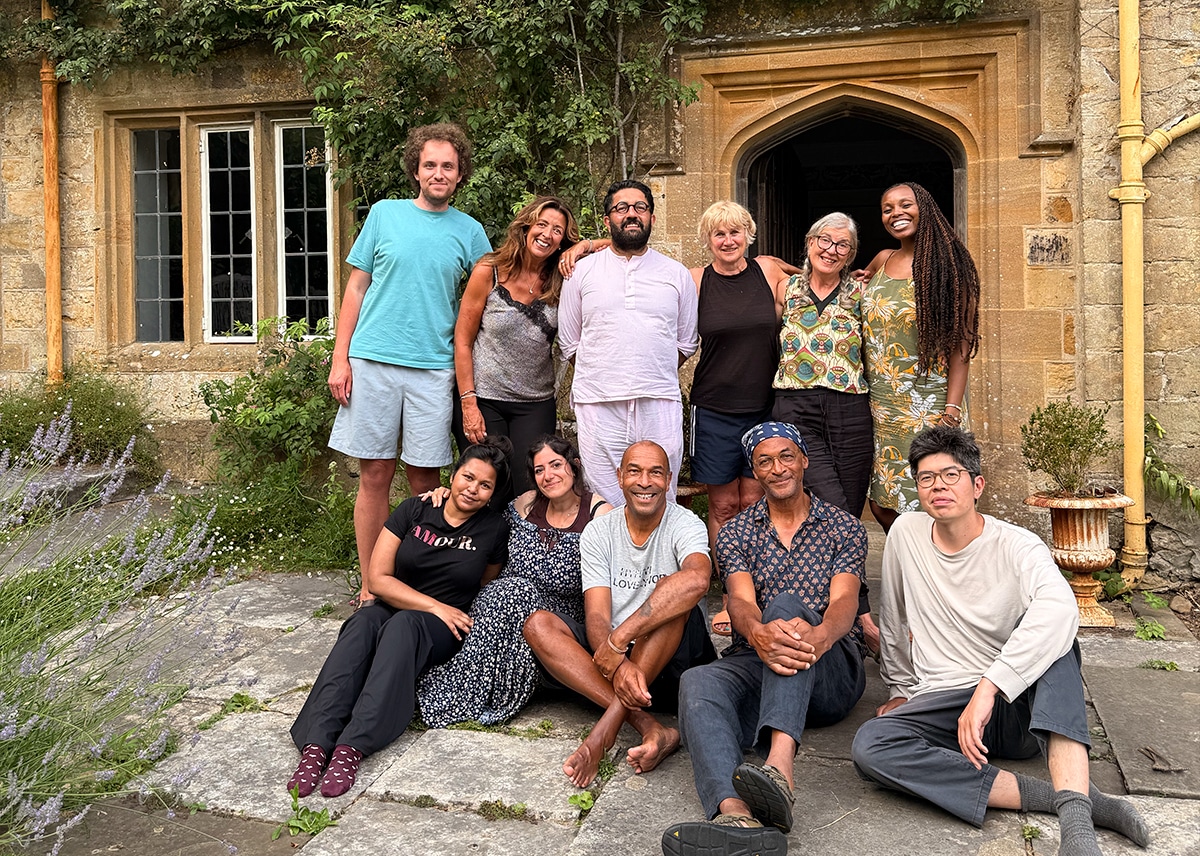
Inside the WritersMosaic Literary Residency
'The sea was crystal clear, the weather was perfect and my pink toenails shimmered beneath the transparent water'

Gratitude
A message of gratitude for the late Eric Huntley

Driftwood
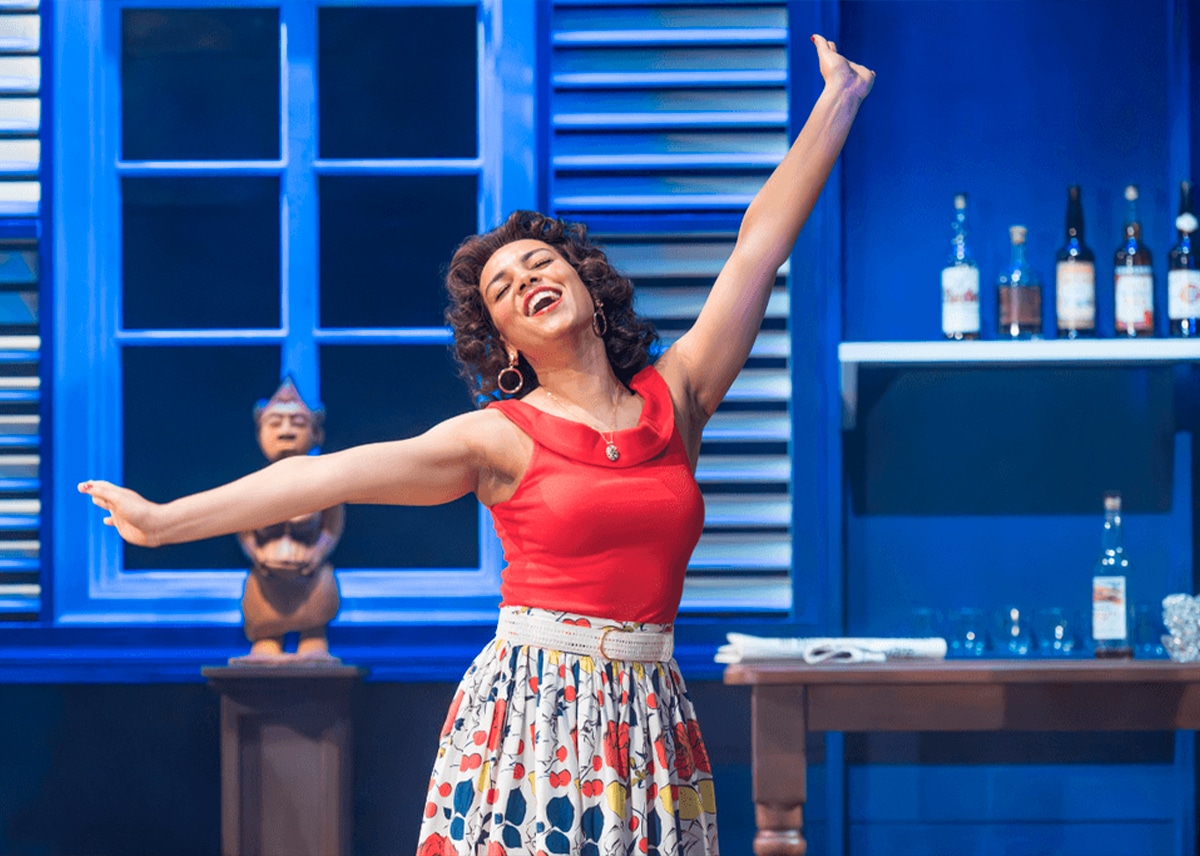
A play carrying diasporic memory and political weight

About to Fall Apart
'To read About To Fall Apart is to read with headphones on, nodding one’s head'
Finding Albion
Zakia Sewell's quest to uncover the alternative spirit of the nation

Free Will
Will Harris reads his poem, 'Free Will'. Directed by Matthew Thompson and commissioned by the Adrian Brinkerhoff Poetry Foundation.

Half Written Love Letter
Selina Nwulu reads her poem, 'Half Written Love Letter'. Directed by Matthew Thompson and commissioned by the Adrian Brinkerhoff Poetry Foundation.

Illuminating, in-depth conversations between writers.
Listen to all episodes
SpotifyApple Podcasts
Amazon Music
YouTube
Other apps

The series that tells the true-life stories of migration to the UK.
Listen to all episodes
SpotifyApple Podcasts
Amazon Music
YouTube
Other apps
Nine writers explore the elusive emotional truth behind narratives and storytelling.
Listen to all episodes
SpotifyApple Podcasts
YouTube