
Alice Through the Looking-Glass – after 50 years of reading
Suhayl Saadi
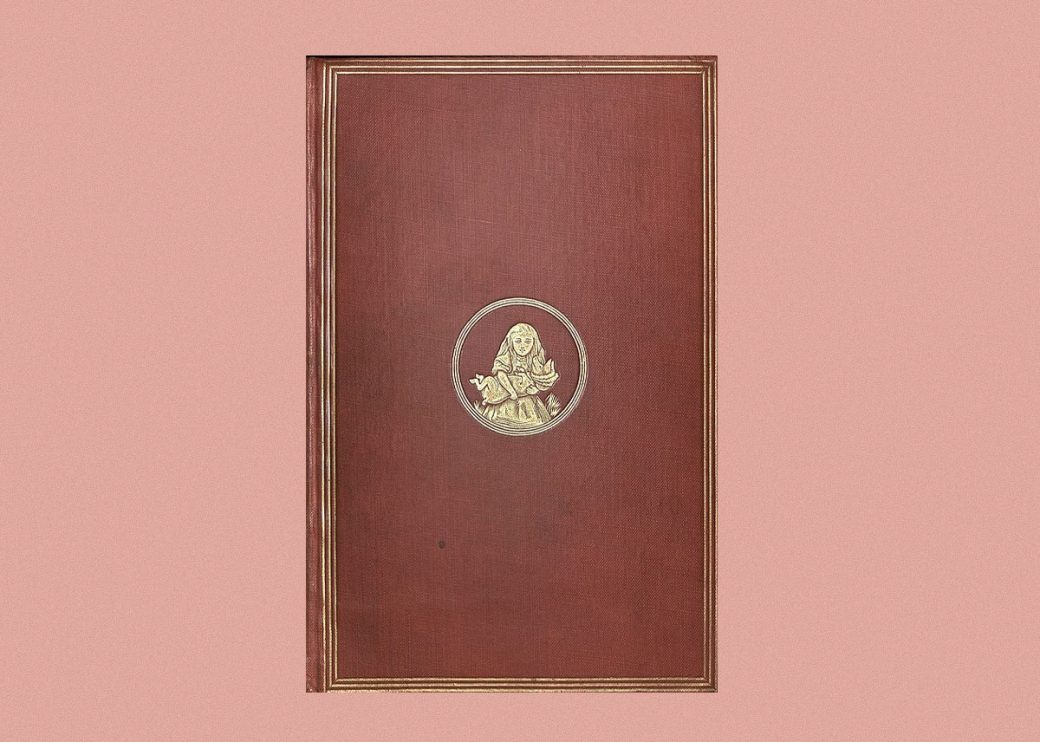
Lewis Carroll’s Through the Looking-Glass, and What Alice Found There (1871) has stayed with me for more than 50 years. Opening the book, one is transported to the quintessentially Victorian house and garden of the Reverend Charles Dodgson in Oxford.
It is fitting then that I am writing this in the back garden in June, with buttercups and daisies dancing in the breeze, the neighbour’s dog, a sleepy russet cocker spaniel named Henry, at my feet. The potted plants, the massive ash tree. The sounds of workmen chipping at the blunted stumps where the old wrought iron fence was amputated during the last Great Conflagration; they are building a new one. And, fittingly, in the distance, the sweetly discordant symphony of a children’s nursery with the same song I heard 20 years ago when I perched on this bench and tried to write magna opera.
Writing and reading are forms of structured daydreaming. Like the sleeping Red King, others can enter this porous state of consciousness and dream awhile.
The idea of the magically discerning scrying glass as a tool of enlightenment features widely, from Farid Attar’s The Conference of the Birds (1177), where the hoopoe bird sees God in its own reflection, to the writings on subjectivity of Jacques Lacan. From one square of the chessboard to the next, Carroll was describing the mathematics of storytelling. As she grows and shrinks and grows again, Alice is constantly engaged in an argumentative dialectic with herself.
At one point, she even loses certainty about who she is. She crosses brooks and traverses woods, meets odd archetypes, tries to make sense of it all, until she learns to think logically in nonsense and eventually is crowned Queen of Misrule.
In the poem ‘The Walrus and the Carpenter’, the sun is shining in the night, and the oysters have shiny shoes but no feet. Paradox – Checkmate, the King is Dead (Shah Mat) – takes us back to first principles.
“When I use a word,” Humpty Dumpty said, in rather a scornful tone, “it means just what I choose it to mean – neither more nor less.” “The question is,” said Alice, “whether you can make words mean so many different things”.
Which brings us to…
Songs from the eclectic psychedelic era of my childhood abound with Carrollian imagery. Carroll may have drawn on and parodied Coleridge and De Quincey, but did so in the lighter style of ‘English whimsy’ – after all, he was writing for children. During the later twentieth century, in a rejection of personal and political repression, genocide and atom bomb politics, it was posited that truth and hope may be found through a return to the first principles of childhood.
I am the walrus, and this music sent me on a journey back to the garden of Eden.
Long ago, a teacher suggested that I had ‘a natural talent’ and should consider doing English at university. But by that time, towards the end of my childhood, I had imbibed a surfeit of the wrong side of the mushroom and had shrunk to the size of a widget. It was only much later that, like the algebraic reverend, I came back into my own garden through the looking glass. You see, what Alice found there was me.
Twenty flowering generations on, around the hundred-ring ash tree, the leaves are acrobats and Henry, the cocker spaniel, rises from his kingly slumber to chase after something over to my right, there, in the shadowed corner of the garden, something white that flickers in and out of my field of vision. And in the end, it is impossible to know which of the two of us dreamed it.
Suhayl Saadi
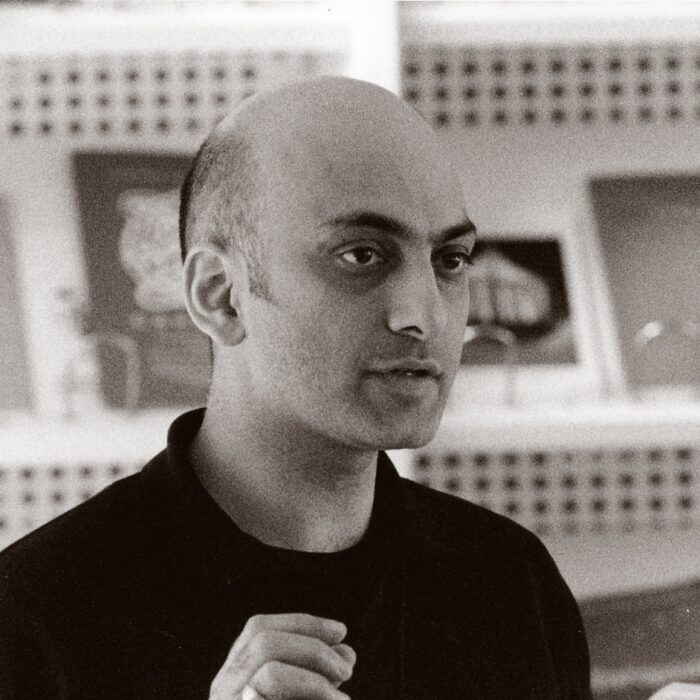
Suhayl Saadi lives in Glasgow, Scotland. His books include The Snake, The Burning Mirror and Psychoraag.
WritersMosaic monthly
Get new writing in your inbox
One email monthly, unsubscribe anytime
It’s being published I get paid for; the writing I would do for free
‘Any advance [...] for your novel is to compensate you for the horrors of being published'
Complex antihero: an interview with Arthur Hughes
Unravelling Authur Hughes' Richard III

Marlon James: a Jamaican reckoning
'A return to a home I barely knew'





Haunting the Black Air
Poetic freedom across space and time
The Disappearers
A sprawling visceral experience that drops you in head first

The Lady Imam
Is the world ready to catch up with amina wadud?



Illuminating, in-depth conversations between writers.
Listen to all episodes
SpotifyApple Podcasts
Amazon Music
YouTube
Other apps

The series that tells the true-life stories of migration to the UK.
Listen to all episodes
SpotifyApple Podcasts
Amazon Music
YouTube
Other apps
WritersMosaic interrogates the notion of ‘staying in your lane’ by asking writers how they attempt to think beyond the parameters of their cultural identity.
Listen to all episodes
SpotifyApple Podcasts
YouTube