
Watching a theatre go dark
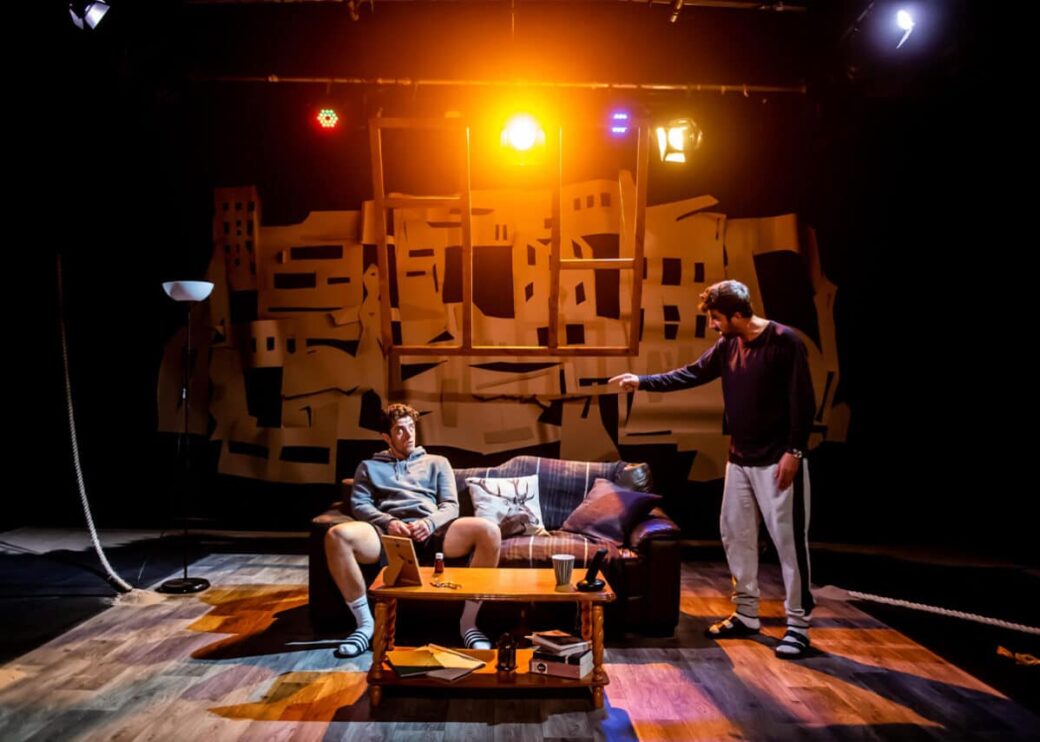
There is a figure of an elephant that hangs above a blue door in the middle of a housing estate in Camberwell, south-east London. It’s an intriguing sight if you’re unfamiliar with the area. Behind the door is a black box theatre where, for over 25 years, all kinds of amazing things have happened: from theatre companies’ first shows and children’s drama groups to evenings spent chatting about the admirable things theatre can achieve. I walk towards it on a cold evening and ring the bell. I look up at the eternally smiling herbivore and feel a pang of sadness. The hinges squeal and familiar faces greet me for what I know will be the last time. Blue Elephant Theatre closed in December 2025, leaving behind a beautiful legacy and a hole in the community it served.
The theatre was founded by Antonio Ribeiro in 1999, a Portuguese theatre maker who hungered to showcase work by minority playwrights. His video diary of the space’s opening is a great watch. He informs the camera of the venue’s past: ‘This was a dance space in the eighties that was shut down for being too rowdy,’ he says. I watch as he fights against everything from mould on the walls to an empty bank account while directing the theatre’s first production. I am reminded of just how precarious theatremaking has always been; so much of the artform’s success relies on human efforts that can’t be quantified and are rarely remunerated. Subsequent Artistic Director Jasmine Cullingford, and then co-Artistic Directors Niamh de Valera and Jo Sadler-Lovett, transformed Blue Elephant into a place that supported early-career artists and showcased new work against financial odds. ‘We never had much money, but I didn’t see that as a hindrance to putting on good theatre,’ Cullingford says in an interview; a philosophy they honoured until its closure.
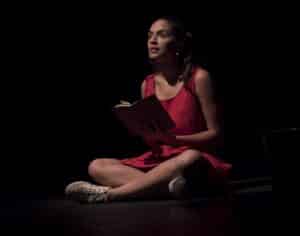 Amanda Vilanova performing at the Blue Elephant Theatre
All artists need a stepping stone to begin their journey, and Blue Elephant has served as that for many. In my case, after the artistic directors watched a showcase of my one-woman show, I was given free rehearsal space, aid with funding applications and an agreement to co-produce the piece. It was one of my first professional credits and led to me being granted an artist’s visa to stay in the United Kingdom. I have worked with them ever since. There is a long list of theatremakers and creatives like me across the UK who have lived part of their journey behind the blue door. Theatre companies like Lazarus, Lung Theatre, Ad Infinitum, and Single Shoe Productions showcased early attempts at BET. They have gone on to make recognised work and become part of the Arts Council’s portfolio. It is a place that has allowed people without many resources to pursue careers in the arts. I’ve watched artists find a home at Blue Elephant: a space to try and fail safely.
During my last visit, I look at pictures on the theatre’s wall and spot a younger version of a familiar face: a young man who grew up on the nearby housing estate, was part of the youth theatre and has delivered workshops with me. ‘He came here as a teenager,’ De Valera says. ‘Knowing all the things he’s experienced, watching him become this incredible, gentle young man and how much the theatre has meant to him is amazing.’ Alongside work with artists, Blue Elephant has served its community by leading programmes for children and young people. The list of shows devised and performed by the youth theatre is impressive and has not gone unnoticed. They were granted funding by Children in Need for 15 years. In 2014, youth theatre members joined Gareth Malone to record the year’s official BBC Children in Need single, which reached number one in the charts. Discussing their work, De Valera says: ‘Our young people are amazing. We have always wanted to help them expose their light rather than telling them that they need light.’ The theatre’s youth leaders have watched participants grow into kind adults, often belying their portrayal in the country’s media.
Making theatre is always a battle, but making community theatre is nearly impossible. Spaces that focus on community rather than profit rely on grants, and the fear of closure is always looming. Blue Elephant’s team taught themselves how to draft applications alongside running a theatre. They became a National Portfolio Organisation in 2019, then funding bodies changed their focus. Covid-19’s effects and the ‘Levelling Up’ mission to move investment from London meant the end of the theatre’s core funding. Children in Need also shifted from social and emotional support for young people to more practical assistance. The theatre’s last two years have been an uphill battle to stay afloat. As I read their list of accolades and speak to parents, children, and artists who have been touched by Blue Elephant’s work, I wonder what community theatre can do to convince funders of its merit.
De Valera and Sadler-Lovett remember fondly saying, ‘This is our dream job,’ when they became co-artistic directors, and they are proud of Blue Elephant Theatre’s many successes. Though they hope to continue their work without a venue, the theatre’s closure leaves a heartbreaking gap. Another place where theatre can be a free space of fun, care, and exploration for less affluent communities is gone. Another place where poorer artists can create connections has closed. The positive effects of theatre are subtle; they manifest in wellbeing and freedom within communities, not financial gain. The impact of Blue Elephant’s loss is hard to measure, but those who need it the most will be the hardest hit. I, for one, will miss it dearly. I invite readers to look back on Blue Elephant Theatre’s work and gain some perspective on what we all lose when places like this go dark.

WritersMosaic monthly
Get new writing in your inbox
One email monthly, unsubscribe anytime
Marlon James: a Jamaican reckoning
'A return to a home I barely knew'
The name of this wallpaper is ‘Childhood’
A luminescent bubble of memory
What’s in a feminist? Holding on to Gloria Steinem
Is Gloria Steinem's feminism still relevant today?


Pressure
What's missing from the latest 'untold story behind D-Day'?
A Trial
An examination of theatre’s complicity in post-truth politics

The Complex
The unraveling of a dynasty


Illuminating, in-depth conversations between writers.
Listen to all episodes
SpotifyApple Podcasts
Amazon Music
YouTube
Other apps

The series that tells the true-life stories of migration to the UK.
Listen to all episodes
SpotifyApple Podcasts
Amazon Music
YouTube
Other apps
WritersMosaic interrogates the notion of ‘staying in your lane’ by asking writers how they attempt to think beyond the parameters of their cultural identity.
Listen to all episodes
SpotifyApple Podcasts
YouTube