
“Wuthering Heights”
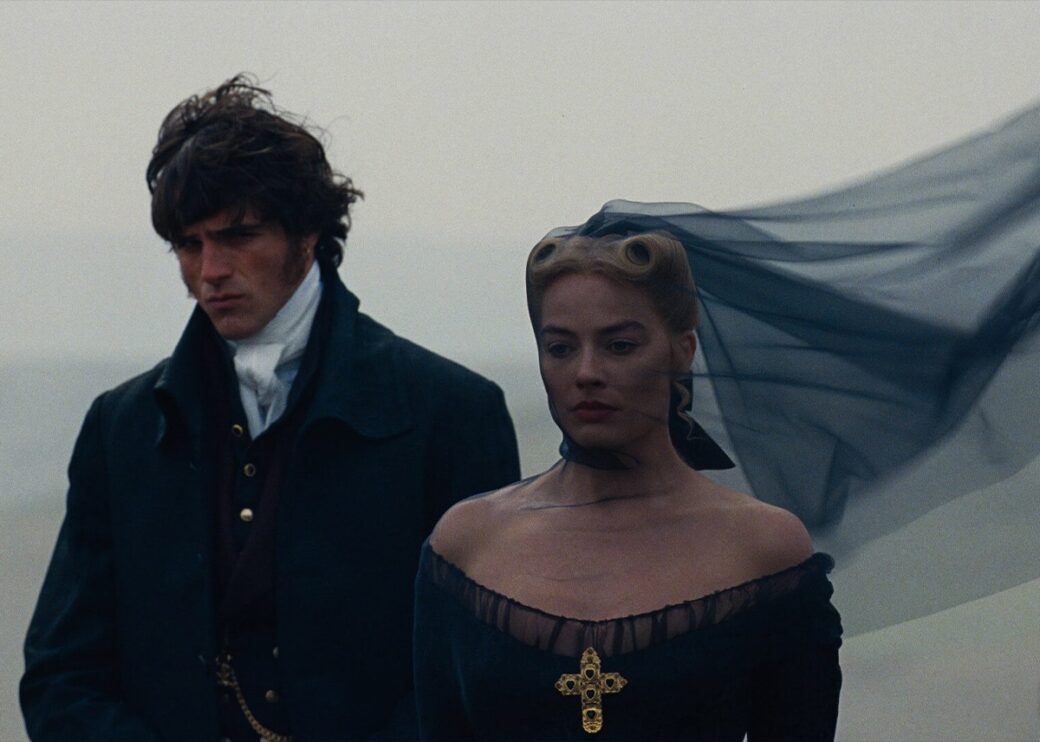
“Wuthering Heights”
Directed by Emerald Fennell, 2026
Emerald Fennell’s ”Wuthering Heights” arrives wrapped in a layer of prestige and provocation. With Oscar-nominated leads Jacob Elordi and Margot Robbie, a soundtrack by pop icon Charli XCX, and a reported $80 million budget, it was marketed as a ‘swoon-ready’ Valentine’s Day event. Yet, for all its grandeur, the emotional architecture feels strangely hollow.
Fennell is a confirmed maximalist, favouring the bold and the visually disruptive. The Yorkshire Moors brood magnificently and the Heights loom like monuments to misery. By the second half, however, the film tips into camp, its aesthetics often clashing. Robbie’s Catherine feels less like a woman lost to Victorian propriety and more like a PVC Barbie in a hyper-saturated dollhouse.
Fennell has cited Gone with the Wind (1939) as inspiration, and the nods are unmistakable: the sweeping film poster, molten-orange sunsets, and the scene of the primary housekeeper cinching her mistress into a corset. But borrowing the iconography of a film criticised for being racist propaganda, while stripping away the racial hostility of Brontë’s novel, feels ideologically problematic and tone-deaf.
Brontë’s Heathcliff is explicitly described as ‘dark-skinned’ and racialised as a ‘gypsy’. Hindley Earnshaw (Catherine’s brother) becomes his chief tormentor, his hostility hardening into sustained emotional and physical abuse that strips Heathcliff of any status and reduces him from foster son to labourer. The wealthy Lintons also recoil from him with racist contempt at first sight, whilst welcoming Catherine into their home – a betrayal that calcifies Heathcliff’s sense of exclusion and sets his vengeance in motion.
In Fennell’s version, not only is Heathcliff removed from this interaction entirely, turning Catherine and Edgar Linton’s first meeting into a theatrical meet-cute. But she also axes Hindley as a character and, in doing so, drastically softens the structural cruelty Heathcliff endures. Elordi’s Heathcliff – white, statuesque and magnetic – moves with a level of social power the original character never possessed, and his later brutality reads as a bad-boy temperament rather than a survival mechanism.
Margot Robbie, as evocative as she is, struggles to sell the prideful, adolescent impulsivity that defines Catherine Earnshaw. When played by an adult, Catherine’s catastrophising reads less like a seventeen-year-old’s tragic ego and more like calculated vanity; her decision to marry Edgar, driven by poverty and the economic suffocation of womanhood, loses its urgency.
The film also amplifies the physical relationship between the leads, staging their bond as overtly sexual. In the novel, their intimacy is agonisingly restrained, culminating in a single, desperate kiss before Catherine dies. This restraint is the engine of the tragedy because their love is never consummated. By transforming their connection into a full-bodied affair, the adaptation releases the tension. Forbidden love becomes a fulfilled appetite.
Isabella’s (Alison Oliver) storyline suffers a similar fate. In the novel, her marriage to Heathcliff is a study in coercion, emotional and physical abuse, and degradation – he even murders her dog. Fennell reframes this brutality as a BDSM dynamic, presented as a consensual kink. The ugliness is aestheticised; the moral horror smoothed into something marketable and edgy.
The casting of Shazad Latif as Edgar Linton and Hong Chau as Nelly Dean further complicates things. By casting the antagonists who uphold the hierarchical structures as non-white, while casting a white actor as the ‘outsider’, the film inadvertently flips the power structures that oppress Heathcliff in the book. “Wuthering Heights” becomes an echo of Fennell’s 2023 black comedy Saltburn, with socially marginalised characters attempting to infiltrate or claim the world of the wealthy who, in the end, are often portrayed as less villainous than expected. It is an intriguing through-line, particularly given Fennell’s own aristocratic background.
As in Andrea Arnold’s 2011 Wuthering Heights adaptation, Fennell ends with Catherine’s death, omitting the novel’s philosophical second half. Arnold leans heavily into overt racism and relentless bleakness; her Heathcliff is Black (Solomon Glave/James Howson). While Arnold sacrifices Brontë’s dialogue for socio-realism, she understands the drive behind the plot. Fennell, by contrast, defends her position by saying that ‘you can only make the movie that you imagined yourself’.
“Wuthering Heights” is more than a doomed romance; it is a study of how pride and revenge metastasise over decades, leading Heathcliff towards a metaphysical haunting in which cruelty fails to cure grief. Without the second generation to break the cycle of trauma, and with the couple’s desire already physically satisfied, the profound promise of transcendence – of a union existing beyond hierarchy and ego – is lost. We are left only with the heat of the fire, never the haunting of the ash.
Fennell’s “Wuthering Heights” is visually captivating, provocative and intermittently gripping. The ensemble cast is exceptional; the moors swell, the romance burns hot, the spectacle seduces, and the tragedy pulls on your heartstrings. But in stripping back Brontë’s jagged meditation on race, class, pride, and generational trauma into something sleek and sellable, the film ultimately flattens a novel that is far crueller and more psychologically feral than the gothic Romeo and Juliet it attempts to be.
Danielle Papamichael
Danielle Papamichael is a British screenwriter and film critic of Greek Cypriot and Irish heritage.
WritersMosaic monthly
Get new reviews in your inbox
One email monthly, unsubscribe anytime
The Disappearers
A sprawling visceral experience that drops you in head first
The Lady Imam
Is the world ready to catch up with amina wadud?
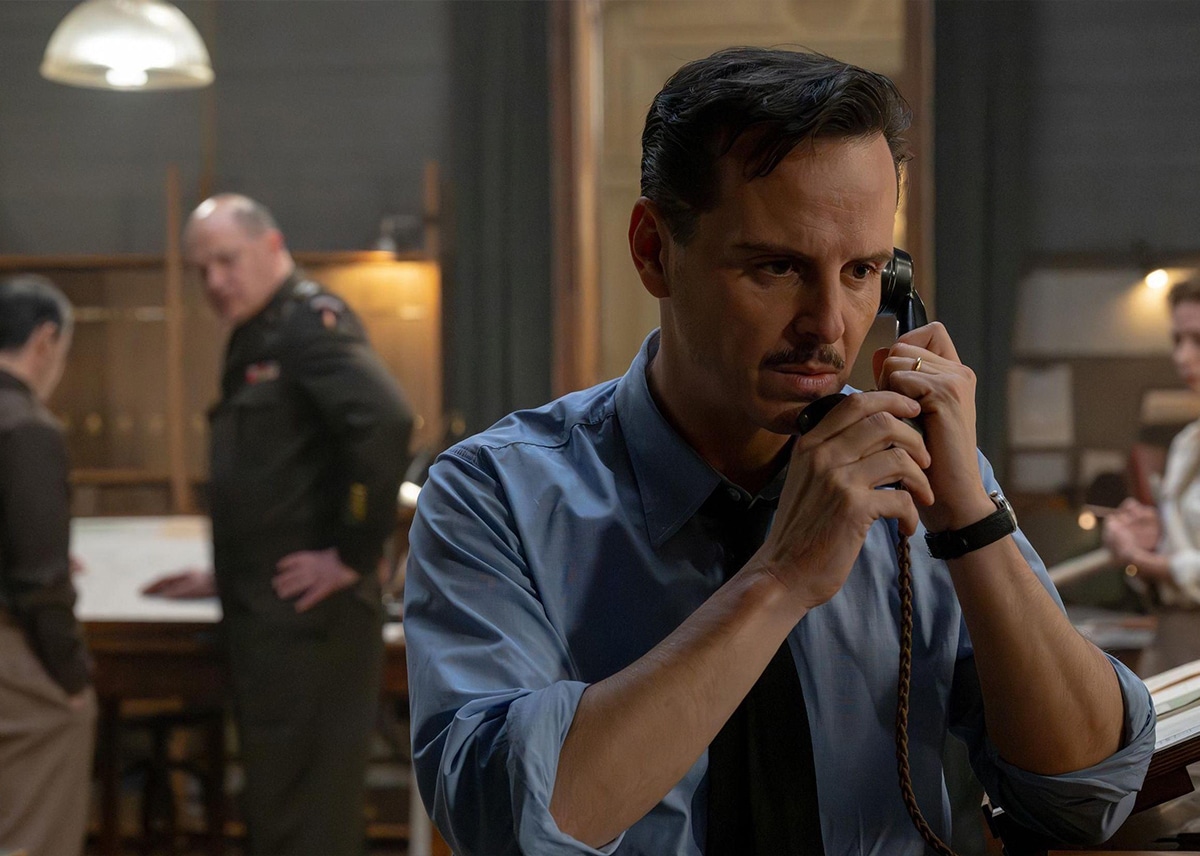
Pressure
What's missing from the latest 'untold story behind D-Day'?


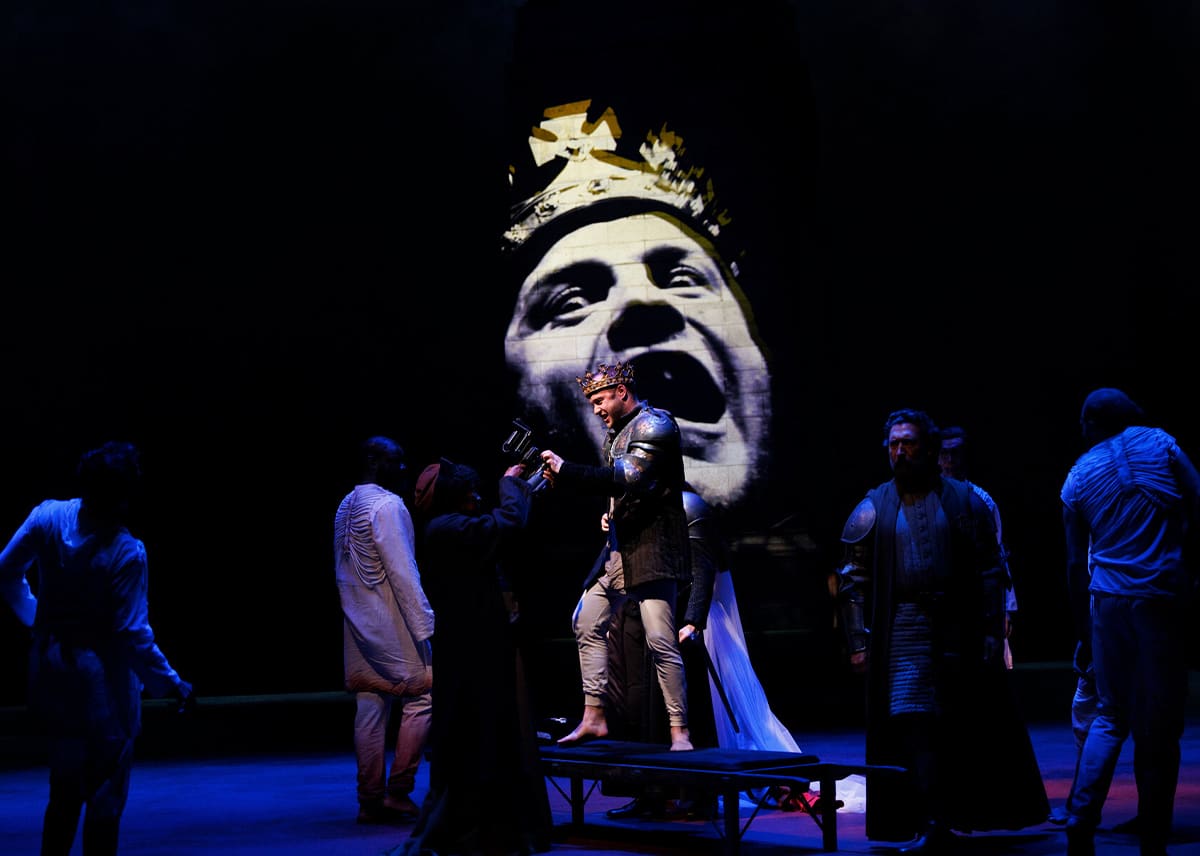
Complex antihero: an interview with Arthur Hughes
Unravelling Authur Hughes' Richard III

Marlon James: a Jamaican reckoning
'A return to a home I barely knew'
The name of this wallpaper is ‘Childhood’
A luminescent bubble of memory



Illuminating, in-depth conversations between writers.
Listen to all episodes
SpotifyApple Podcasts
Amazon Music
YouTube
Other apps

The series that tells the true-life stories of migration to the UK.
Listen to all episodes
SpotifyApple Podcasts
Amazon Music
YouTube
Other apps
WritersMosaic interrogates the notion of ‘staying in your lane’ by asking writers how they attempt to think beyond the parameters of their cultural identity.
Listen to all episodes
SpotifyApple Podcasts
YouTube