
‘AI’m not gagging’
Anybody can learn a recipe and execute it, with enough practice, to perfection, but the virtuosic flair of a true chef or cook will always produce better results. My maternal grandmother would go to a certain butcher and screw the exact cut of meat she wanted out of him. At a certain market stall she would spend time scrutinising individual vegetables and ground provisions, clutching them in the grip of her nails, twisting them around and putting them back before finally selecting. She knew, having grown up in the Jamaican countryside, what she was looking for. She would never allow anyone else in the kitchen while she seasoned everything up, and when we were finally served a plate, we found her flavour and texture combinations to be consistently, authentically hers. At the end, one of my cousins asked her for her recipes one last time, and we all laughed when she, suddenly sharp as a tack, muttered a dismissive ‘nh-nh’. Her knowledge left with her, and so it became the responsibility of all of us to develop in our own lives the experience, taste and artistry she had spent a lifetime realising.
My grandfather was illiterate. Just two generations later, I am a novelist, not by studying creative writing, but by my skill with language intersecting with my varied personal experiences and my taste for the bizarre. Some writers write not because they should, but because they can. For others, writing is unsustainable as a career choice, now further threatened by AI. A privileged minority do not need to earn a living from their writing; rarer still are those who benefit from TV or film adaptations of their work. Perhaps I’m being naïve, but I don’t feel threatened in the same way because I don’t really know what I’m doing, and it is the chaos, the experiments I undertake and the fun that I have that make my finished work what it is. My work arrives through wisps of memory, observation and imagination, intrusive thoughts and reckless choices that are volatile, unpredictable and that surprise me as they occur. Language, and the unique voices we develop, are our ingenious way, as minoritised people, of personally facilitating our migration culturally from the periphery to the centre. Language services our concepts and ideas, not the other way round. It is also, to continue to reflect on the work of Édouard Glissant, our way of keeping thoughts and concepts to ourselves or away from outsiders, of centring ourselves in the universe, towards full subjectivity.
Large language models (LLMs) may one day mimic us expertly, but as yet I doubt their ability to feel, to experience emotion, to locate the extraordinary, the uncanny, within the quotidian. Readers with taste will always, it is hoped, choose to spend their time reading something that subverts tropes, blooms with originality and sets its own agenda. Each work of literary fiction requires its own bespoke process. I’ve always found it difficult to explain my process, because it is fluid. LLMs such as ChatGPT rely on being fed information in order to spot patterns, so their ability to replicate an authorial voice relies on that voice being somewhat predictable. The more LLMs are fed and produce, the fainter their impact will be, because the more you recycle a material, the less integrity it will have compared with its original form. They are reflective by definition; they can only reconstitute what they have been fed and cannot, so far, demonstrate a unique way of seeing the world.
The economic majority has thus far only ever had to fear natural disasters and the debated existence of God, but now something they themselves have created is threatening to make them obsolete. I have never lived in uncontested power, so that guilt, and fear of the repercussions that come with it, does not overwhelm me. Even so, many writers have dedicated themselves to their craft to the extent that they can’t easily pivot. Some would-be writers have a picture in their minds of what the writer’s life is, but only when they eventually sit down to write will they understand that this perceived glamour is largely mythical. You are creating work nobody has asked for and nobody believes in until it appears on a bookstore shelf. Every novel is its own quixotic journey. Perhaps because the literary novel especially is such a difficult thing to grasp the meaning and worth of as a concept in our digital society, it is casually deemed extraneous and vulnerable to change. And yet it has survived to observe revolutions and world wars, in the hands of mavericks who, by means of their dedication, have changed the course of history. That said, the novel itself may one day be superseded by other forms that are truer to a new generation’s visions and skillsets, while being more accommodating to a consumer’s increasingly volatile attention span and imagination.
What I can see happening in the medium term is the restitution of literature as an elite pursuit, and traditional publishers putting profit before quality. And so the survival of human-made art depends on the taste of the consumer. Your taste reflects your politics, your openness of mind and your dedication to learning multiple perspectives. It is incumbent on the part of those with taste to continue refining and interrogating what we encounter and produce. AI was seized upon, from the outset, by people who wished to produce work aligned with the idea of art, to a passable standard, quickly. Yet it struggles with the qualities that make a novel jump off the page: those micro-decisions when it comes to language, for instance; the choices characters make and the ideas they have; or when the vicissitudes of life cut across them unexpectedly. Granted, many human writers do too.
James Baldwin, frequently in his literary criticism, spoke of the importance of precision in language, which is another AI failing. True, it can speed up the process of drafting and modelling when you ask it to brainstorm an idea quickly, and it will then offer to elaborate and segue. But until the technology becomes sentient, it will not be able to match a skilled human writer, given its reliance on cliché. And there will always be writers who enjoy the organic process for its own sake, however gruelling it often proves to be, because it takes their material so much further. All writers, at some level, write from personal experience. We write what we see, the way we see, experience and think about it. Rather than fearing obsolescence, perhaps we should be looking at how we might make the most of an organic process in a way that embraces human imperfection: nothing throwaway, everything precious. A wabi-sabi era of literature, perhaps.
And no, I did not use AI to write this.
WritersMosaic monthly
Get new writing in your inbox
One email monthly, unsubscribe anytime
It’s being published I get paid for; the writing I would do for free
‘Any advance [...] for your novel is to compensate you for the horrors of being published'
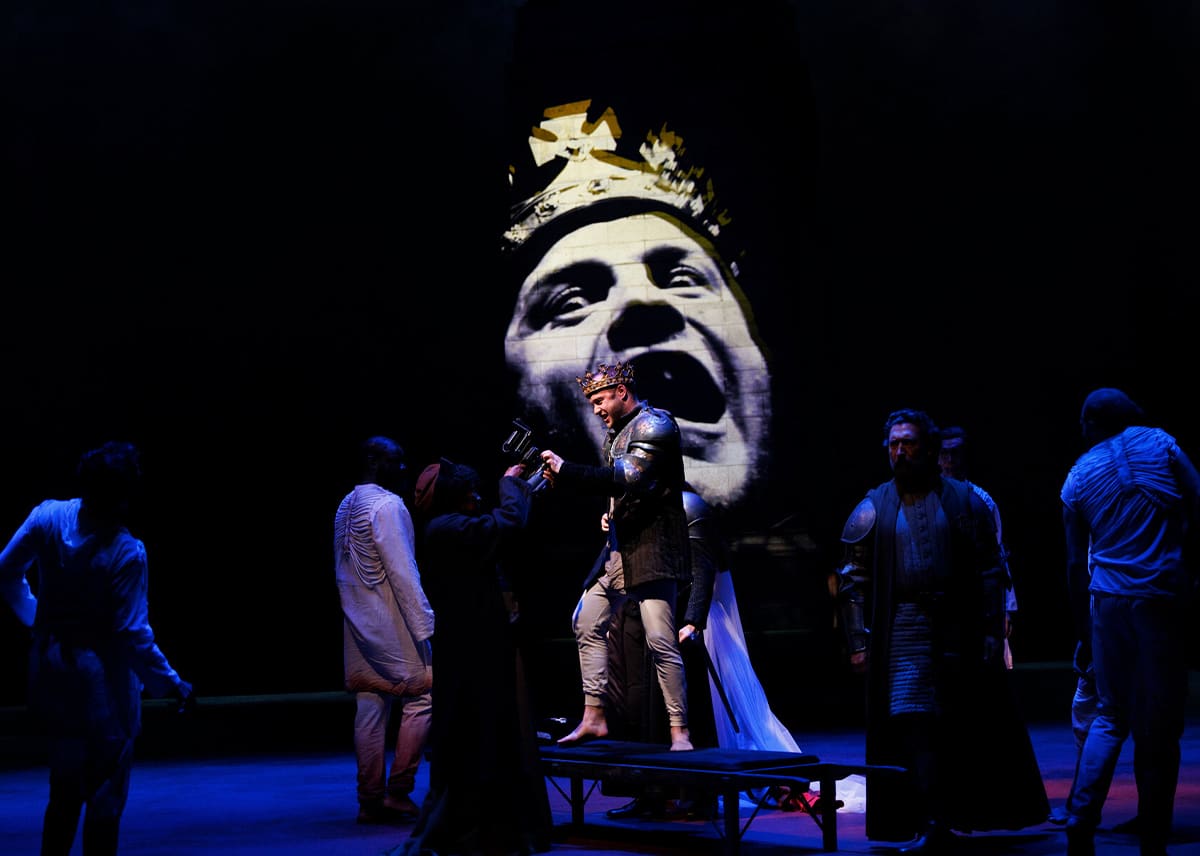
Complex antihero: an interview with Arthur Hughes
Unravelling Authur Hughes' Richard III
Marlon James: a Jamaican reckoning
'A return to a home I barely knew'

Haunting the Black Air
Poetic freedom across space and time
The Disappearers
A sprawling visceral experience that drops you in head first

The Lady Imam
Is the world ready to catch up with amina wadud?



Illuminating, in-depth conversations between writers.
Listen to all episodes
SpotifyApple Podcasts
Amazon Music
YouTube
Other apps

The series that tells the true-life stories of migration to the UK.
Listen to all episodes
SpotifyApple Podcasts
Amazon Music
YouTube
Other apps
WritersMosaic interrogates the notion of ‘staying in your lane’ by asking writers how they attempt to think beyond the parameters of their cultural identity.
Listen to all episodes
SpotifyApple Podcasts
YouTube