
The Odyssey
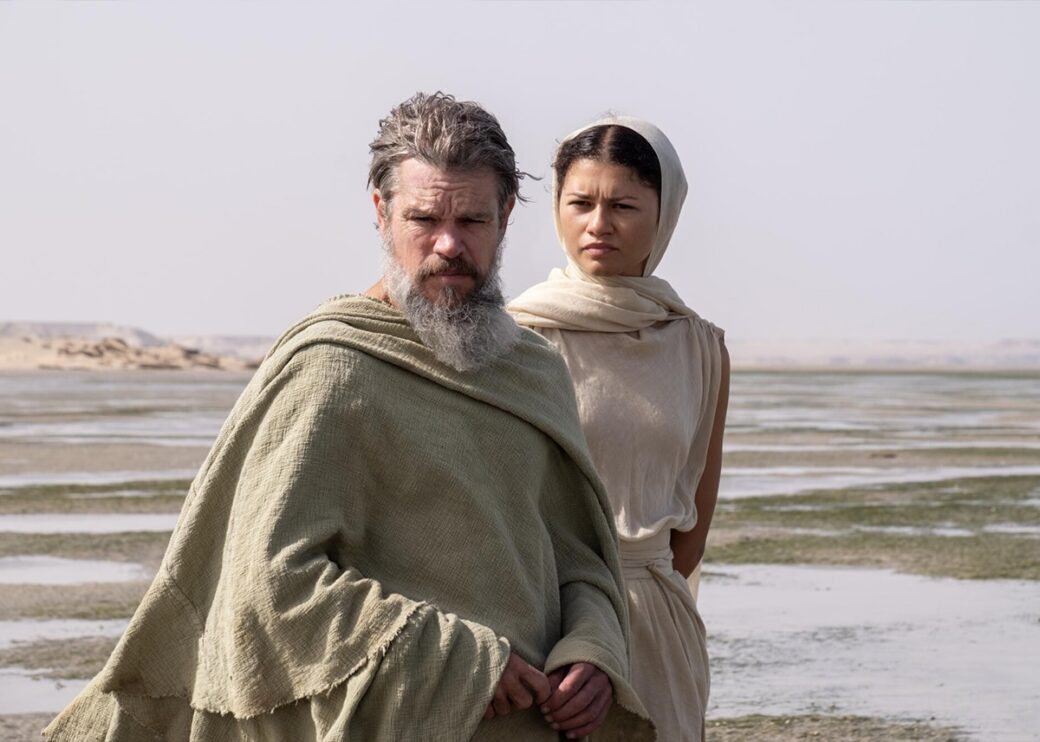
Written and directed by Christopher Nolan, 2026
Christopher Nolan’s new film, The Odyssey, can be read as a meditation on a line from his 2008 film, The Dark Knight: ‘You either die a hero, or you live long enough to see yourself become the villain’. Odysseus is lauded as a hero and celebrated for his cunning, as the warrior who helped end the siege of Troy and grant victory to his men. Yet he spends much of the film feeling anything but heroic.
The joy of Nolan’s Odyssey is that it shows a filmmaker truly at the height of his powers. His tendency toward non-linear storytelling, a habit that often leaves audiences scratching their heads, turns out to be perfectly suited to Homer’s text. Viewers with even the slightest knowledge of the epic poem know it’s about a war hero who struggles for years to return home, encountering trials and tragedies along the way. Homer’s Odyssey has so many subplots and side quests that Nolan’s Herculean feat of rendering the poem into a film just shy of three hours long is impressive. He reframes Odysseus’s story as an exploration of the thin line between heroism and barbarity.
Many hot takes circulated about this film even before release, from Nolan’s previous struggles to write meaningful female roles, to criticism of his ‘woke’ casting of trans actor Elliot Page as Sinon. Right-wing message boards were aflame, incensed that Lupita Nyong’o, a dark-skinned black woman, would be considered beautiful enough to play Helen, ‘the face that launched a thousand ships’. In reality, Nyong’o plays not one but two roles. In only eight minutes of screen time she gives a visceral performance, depicting both Clytemnestra’s bloodthirsty revenge and the desperate regret of her sister, Helen of Sparta, forcefully returned to her husband Menelaus, who is played with pitch-perfect bitterness by Jon Bernthal.
Arts critic Angelica Jade Bastién has argued that ‘Christopher Nolan’s genius ends when a woman enters the frame’, but The Odyssey refutes that. In a world where men fight and perform valour and women are required to remain at home, chaste and passive, it would be easy to relegate female characters to bit parts. Instead, Nolan’s Odyssey, and its stellar cast of actresses, is a world where women rebel in small and great ways against the social order: to avenge, elope, seduce and resist. Samantha Morton’s Circe, once satisfied Odysseus is unlike other men and intends her no harm, hands him the strategy to finally reach Ithaca. Even faithful, patient Penelope proves rebellious in refusing to submit to her husband and fulfil her promise to remarry if he did not return by the time their son was of age, despite the threat posed to Ithaca by seaborne marauders, the ominous ‘people from the sea’.
My strongest criticism can be levelled at Nolan’s incarnation of Calypso, played by Charlize Theron. Amorous in Homer, she is flattened and reframed here as patient, unrequited love: part nurse, part therapist, helping Odysseus reconstruct his memory. Gently drawing him past the trauma and disgrace of the events that left him shipwrecked on her island, she shapes much of the film’s emotional structure. But with no agency or desire beyond her love for Odysseus, she is very much a Hellenic Pixie Dream Girl.
Much of the film is spent exploring violations of ‘Zeus’s law’, the Greek custom of ‘xenia’, requiring hosts to offer food and shelter to strangers, and guests not to abuse their host’s hospitality; in short, all should treat others as they wish to be treated. If viewers were to take a shot of alcohol every time Zeus’s law is mentioned, few would make it past the first hour. Several violations of Zeus’s law are explored within the story. We are invited to condemn Penelope’s lewd suitors who abuse Zeus’s law when they lay claim to Odysseus’s food, wine and wife. We reproach a starving Eurylochus (played by ex-EastEnders star Himesh Patel) for defying an explicit instruction not to eat the cattle of Apollo. And yet we root for Odysseus when he blinds the Cyclops Polyphemus in revenge for eating his men, an offense that incurs the wrath of Poseidon, inviting further calamity to their voyage. Each violation is judged not by the act, but by our sympathy for the one who commits it. That sympathy runs out when Odysseus finally recounts the treachery of the Trojan horse, his original sin.
Reunited with Penelope, Odysseus listens to her fear of the ominous ‘people from the sea’, marauders who have terrorised neighbouring islands. She realises, with horror, that Odysseus and his men are the people from the sea. Offering the Trojan horse as a gift of peace to the people of Troy was so great a perversion of Zeus’s law, it ushered in an age of barbarism. Odysseus’s greatest victory is also his greatest cause for shame.
The film emerges not as a story of heroic feats but as a reckoning with the barbarity of war: one man’s valour is another man’s slaughter. With a message that speaks to our increasingly volatile and violent political landscape and the weakening of the rules-based order, The Odyssey proves to be as timely as it is timeless.
WritersMosaic monthly
Get new reviews in your inbox
One email monthly, unsubscribe anytime
The Disappearers
A sprawling visceral experience that drops you in head first
The Lady Imam
Is the world ready to catch up with amina wadud?
Pressure
What's missing from the latest 'untold story behind D-Day'?



Complex antihero: an interview with Arthur Hughes
Unravelling Authur Hughes' Richard III
Marlon James: a Jamaican reckoning
'A return to a home I barely knew'

The name of this wallpaper is ‘Childhood’
A luminescent bubble of memory



Illuminating, in-depth conversations between writers.
Listen to all episodes
SpotifyApple Podcasts
Amazon Music
YouTube
Other apps

The series that tells the true-life stories of migration to the UK.
Listen to all episodes
SpotifyApple Podcasts
Amazon Music
YouTube
Other apps
WritersMosaic interrogates the notion of ‘staying in your lane’ by asking writers how they attempt to think beyond the parameters of their cultural identity.
Listen to all episodes
SpotifyApple Podcasts
YouTube