
The Disappearers
The Disappearers
Marlon James
Hamish Hamilton, 2026
Halfway through Marlon James’ conversation with Jason Okundaye, the organiser from Foyles bookshop interrupts. The Disappearers has just been shortlisted for the Booker Prize. The venue – a packed church in Piccadilly, London – erupts in whoops and cheers. James last won the Booker in 2015, with his third novel A Brief History of Seven Killings, making him the first Jamaican to do so. Were he to win it twice, he’d join J.M. Coetzee, Peter Carey, Hilary Mantel and Margaret Atwood.
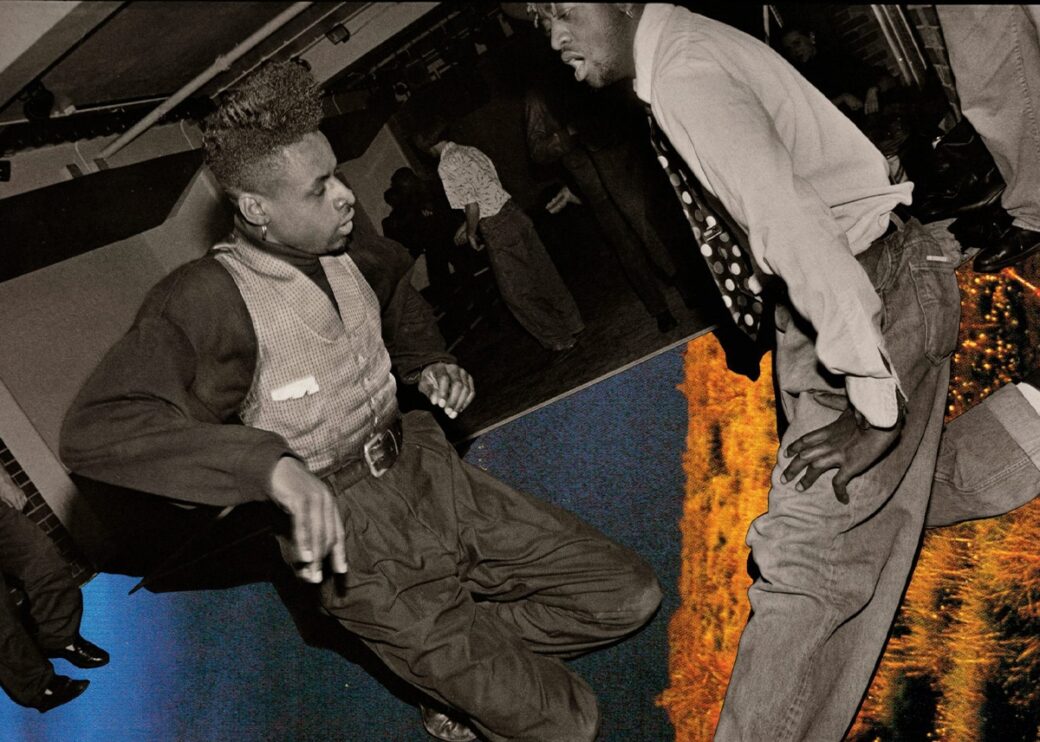
The Disappearers, named after a 1990 Sonic Youth track, is a breezeblock of a book. A sprawling visceral experience that drops you in head first and without preamble, other than a list of characters. It is epic. In the press release, James addresses his readers directly: ‘This time it’s personal. Not because these events happened (though many of them did), or that they happened to me (though some of them did), but because they are all true […] from the 1980s to the beginning of the new millennium, gay men and women in Jamaica experienced both moments of prejudice and terror as well as community, liberation and celebration.’
The Disappearers, set mostly in Kingston, focuses on prejudice and terror. It’s a multi-voiced story of Jamaican homophobia in the ‘80s and ‘90s, when colonial era laws were still in place, criminalising homosexuality and offering no legal protection – or any other kind – against discrimination, from school bullying to murder. For cops to preachers to musicians, homophobia was a blood sport.
The novel’s pivotal event happens in 1988, when eight gay men are attacked by 12 homophobic men. In a private location, the eight are rehearsing a queer play set in a men’s prison, having answered a casting call. In a climate of such virulent homophobia, this in itself is an act of bravery: ‘No need code. “drama audition” already weed out normal man’. James’ choice of play, John Herbert’s Fortune and Men’s Eyes, was inspired by his partner Nicholas Boggs’ biography of James Baldwin; Baldwin directed the same play in Istanbul in1969.
We meet the eight men at rehearsals – a collection of funny, cynical, smart, educated and uneducated voices riffing on everything from Lord of the Flies to Caged Heat. Only one cast member, the middle-class, mixed-race, 18 year old Eddy Porteous, whose paleness is advantageous in Jamaica’s rigid pigmentocracy, is absent when the attack happens.
You have to gird yourself for it. The 12 attackers spend just 27 pages narrating what they do but, despite its brevity, it’s a gut-churning read. One man is killed by being anally impaled, another has his eyes gouged out – all are left physically and psychologically brutalised. You almost go blind yourself to the slurs ‘faggot’ and ‘battyman’. James makes us a witness to it all. Dares us not to skip over it.
‘Kill a man with a high voice,’ says one of the attackers. ‘Kill a man who float when he walk […] Kill Boy George. Kill Rock Hudson. Kill a man in short-shorts. Kill a man with no girlfriend. Kill George Michael […] Kill a boy who get A+ on shit like poetry. Kill a poet […] Kill all who wrist limp […] Kill a man who defend battymanism while saying he not a battyman. Kill a man who touch your face […] Kill a man who hug too tight. Kill a man who shower every day. Kill a man before he spread AIDS.’ Another is a closeted gay man himself: ‘Kill it in them, kill it in me.’
One of the most heart-rending moments happens in the immediate aftermath of the attack, when the blinded man staggers about like Gloucester in King Lear, repeating over and over ‘My name is Rainford Ellis. I … I live at 529 Sitwell Road. Please help me.’
The rest of the story is told via diary entries, journalists’ interviews and letters. After the attack, the victims’ responses vary – the funniest, smartest, most damaged character, Kurt Cobain fan Jordan Brown, is the most enraged. He reads John Rechy’s 1977 book The Sexual Outlaw: ‘The promiscuous homosexual is a sexual revolutionary. […] As long as they continue to kill us, fuck and suck on every corner! Question their hypocritical, murderous, uptight world.’ Brown refuses to be cowed – he wants sex and revenge, and gets plenty of both. Some of it, involving his violently homophobic dad, is eye-wateringly, bleakly hilarious.
Like Marlon James himself, Jordan Brown is a massive music fan – there are over 150 musical references in the novel. White boy Gen X rock’n’roll loved him back, unlike some of the island’s homegrown musicians – fictional reggae star Streggah Don, whose hit ‘Batty Is Not Pussy’ soundtracks the entire novel and echoes Buju Banton’s real life 1992 track ‘Boom Bye Bye’. The one that incited the shooting dead of gay men.
Post attack, two of the victims, Matt Chin and Orrin Turner, vanish completely. We accompany Eddy and Jordan, who don’t much like each other, as they search for them from funeral homes to ghettos to sewers. The treatment of AIDS patients is unflinching.
We time-travel back to 1950s London via a series of letters written by Havelock Titus, the older man in the green velvet jacket who organised the play’s rehearsals. (Could his name be inspired by Havelock Ellis, the sexologist who wrote the first medical book about homosexuality in 1897, declaring it innate?) Havelock Titus is cultured and dignified and deeply unimpressed by modern gays wanting to live like straights. ‘Did we risk getting murdered by fucking under bridges and in toilets just so they could buy “his and his” bath towels? […] the obsession with normalcy makes my teeth ache. Then you have the rejection of desire itself, or the reduction of it to make it seem like a blight, some sort of wart instead of the core of our existence.’ The theme of sex work for survival threads through the narrative: ‘A man who knows how to use his body is ten times sexier than a man who simply has one.’ Titus continues, ‘Gas, grass or ass, one must make a living.’
You might be wary of picking this book up. Too heavy, in every sense. But it’s not – it’s a deep dive into human resilience, community, irrepressible spirit. Survival and adaptation in the face of ignorance and cruelty. It’s about loyalty, decency, remaining steadfast when shunned and othered by one’s own mother. It is defiance and desire, ingenious survival in hostile hetero-fascist territory. A howl of rage at being endlessly victim-blamed: ‘for real a mob could put two car tires over our necks and burn us alive and we’d still be “involved” in our own demise.’
It’s layer upon layer of story, narrative, voice, its language pulsating as James lets us eavesdrop on dreams of ordinary freedom: “I want to kiss a man on the street […] I want to ask a man what him eat today. I want to have sex with a man while sober. I want somebody to tell me he loves me when I’m inside him. I want to be boring …’
The Disappearers is a solid block of undiluted, unvarnished empathy, shape-shifting and agile and unsparing. It’s not a fast read or an easy read, but it’s so worth the time and effort. It’s what literature is for.
WritersMosaic monthly
Get new reviews in your inbox
One email monthly, unsubscribe anytime
A Trial
An examination of theatre’s complicity in post-truth politics
The Lady Imam
Is the world ready to catch up with amina wadud?
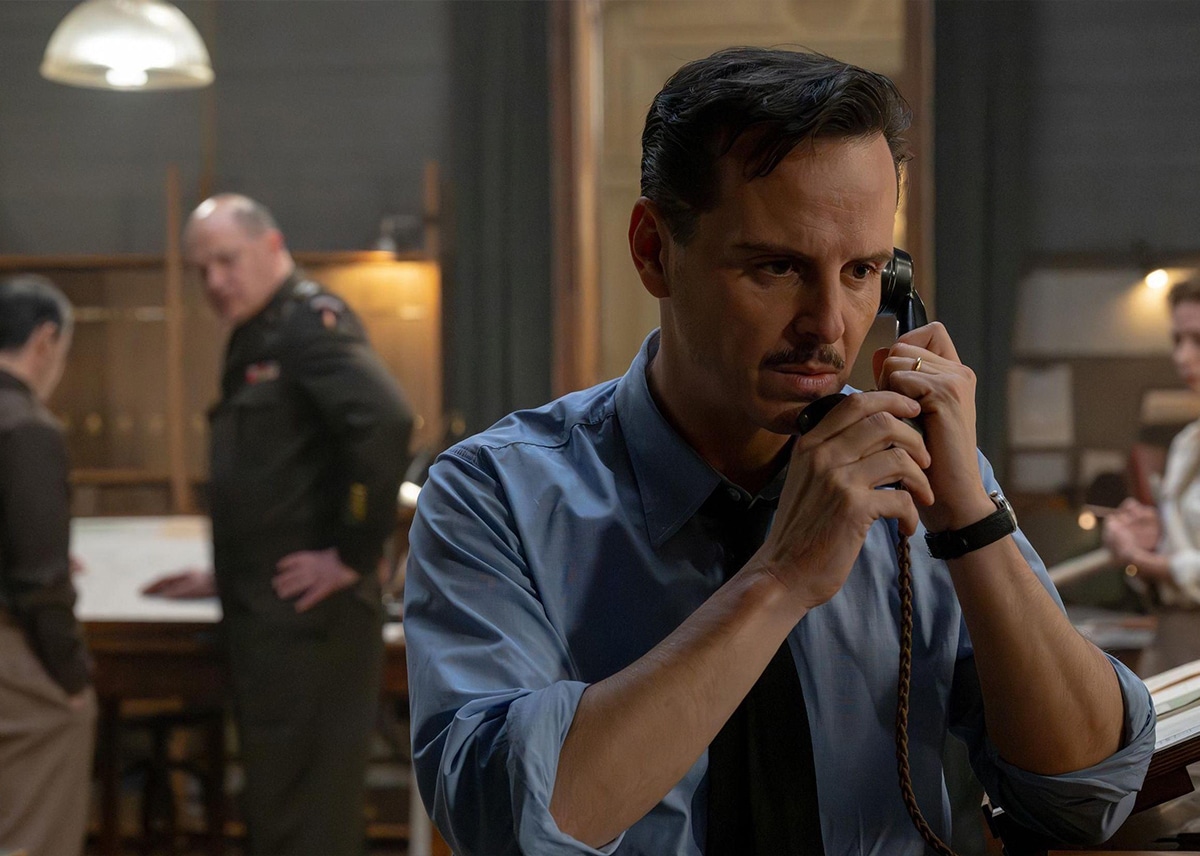
Pressure
What's missing from the latest 'untold story behind D-Day'?

Complex antihero: an interview with Arthur Hughes
Unravelling Authur Hughes' Richard III
Marlon James: a Jamaican reckoning
'A return to a home I barely knew'
The name of this wallpaper is ‘Childhood’
A luminescent bubble of memory


Illuminating, in-depth conversations between writers.
Listen to all episodes
SpotifyApple Podcasts
Amazon Music
YouTube
Other apps

The series that tells the true-life stories of migration to the UK.
Listen to all episodes
SpotifyApple Podcasts
Amazon Music
YouTube
Other apps
WritersMosaic interrogates the notion of ‘staying in your lane’ by asking writers how they attempt to think beyond the parameters of their cultural identity.
Listen to all episodes
SpotifyApple Podcasts
YouTube