
It’s being published I get paid for; the writing I would do for free
I think it was Harrison Ford who said, ‘It’s being famous I get paid for, the acting I would do for free.’ Back when I taught creative writing for various institutions, I would paraphrase this for my students, who were all hard at work on their debut novels. ‘Any advance you may get for your novel is to compensate you for the horrors of being published,’ I would say sternly, eyeballing them over my glasses. ‘The writing you should do for free.’ They looked at me as if I was mad.
All of them had heard the tales of the writers who trouser six figure cheques for their first book: all of them, without exception, dreamed of publication in some form or another and viewed it, as one student put it, as ‘the dragon’s head on the plate.’ The best way to think of it, I used to tell them, is that as a writer you have two jobs: one is writing, the utterly joyful business of creating an entire universe with words – the other is Being a Writer (negotiations with agents and publishers, the mindnumbing brainfuckery of self-promotion). Keeping those two jobs separate in your head is a really, really good idea.
The other pearl of wisdom I would offer – back in those days, I was full of ‘em – is that the greatest good fortune you can have as a writer is to make writer friends.
Let’s face it, being a writer is not a normal way to earn a living. We spend most of our time in a room on our own making up stories and then, when we are thoroughly deranged and curmudgeonly after several years of it, put on our tap-dancing shoes and turn into public entertainers, performing at festivals and being absolutely thrilled to bits with everything on social media. Writers are odd little creatures, often poorly dressed and smelling faintly of dressing gown, made up half of God complex and half of paralysing insecurity. We are probably best off in each other’s company; and when we get grumpy it’s a good idea to feed us, like bears.
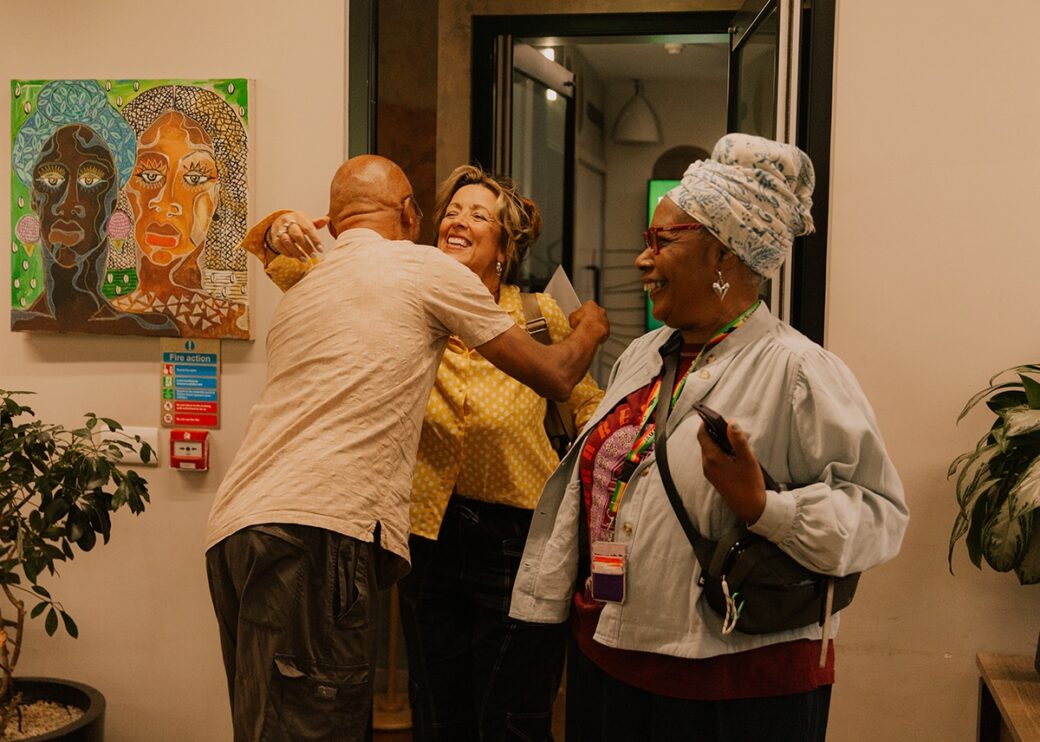
This is where a writers’ residency can come in – and where, if you’re very, very lucky, you might find that you have fallen amongst a group of people who, by some strange magic, suddenly feel like fellow writers you have known for years. Such was the WritersMosaic retreat at Symondsbury Manor in July of this year.
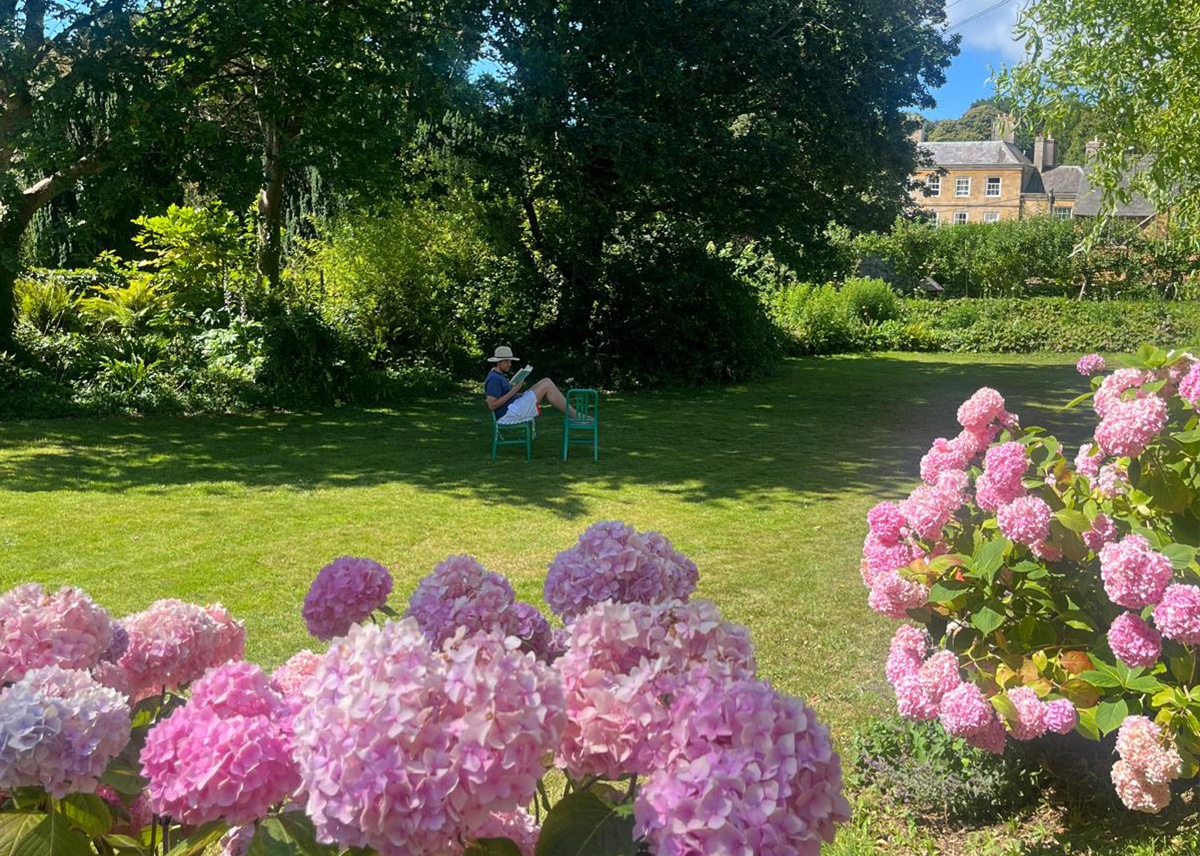
For complex reasons, I was a particularly grumpy bear when I arrived – but the minute we all stepped out of the taxi from Dorchester South, I felt my shoulders begin to drop. Symondsbury Manor turned out to be a beautiful house in a small stone village, set on an estate of rolling fields. There was a café nearby. The garden had any number of nooks and crannies in which to write in the shade on a hot summer’s day that were guarded by a curious peacock who cocked its head quizzically as it stared through doorways at the humans bashing laptops as if it was saying, what the fuck?
The setting alone would have been riches – but we were hosted by WritersMosaic’s Wise Owl-in-Chief, Colin Grant, who was accompanied by wife Jo and friend Fiona: not only amazing cooks but keen swimmers and up for running carloads of writers to the beach for a pre-breakfast dip on the Dorset coastline. Apart from me, there were seven other writers of different ages, levels of experience and working in various genres, who took immediate and respectful interest in what each other was working on and our career paths so far: the strange, twin-track nature of a writer’s life needed no explanation.
Within 24 hours, we had slipped into a routine – a pre-breakfast swim for some of us, a few hours at our laptops or with our notepads, either in our rooms or tucked into shady corners of the garden, walks and casual conversations in the kitchen. At 1 pm and 7 pm a bell rang and we all meandered, as if in a dream, to the long wooden table in the garden where glorious food was eaten and accounts of our writing progress that day were swapped.
It was at one such lunch when a small jiffy bag arrived for me – a delivery of the very first finished copy of my soon-to-be-published memoir, which my editor had kindly sent to the retreat. What a pleasure to open that jiffy bag in the company of my new writer friends, who all applauded, and yet to know that ten minutes later, I could be receiving commiserations while saying ‘My novel is in such a mess, the story has gone awol …’ as if it was a pet gerbil who had escaped its cage. The best writer friends can deliver applause and commiseration in quick succession, sometimes at the same time.
It made me want to go back in time to speak to those writing students and say, ‘A writer’s career may be full of cowpats and pitfalls, but if you are very, very lucky, there are also great joys that have nothing to do with the elusive and illusory business of success, and chief amongst them is the chance of a writing residency in a big house somewhere, where you fall amongst a bunch of strangers who understand you intimately from the word go, and where you feel you have come home.’
Hachette UK: On This Spot Feel One Tear of Love

Louise Doughty
Louise Doughty is the author of ten novels, including Stone Cradle, based on her own English Romanichal background.
WritersMosaic monthly
Get new writing in your inbox
One email monthly, unsubscribe anytime
The name of this wallpaper is ‘Childhood’
A luminescent bubble of memory
Complex antihero: an interview with Arthur Hughes
Unravelling Authur Hughes' Richard III
Marlon James: a Jamaican reckoning
'A return to a home I barely knew'

Haunting the Black Air
Poetic freedom across space and time
The Disappearers
A sprawling visceral experience that drops you in head first
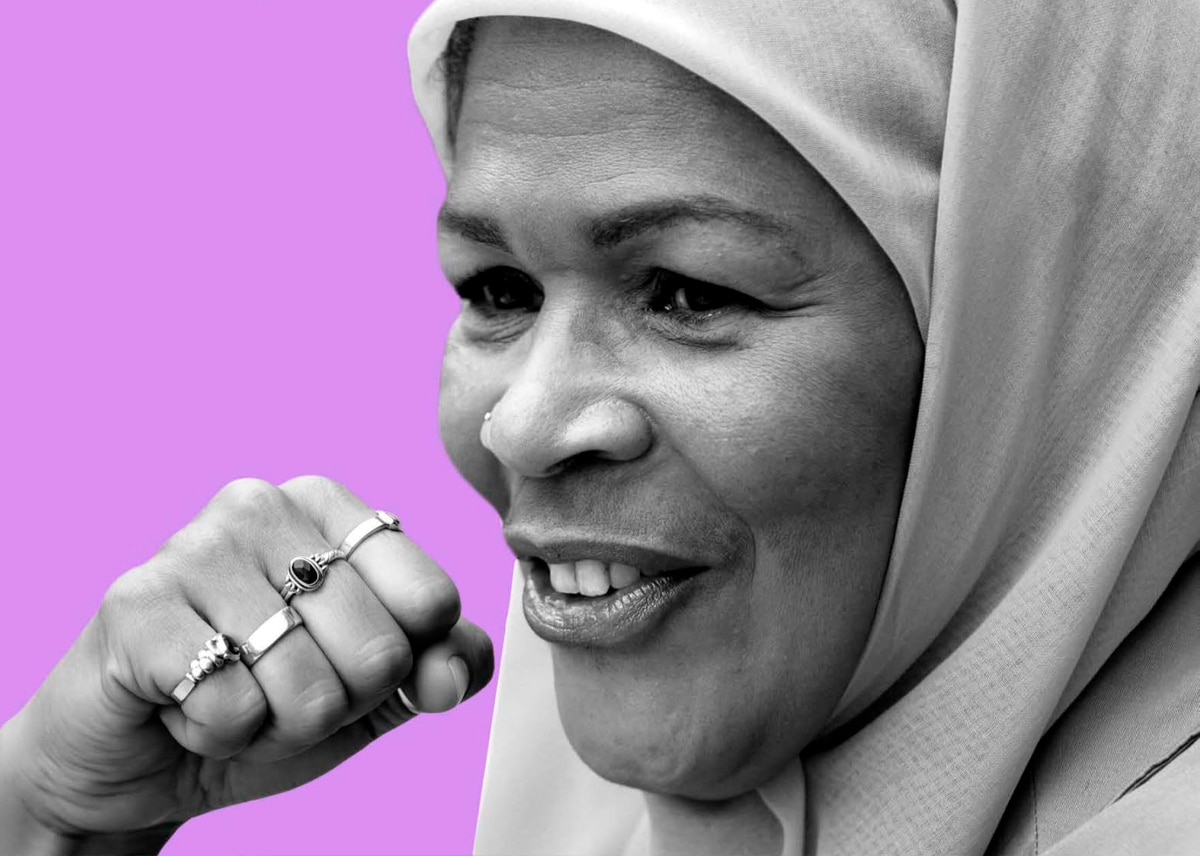
The Lady Imam
Is the world ready to catch up with amina wadud?



Illuminating, in-depth conversations between writers.
Listen to all episodes
SpotifyApple Podcasts
Amazon Music
YouTube
Other apps

The series that tells the true-life stories of migration to the UK.
Listen to all episodes
SpotifyApple Podcasts
Amazon Music
YouTube
Other apps
WritersMosaic interrogates the notion of ‘staying in your lane’ by asking writers how they attempt to think beyond the parameters of their cultural identity.
Listen to all episodes
SpotifyApple Podcasts
YouTube