
On Becoming a Guinea Fowl
Written and directed by Rungano Nyoni, 2024
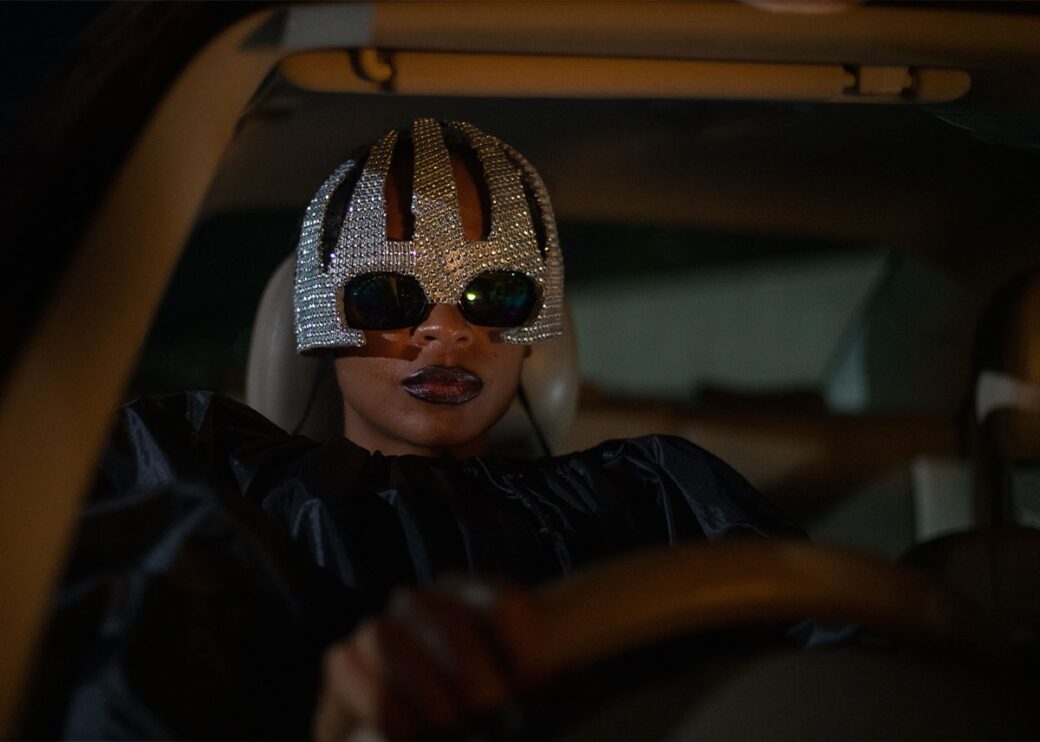
So much happens in the first few minutes of On Becoming a Guinea Fowl that it achieves what most films stumble through in the first half hour. Late at night, Shula (Susan Chardy) drives down a quiet Zambian dirt road on her way home from a fancy-dress party, dressed as Missy Elliott in the bejewelled mask and inflated jumpsuit from her video for ‘The Rain (Supa Dupa Fly)’. She slams to a halt: in her headlights lies her Uncle Fred, dead, eyes fixed on the sky, close to a brothel. Waddling over in her costume, she sets the surreal, darkly comic tone of Rungano Nyoni’s vision; her expression of being inconvenienced deepens the deadpan.
Zambian Welsh writer-director Rungano Nyoni made her name with I Am Not a Witch (2017), which won a BAFTA for outstanding debut. This follow-up won her Best Director in the category ‘Un Certain Regard’ at Cannes and a British Independent Film Award. I can see why.
As the middle-class family prepares Uncle Fred’s funeral, Zambian mourning traditions become a pressure cooker for Shula: performative grief and heavy domestic labour, all to honour a man revealed to be a child sex abuser. The aunties shame her for showering and having dry eyes, dragging her from the hotel room where she had taken refuge to make international Zoom calls for work, to her mother’s home, where the community of women awaits. Nyoni stresses gender inequality: women carry grief and domestic work while men sit outside, detached, waiting to be served. Shula serves elders devoted more to elaborate mourning than their children’s wellbeing.
Uncle Fred, an alcoholic, was cruel in ways that were an open secret. ‘Why are they mourning Uncle Fred like he was an angel, not a pervert?’ Nsansa (Elizabeth Chisela), Shula’s cousin, asks. The matriarch’s silence intended to protect the unity of the family, instead enabled sexual violence for generations, upholding a dysfunctional patriarchy that only benefits the communities’ men.
Nyoni tells much of this story through visuals over dialogue and shows how victims can all cope differently: a younger cousin Bupe (Esther Singini) repeatedly attempts suicide, Nsansa stays perpetually drunk, and Shula is emotionally checked out. Rather than having Shula explain her feelings, Nyoni floods Bupe’s university dorm to the ankles, then in a dream the whole house – water rising like unvoiced emotions.
The guinea fowl of the title has a sharp cry that warns the flock of approaching predators, a symbol of breaking silence. As a child, after Uncle Fred sexually assaulted her, Shula watched a segment of the children’s TV show Farm Club, in which the letter G stood for guinea fowl. In the opening scene, as Shula looks over Uncle Fred’s body, she gives way to her child self, showing how trauma lingers. Later in the film, segments of the show and flashbacks of young Shula watching it intrude on the present, mirroring Shula’s journey toward speaking out.
Nyoni’s most striking technique is her use of architecture and technology to partially obscure her characters’ faces or create distance between characters, or between character and viewer, conveying shame and difficult conversations. Shula’s father waits for her to leave him before calling her to ask if she was abused by Uncle Fred; she answers on the split level below, only the bottom half of her body visible, lingering for a moment too long after she lies to him. It echoes an earlier scene, in which Bupe video-records her account of abuse rather than speaking directly to her mother. Nyoni repeats this differently with Fred’s funeral flyers: we never see his full face. The abuser stays obscured; his victims are the ones we look at.
Yet Nyoni offers hope. Squeezed into the pantry, women across generations confront their failure to protect one another, apologise, and cry and sing together. Throughout, Shula also forms new bonds with her cousins. In a poignant scene, Shula lies in the middle of Bupe’s hospital bed, with Bupe and Nsansa asleep beside her. All three women, in the same bed, abused by the same man.
By the end, family bonds may be mending, but the scapegoating of Uncle Fred’s widow (Norah Mwansa), another victim of his abuse, exposes the cruelty of the misogyny that remains. A child herself when she had her first baby with him, she is shamed and mocked by the matriarchs for not fulfilling her domestic duties. The patriarchs seize Fred’s belongings, leaving her and her fatherless children destitute. Yet as the dispute continues, Shula, Bupe and Nsansa appear in the distance, standing in solidarity with the widow and showing that the fight is not over.
On Becoming a Guinea Fowl is a sharp, layered study of patriarchal privilege, misogyny and enabling silence. Nyoni masterfully weaves complex themes through dark humour and the surreal. Chardy is phenomenal, her ability to convey such repressed pain and strength through only her eyes. This controlled, confident film is quietly devastating yet hopeful: silence can be broken, cycles can end and important conversations can begin.
Danielle Papamichael
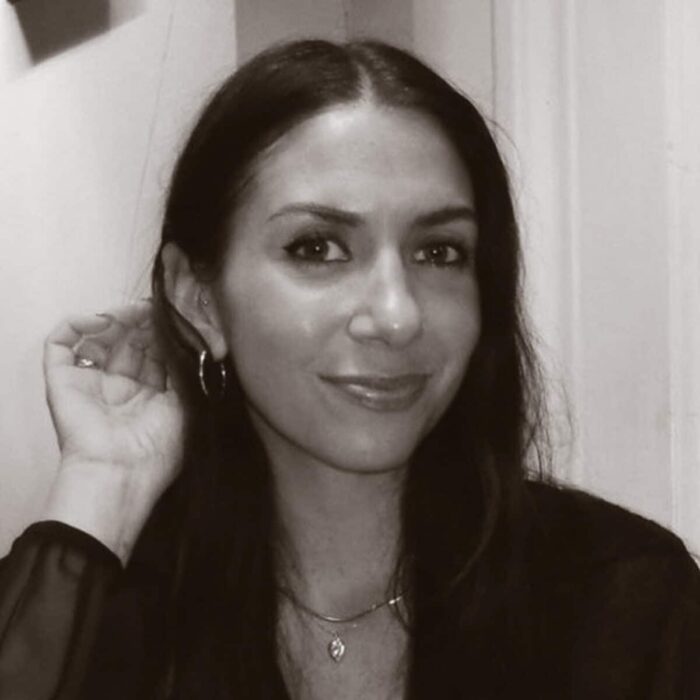
Danielle Papamichael is a British screenwriter and film critic of Greek Cypriot and Irish heritage.
WritersMosaic monthly
Get new reviews in your inbox
One email monthly, unsubscribe anytime
Death of the Soccer God
The 'uneven' novel on the disappeared Haitian footballer, Joseph Edouard Gaetjens
The Story
A propulsive play centered on a black-run section of a mainstream newspaper

Some Sacred Harbour
As much a book of joy as of anger
Ladies of the Rachmaninoff Eyes
The impact of space between what is happening on and off the page
On Snow
'The mind inevitably seeks a reenactment of the teal light I associate with home'
It’s being published I get paid for; the writing I would do for free
‘Any advance [...] for your novel is to compensate you for the horrors of being published'


Illuminating, in-depth conversations between writers.
Listen to all episodes
SpotifyApple Podcasts
Amazon Music
YouTube
Other apps

The series that tells the true-life stories of migration to the UK.
Listen to all episodes
SpotifyApple Podcasts
Amazon Music
YouTube
Other apps
In this second series of poems commissioned by Hannah Lowe, six poets explore the theme of surveillance.
Listen to all episodes
SpotifyApple Podcasts
YouTube