
Michael Armitage

Royal Academy (22 May – 19 September, 2021)
Review by Andy Bay
With a series of imposing oil paintings and stunning wall-sized canvases, the artist Michael Armitage, born in Nairobi in 1984, to a British father and Kenyan mother, has created a breathtaking narrative in the ‘Paradise Edict’ exhibition at the Royal Academy in London.
Armitage confidently addresses the primary themes which dominate Kenya’s political and civic daily life: socio-economic inequality, government corruption, freedom of speech and expression.
In 2017, he decided to make a painting about the Kenyan presidential election, using the fevered dynamic between political leaders and their followers as a template for the work. Armitage witnessed a dazzling mix of demonstrators and supporters, evoking the spirit of massive carnivals, as well as the president elect’s aggressive political slogans, claiming to lead the unruly crowd to the ‘promised land’.
The centrepiece, ‘Paradise Edict’, which gives the show its title, immerses viewers in the density of the African hinterland, challenging preconceived ideas of colourful landscapes with complex strands of green and brown paint in flush strokes. This lustrous canvas creates an emotional connection with the untamed spirit of the Kenyan countryside, in sharp contrast to the local authorities’ attempt to control people’s desire for social emancipation and autonomy.
Another painting, ‘The Chicken Thief’, depicts an adult man hurriedly pacing through a city street, carrying a presumably ill-gotten pair of white chickens. His toothy grin invites sympathy: he looks less like a criminal than a downtrodden everyday man, relieved to know he might be able to feed his family. Glossy pink and orange tones saturate the lubugo bark cloth they are painted on, enabling Armitage to weave his subtle commentary about the day-to-day struggles of Nairobi’s street dwellers.
With pieces such as ‘Chimp in Lingerie’ and ‘Leopard Print Seducer’, Armitage’s exploration of ‘exoticism’ is reflected in the act of looking at dreamlike depictions of otherworldly animals, epitomising the notion of ‘otherness’. Glistening green grass fields and backlit feline skins enable the observer to consider how ‘exoticism’ distances them from what they’re seeing when simply looking at animals.
In the ‘Body, Mind and Spirit’ section of the show, the works of six major East African artists are brought together. Armitage was determined to highlight the cultural landscape that existed before his own paintings gained relevance and recognition. Here the exhibition looks back at fifty years of Kenyan folk symbolism in figurative painting and sculpture.
At the heart of ‘Paradise Edict’ lies the precariousness of a rich cultural tradition and heritage which Michael Armitage ardently wants to preserve whilst seeking solace from it. He found the strength to both articulate his complex feelings about Kenya’s political turmoil, and revitalise the abundantly rich, albeit little known, cultural legacy of East African painting. The emblematic undertones in Armitage’s paintings are most pertinent when they allow the subjects to speak their own truths; he’s an exceptional custodian of this dignified tradition and the heartwarming characters he depicts so convincingly.
WritersMosaic monthly
Get new reviews in your inbox
One email monthly, unsubscribe anytime

Shine Your Eye
A no-holds-barred account of travels through West Africa
The Immortalists
What would you be willing to do to ensure eternity?
Driftwood
A play carrying diasporic memory and political weight

From Fruity to Raffell
A retreat of solitude, community and creative stimulation
Jason Arday (9 May, 1985 – 14 August, 2026)
WritersMosaic reflects on the life of Jason Arday
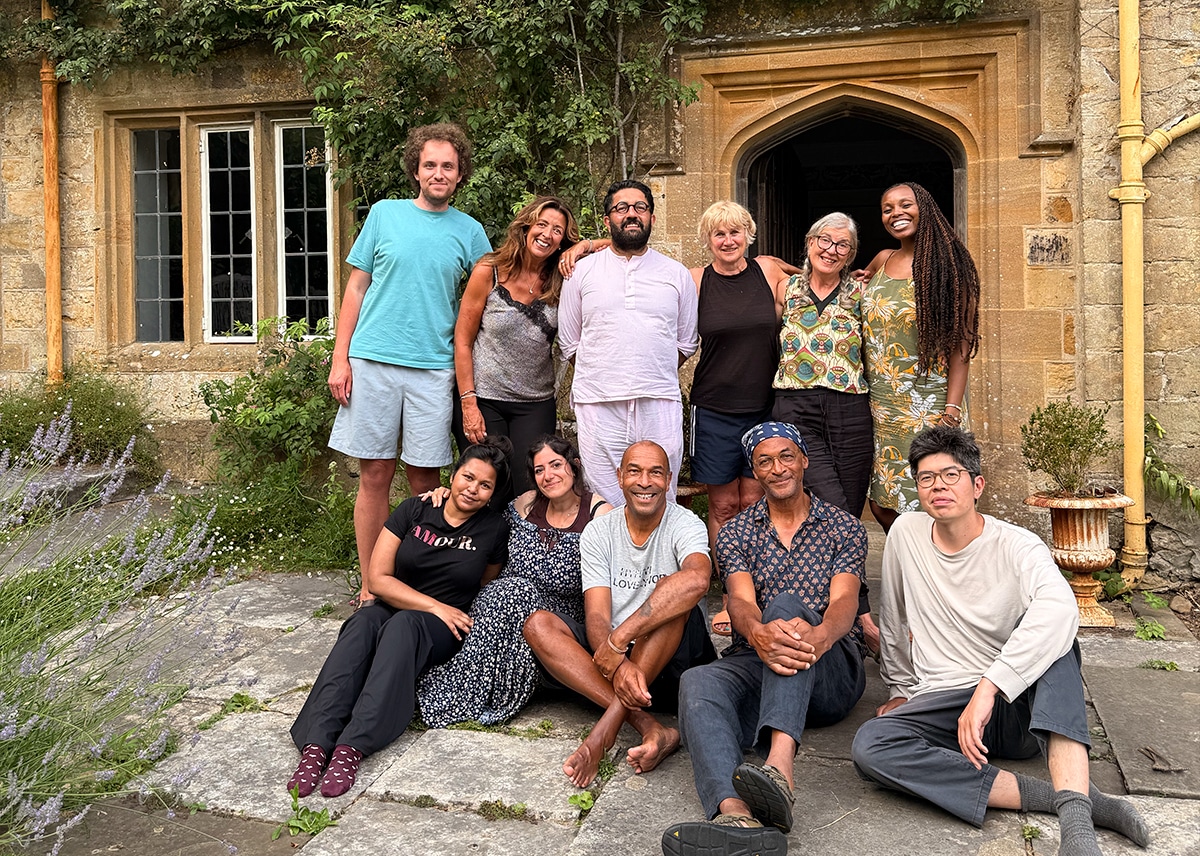
Inside the WritersMosaic Literary Residency
'The sea was crystal clear, the weather was perfect and my pink toenails shimmered beneath the transparent water'

Free Will
Will Harris reads his poem, 'Free Will'. Directed by Matthew Thompson and commissioned by the Adrian Brinkerhoff Poetry Foundation.

Half Written Love Letter
Selina Nwulu reads her poem, 'Half Written Love Letter'. Directed by Matthew Thompson and commissioned by the Adrian Brinkerhoff Poetry Foundation.

Illuminating, in-depth conversations between writers.
Listen to all episodes
SpotifyApple Podcasts
Amazon Music
YouTube
Other apps

The series that tells the true-life stories of migration to the UK.
Listen to all episodes
SpotifyApple Podcasts
Amazon Music
YouTube
Other apps
Nine writers explore the elusive emotional truth behind narratives and storytelling.
Listen to all episodes
SpotifyApple Podcasts
YouTube