
Inside the WritersMosaic Literary Residency
*Warning: The order of events (and many other things) has been slightly altered for the convenience of the reader. This review is, however, heavily based on reality.
**Written in the spirit of Roberto Bolaño’s novel The Savage Detectives.
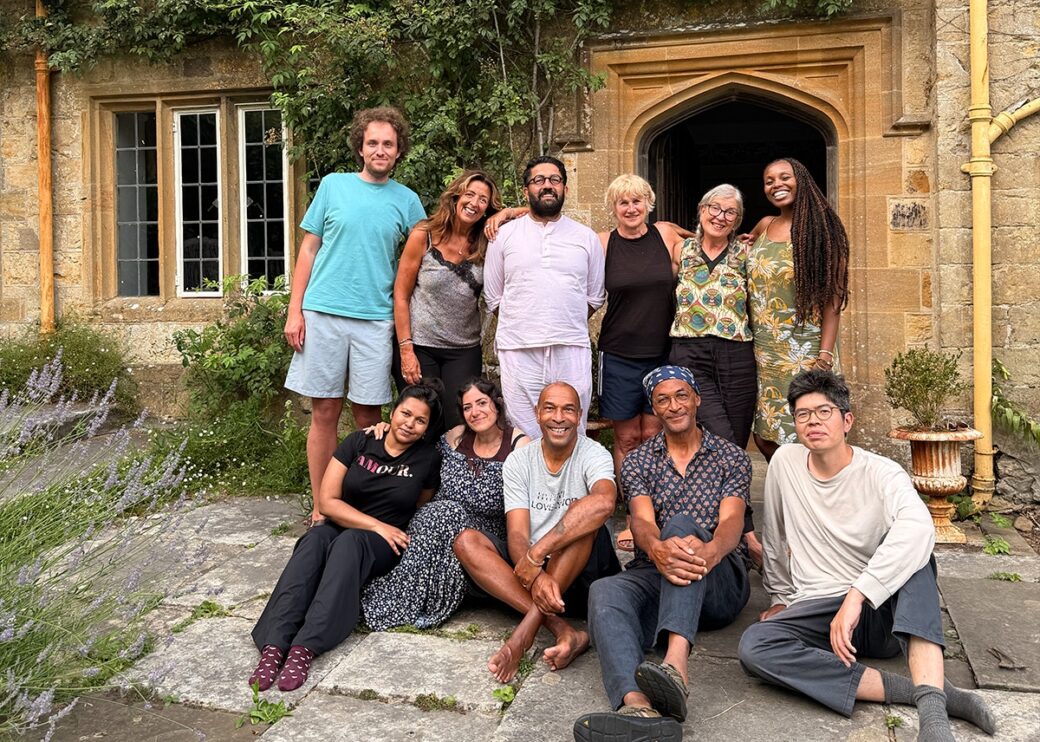
When I arrived at Dorchester South, I realised I wasn’t the only writer who had confused Dorset with Dorchester. Dorchester, as I soon learned in the taxi from the station to Symondsbury Manor, is the county town of Dorset. I realised many of us were using the terms interchangeably, but then we had a discussion about it and clarified it. It was the first of many things I would learn during the residency. Almost immediately, I also discovered the difference between a writing retreat and a writing residency as Shani and Sophie explained to me. The latter offers much more independent time to write and think.
*
I insisted on calling Symondsbury Manor the ‘castle’, but I think I’m the only one who used that term. What I had assumed was a castle tower turned out to be a church next to it. Nonetheless, the ‘castle’ made an unforgettable first impression on all of us. The magnificent rooms, the enormous beds that might have been made for queens and the beauty of the house made the nickname feel entirely appropriate. The ‘castle’ was surrounded by beautiful gardens, broad views and peacocks. It smelled of ginger and chai. Fiona and Jo, chef and assistant, prepared extraordinary plant-based meals every day with remarkable care and creativity. WritersMosaic took care of everything: our accommodation, meals and every practical detail, allowing us to focus entirely on writing.
*
Later, Colin, the director of WritersMosaic, kindly drove me to Boots to buy some vitamins. On the way, we talked about Bob Marley, Jamaica, literary prestige, research projects and the importance of taking risks. Inspired by our conversation, Colin apparently decided to take one himself: on the drive back to the castle, we got completely lost. At one point, he said that poetry is one of the highest forms of writing. I agreed, but I stayed quiet because I was thinking about Roberto Bolaño’s words: ‘Poetry is a higher calling than any other genre.’
*
That first evening we had the most delicious aubergines for dinner while talking about writing, politics and the University of Oxford. Osman, who grew up in Birmingham, laughed when I confessed that Birmingham Airport is one of my favourite places in the UK. At night, all the writers went to bed. I stayed awake writing this. The sound of my keyboard was the only sound I could hear.
*
Early the next day, Sophie wanted to go to a place called ‘Gym Carey’. To get there, we walked across hills and through fields until we eventually found it, hidden behind a Pilates studio in what felt like the middle of nowhere.
On the way, we talked about what it feels like to receive funding and then lose it again, to go from being a funded academic or writer, back to being an ordinary person. We laughed about being ordinary people, even though we are ordinary people… While Sophie was at the gym, I decided to look for the sea. The route turned out to be much steeper than I had expected, so instead I found myself back at Boots in the town centre for the second day in a row.
When I returned to the castle, Fiona had prepared what I first thought was a fruit salad. It turned out to be a salad with fruit instead. Watermelon, tomatoes and fresh herbs. I couldn’t believe how she transformed such ordinary ingredients into something else.
*
In the afternoon, Will, Franklin and I went to watch the World Cup at the White Lion: England vs DR Congo. As I walked into the pub, England scored their second goal. On the walk back to the residency, Will, Franklin and I talked about work, writing and our plans for the holidays as we crossed the hills in the evening light.
Dinner: incredible potatoes, fresh salad and warm vegan garlic bread. That evening, our conversations wandered from pretending to write to pretending to read books we hadn’t actually read. We also debated whether swimming so early in the morning was really a good idea. Louise repeatedly asked whether everyone was definitely going to the same beach, reminding us that it was quite a ‘wild’ one. Somehow, the mysterious Pilates studio and the lonely gym found their way back into the conversation too. Colin asked me about therapy in Argentina, and we tried to work out why Argentina has a higher number of therapists per capita than any other country. I was unsuccessful in trying to answer. Louise received the first copy of her new book. After twelve years of working on it, she was finally holding it in her hands.
*
After several unsuccessful attempts to reach the sea on my own, the group leaders finally took me there.
As soon as I stepped into the water, a large pebble crashed into my leg leaving a bruise. I understood what they meant about the sea being ‘wild’ at that point.
The sea was crystal clear, the weather was perfect and my pink toenails shimmered beneath the transparent water.
*
Determined to be brave, I walked straight into the sea. The water was freezing, and for a few seconds my whole body felt strangely disconnected.
I instinctively grabbed Osman’s hand as he confessed that he didn’t know how to swim. A few moments later, I let go of his hand, and before long he was happily enjoying the sea.
Back on the beach, Franklin and I talked about Oxford, Cambridge and Pakistani weddings before Fiona drove us back to the castle.
*
I helped Fiona prepare Spanish tortillas for dinner. Fiona and Jo became my unofficial therapists as we navigated enormous frying pans, dangerously hot oil and a house full of hungry writers waiting to eat. My admiration for the cooks increased dramatically that day.
Will and Franklin, my World Cup team in the house, went to sleep and left me alone watching Argentina. It was the most nerve-wracking match and it finished really late after extra time.
*
Shani said she wanted some mānuka honey, so I tried to find it in what I called ‘the city centre’ and I went to Boots again for the third or fourth time in a row. Boots became my second home. I could never really find anything there, and I ended up in other similar shops. On the way, I met Franklin, Will, Sophie, Fiona, Jo, Colin and almost everyone really, except Louise who had mysteriously disappeared on that day.
*
We moved to a different table at a bohemian café called Red Brick Café because the sun was too strong. We talked about Bridport’s art galleries, punk, mushroom risotto and Blondie. Then I lost everyone, and lost myself, in the town centre. Just as I started to enjoy the cool air-conditioning in Waitrose, I turned around and Fiona, Colin, Franklin and Jo were standing behind me. ‘We’ve been here all this time,’ they said.
We drove back together, and I told Jo that her words would be the last line of this review. She laughed.
*
One morning, I went into the kitchen to ask where the washing machine was.
‘It’s next to the snake,’ Phil replied.
I assumed he was joking.
He wasn’t.
*
There really was a snake living near the laundry room, although opinions differed on what exactly it was. Someone insisted it was actually a slow worm. Fiona explained that the laundry room was its home and reassured us that it was perfectly harmless. In fact, according to her, it wasn’t really a snake at all, but something in between a snake and a worm.
*
Sophie, Osman and Will seemed rather uneasy about having a snake, or a snake-like creature, living so close to their bedrooms. Colin, meanwhile, announced that he wasn’t afraid of snakes or spiders in the slightest and he declared he would deal with the snake.
Jo immediately revealed that she had specifically asked him not to tell everyone that he wasn’t afraid of snakes or spiders.
*
Undeterred, Colin marched confidently into the laundry room and disappeared into the darkness.
*
We wondered whether any of it made sense anymore. Whether this was a dream or whether any of it had really happened. We wondered whether we were simply writers living through a surreal and extraordinary experience, or whether none of it had ever existed at all. We wondered whether Colin was real: this talented writer creating a unique experience that would change our lives and memories forever, or whether he, too, was just an illusion, our desire for a place like this to write, made real only in our minds.
*
At that exact moment, a bat flew over our heads.
*
‘It’s only a night bird,’ Jo said.
The end
WritersMosaic monthly
Get new writing in your inbox
One email monthly, unsubscribe anytime
Coats
The unexpected cost of acquiring two Italian leather coats in Rome
A tribute to Bonnie Greer
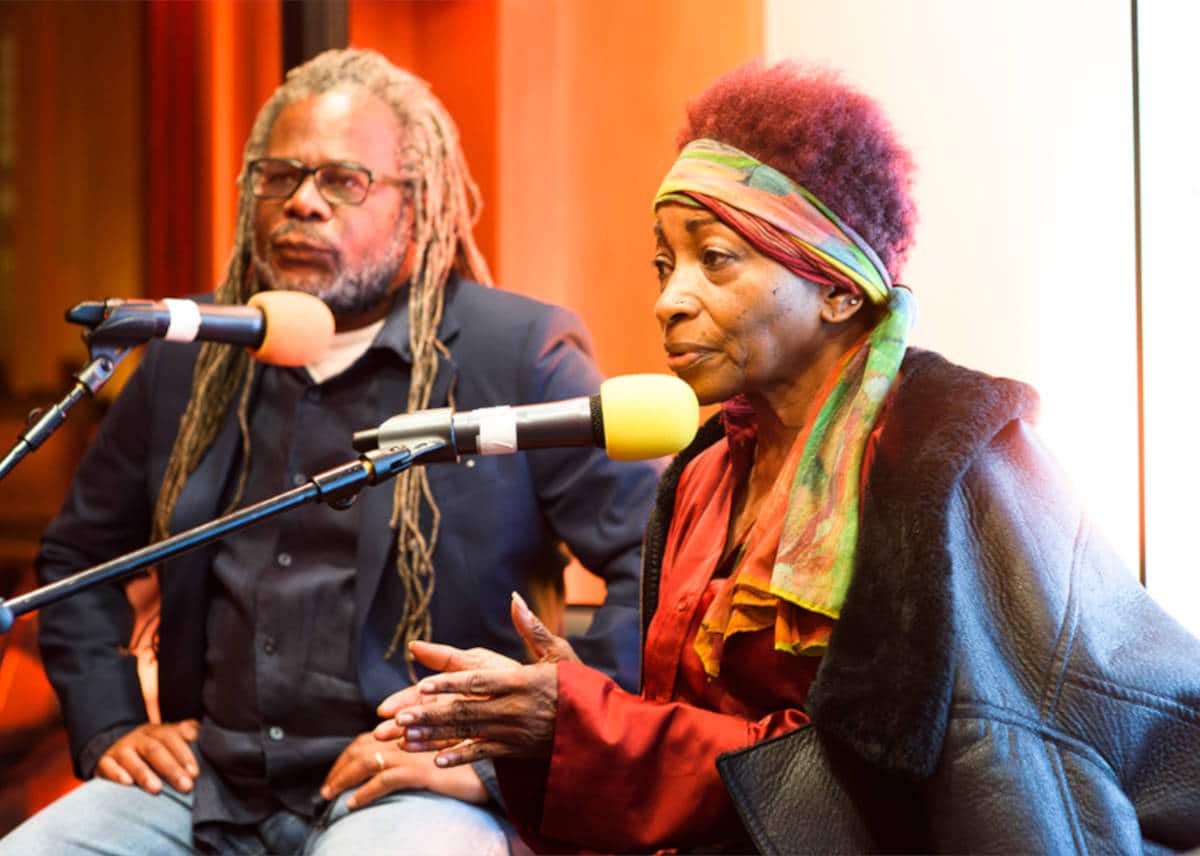
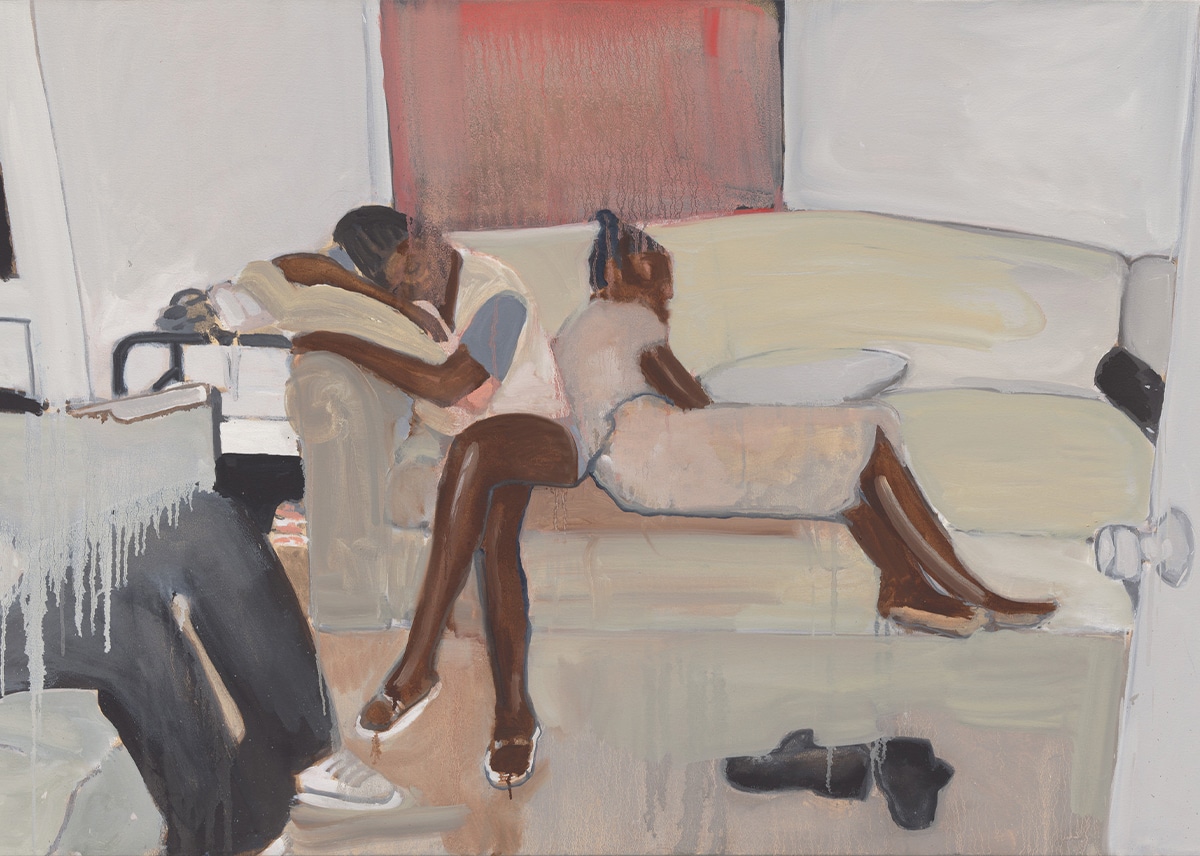
Founding editor of WritersMosaic Gabriel Gbadamosi pays tribute to Bonnie Greer, the extraordinary writer, public intellectual and much admired contributor to WritersMosaic who died on 15 September, 2026.
Triage
A response to the endless spiral of worldwide conflict and tragedy
The Complex
The unraveling of a dynasty

Disappearing Images
A festival of ephemeral art and the impermanence of our current world
Ever Land
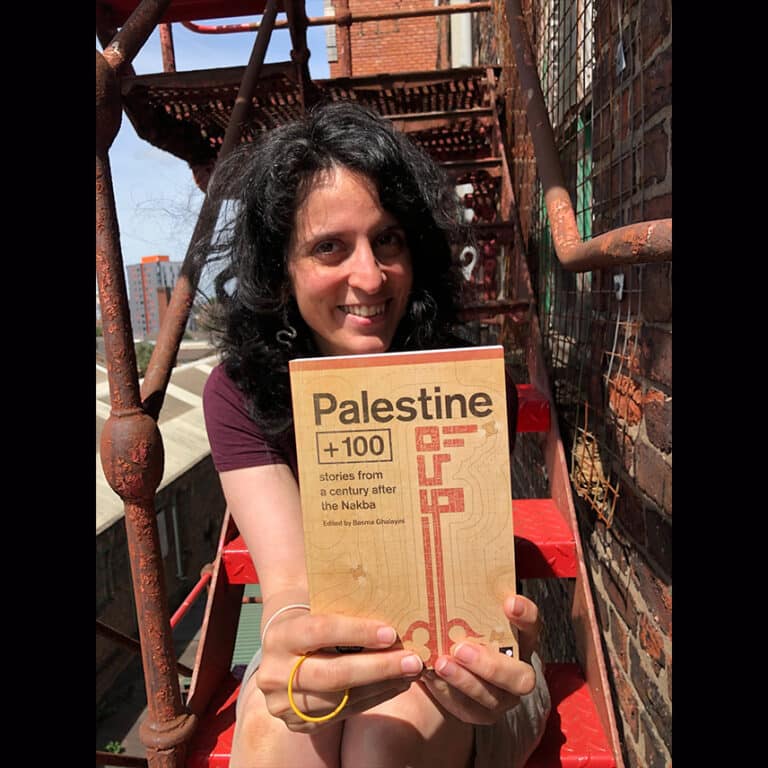
A layered and haunting view of daily life in occupied Palestine

Free Will
Will Harris reads his poem, 'Free Will'. Directed by Matthew Thompson and commissioned by the Adrian Brinkerhoff Poetry Foundation.

Half Written Love Letter
Selina Nwulu reads her poem, 'Half Written Love Letter'. Directed by Matthew Thompson and commissioned by the Adrian Brinkerhoff Poetry Foundation.

Illuminating, in-depth conversations between writers.
Listen to all episodes
SpotifyApple Podcasts
Amazon Music
YouTube
Other apps

The series that tells the true-life stories of migration to the UK.
Listen to all episodes
SpotifyApple Podcasts
Amazon Music
YouTube
Other apps
WritersMosaic interrogates the notion of ‘staying in your lane’ by asking writers how they attempt to think beyond the parameters of their cultural identity.
Listen to all episodes
SpotifyApple Podcasts
YouTube
In the first series of poems commissioned by Hannah Lowe, six poets explore how ritual gives meaning to our lives.
Listen to all episodes
SpotifyApple Podcasts
YouTube