
What’s in a feminist? Holding on to Gloria Steinem
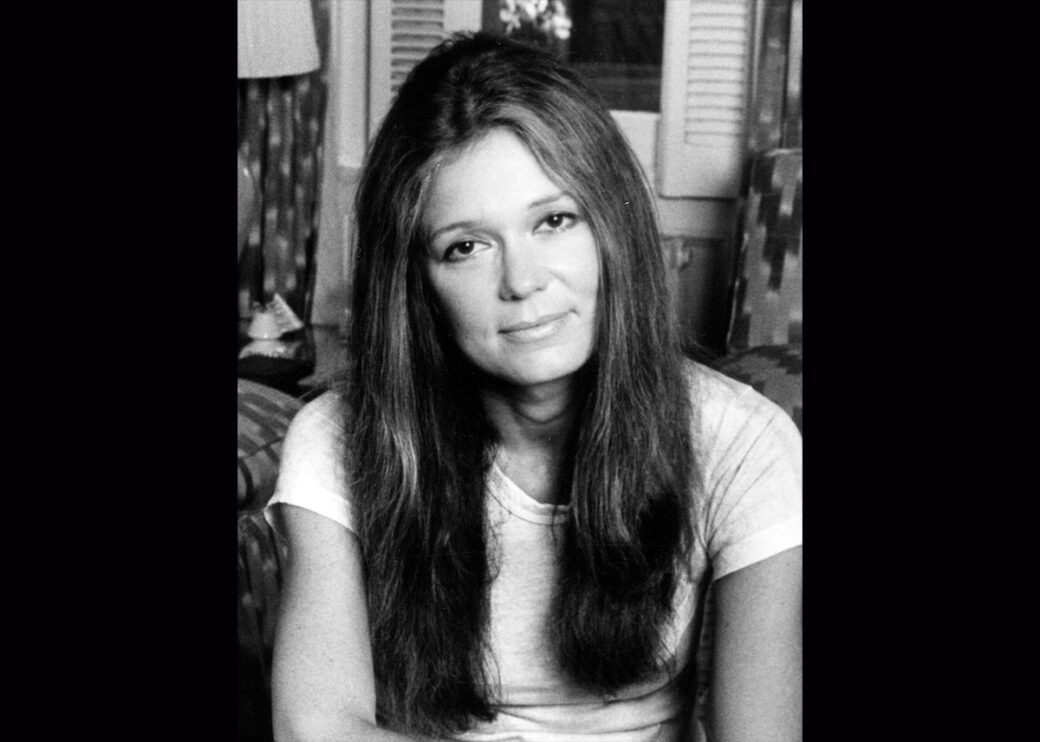
One evening in 1969, in the basement of a church in Greenwich Village, reporter Gloria Steinem listened to other women talking about their abortions. She’d had one too, over a decade earlier. Along with 52 other women, she would later share her experience in Ms. Magazine; the article ‘We Have Had Abortions’ came out in 1972, a year before Roe v Wade legalised abortion nationwide across the US. Ever since that speak-out in the Village, Gloria Steinem called herself a feminist.
Steinem’s activism often took the shape of groups of women talking. Until three weeks before her death at 92, she would host talking circles in the living room of her apartment in Manhattan. It was an art she’d learned in India, travelling with Gandhian activists for two years at the end of the 1950s. As Steinem would recognise in her memoir My Life on the Road, Black communities were already coming together in similar ways in the US around the civil rights movement. Yet, her experience of American life had been, so far, overwhelmingly white, and it was on the other side of the world that she first witnessed the practice: ‘a decade later, I would see consciousness-raising groups, women’s talking circles, giving birth to the feminist movement’. In over six decades of fighting for women’s rights, speaking and listening, Steinem travelled tirelessly through the United States and beyond, whether collecting donations for the Angela Davis Defence Fund or reporting on the working conditions of Playboy Bunnies. These experiences resulted in an eclectic series of writings, starting with her collection Outrageous Acts and Everyday Rebellions, which many credit with their introduction to feminism.
I didn’t have an introduction to feminism. I was born into the movement from a mother who’d scandalised our small town by organising pro-abortion rallies, printing pamphlets about sexual harassment, and distributing condoms. (In what context the latter outrageous act of everyday rebellion took place remains largely unclear, but this was the 1980s in southern Italy, and for a woman to admit to the knowledge of any form of contraception was inherently radical.) My mother’s group was called ‘Pandora’, and the daughters of its members would hold feminist meetings in the room next to where our mothers were speaking. One of the older girls took minutes on a piece of coloured paper.
Although her life was dominated by her work as a speaker, Steinem’s legacy is distinctly defined by listening. When I eventually read her writing, it wasn’t its combativeness that inspired me, nor the ferocious wit Steinem employed against the patriarchy (though I wouldn’t say no to any of that). Growing up in the middle of a talking circle, I recognised and appreciated Steinem’s ability to listen to voices other than her own, and to learn from them. Dorothy Pitman Hughes and Flo Kennedy were two of the many women of colour whom Steinem credited with teaching her about feminism. Partnering with both in turn, she spent much of the sixties ‘creating a context in which audiences themselves could become one big talking circle.’ The pioneering feminist magazine Ms., co-founded with Pitman Hughes in 1971, could be considered a physical extension of this practice, a talking circle of ink and paper, speaking through decades of feminist fights.
We’re all smashing the patriarchy, nowadays; I have a laptop sticker that says so. We’re all doing Gloria’s work. But the word ‘feminist’ has turned sour. At some point over the past few years, I stopped using it on social media. The word – proudly carried from my childhood across languages and countries, a talisman of my identity – has been tainted by its association with trans-exclusionary politics. The TERFs appear to have stolen feminism and, like Romeo in his enemy’s garden, I know not what name to call myself. Even Steinem probed the usefulness of the term ‘feminism’ in her final essay, published posthumously in The New Yorker: ‘it just means treating each of us as uniquely human. The experiences of race and gender and class are very real and important, but they are also constructed and changeable. Our humanity is consistent and sacred.’ She’d long since come to support trans rights unambiguously, after recanting an early article in which she fundamentally misrepresented the issue, in spite of having been an early supporter of gender affirming care. Unlike other representatives of second-wave feminism, throughout her long life Steinem never lost the ability to listen, to question herself, to understand what she heard.
In an Instagram reel from last year, we see Steinem sitting in her red armchair in her crowded living room, inviting the members of The State of Feminism Salon to consider it their meeting place. We also see the activist Kimberlé Crenshaw, who in 1989 coined the term ‘intersectionality’ to address the multiple layers of discrimination faced by women of colour. While acknowledging the diverse paths criss-crossing the movement, in the reel Crenshaw argues that we still need a word, at the very least to be able to ‘hail each other, to know what the project is,’ and, she says, ‘that’s why I want to hold on to feminism.’ Crenshaw is perched on the arm of Steinem’s chair; Gloria Steinem is listening.
WritersMosaic monthly
Get new writing in your inbox
One email monthly, unsubscribe anytime
Complex antihero: an interview with Arthur Hughes
Unravelling Authur Hughes' Richard III

Marlon James: a Jamaican reckoning
'A return to a home I barely knew'
The name of this wallpaper is ‘Childhood’
A luminescent bubble of memory

The Disappearers
A sprawling visceral experience that drops you in head first
The Lady Imam
Is the world ready to catch up with amina wadud?
Pressure
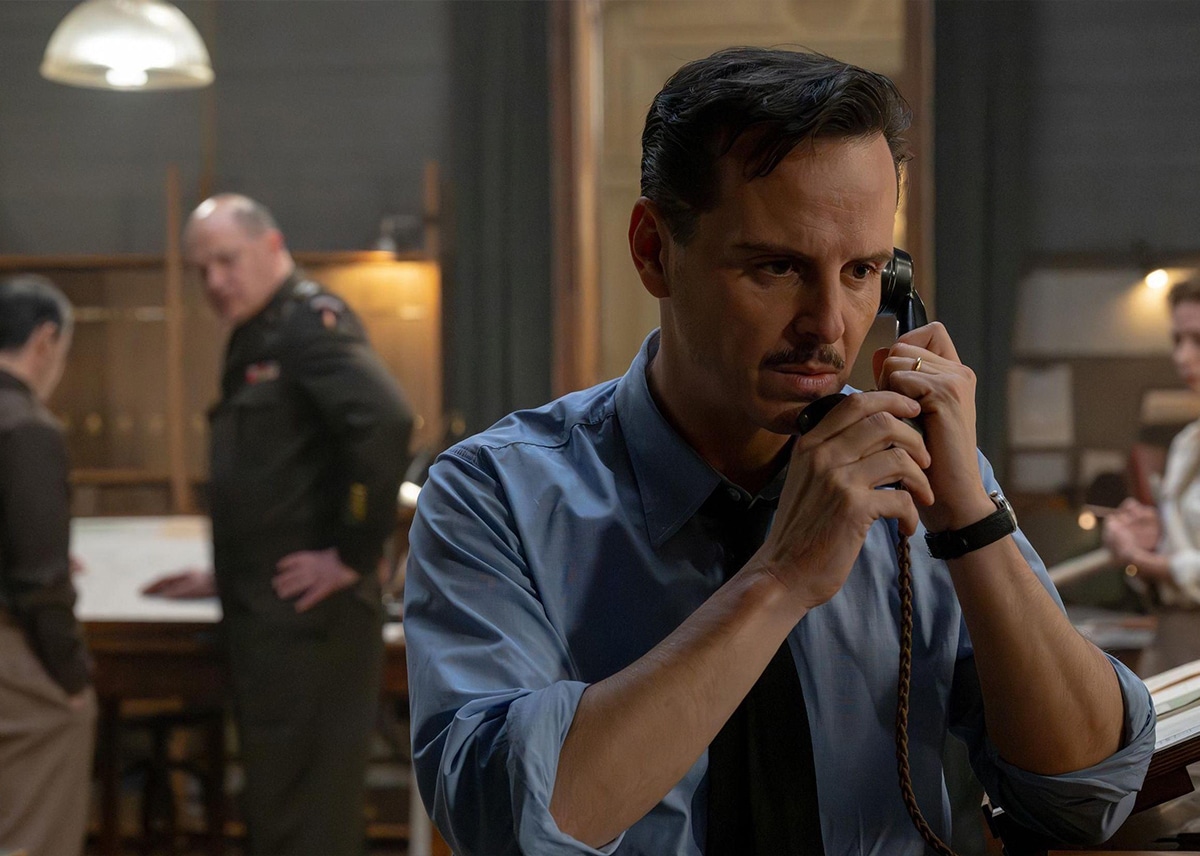
What's missing from the latest 'untold story behind D-Day'?


Illuminating, in-depth conversations between writers.
Listen to all episodes
SpotifyApple Podcasts
Amazon Music
YouTube
Other apps

The series that tells the true-life stories of migration to the UK.
Listen to all episodes
SpotifyApple Podcasts
Amazon Music
YouTube
Other apps
WritersMosaic interrogates the notion of ‘staying in your lane’ by asking writers how they attempt to think beyond the parameters of their cultural identity.
Listen to all episodes
SpotifyApple Podcasts
YouTube