
Fiction Prescriptions
The state of the world


Write in with your dilemmas and our dynamic duo will suggest remedies for the head and heart, drawn from novels, poetry and prose collections.
Contact Isabelle and Ella for a literary check up here:
writersmosaic.org.uk/
Fiction prescribed in this episode:
Aeneid by Virgil, translation by Scott McGill and Susannah Wright
When We Cease to Understand the World by Benjamín Labatut, translation by Adrian Nathan West
The Humans by Matt Haig
The Lonely Londoners by Sam Selvon
High and Low by Amanda Craig
‘Do Not Ask Your Children to Strive’ (poem) by William Martin
Yair (short story) by Emily Abdeni-Holman
The Night Creatures: Firefly by Robert Macfarlane and Luke Adam Hawker
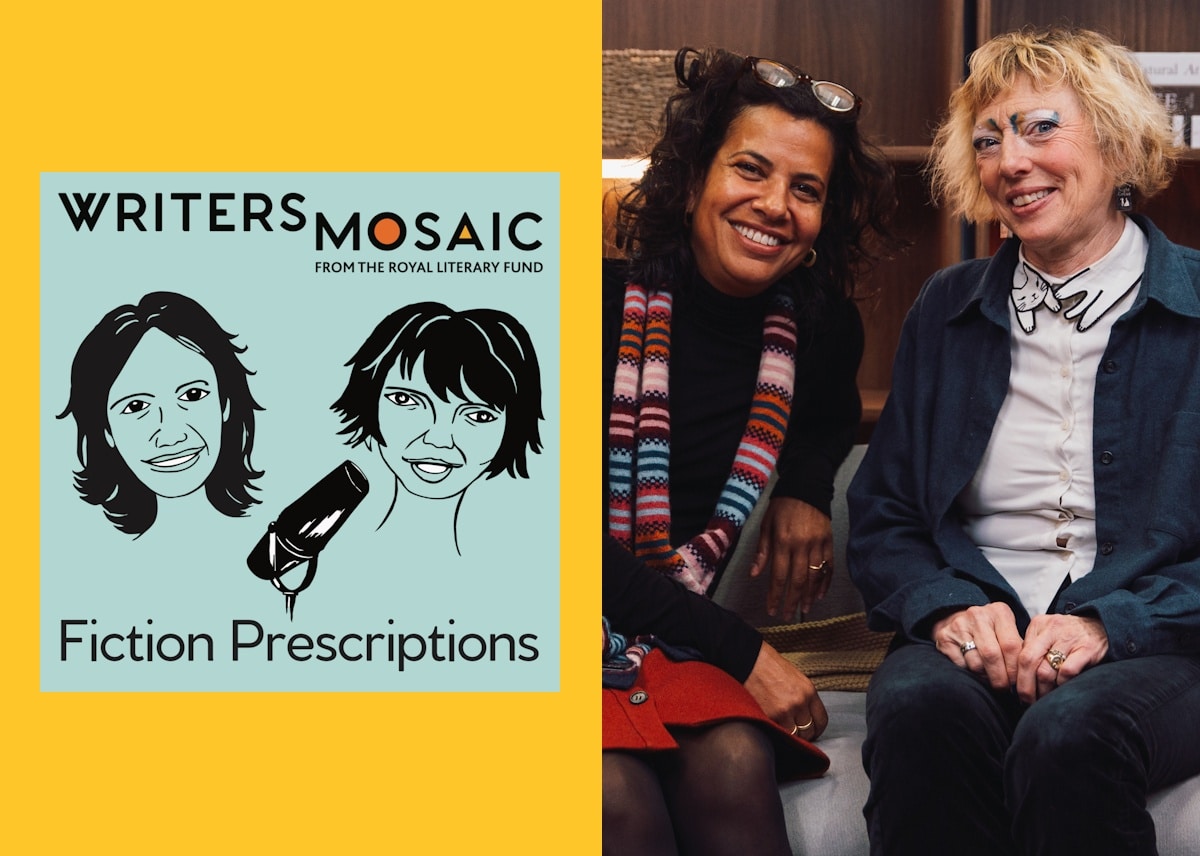
Ella Berthoud (EB): Welcome to Fiction Prescriptions. I’m Ella Berthoud, and I’m a bibliotherapist and an artist.
Isabelle Dupuy (ID): And I’m Isabelle Dupuy, and I’m a writer.
EB: This month, we’re going to be talking about the state of the world.
ID: And how fiction can help us live better in it.
EB: We begin with this question from Jen from Oregon, a listener to this podcast, who says, ‘Now that I’m an empty nester, I thought I’d be able to write the novel that I’ve always wanted to write. But I find the state of the world takes up too much of my brain, and I cannot write a word.’
ID: There is a line that’s being spoken quite often right now. It’s from ancient times, the Greek—
EB: Thucydides.
ID: Thank you. I cannot say his name, but I can say the line. ‘The strong do what they can and the weak suffer what they must.’ We’re going to start, surprisingly enough, with the return of Western civilisation, which may sound counterintuitive in terms of what the Western civilisation descendants are doing right now in this world. But we’re going to start by talking about this book, the Aeneid.
EB: By Virgil.
ID: By Virgil, written 2,000 years ago, about 30 years before Christ was born. This is a new translation by Scott McGill and Susannah Wright. It is absolutely beautiful. The aesthetics of it are incredible. It makes you feel like getting on a cruise around the Mediterranean.
EB: And I can agree, it’s a book that you pick up, and every passage you read is incredibly beautiful.
ID: It’s stunning. But deeper than that, the translation is so current that they actually do call Aeneas what he is, a refugee. So, this is the man whose destiny it is to found Rome and to found the Roman Empire, and yet, he begins life running away from a burning city, destroyed forever, called Troy, with his father on his back, his son in his hand. Unfortunately, his wife got lost along the way. A few other—already then, already then, Ella.
EB: [Laughs] Collateral damage.
ID: Already then. And they end up on these ships, 2,000 years ago, with no engine, no map, no compass, no GPS.
EB: A familiar story.
ID: In the middle of the Mediterranean with a dream, a dream of Europe, because the gods came to him and said to him, ‘Your future is in a place called Italy.’ They don’t even know where this Italy is. They are leaving what is effectively today the coast of Türkiye. And they end up beaching up in Libya, in North Africa. And they are in very bad shape. The boats are destroyed. They’re sick. They’ve been through a terrible, terrible storm. And in Libya, they are welcomed by this queen called Dido. And Dido is a widow. And because she’s a chaste widow, she gets respect from all the other kingdoms around her in Africa. And she has built a city called Carthage. And she welcomes them, and she fixes their ships, and she gives them food and clothes and shelter and falls madly in love with Aeneas, who falls in love with her. And it’s a beautiful love story.
EB: But doomed.
ID: But doomed, because the day comes when the gods tell Aeneas that this is not where he is supposed to be. He is supposed to go to Europe; that is the future, not Africa. Very interesting already back then, isn’t it? And he chooses power over love somewhere, doesn’t he?
EB: He does, and he listens to the gods and leaves Dido.
ID: He leaves Dido.
EB: In an awful way.
ID: Without looking at her.
EB: Yeah.
ID: That scene was so modern in a way, wasn’t it?
EB: Typical man, we might say [both laugh].
ID: Not all men! But indeed, we have seen these types of men, haven’t we Ella?
EB: We have.
ID: This is a type of man who told his—when the message came to him at night from the gods, he told his men, ‘Pack up the ships quick, we have to go.’ And while he is thinking about how to break this to Dido, she of course hears that they’re packing up to go. She’s the queen; she knows what’s going on in her territory. And she confronts him, and she’s like, ‘What is this?’ And he’s like, ‘Well, yes, I was trying to think about how to say this to you.’ And with his eyes on the future, which was not her face but somewhere out there in the air on a cloud or in a rock on the sea.
EB: On the gods, maybe.
ID: He says, ‘I have to go. This is not where I’m supposed to be.’ So—
EB: And off he goes.
ID: And off he goes.
EB: And then he does found Rome.
ID: Well, yes.
EB: Eventually. But that’s not the story.
ID: But that’s not, no, that’s not in the story. But he does get to Italy, where enormous violence awaits him because as we know, refugees are not always welcome. And he does leave. Dido dies in a rage and also in despair because as a widow, she was getting respect, but now that she had displayed her love and that she basically had sex with this refugee, the other kings around her were closing in on her. And so she builds a pyre on top of her city and burns herself. And Aeneas gets to watch this from his departing ships.
EB: It’s pretty tragic.
ID: But he made his choice. And so when he gets to Italy, he is confronted by a number of tribes who do not want him there with his men. And he has to fight. And this is what I wanted to read about because this choice of violence is quite striking, and Virgil writes violence amazingly.
EB: He doesn’t beat about the bush.
This is a preview of the show. The full text will be available as a PDF here: Fiction Prescriptions: The state of the world
Next time on Fiction Prescriptions: Parenting
(Playful book chat only – not medical advice. If you need serious support, contact samaritans.org)

Fiction Prescriptions
Love
Ella Berthoud & Isabelle Dupuy

New Year’s resolutions
Ella Berthoud & Isabelle Dupuy

Illuminating, in-depth conversations between writers.
Listen to all episodes
SpotifyApple Podcasts
Amazon Music
YouTube
Other apps

The series that tells the true-life stories of migration to the UK.
Listen to all episodes
SpotifyApple Podcasts
Amazon Music
YouTube
Other apps
Afro-Caribbean writer Frantz Fanon, his work as a psychiatrist and commitment to independence movements.
Listen to all episodes
SpotifyApple Podcasts
YouTube
Nine writers with migrant backgrounds reveal the secrets of their talismans of migration.
Listen to all episodes
SpotifyApple Podcasts
YouTube

Free Will
Will Harris reads his poem, 'Free Will'. Directed by Matthew Thompson and commissioned by the Adrian Brinkerhoff Poetry Foundation.

Half Written Love Letter
Selina Nwulu reads her poem, 'Half Written Love Letter'. Directed by Matthew Thompson and commissioned by the Adrian Brinkerhoff Poetry Foundation.


On seeing Iran in the news, I want to say
A poet reflects on what it's like to be of Iranian descent and to witness terrible news coming out of Iran.

Sad Song of Plantain poem
'I lie as quiet as death in this ‘three for two pounds’ cardboard box'
Regarding Turner
What does knowing of the revered British artist's investment in chattel slavery mean for his legacy?

The Secret Agent
A film as much about the contemporary moment as its period setting
Sinners
A soulful, blues-soaked explosion of music centres this Southern Gothic and slasher horror
