
Colonial Countryside

Edited by Corinne Fowler and Jeremy Poynting
Peepal Tree Press (2024)
Review by Franklin Nelson
In September 2020, the National Trust published a report that laid bare its links to the British empire. The heritage conservation charity found that twenty-nine of its properties had ‘links to successful compensation claims for slave ownership’ and that about one-third could ‘be directly connected to colonial histories’, with enslavers and East India Company officials among houses’ former owners. As Corinne Fowler – one of the editors of that report – and Jeremy Poynting note in their introduction to Colonial Countryside, its findings ‘provoked the wrath of those who preferred that Britain’s colonial past remain unstirred’.
This ‘anthology of creative and historical responses’ – edited by Fowler and Poynting as part of a publicly funded child-led history and creative writing programme – continues the project of unsettling received narratives about colonialism, nation and material culture. Eight stories and two series of poems that take inspiration from a National Trust property are each paired with a short essay on the house, hall or castle in question. From Charlecote Park near Stratford-upon-Avon to Calke Abbey in Derbyshire, the buildings range in age, size and grandeur. In their stories of origin or expansion, what they have in common is enrichment through the exploitation of Black people.
The ‘creative responses’ to often dark histories that are gathered here adopt a variety of formal and thematic approaches. Some, such as Ayanna Lloyd Banwo’s careful reimagining of Diego, a freed slave who went around the world with Sir Francis Drake, seek to recover ‘forgotten’ individuals. Others, like Hannah Lowe’s poems on ‘Chinese Wallpaper’, dwell on the buildings and objects those individuals’ labour helped fund. Others still, including Jacqueline Crooks’s ‘Dreams on My Skin’ and Malachi McIntosh’s sharp deconstruction of the romance genre in ‘Imperial Homes’, move between past and present, wrestling with the afterlives of empire and how it continues to shape our world and selves.
The diversity and richness of the creative responses is matched by the clarity and rigour of the ‘historical responses’, notwithstanding a number of typographical and type-setting errors. Written by academics and National Trust curators, they build on Fowler and Poynting’s authoritative introduction to illuminate the characters behind Britain’s activity overseas and how it affected life at home. On inheriting Penrhyn Castle, for example, Richard Pennant invested in ‘farms, housing, roads, tourism, churches, and schools’ in Wales thanks to his ‘Jamaican assets’, which he never laid eyes on.
People alive today cannot reasonably be held liable for their ancestors’ actions. But Fowler and Poynting correctly note that ‘we all live among the consequences of past activities’, and thoughtful efforts to nuance Britain’s sense of its history seem to be shifting the public mood. Sixty-four per cent of Britons are proud of their country’s history, down from 86 per cent ten years ago, the British Social Attitudes survey reported this month, and younger generations seem more willing to instigate and participate in ‘difficult conversations’. Indeed, Colonial Countryside stresses the future: children photographed by Ingrid Pollard, who has contributed a visual essay, on school trips to National Trust properties are the first and last thing we see. Their engagement with how the United Kingdom came to be will surely change the landscape in which these texts and the properties that motivated them sit.
https://www.peepaltreepress.com/books/colonial-countryside
Photo courtesy of wikicommons
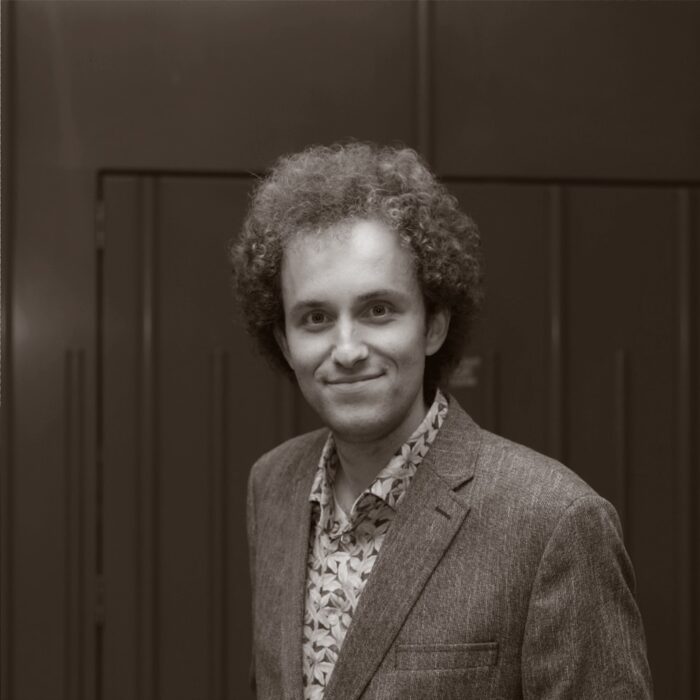
Franklin Nelson
Franklin Nelson works for the Financial Times, commissioning and writing on UK politics, the economy and society as well as books and the arts.
WritersMosaic monthly
Get new reviews in your inbox
One email monthly, unsubscribe anytime
Mahsa Salali’s Naqqāli
'Salali positions the female body... as an active agent'

At Sea
Bearing witness in the face of dismissal

Ai Weiwei: Button Up!
A journey through the dangerous world of human tragedy

Triage
A response to the endless spiral of worldwide conflict and tragedy
My tomorrow is today
'I clasped my hands together, not in prayer but to stop them from shaking'
Ballet Black at 25
Cassa Pancho: 'It’s a miracle that we are still here in some way'

Free Will
Will Harris reads his poem, 'Free Will'. Directed by Matthew Thompson and commissioned by the Adrian Brinkerhoff Poetry Foundation.

Half Written Love Letter
Selina Nwulu reads her poem, 'Half Written Love Letter'. Directed by Matthew Thompson and commissioned by the Adrian Brinkerhoff Poetry Foundation.

Illuminating, in-depth conversations between writers.
Listen to all episodes
SpotifyApple Podcasts
Amazon Music
YouTube
Other apps

The series that tells the true-life stories of migration to the UK.
Listen to all episodes
SpotifyApple Podcasts
Amazon Music
YouTube
Other apps
In the first series of poems commissioned by Hannah Lowe, six poets explore how ritual gives meaning to our lives.
Listen to all episodes
SpotifyApple Podcasts
YouTube