
Father Mother Sister Brother
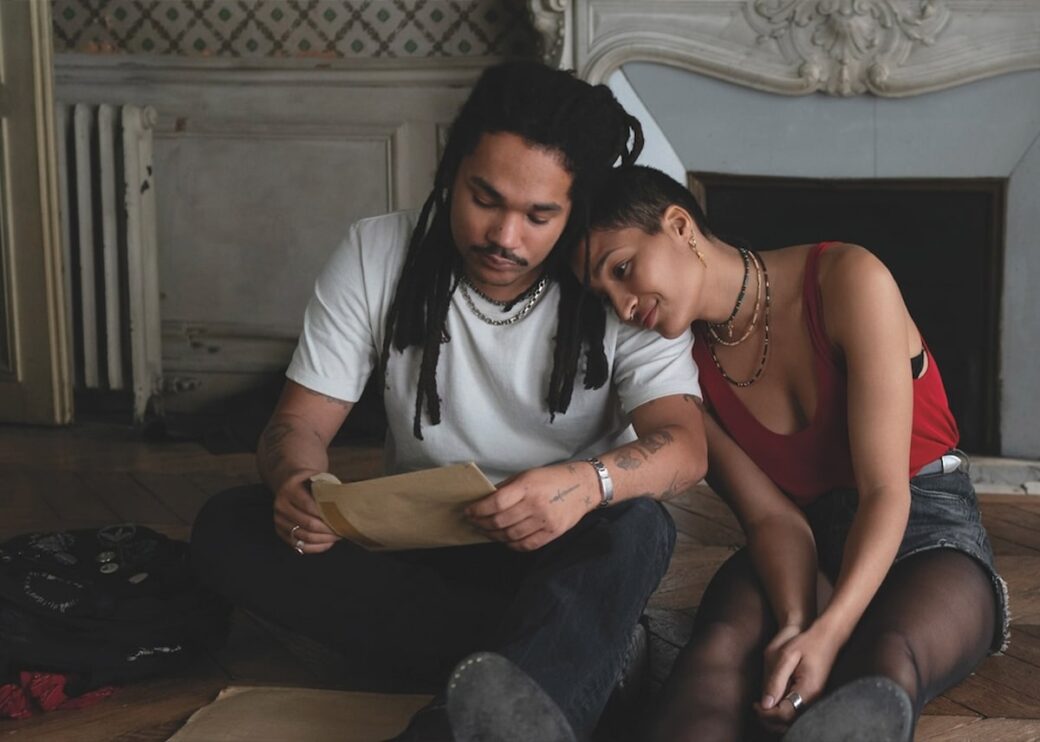
Directed by Jim Jarmusch, 2025
The children in Father Mother Sister Brother are adults, but they may as well be actual children, caught in the wake of their parents’ perpetual emotional immaturity. Jim Jarmusch’s anthology film unfolds over three distinct chapters, as three sets of siblings encounter their parents in some way or another over the course of an afternoon. Awkward chit chat is made, a copious amount of tea is drunk, the past is simultaneously delved into and avoided at all costs. Childhood, Jarmusch seems to be telling us, never quite ends, in that we never quite break out of the patterns set out for us from an early age. Step back into your parent’s house and you are transformed once again into that small, uncertain creature, both helpless and disappointed.
If this sounds a little bleak, it is, despite Jarmusch’s trademark deadpan touch. Father Mother Sister Brother is in many ways a successful family drama, in that it successfully mimics the emotional quality of encountering estranged relatives: the small talk, the strained silence, the movements towards intimacy that only throw into relief its absence. Jarmusch’s restrained directorial style is the perfect vessel for these repressed dynamics to simmer and never fully erupt. Minimal dialogue accentuates the inability of his characters to ever really say how they feel; disinterest in narrative propulsion allows his characters to fully marinate in their stagnation – with themselves and each other.
Take, for example, our first sibling pair: Adam Driver’s Jeff and Mayim Bialik’s Emily, an extremely normal and boring brother and sister whose extremely normal and boring lives – work, divorce, children – are interrupted with a rare visit to their distant father. The encounter plays out like a game of musical chairs: the three relatives, bound by blood and memories and very little else, circle each other, swapping positions on furniture and treading over the same questions and answers. The rare attempt to get real – a reference to their deceased mother, the worrying state of their father’s finances – are hurriedly glossed over with well-mannered alarm, lest the polite family charade shatters.
Similar too, is our second family unit, the extremely self-possessed mother (Charlotte Rampling) and her daughters Tim (Cate Blanchett) and Lilith (Vicky Krieps). The sisters have moved to Dublin to be closer to their famed writer mother, yet it becomes apparent that this closeness is in proximity only: they visit her for tea once a year, an annual tradition rooted in frigid British civility and emotional avoidance, with Charlotte Rampling’s cut-glass English accent sharp against the family’s adopted Irish home. The trio swap meaningless platitudes before Lilith, a free-spirited bohemian, makes an excuse to leave quickly, using her mother’s Uber account. Jarmusch closely observes the small moments of heartbreak that make up such dynamics: the mother handing her daughters gift bags in lieu of actual affection, the strained smile on people-pleaser Tim’s face as she negotiates the other two.
Yet for all its uncanny ability to reconstruct the kind of family event that makes you want to shrivel up inside, Father Mother Sister Brother never quite externalises these sensations into a workable narrative structure. It succeeds perhaps more as a mood piece than as a coherent work of cinema: very little appears to hold the three vignettes together beyond a looming sense of attachment anxiety and certain repeated motifs. All three sibling pairs spot a group of skateboarders freewheeling past; all three make reference to needing to drink water; all three discuss a Rolex watch someone is wearing; all three make an offhand reference to “Bob’s your uncle” (the film’s biggest laugh comes from Charlotte Rampling’s affected ‘your uncle’s name is Robert’). These intermittent Easter eggs act less as a thematic glue than as sudden moments of alienation given their absurd pointedness, revealing the forced structure of narrative and script and the ultimately false nature of what we are watching. If, as Tolstoy said, all unhappy families are each unhappy in their own way, Jarmusch’s insistence that they share such specific references feel less a nod to the universality of fraught intimacy and more an awkward attempt to thread three otherwise standalone shorts together.
Jarmusch’s final vignette feels perhaps the best realised, moving away from the structuring narrative of a weird family afternoon hangout toward something looser and more contemplative. Here, fraternal twins Skye (Indya Moore) and Billy (Luka Sabbat) reunite in Paris after the deaths of their parents in an accident to clear out their childhood home. Parental absence is concretised and what is left is something extremely tender between the two siblings. While still replete with the same nod-and-wink motifs as the previous sections, this concluding part tells less and shows more than its predecessors. The chemistry between the two siblings – natural and (just) the right side of sentimental – points to a complex family dynamic and history that, rather than unrealised, feels too big to depict outside of its residue: family photos, inside jokes, a brother and sister whose love remains even after their parents are gone. It is here, in the momentary earnestness of these two adult orphans, that we get a glimpse of the true bittersweetness that family can signify, beyond the irony that otherwise cloaks Jarmusch’s film.
WritersMosaic monthly
Get new reviews in your inbox
One email monthly, unsubscribe anytime
Pressure
What's missing from the latest 'untold story behind D-Day'?
A Trial
An examination of theatre’s complicity in post-truth politics
The Complex
The unraveling of a dynasty
Marlon James: a Jamaican reckoning
'A return to a home I barely knew'
The name of this wallpaper is ‘Childhood’
A luminescent bubble of memory
What’s in a feminist? Holding on to Gloria Steinem
Is Gloria Steinem's feminism still relevant today?


Illuminating, in-depth conversations between writers.
Listen to all episodes
SpotifyApple Podcasts
Amazon Music
YouTube
Other apps

The series that tells the true-life stories of migration to the UK.
Listen to all episodes
SpotifyApple Podcasts
Amazon Music
YouTube
Other apps
WritersMosaic interrogates the notion of ‘staying in your lane’ by asking writers how they attempt to think beyond the parameters of their cultural identity.
Listen to all episodes
SpotifyApple Podcasts
YouTube