
A trail through the archive of Black British history
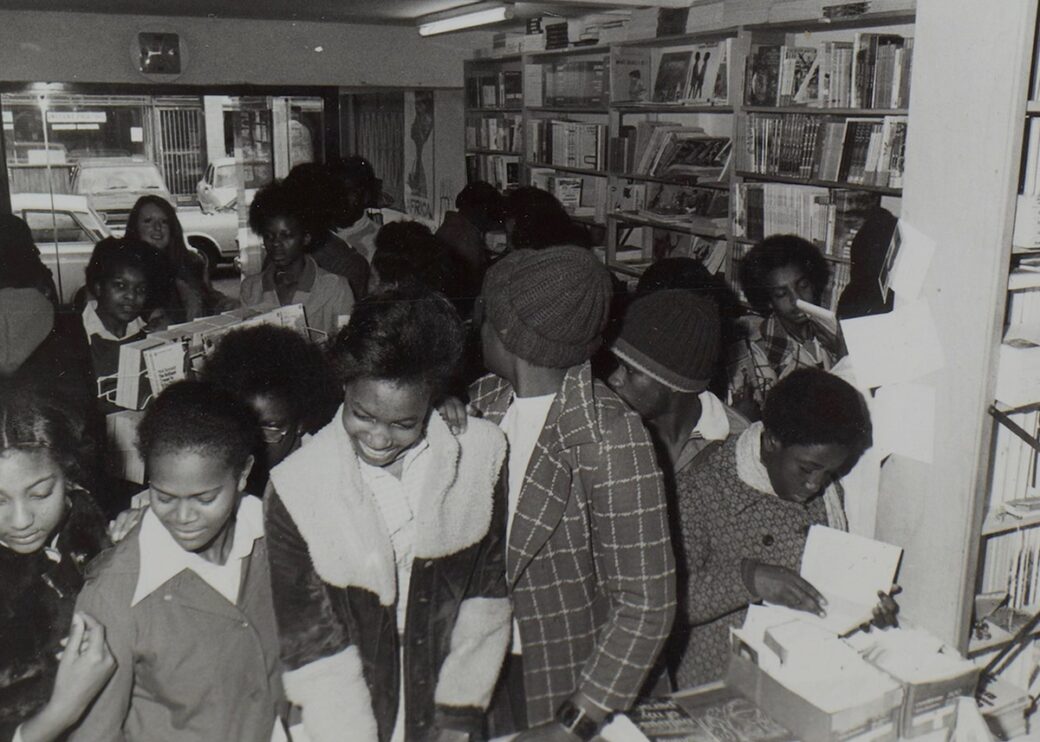
When I was writing my first book We Were There, I kept discovering those who’d come before me, their footsteps faded but still just about visible on the path ahead. Often one clue would lead to another new discovery, a writer would cite another, creating a chain; a trail of breadcrumbs. When I sold We Were There, publishers kept saying they couldn’t believe books like mine – those which considered the Black population outside of London in detail during the tumultuous Thatcher era – didn’t already exist. But, of course, they did.
I remember sitting in the British Library reading Jacqueline Nassy Brown’s Dropping Anchor, Setting Sail, the African American scholar’s survey of the Black population of Liverpool at the end of the 1980s. It’s a brilliant, considered piece of work that gives a uniquely American view of a Black British community. It also contained clues. First, I realised that the book’s cover photograph of the Mersey was taken by Ingrid Pollard, a photographer who had become a key figure in We Were There. Then, as I flicked through the pages, I saw a reference to a book I’d never heard of – Behind The Frontlines by Ferdinand Dennis. I bought it off eBay for £3. When it arrived, I was amazed. It’s an unputdownable travelogue around Black Britain during the mid-1980s. Dennis visits nearly every city I write about – Cardiff, Birmingham, Liverpool; he visits Haile Selassie’s home in exile in Bath. He sparred intellectually with Rastas, questioned Pan-African logic and created a portrait of Black Britain at that time that stands up 40 years on.
These discoveries happened several times when I was in archives. I remember sitting in the George Padmore Institute reading a gonzo feature by Carl Gayle about British reggae from 1976. Four thousand words of new journalism that would have put Tom Wolfe to shame. Vivid, funny, absolutely captivating writing. The kind that any editor I know would have loved on their pages. As insightful as Greg Tate, as stylish as Nick Tosches or Lynn Barber. The excuse I’d heard while I made my first steps in journalism – ‘we’d have loved to commission Black writers, but there weren’t any’ – rang in my head.
Before Behind The Frontlines, I’d been told about a photography book by Clement Cooper, the Mancunian artist. He’d captured the Black population of his city – in church, at youth clubs, in the pub – and gave me a sense of place, of time, of the people who I was trying to bring back to life, momentarily, on my pages.
What every one of these books did was tell me what I was doing was possible, that it was part of a continuum and that Black British people had attempted to map our story in various ways and modes – and had done so brilliantly. These discoveries continued long after I’d finished writing; in May 2026, Ralf Webb wrote in The Guardian about the forgotten tale of Eric Walrond, the Guyanese writer who navigated the Harlem Renaissance, wrote searing short fiction, bumped heads with Marcus Garvey – and ended up dying in Wiltshire, with his work mostly forgotten.
Why aren’t these words part of our wider canon? Why aren’t they at our fingertips? Neglect? Certainly, but by whom? A failure on the part of the literary establishment to grasp or even acknowledge these stories? Definitely. A wider landscape that refuses to take Black British stories seriously? Yes. But we also have to take stock. Should we expect a literary industry that has been so apathetic about embracing Black authors to now do a volte-face and provide a guide? That would be naive and ridiculous. First, we’ve got to grasp these stories and build a canon. Pass on those books, the names of their authors and their stories. If they don’t live with us, why would they live with anyone else?
Another name that rings loudly in this work is that of the Huntleys, Eric and Jessica – the publishers and activists who helped reshape Black British literature during the second half of the 20th century. The first date of my book tour was the inaugural Huntley Archive event at the Ealing Book Festival. I had no idea that Eric Huntley would attend. He sat in the front row, aged 95, just a few months before his death. There were many emotional moments while researching, writing and talking about We Were There, but looking out and seeing one of the people who made what I do possible was a stand out.
Along with other publishers like Karia Press, Peepal (who have just published Ferdinand Dennis’s latest novel) and Margaret Busby, Eric and his wife Jessica didn’t just publish books, they reshaped the way Black Britain thought about itself and its history. The fact they did this at a time when Black writers were ignored and marginalised is all the more impressive and shows just how needed their work was. The Huntleys were incredibly successful too: Bogle L’Ouverture Publications sold 40,000 copies of Walter Rodney’s How Europe Underdeveloped Africa without one broadsheet newspaper review.
But numbers alone don’t tell the true impact of their work – much of it is intangible. How many people did their work truly affect? We’ll never know because it wasn’t just about how many people bought one of their books, it’s also how many passed those words on, embraced the ideas contained within and revised their self-image afterwards. Then there are those who passed the learnings down to successive generations; we’d also have to include the teachers who taught their classes about Mary Seacole and Nanny of the Maroons.
I was lucky with my book. It came out in the wake of Black Lives Matter at a time when mainstream publishers – genuinely for the first time ever – actually wanted Black British authors and their work. I ended up having more than a dozen offers for my book. I spent a day being ferried around London and being told I was a superstar in the offices of publishers I love and respect. It was surreal. I know that very few of us have ever had that experience. The people that I read and was so inspired by certainly didn’t. But they made the work anyway. As publishers now turn their backs on Black authors as quickly as they embraced them, that fact is the one I think about. Building something ourselves is the only way to ensure it endures.
I have no idea if my book will be remembered; history shows it is very unlikely. But it is now part of something bigger: a nexus of writing that is about and from Black Britain. It does not stand alone, and by following the breadcrumbs a bigger picture becomes visible.
Rest easy, Mr Huntley. You showed us the path.
Lanre Bakare
Lanre Bakare writes for The Guardian, where his work focuses on the intersection of art, race and culture across multiple disciplines.
WritersMosaic monthly
Get new writing in your inbox
One email monthly, unsubscribe anytime
A tribute to Bonnie Greer
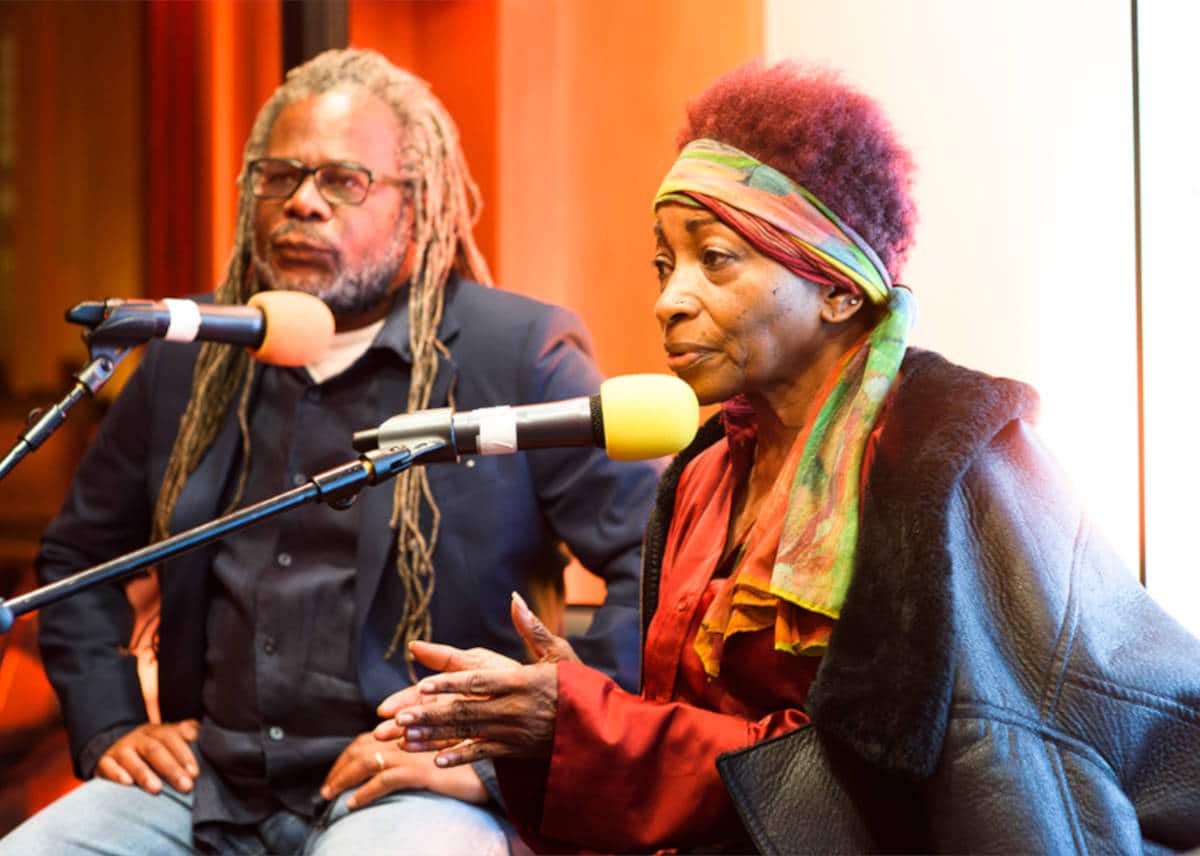
Founding editor of WritersMosaic Gabriel Gbadamosi pays tribute to Bonnie Greer, the extraordinary writer, public intellectual and much admired contributor to WritersMosaic who died on 15 September, 2026.
Triage
A response to the endless spiral of worldwide conflict and tragedy
My tomorrow is today
'I clasped my hands together, not in prayer but to stop them from shaking'
Ever Land
A layered and haunting view of daily life in occupied Palestine
Mahsa Salali’s Naqqāli
'Salali positions the female body... as an active agent'
At Sea
Bearing witness in the face of dismissal

Free Will
Will Harris reads his poem, 'Free Will'. Directed by Matthew Thompson and commissioned by the Adrian Brinkerhoff Poetry Foundation.

Half Written Love Letter
Selina Nwulu reads her poem, 'Half Written Love Letter'. Directed by Matthew Thompson and commissioned by the Adrian Brinkerhoff Poetry Foundation.

Illuminating, in-depth conversations between writers.
Listen to all episodes
SpotifyApple Podcasts
Amazon Music
YouTube
Other apps

The series that tells the true-life stories of migration to the UK.
Listen to all episodes
SpotifyApple Podcasts
Amazon Music
YouTube
Other apps
WritersMosaic interrogates the notion of ‘staying in your lane’ by asking writers how they attempt to think beyond the parameters of their cultural identity.
Listen to all episodes
SpotifyApple Podcasts
YouTube
In the first series of poems commissioned by Hannah Lowe, six poets explore how ritual gives meaning to our lives.
Listen to all episodes
SpotifyApple Podcasts
YouTube