
Mahsa Salali’s Naqqāli
Mahsa Salali
Victoria & Albert Museum, 2026
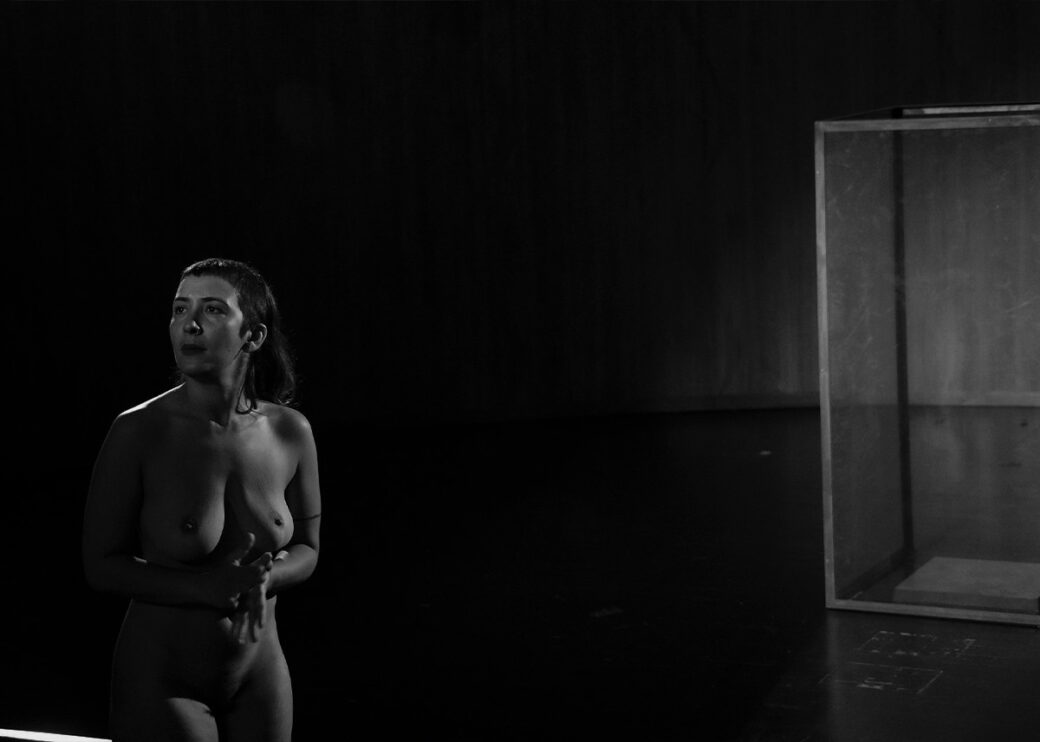
On the evening of 26 June, during the final hours of an unusually warm London day, the Lydia and Manfred Gorvy Lecture Theatre at the V&A was completely full. As the audience entered, the space was almost entirely dark. At the centre of a semi-circular stage stood a glass booth resembling the display vitrines found throughout the museum. When the lights slowly rose, Mahsa Salali was revealed inside, seated naked within the enclosure.
Naqqāli responds to the Ardabil Carpet, the world’s oldest dated Persian carpet, displayed in the V&A’s Jameel Gallery. Rather than simply referencing an object in the museum’s collection, Salali’s work confronts the institutional structures that frame cultural heritage. By reactivating the mythology of Ferdowsi’s epic poem Shahnameh through her body, she turns the museum into a site where ownership, memory, gender and identity are contested.
Before the performance began, a low-frequency hum emerged from the darkness. Gradually intensifying, it sent vibrations through the auditorium and into the audience’s seats, deliberately attuning bodies to the physical demands of the performance to come. Eventually, the sound developed into music. Sound functioned as a structural element throughout the work. Trained as a musician, Salali has long integrated music into her performances, including The Call at Whitechapel Gallery. Here, even the rhythm of her breathing became part of the score.
From inside the glass enclosure, amplified breaths filled the room. Salali then began a naqqāli recital, a traditional Persian form of epic storytelling closely associated with Ferdowsi’s Shahnameh. Her chosen subject was Gordafarid, one of the epic’s most celebrated female heroes, renowned for her courage and defiance.
For Persian-speaking members of the audience, the resonance of these verses carried the promise of something unusual and transgressive. Yet meaning circulated through the room beyond language itself, passing through shifts in attention, breath, tension and anticipation. Salali does not attempt to translate her references, whether from the Shahnameh or, later, an iconic Iranian pop song. She trusts the work to communicate through rhythm, gesture and presence.
Upon completing the recitation, Salali bowed to the floor in a gesture reminiscent of rituals performed in the Iranian zurkhaneh, the traditional ‘house of strength’, where such acts mark the beginning of a contest or display of combat. What followed was the most demanding and unsettling section of the work.
Reaching between her legs, Salali slowly began extracting a narrow strip of black fabric from her body. The gesture inevitably recalled Carolee Schneemann’s influential 1975 performance ‘Interior Scroll’, in which the artist pulled a scroll from her vagina while reading a text that became a landmark of feminist performance art. Yet the black textile functions differently, evoking both the woven structure of the Ardabil Carpet and a letter addressed to the museum itself. Here, the gesture is redirected towards questions of cultural possession, displacement and institutional ownership.
As in much of Salali’s practice, symbols invite multiple readings while resisting fixed interpretation. The prolonged extraction of fabric was physically arduous: trembling, intensely embodied, exhausting and at times deeply uncomfortable to witness. Sweat, strain and even urine became part of the performance’s material reality. The body ceased to function as a neutral medium and became instead a site of struggle. Here the intersections of art, politics and gender were not represented but enacted.
Like Gordafarid herself, Salali positions the female body not as an object to be viewed but as an active agent. Her body becomes both battlefield and storyteller, simultaneously carrying histories of violence and possibilities of resistance. Once the extraction was complete, Salali emerged from the glass enclosure. She put on a dress, a mesh headscarf associated with her first childhood performance and a pair of shoes that had been placed on a chair in the front row before the performance began. At this moment, a cameraman entered the stage, filming her from up close.
Ebi’s well-known song ‘Shabzadeh’ began to play. Familiar to many in the audience, the song centres on longing, homeland and displacement, and also appears memorably in Panah Panahi’s acclaimed 2021 film Hit the Road. Salali lip-synced as she moved through the auditorium and ascended the stairs while her image was projected live onto a large screen. At the back of the theatre, she opened the doors and embraced her parents.
The reunion carried particular emotional weight. Salali had previously spoken to me of her father’s reluctance to attend her performances, and of how he felt unprepared for such encounters. Yet here he was, waiting behind the doors, ready to enter the work. His presence suggested not a sudden transformation but a quieter form of accompaniment. If the performance was concerned with reclaiming agency, then this gesture acknowledged that such shifts often unfold at different rhythms for different generations. Salali led her parents into the auditorium and together they walked towards the stage, bringing the performance to a close.

WritersMosaic monthly
Get new reviews in your inbox
One email monthly, unsubscribe anytime
The Disappearers
A sprawling visceral experience that drops you in head first
The Lady Imam
Is the world ready to catch up with amina wadud?
Pressure
What's missing from the latest 'untold story behind D-Day'?



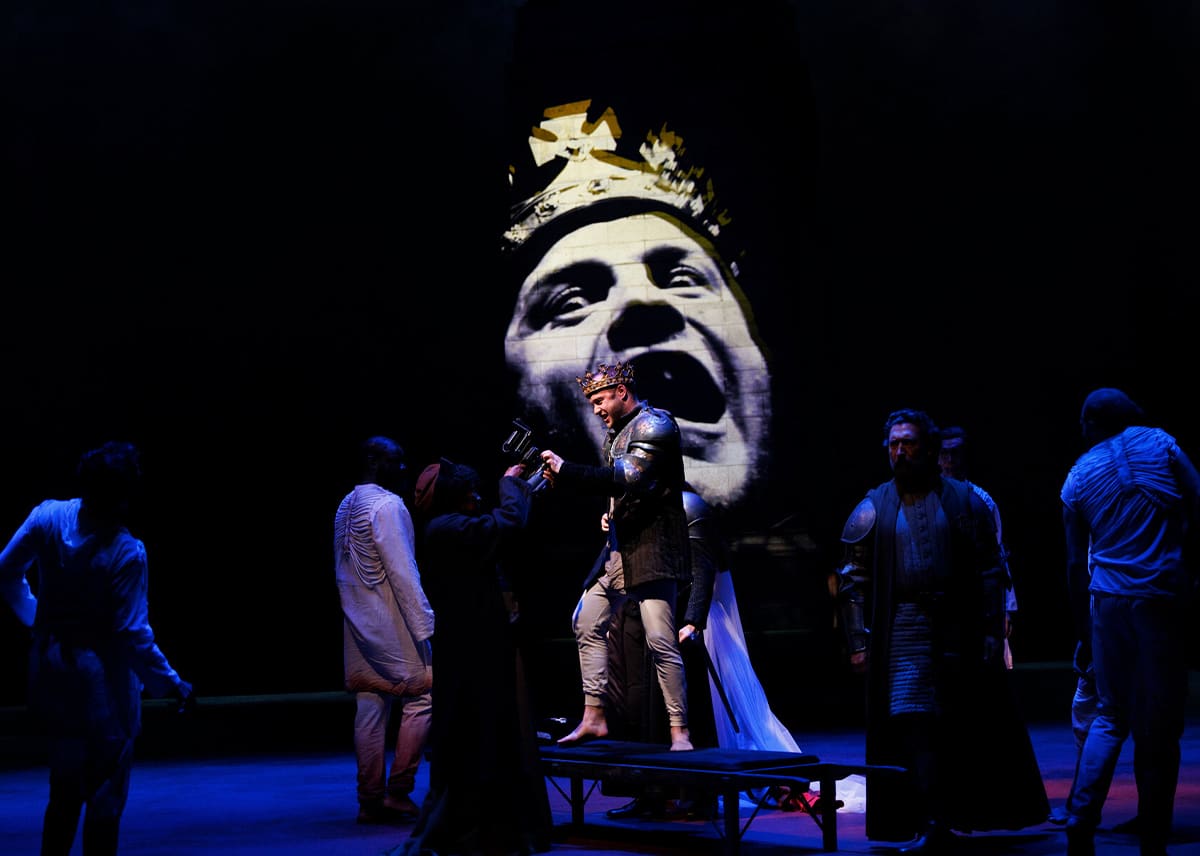
Complex antihero: an interview with Arthur Hughes
Unravelling Authur Hughes' Richard III
Marlon James: a Jamaican reckoning
'A return to a home I barely knew'
The name of this wallpaper is ‘Childhood’
A luminescent bubble of memory




Illuminating, in-depth conversations between writers.
Listen to all episodes
SpotifyApple Podcasts
Amazon Music
YouTube
Other apps

The series that tells the true-life stories of migration to the UK.
Listen to all episodes
SpotifyApple Podcasts
Amazon Music
YouTube
Other apps
WritersMosaic interrogates the notion of ‘staying in your lane’ by asking writers how they attempt to think beyond the parameters of their cultural identity.
Listen to all episodes
SpotifyApple Podcasts
YouTube