
The English
Written and directed by Hugo Blick
BBC TV and Amazon Prime (2022)
Review by Nou Ra
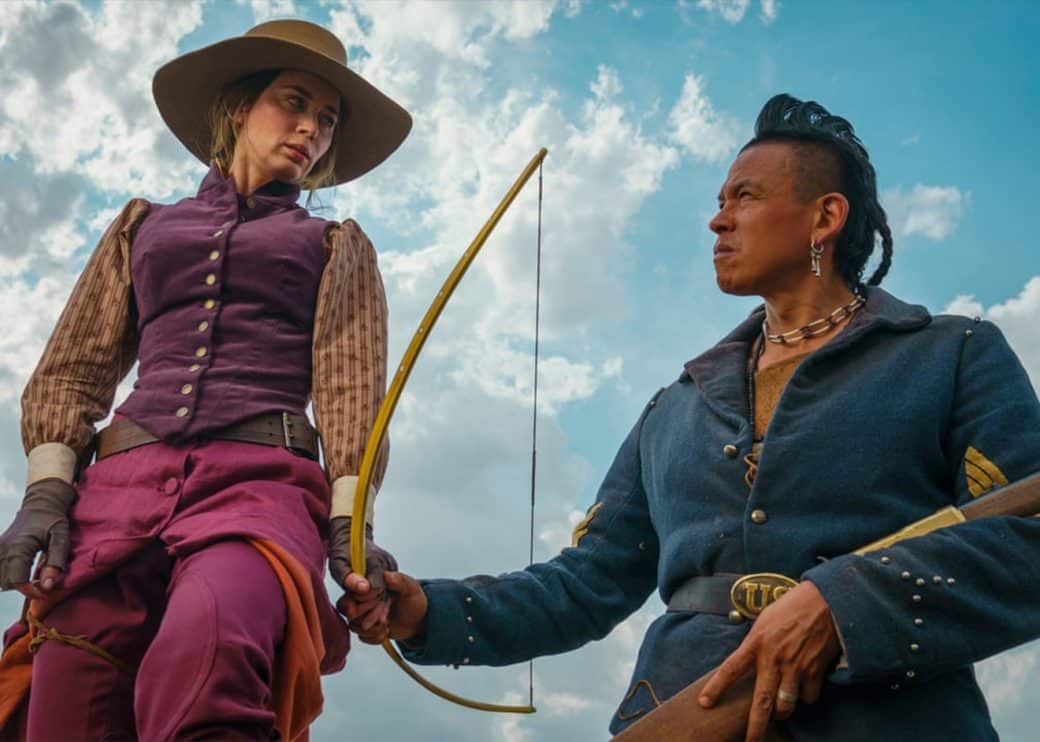
The Emily Blunt-produced six-part Western series, The English, in which she stars as Lady Cornelia Locke, sees her pitted against the biggest character of the show: the American landscape. The story focuses on an English woman seeking closure, and her connection to a Native American man she meets on her journey. Immediately, we are introduced to the first big sky, illuminated in myriad colours, its poetic vastness and rolling clouds.
The opening scene, filled with Cornelia’s off-screen exposition, ends with a single ‘Pawnee’ (native American tribe) word, ‘Tawatachicsta’ (I cherish you). From the beginning the series is enigmatic. It’s not clear what we are to expect. Is it a simple story of revenge, a classical love story or is it a thesis on race and culture in the American Dream?
British writer and director Hugo Blick also created the Golden Globe Award-winning The Honourable Woman (2014). His work on The English is direct, confrontational, frightening, and ambitious. The cinematographer’s stunning vistas and colour palettes are reminiscent of John Ford’s classic, The Searchers.
The English speaks of loss, chaos, loyalty and betrayal. The first episode is set in the newly formed territory of Oklahoma, following a murder. We meet the Native American in the shadows, a Pawnee called Wounded Wolf, aka Eli Whipp (a charismatic performance by Chaske Spencer). He rides the ridge of the mountain on his beautiful horse and gives the white men orders. He wears his Pawnee heritage in his Mohawk haircut. He speaks slowly, measuring his words, in a way that calls to mind Joni Mitchell’s lyric, ‘you spend every sentence as if it were marked currency’. Eli is the master of increasingly taciturn behaviour. At one point someone asks him: ‘You a father?’; his simple response, ‘Been.’
His backstory? The Pawnee population diminished heavily during the 1800s from exposure to Eurasian infectious diseases, as well as from internecine wars. Eli joined the American cavalry by choice, because he ‘Got enemies. Sioux, Cheyenne, Arapaho, Comanche, Osages, Kansas. A few.’
The next big sky takes us to Kansas where Lady Cornelia arrives at a liminal space. Apart from a double-storey wooden structure bearing the sign Hotel, there are no other buildings in sight. The setup is ominous. Two men sit outside, one with a pink parasol and the other with an accordion; no one else is to be seen. Lady Cornelia is accompanied by a stagecoach driver played by Toby Jones who has delivered her, not so unwittingly it seems, into the hands of the hotelier, Richard M. Watts. Played menacingly by Ciaran Hinds, the hotelier is a terrifyingly amoral character.
Outside the hotel is where the stars align for our two protagonists. Eli has previously entered the hotel and asked for a drink, politely. His politeness is not returned in kind but rewarded with brutality; he is beaten and trussed like a pig ready for slaughter by Watts and his cronies. This cinematic kismet moment between Eli and Cornelia is a bit less cute than Harry meeting Sally. Their first interaction is neither romantic nor hopeful. She’s warned that ‘You don’t have to mark him down for his manners, just the colour of his skin.’ Blick doesn’t equivocate here. He’s clearly saying that in the Wild West this dark-skinned man is not considered a real human, but rather a beast. Colour is brought up throughout the show and its reference is clearly important in the telling of any story from those times. But would a beast tell a woman who was trying to help them: ‘Not your fight, don’t pick it’?
Blunt’s portrayal of Cornelia is one of growth. She develops from being naïve and vain into a complex character as she proceeds through the American plains. She learns along the way that ‘The difference between what you need and what you want is what you can fit on a horse.’ She adapts quickly, asserting that she can take care of herself. Later, when freed, Eli asks: ‘Can you shoot?’ Cordelia replies ‘If I have to.’ ‘Oh, you’ll have to,’ says Eli.
The Wild West is just that, wild. There is as much jeopardy in being a lone white woman as there is for a Pawnee. Nobody is safe and it’s evident that being alone in the wilderness might cost you your life.
In the first three episodes of The English we are given hints of Cornelia’s quest for revenge and a glimpse into the lives of Native Americans who have been colonized, marginalized, limited and lamented. As Cornelia travels through the landscape, her strength becomes the focus of the story. It turns out that she can absolutely hold her own. Then again, maybe she can’t. After three episodes I am still not sure. One thing is certain, though: I will be hungrily consuming the remaining episodes with no idea where Cornelia’s journey will take her. But in a time and place, full of fear and the horrors of war, the destination is likely to be a place of sorrow.
WritersMosaic monthly
Get new reviews in your inbox
One email monthly, unsubscribe anytime
A Trial
An examination of theatre’s complicity in post-truth politics

The Complex
The unraveling of a dynasty
Disappearing Images
A festival of ephemeral art and the impermanence of our current world


The name of this wallpaper is ‘Childhood’
A luminescent bubble of memory
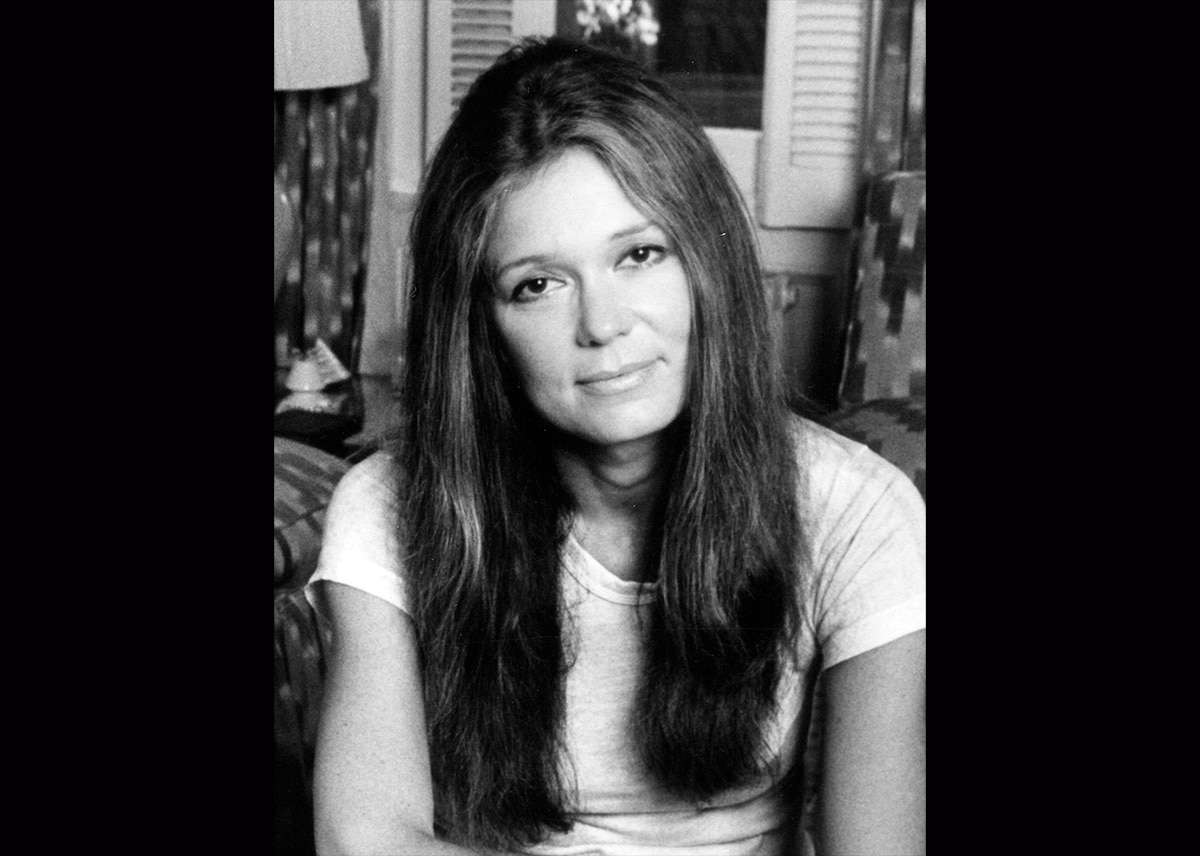
What’s in a feminist? Holding on to Gloria Steinem
Is Gloria Steinem's feminism still relevant today?

Coats
The unexpected cost of acquiring two Italian leather coats in Rome

Free Will
Will Harris reads his poem, 'Free Will'. Directed by Matthew Thompson and commissioned by the Adrian Brinkerhoff Poetry Foundation.

Half Written Love Letter
Selina Nwulu reads her poem, 'Half Written Love Letter'. Directed by Matthew Thompson and commissioned by the Adrian Brinkerhoff Poetry Foundation.

Illuminating, in-depth conversations between writers.
Listen to all episodes
SpotifyApple Podcasts
Amazon Music
YouTube
Other apps

The series that tells the true-life stories of migration to the UK.
Listen to all episodes
SpotifyApple Podcasts
Amazon Music
YouTube
Other apps
WritersMosaic interrogates the notion of ‘staying in your lane’ by asking writers how they attempt to think beyond the parameters of their cultural identity.
Listen to all episodes
SpotifyApple Podcasts
YouTube
In the first series of poems commissioned by Hannah Lowe, six poets explore how ritual gives meaning to our lives.
Listen to all episodes
SpotifyApple Podcasts
YouTube