
The Rise of the Roman Empire
Polybius
Translated by F. W. Walbank
Penguin Classics, 1979
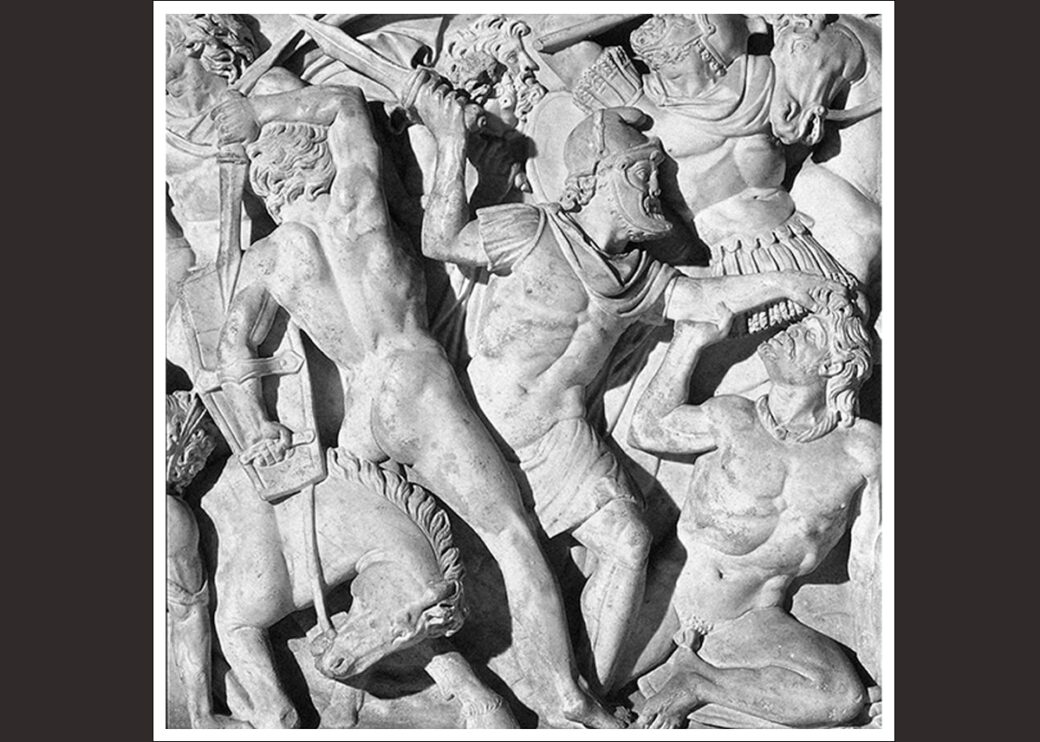
‘According to the Roman custom, their orders were to exterminate every form of life they encountered, sparing none … when cities are taken by the Romans you may often see not only the corpses of human beings but dogs cut in half and the dismembered limbs of other animals.’ So writes Polybius in The Rise of the Roman Empire, here published posthumously and translated from its author’s native Greek by F. W. Walbank, a noted Polybius scholar. This is atypical history, not because of the violence, but because in this case the writer has managed to speak to a large number of eyewitnesses, or at least to those who knew them. The resulting book combines elements of military and social history with political memoir and, occasionally, reportage. As a mix of these genres and styles, it generally works. The lack of dialogue, however – doubtless left out in the interests of scholarly responsibility – makes it feel formally relentless at times.
I picked up a copy of Polybius after noticing lots of references to it in recent books about ancient Rome. There is a consensus that he is more reliable than other famous ancient writers on Roman history, in particular the better-known Livy. But Polybius also comes in for some flak. Words like ‘hectoring’, ‘staid’ and ‘dry’ have attached themselves to his writing for some time. Dionysius of Halicarnassus, writing just before the time of Jesus, claimed that ‘no one has the endurance to reach the end’ of Polybius’s history. Boring or not, most of it has since been lost. Of the forty ‘books’ that originally made up the Histories, only the first five survive in complete form, alongside fragments of some of the others. In spite of that, the book does not read like a bitty or unfinished one. At 576 pages of dense text, and with bridging notes supplied by the translator, it feels unified and detailed. I am not a classicist, so I tried to read it as though it were any other book that had just landed on my desk: simply as a text, to be approached with interest, but not reverence.
Polybius’s stated purpose is to explain the speed and thoroughness of Rome’s assumption of regional hegemony, particularly to his crestfallen Greek compatriots, many of them still in shock at their subjection to this once-marginal player. But did it really happen fast? Polybius thinks so, given the scale of what occurred: Rome’s ascent in just 50 years from being a local power, vulnerable to being terrorised on its own soil by the rampaging armies of Hannibal (more about him later), to a world power, capable of projecting decisive military force well over a thousand miles from its capital. For Polybius, the key years in this rise were those which ran from 219 BC to 167 BC, by the end of which Rome no longer had any rivals of similar stature within its vast sphere of influence, which encompassed the entire Mediterranean and its surrounding lands.
One aspect of this book that might be singled out for reproach is the nature and tone of its author’s approach to historiography. He angrily upbraids his predecessors and is dismissive of contributions to knowledge made by writers whom he doesn’t consider to be ‘men of action’, which for the most part means those who haven’t had long careers at the top of the military-industrial complex. It is hard not to think he would have preferred, say, Winston Churchill as an historian over Edward Said.
When women and girls appear in the book, they tend to do so as a collective. For instance, Polybius describes how Roman women, en masse, clean the floors of religious buildings with their hair during moments of national crisis. More often, large numbers of nameless women who come from defeated cities and ethnicities are mentioned as being captured and enslaved, alongside any men who haven’t been killed in battle or executed afterwards.
Very occasionally a woman does play a leading role in proceedings. One of these is Teuta, queen of Illyria (roughly the western Balkans), and no sooner has Polybius introduced her than he offers a sexist character appraisal: ‘she suffered from a typically feminine weakness, that of taking a short view of everything’. Teuta has a Roman diplomat assassinated after he makes a thinly disguised threat of military reprisals against her domain. Polybius’s assessment of this – that it happened ‘in a fit of womanish petulance’ – is rich, given the exploits of so many of the men of his times.
If the book has a main character then it isn’t a Roman but one of their most feared enemies: the Carthaginian general and unparalleled tactician, Hannibal Barca. ‘Carthaginian’ is a Roman ethnonym derived from the name of the place where Hannibal was born, the North African port city of Qart Hadasht. Latinised as Carthago, anglicised as Carthage, it is now a suburb of the city of Tunis, but for much of the period covered by Polybius, it was the metropolis of a multi-ethnic empire with a large and fearsome navy. Hannibal came from a military family that traced its roots to present-day Lebanon. When he was a boy, his father Hamilcar is said to have made him swear a sacred oath that he would ‘never be a friend to the Romans’. In becoming their most feared adversary, he kept his word.
Because of the broad timespan covered by The Rise of the Roman Empire (focussing on the years from 264 BC to 146 BC, but with references to earlier times), the cast is enormous. As in One Hundred Years of Solitude, lots of different people have the same names. By my count, there are five Hannibals. Six important Romans are called Cornelius, all of them members of the family which would produce Hannibal’s nemesis, the general Publius Cornelius Scipio. This Scipio was given the official nickname ‘Africanus’ (‘the African’) for commanding the final defeat of Hannibal at the battle of Zama in 202 BC.
Apparently without irony, his adoptive grandson, Scipio Aemilianus, was later given the same epithet, in part for leading an army which slaughtered civilians on African soil at a speed and on a scale which are shocking even by the standards of modernity. When Carthage fell to the Roman army in February 146 BC, many of the city’s inhabitants were killed in about four days. Modern estimates range from 62,000 victims at the lower end, to perhaps as many as three quarters of a million.
Historians debate whether these actions warrant description as ethnic cleansing, or perhaps even as genocide. These are difficult matters. The Romans lacked a concept of race as later cultures would come to apply it, so it could be argued that the mass killing of Carthaginian civilians was not ethnically motivated. But this seems like anachronistic – perhaps even perverse – reasoning, given the pseudoscientific roots of modern racist thinking. Why should we need the Romans to have possessed spurious motivations that didn’t exist in their time in order to condemn them for killing and enslaving another people on such a massive scale?
Polybius watched all this by the side of his friend Scipio Aemilianus, the general who ordered it. Does that make him not only a recorder, but also a possible accessory to war crimes? The answer might be yes but, if so, he is a strange accomplice. He was not a Roman: Rome had in fact only recently subjugated his own homeland and deported him to their capital as a political hostage. But by the time he sailed to Carthage with Scipio, Polybius was a hostage no longer. As a close confidant of the officer in command of the siege, he can surely be assumed to have played some sort of a role in it.
There is plenty in this book that might be quoted in support of a thesis like Steven Pinker’s, which is to say that violence of all kinds has been steadily declining over time. But this depends on our answers to many questions. How narrowly should we define violence? Do low murder rates per thousand mean we shouldn’t be shocked by the high raw numbers of killings we still see happening today? How much do nominal bans on slavery mean to those with no practical escape route from the brutal systems underpinning the global economy?
Polybius describes harrowing conflicts on land and at sea, but in a list of the deadliest wars ever, measured in terms of death toll, the top 41 have all occurred since the time he was writing about. And unlike those of his era, we live under the constant spectre of possible nuclear annihilation, with the rise of AI further complicating the picture. Polybius argues that polities exist in a constant cycle that takes in despotic and mob rule alongside more settled periods of monarchy and democracy, but he didn’t foresee the invention of a power to delete that cycle itself.
WritersMosaic monthly
Get new reviews in your inbox
One email monthly, unsubscribe anytime
Haunting the Black Air
Poetic freedom across space and time
The Disappearers
A sprawling visceral experience that drops you in head first

The Lady Imam
Is the world ready to catch up with amina wadud?




It’s being published I get paid for; the writing I would do for free
‘Any advance [...] for your novel is to compensate you for the horrors of being published'
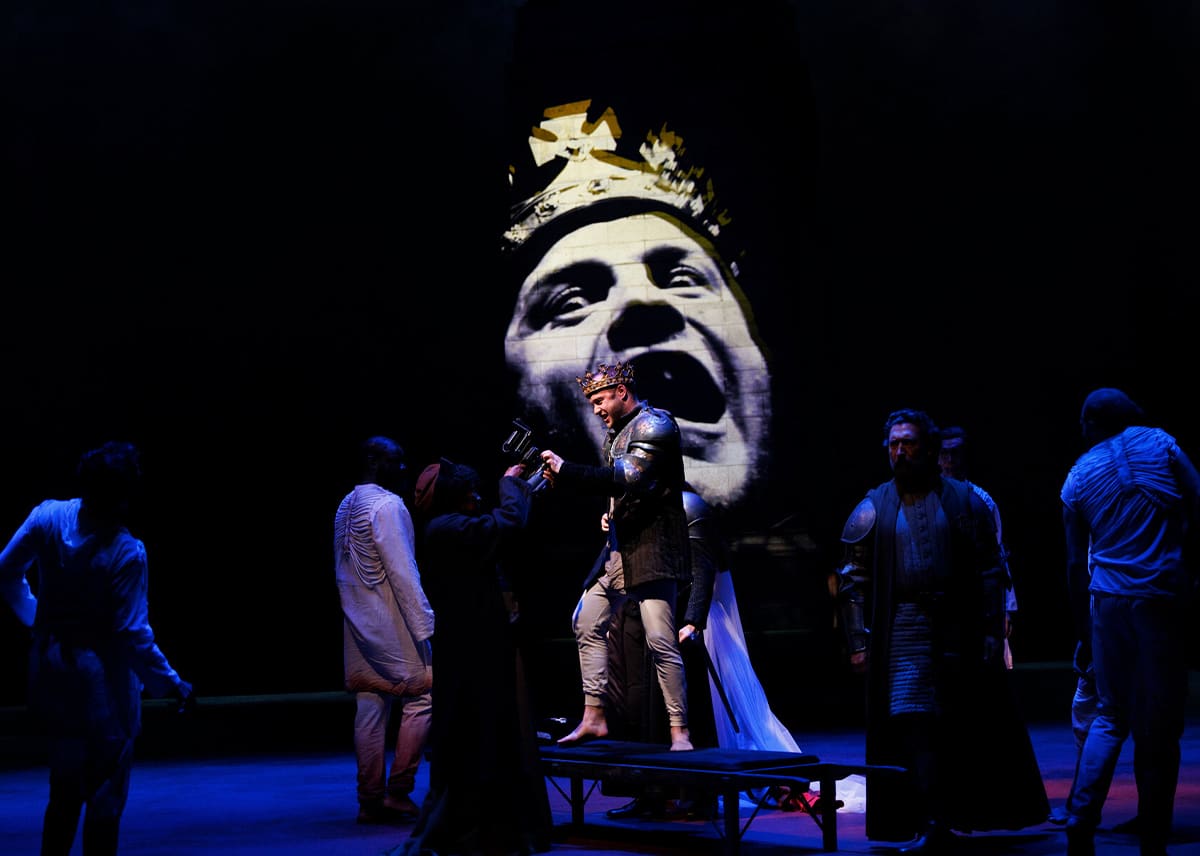
Complex antihero: an interview with Arthur Hughes
Unravelling Authur Hughes' Richard III
Marlon James: a Jamaican reckoning
'A return to a home I barely knew'





Illuminating, in-depth conversations between writers.
Listen to all episodes
SpotifyApple Podcasts
Amazon Music
YouTube
Other apps

The series that tells the true-life stories of migration to the UK.
Listen to all episodes
SpotifyApple Podcasts
Amazon Music
YouTube
Other apps
WritersMosaic interrogates the notion of ‘staying in your lane’ by asking writers how they attempt to think beyond the parameters of their cultural identity.
Listen to all episodes
SpotifyApple Podcasts
YouTube