
The World of Stonehenge
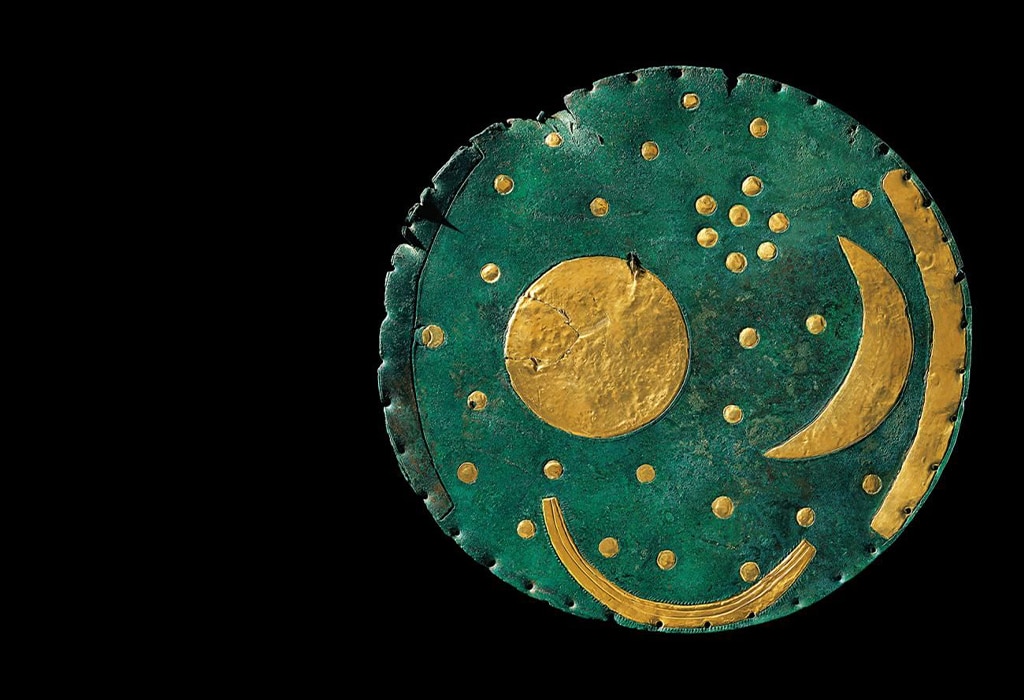
(British Museum, 17 February – 17 July 2022)
Review by Anjali Joseph
Every exhibition is an act of storytelling, and The World of Stonehenge is a fascinating example of what a fantasy novelist might call ‘worldbuilding’. Stonehenge, in this story, is an enigmatic lead character on to whom a great deal can and inevitably will be projected, but despite already having taken place, this particular drama remains resolutely incomplete. Perhaps it’s that very incompleteness which makes Stonehenge fascinating, even now, 4,500 years after it was completed.
The exhibition opens with the world before Stonehenge. Headlines: in 8,000 BC, Britain separated from continental Europe (we are speaking of a geological, not elective movement). Around 6,000 BC, humankind began to interfere in a sustained, somewhat unrelenting way with the natural world – that is, to farm, to coppice forests and start to domesticate herd animals like the auroch, a magnificent horned beast that was the forerunner of the cow before, naturally, we killed them all – it only took one bull auroch to undomesticate an entire herd of cows.
Nine thousand years ago, on a hilltop not too far from the later site of Stonehenge, our own prehistoric forerunners put up three huge tree trunks. ‘Like totem poles,’ says a caption, ‘they may have marked events or celebrated important people and places’. Perhaps some sites become palimpsests of reverence, spots in which even as rude a species as humanity pauses to breathe and become quiet. On the other hand, perhaps few places on earth have not known every human mood, from worship to war.
Under the direction of lead curator Dr Neil Wilkin, the exhibition gains momentum with displays of clusters of things. First, beautiful stone axe heads, sharpening stones, mining tools from across Britain. Then, a ghostly display of the whole skeletons of a pair of oxen sacrificed in Germany around 3,000 BC, with an animated light drawing superimposed on them to show the cart and cattle lifted up and brought back to life. Short animated films suggest how the enormous sarsen stones and bluestones that make up Stonehenge were transported to the site, tracing the route by which the Welsh bluestones were brought from the Preseli mountains through Milford Haven by sea and river to their present home.
Offering context for Stonehenge, there are also displays of artefacts from Orkney, ‘cup-marked’ stones from Northumberland, and 4,000 year-old oak pillars from a timber circle found in a Norfolk saltmarsh and dubbed ‘Seahenge’.
From Stonehenge, the exhibition pivots into metal objects, especially those made of or decorated with gold. A caption notes, ‘Gold was turned into jewellery and cult objects, imbuing its wearers with the power of the sun… This marked a significant departure, from fixed monuments where the sun was observed and worshipped at carefully prescribed times of year, to items that could be held or worn to express a close, personal connection with the heavens.’ The displays of ritual gold jewellery, belts, armlets and other ornaments are surprisingly striking. The urge to acquire that those prehistoric humans seem to have felt when they saw gold hasn’t gone anywhere. But, with its mise-en-scène of characters, tools, landscapes, settlements, burials, violent conflict and beautifully wrought weapons, the World of Stonehenge exhibition is also presenting a world with lines that continue into our own. It could be the story of the fall of Man, or the start of environmental catastrophe, but it’s fascinating and well worth seeing.
https://www.britishmuseum.org/exhibitions/world-stonehenge
WritersMosaic monthly
Get new reviews in your inbox
One email monthly, unsubscribe anytime
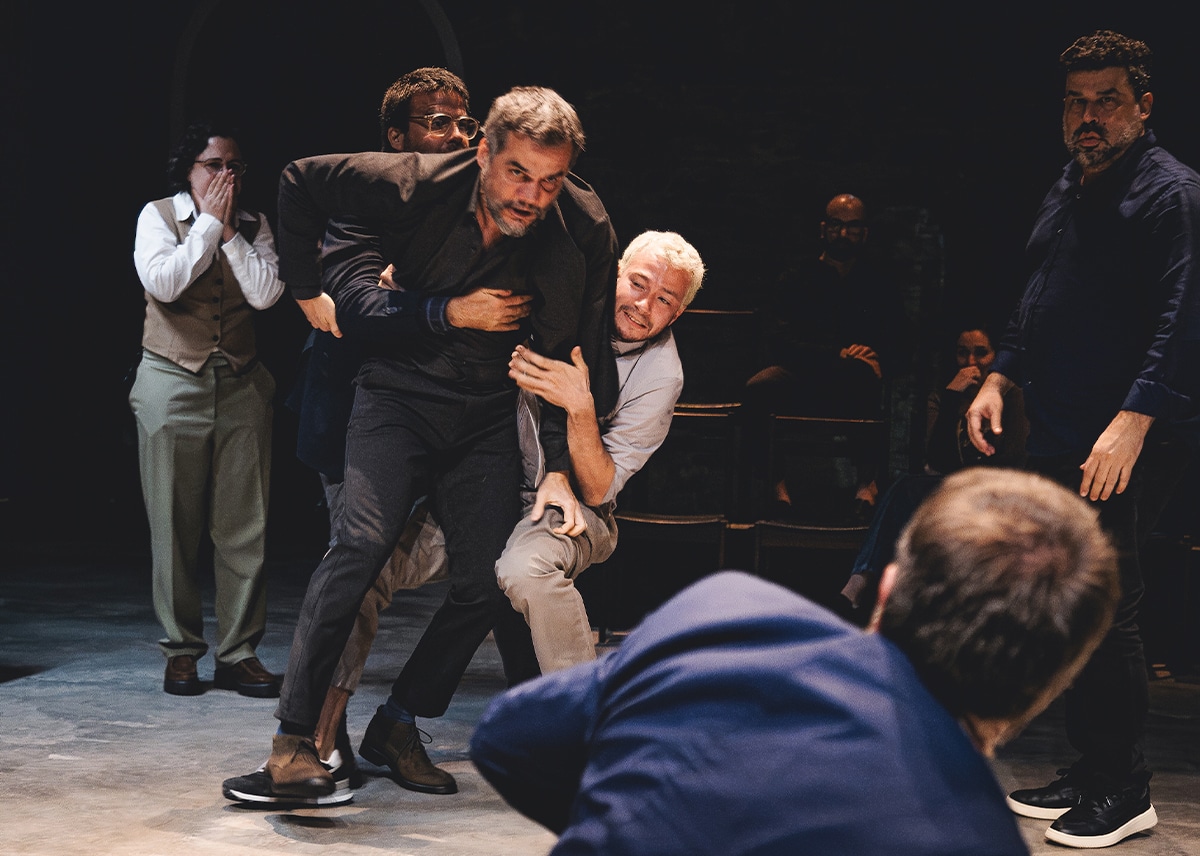
A Trial
An examination of theatre’s complicity in post-truth politics
The Complex
The unraveling of a dynasty

Disappearing Images
A festival of ephemeral art and the impermanence of our current world

The name of this wallpaper is ‘Childhood’
A luminescent bubble of memory

What’s in a feminist? Holding on to Gloria Steinem
Is Gloria Steinem's feminism still relevant today?
Coats
The unexpected cost of acquiring two Italian leather coats in Rome



Free Will
Will Harris reads his poem, 'Free Will'. Directed by Matthew Thompson and commissioned by the Adrian Brinkerhoff Poetry Foundation.

Half Written Love Letter
Selina Nwulu reads her poem, 'Half Written Love Letter'. Directed by Matthew Thompson and commissioned by the Adrian Brinkerhoff Poetry Foundation.

Illuminating, in-depth conversations between writers.
Listen to all episodes
SpotifyApple Podcasts
Amazon Music
YouTube
Other apps

The series that tells the true-life stories of migration to the UK.
Listen to all episodes
SpotifyApple Podcasts
Amazon Music
YouTube
Other apps
WritersMosaic interrogates the notion of ‘staying in your lane’ by asking writers how they attempt to think beyond the parameters of their cultural identity.
Listen to all episodes
SpotifyApple Podcasts
YouTube
In the first series of poems commissioned by Hannah Lowe, six poets explore how ritual gives meaning to our lives.
Listen to all episodes
SpotifyApple Podcasts
YouTube