
Perfect Days
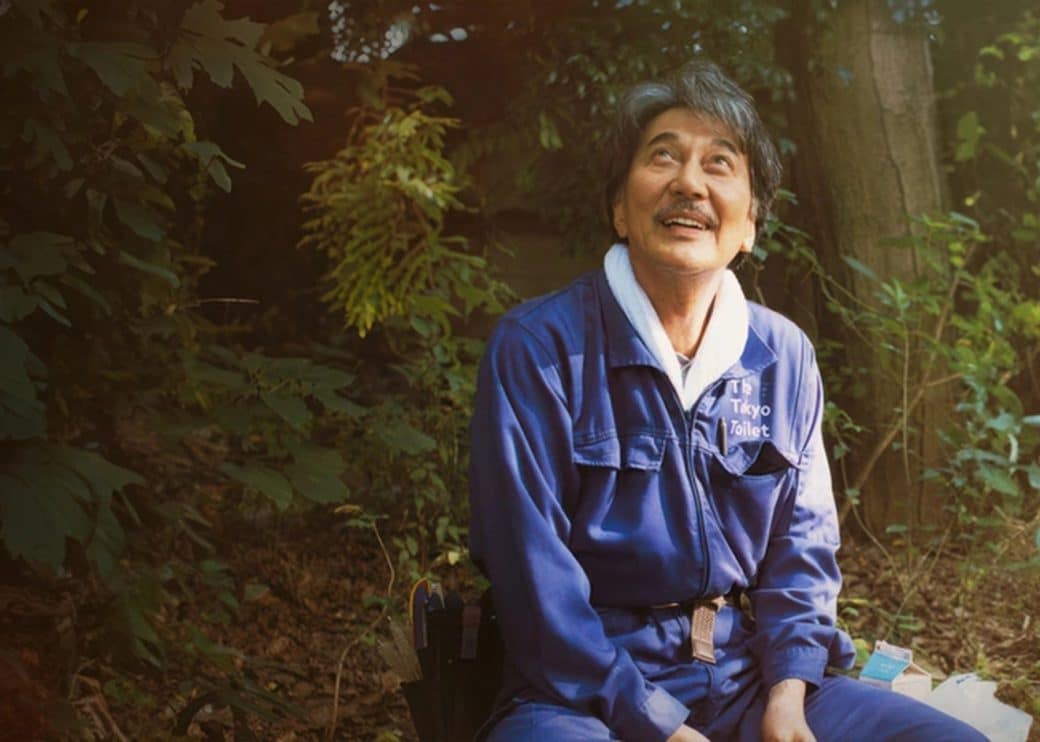
Directed by Wim Wenders
Review by John Siddique
Perfect Days is the most recent dramatic film by Wim Wenders and is an incredible return to form after a long run of misses for him in this form of cinema. However, during this time he has made some great documentaries such as Salt of The Earth (2014), which gives a deep inner view of the work of photographer and photojournalist Sebastião Salgado, and an incredible film, Pina (2011), on choreographer Pina Bausch. Perfect Days is one of the best films I have seen in years and yes you should go and see it if you love personal, humanistic and minimal storytelling that feels hyperreal.
Arthouse film has, over the last twenty years, turned from reflecting culture to dictating it and, similarly, it feels that Hollywood and Bollywood have devolved more and more to be little more than propaganda and capitalism. Watching Perfect Days is like breathing clean air after suffocating in smog. The film is entirely set in Japan and is in Japanese. Films by western directors in other languages is something of a little trend that seems to be emerging at present.
The viewer is brought into the life of Hirayama (played flawlessly by veteran actor Kōji Hashimoto), a man in his sixties who lives in an ordinary and ungentrified area of Tokyo. At night, he reads books in his small room until he falls asleep and, at dawn, wakes to the first sounds of the day, folds away his futon mattress, washes himself, then sprays and waters his collection of tree seedlings he has rescued form here and there. He then goes to work cleaning toilets in the Shibuya area, which has grown and transformed over a millennium from a village with a castle to a significant financial and trading district. This is important to bear in mind, as we spend a lot of time with Hirayama as he cleans his toilets with love and Zen-like care, as the people who use his toilets are the people who work in that area and carry the inherent sensibilities of that environment in their deportment and meetings with him.
The role of toilet cleaner is not an arbitrary or cute choice for Hirayama’s work. In Japan, many very famous CEOs insist on cleaning the toilets of the buildings in which they work. It is of the highest service to the company and the people who work for them. The cleaning is done in an almost sacramental way. It is thought that one cannot be at the top of a company if one cannot or is not prepared to do the humblest jobs. Imagine Sunak, Starmer, Biden, Trump, Bezos or Musk cleaning a toilet in the service of others. If you ever find yourself on a Soto Zen retreat, you’ll notice that the toilet cleaning job will always go first on the sign-up sheet for jobs around the temple.
The film moves in loops through Hirayama’s days – though nothing like Groundhog Day (1993). We participate in Hirayama living through his routine; he photographs sunlight through trees, who he considers his friends, he eats at the same cafe every night, and is greeted by the same greeting from the owner. The loops of days are punctuated by shifting, short dream sequences that draw you in. When he goes to buy a new book and gets his photos developed each weekend; you remember when you used to read with so much love and think about going to the bookstore. As he drives around, he listens to Patti Smith, Van Morrison and Lou Reed on cassettes in his van and you find yourself missing playing cassettes too, but this is more than nostalgia; it’s a reminder of living in your own way with presence and tangibility. The scenes of his life are juxtaposed against the repeated presence of the Skytree (the world’s highest tower) in the background of many shots.
As the days loop, a few characters come and go into his world, perhaps the most important of whom is Kiko (Arisa Nakano), Hirayama’s niece, who has run away from the home of her mother/his sister. Kiko joins him on his job; she’s a young soulmate to him in their days together and she wants to help. She starts reading too and she takes photos of trees along with him on a pocket film camera that he gave her, identical to his own. Yet Kiko’s appearance also intimates Hirayama’s seemingly wealthy yet complicated past when her mother comes to collect her. Through their conversation, we see hints of what came before these perfect days.
To call this film minimalist, as I did at the outset, is perhaps inaccurate. On reflection, a better description might be quiet power, the tangibility of the intangible in our own lives, and the power of presence and love, which is where the buck really stops – even if the world is swirling in its own ways around us. Perfect Days conjures up the beauty, loneliness, and ordinariness of enlightenment of Japan’s best-known poet, Ryokan. You will walk out of the cinema feeling like the ordinariness of your own sweet life matters in a clear and unsentimental way, and I can see no better reason at this time of our world to go to see a film.

WritersMosaic monthly
Get new reviews in your inbox
One email monthly, unsubscribe anytime
Pressure
What's missing from the latest 'untold story behind D-Day'?

A Trial
An examination of theatre’s complicity in post-truth politics

The Complex
The unraveling of a dynasty





Marlon James: a Jamaican reckoning
'A return to a home I barely knew'
The name of this wallpaper is ‘Childhood’
A luminescent bubble of memory

What’s in a feminist? Holding on to Gloria Steinem
Is Gloria Steinem's feminism still relevant today?






Illuminating, in-depth conversations between writers.
Listen to all episodes
SpotifyApple Podcasts
Amazon Music
YouTube
Other apps

The series that tells the true-life stories of migration to the UK.
Listen to all episodes
SpotifyApple Podcasts
Amazon Music
YouTube
Other apps
WritersMosaic interrogates the notion of ‘staying in your lane’ by asking writers how they attempt to think beyond the parameters of their cultural identity.
Listen to all episodes
SpotifyApple Podcasts
YouTube