
The Architecture of Modern Empire

Arundhati Roy
(Penguin 2024)
Review by Isabelle Dupuy
The PEN Pinter Prize is awarded to a writer who, to quote Harold Pinter, has a ‘fierce intellectual determination … to define the real truth of our lives and our societies.’ Arundhati Roy is the recipient of the PEN Pinter Prize for 2024. She is also a wanted woman. The Booker prize-winning novelist and political activist is being prosecuted in India for comments she made about Kashmir fourteen years ago.
It is against this backdrop that The Architecture of Modern Empire, a collection of interviews Roy recorded with journalist David Barsamian over twenty years, is published. Beginning in 2001 with ‘Knowledge and Power’, and ending with ‘Fascism in India’ in 2022, Roy’s talent for what Naomi Klein calls ‘killer one-liners’ is on ample display in these witty and incisive commentaries on globalisation, politics and what Roy lovingly calls ‘the wilderness’ of non-Western life. Over the years, she sharpens her critique of the India success story. She bears witness to the costs, human and environmental, of Modi’s government’s policies and she challenges the ‘insular’ Indian middle-class. She talks about ‘a country colonising itself … in order to live the dreams of America,’ while the poor ‘have no place in the imagination…’
Roy’s observations are spot-on: a democratic society is about more than just elections. To speak ‘Truth to Power’ is useless. ‘Power knows the truth’, it’s what it chooses to do with it. Truth must be explained to the powerless.
Roy is not a political theorist and does not offer solutions to the dilemmas she explains so well. She is an artist with courage and a conscience. ‘Corruption is linked to power,’ but isn’t she, as a famous and powerful writer, an example of incorruptibility? More than power, corruption requires a loss of trust. Roy ‘s words resonate because she loves. Her fight is about preserving trust.
It’s also about protecting the ‘chaos and anarchy’ of everyday life in India. Like a modern-day Alexis De Toqueville, she reflects on American life, on the ‘sad, lonely, terrible price to pay for creature comforts.’ Unlike the French aristocrat, Roy is writing from the perspective of a brown woman who hails from a country where a Naga Sadhu ‘whose life mission has been to stand naked on one leg for twenty years’ has a place. Roy reminds us of what is precious beyond American dreams. ‘There are so many happinesses that come from just loving and companionship and even losing.’
Randeep Maddoke courtesy of wikicommoms

WritersMosaic monthly
Get new reviews in your inbox
One email monthly, unsubscribe anytime

Pressure
What's missing from the latest 'untold story behind D-Day'?

A Trial
An examination of theatre’s complicity in post-truth politics

The Complex
The unraveling of a dynasty




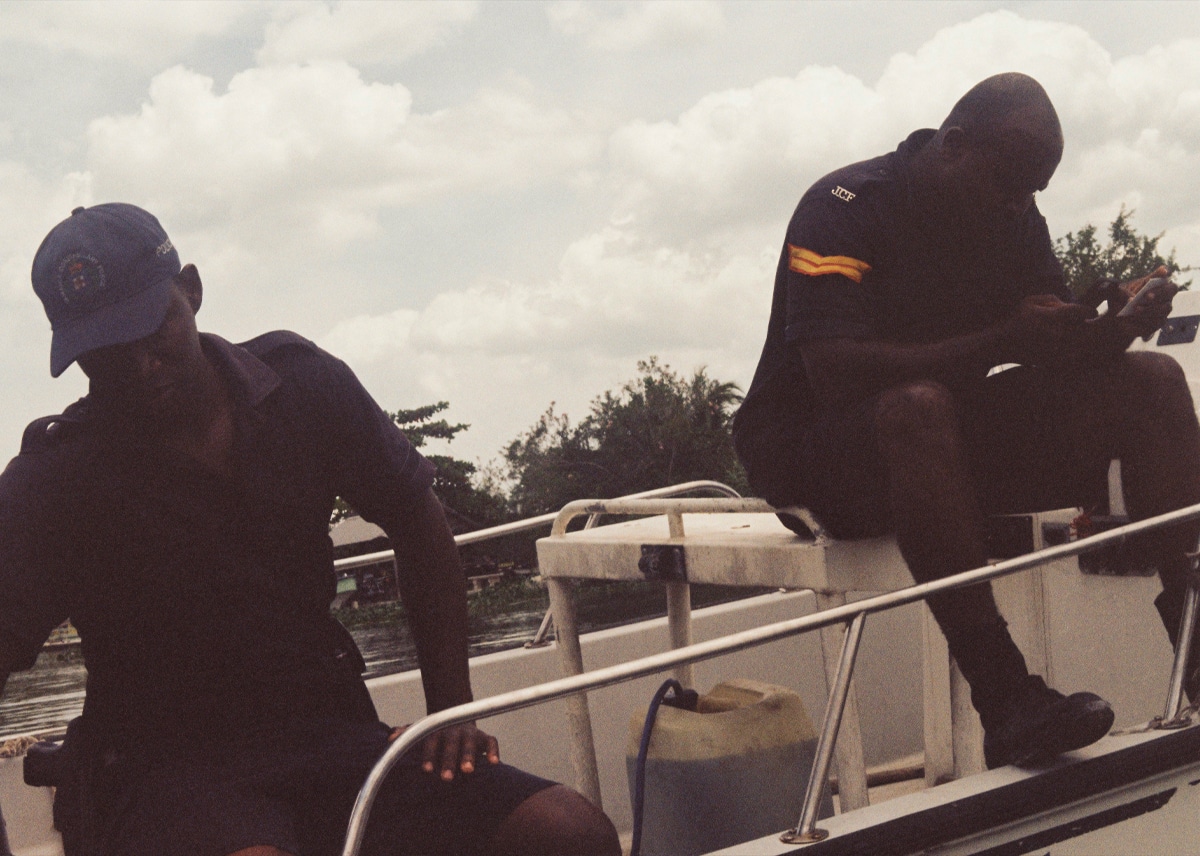
Marlon James: a Jamaican reckoning
'A return to a home I barely knew'
The name of this wallpaper is ‘Childhood’
A luminescent bubble of memory

What’s in a feminist? Holding on to Gloria Steinem
Is Gloria Steinem's feminism still relevant today?





Illuminating, in-depth conversations between writers.
Listen to all episodes
SpotifyApple Podcasts
Amazon Music
YouTube
Other apps

The series that tells the true-life stories of migration to the UK.
Listen to all episodes
SpotifyApple Podcasts
Amazon Music
YouTube
Other apps
WritersMosaic interrogates the notion of ‘staying in your lane’ by asking writers how they attempt to think beyond the parameters of their cultural identity.
Listen to all episodes
SpotifyApple Podcasts
YouTube