
Going for Gold

Lisa Lintott
Park Theatre, London: 6 – 30 November 2024
Review by Michael McMillan
A friend of mine, knowing my family hails from St Vincent and the Grenadines, invited me to join him in seeing Going for Gold at the Park Theatre in north London, a play inspired by the true story of Frankie Lucas, a Vincentian boxer who fought in the UK. I was so pleasantly surprised that I had to see it a second time.
Drawing on in-depth biographical research, and a deep dive into the cultural history of boxing, the economy of Lisa Lintott’s script provides pace where wider issues and historical moments are touched on, but dwells on the personal drama in a multi-media production directed by Philip J Morris and Xanthus.
In the first half, the play moves chronologically through episodes from Frankie’s boxing career, with the writer’s son Jazz Lintott, wearing boxing shorts and matching tank top, in the lead role. We see a cocky nine-year-old in fresh Vincentian creole convince a policeman, Ken Remington, to ignore his age and let him join the Sir Philip Game Boys’ Club in Croydon. Their relationship develops as Ken mentors his talented southpaw (left-handed) protégé through early success, while also becoming a surrogate father.
Llewella Gideon (of The Real McCoy fame), playing Gene, Frankie’s teenage sweetheart, captures their romance in a Brechtian-style narration through the energy of the 1970s – ’Johnny Reggae’, afros, two-tone suits and, with wit and humour, ‘every moldy bread hav’ it moldy cheese’. She gives birth to their son, Michael, and loyally attends Frankie’s fights. Projected archive footage of Lucas’s boxing matches – including winning the British National Amateur Boxing Association middleweight title twice, and in 1976 beating Alan Minter at the Royal Albert Hall – tellingly reveals nothing about the racism from the predominantly white crowds that Gene witnesses.
In nurturing Frankie’s fledgling boxing career, we see Ken trying to keep the powerful boxing promoter, Mickey Duff at arm’s length in numerous phone calls. But when Frankie is not selected to represent Britain at the 1972 Olympics, Ken comments that ‘the British Boxing Board of Control sit in Mr Duff’s pockets’. Rather than hoping he’d be selected for the 1974 Commonwealth Games in New Zealand, Frankie chooses instead to represent his native St Vincent and the Grenadines in New Zealand, where he wins gold, giving the medal to Ken on his return.
Turning professional, Frankie trains with George Francis who runs a gym in North London, knows Muhammad Ali and has produced world champion boxers like the Irish Sierra Leonean John Conteh. Eager for a world title shot, Frankie becomes frustrated as George tries to school him in the politics of the boxing game, in which boxers are commodities, and according to Duff, two Black boxers don’t pull a crowd. Outside the ring, his family see less of Frankie, who, continually stoned on weed, signals his self-destructive alienation to all.
Frankie’s tragic decline signals the beginning of the play’s second half, in which we see him as a old man sitting in a house robe, his left fist permanently clenched. It might be a psychosomatic response to the collapse of his largely forgotten boxing career or, as his son Michael reminds him, ‘you punched a hole in the wall to kill the duppy’ (growing up in Black Britain, Michael would more likely know the Jamaican term for spirit/ghost as a ‘duppy’, rather than the Vincentian ‘jumbie’). Even though Frankie disappeared from Michael’s life, his attentive son isn’t bitter, hasn’t forgotten his father’s boxing career and reminisces with him about playfighting as a child and watching videos of his fights. Michael persuades him to attend his mentor Ken’s 60th wedding anniversary. In a poignant moment, Ken returns Frankie’s 1974 Commonwealth Games gold medal as Frankie’s bitterness blinds him to this gesture of respect. The final scene has father and son exchanging regret for forgiveness, which struck me as sentimental given these feelings had already been expressed. However, winning two Black British Theatre Awards in 2023, Going for Gold portrays Frankie Lucas’ story with sensitivity and tenderness, and underscores the wider story of a Black athletes in Britain who have largely been erased and ignored after being exploited. I’m glad I saw it a second time.
WritersMosaic monthly
Get new reviews in your inbox
One email monthly, unsubscribe anytime
The Disappearers
A sprawling visceral experience that drops you in head first
The Lady Imam
Is the world ready to catch up with amina wadud?
Pressure
What's missing from the latest 'untold story behind D-Day'?



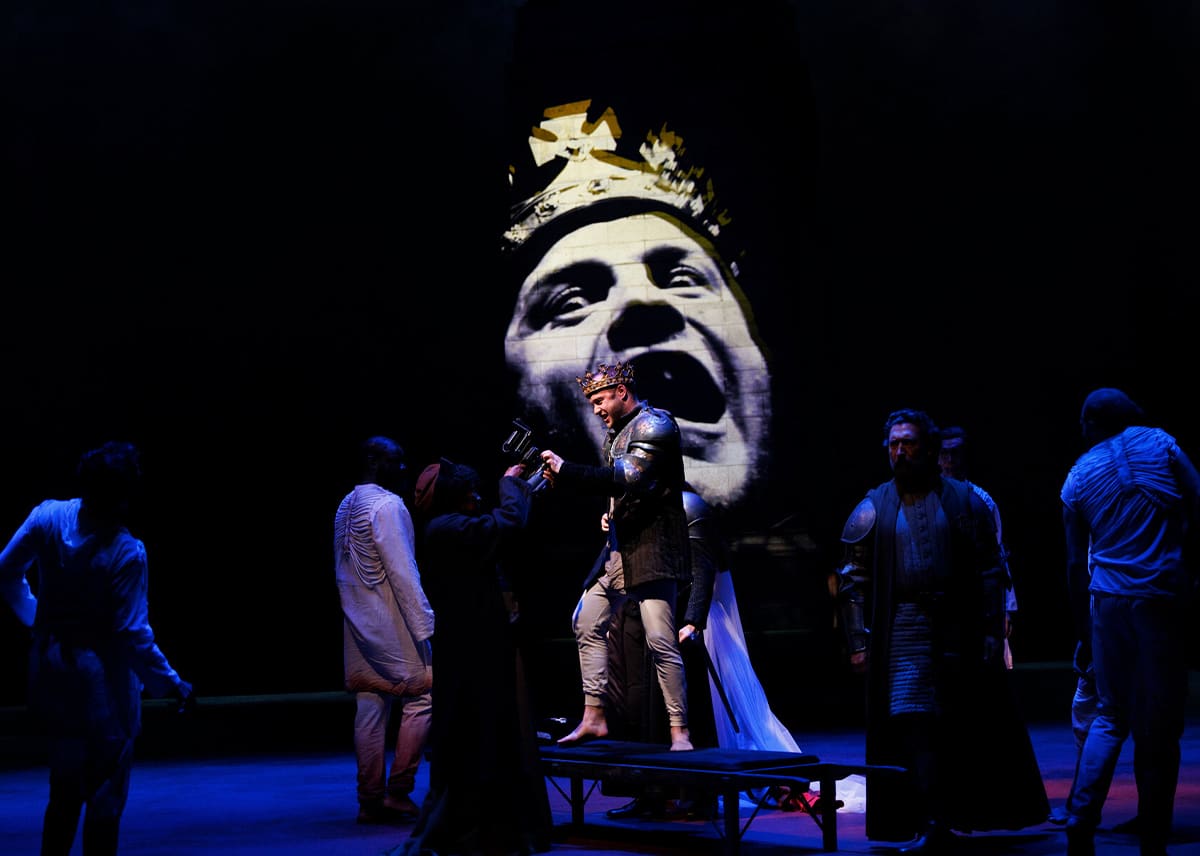
Complex antihero: an interview with Arthur Hughes
Unravelling Authur Hughes' Richard III

Marlon James: a Jamaican reckoning
'A return to a home I barely knew'
The name of this wallpaper is ‘Childhood’
A luminescent bubble of memory





Illuminating, in-depth conversations between writers.
Listen to all episodes
SpotifyApple Podcasts
Amazon Music
YouTube
Other apps

The series that tells the true-life stories of migration to the UK.
Listen to all episodes
SpotifyApple Podcasts
Amazon Music
YouTube
Other apps
WritersMosaic interrogates the notion of ‘staying in your lane’ by asking writers how they attempt to think beyond the parameters of their cultural identity.
Listen to all episodes
SpotifyApple Podcasts
YouTube