
My dead white male artist
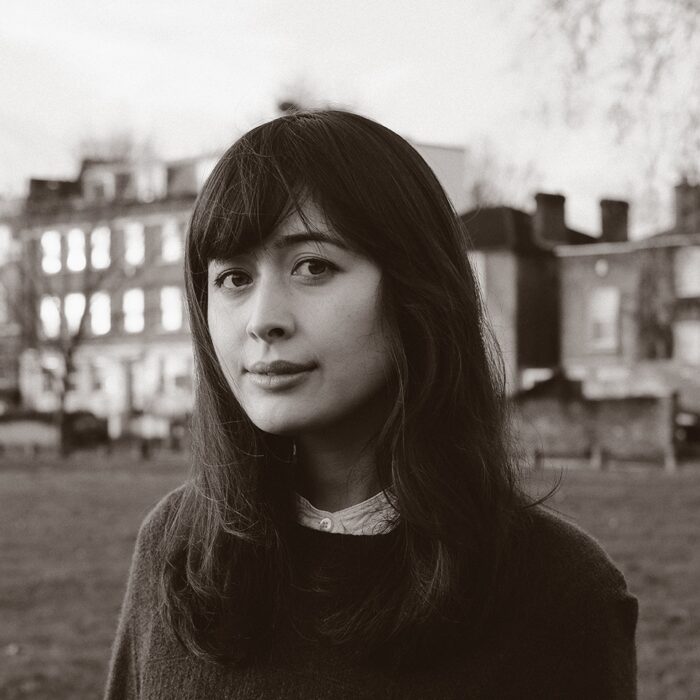
Rowan Hisayo Buchanan
Falling In Love – Seated Male Nude (Self-portrait), 1910
I fell for Egon when I was a teenager. He was not a boy in my year, nor was he a pop star crooning through the radio. He lived in Vienna during the late nineteenth and early twentieth centuries. He was an artist best known for his nude and semi-nude figures – Egon Schiele.
By fell for him, I don’t mean believed in intellectually. I mean that I saw his work and craved to keep looking at it. His art felt like a miracle to me in the same way that two teenagers might feel that the coincidence of meeting each other at a house party, fingertips brushing as they pass warm cans of beer, is a miracle. The way that you can look at someone and think: I have found my person.
What was our meet-cute? Our filmic first encounter? I can’t remember the exact click. I was a sad and lonely teenager with access to the internet. The reasons for that sadness were complicated. Suffice it to say, it was a time when my greatest desire was not to exist at all. In search of distraction I spent hours and hours on the World Wide Web. Somewhere there, I first saw Schiele’s work.
Many of his models were also sad teenage girls, though their sadness was of the bleakest kind. My situation was luxury compared to their lives. It is believed that the girls who sat for Schiele were found amongst Vienna’s poorest, and that they may have been prostitutes. They are often naked but sometimes in the process of getting dressed or undressed. The works posted online were mostly pencil and watercolour. The sharp lines emphasized their bones.
The one I remember most clearly is a study he made in pencil and watercolour – Schwarzhaariger Mädchenakt. It was 1910 and he was about twenty. The girl is naked. At first glance, she is standing, but it is equally possible the view is of her lying down, with you, the viewer, hovering over her. Her breasts are small and protrude only about the same amount as her hip bones. Her belly button is larger than her nipples. She looks very young. You can see the rise and fall of her ribs. Her skin is grey. Her mouth, nipples and labia are vivid red. They remind me of bullseyes. Looking at that painting now, I still find it sad and arresting. I still think he was a man who had a gift for line and colour. But she also looks incredibly vulnerable. The ambiguity of her angled head is an ache. Is that fear, or flirting in the tilted eyebrow? Both? The art historian Peter Vergo has argued that it is possible Schiele’s models were older than the images present and that Schiele had exaggerated their youth to suit his artistic impulses. Possible, but likely? I don’t know. She seems so terribly young, and I want to wrap her in a thick wool blanket, to offer her a biscuit. But when I first saw the painting, I was too close to her in age to pity her.
In any case, it was not her I loved best. It was his self-portraits. The Schiele of his portraits has a coxcomb of dark hair, large ears, long lean hands, with capable knuckles. He often painted himself naked, which was unusual at the time. Yet it was something Schiele did again and again. Many of the ways he painted himself were not so different from the ways he painted his women. He too had pointed hip bones and sharp ribs.
But there was a difference. I see it most clearly in Seated Male Nude. In it, he is naked against a pearly white background. His skin takes on a greenish yellow cast. Nipples and genitals are again a glowing red. So are his belly button and his one visible eye. His emaciated torso is completely exposed. The turned head seems tortured. But there is a power to the red eye. A tension in the torque of the muscles. A bright clear rage. He has power where the girl had none.
I wanted to be him. I wanted to render my loneliness, my vulnerability into art. But I couldn’t paint like Schiele. So I settled for second best. I tried to remake my clumsy teenage body into a shape befitting his brush. And I lived for a while on bags of carrots and apples. I did this not because I wanted to be thin like Kate Moss or the Spice Girls – but because I wanted to be thin as a graphite line, as the sweep of a brush.
Impossible. Particularly because no matter how thin I got my cheeks were still round. Because I did not have the will to stop eating altogether. Because even when you could see the knobs of my spine, my belly had a little pouch. Because in the genetic lottery, I inherited my Chinese great-grandmother’s round cheeks and some English ancestors’ wide hips.
Trouble – House Wall on the River, 1915
A decade after I fell in love with Schiele, I’d found other artists to love and other things to do with loneliness. I’d had to think about what it meant to be mixed-race. I’d nodded along about the problems of only celebrating dead white men. I had realized that thinness does not equal wisdom or beauty. I’d read that Schiele once wrote that, ‘There is something holy about a young girl who has not yet known a man.’ By then, I had known a man. By early twentieth-century standards, I was no longer young. Two counts against holiness. This should have been enough to turn me against him entirely.
I knew more, too, of his history. In 1912, Schiele was taken into custody. He was charged with the seduction of a minor, sexual abuse, and with outraging public morals and decency. He was 22. He was acquitted of the first two offences. It was found that the girl was not abducted but had simply run away. The last charge stuck. He was convicted of disseminating immoral drawings, because the children who came to his house and modelled for him had seen his nude artworks.
Would you have convicted him? It is easy to argue now that his art was about more than indecency. When I first saw those drawings, I barely noticed vulvas or penises, for all their ruddy glow. I saw bone and beauty and colour. I can see the sexuality now, but it strikes me as the least extraordinary part of his work. Far less common is his concision of line, the ability to paint a mood into the shade of skin. Perhaps Schiele was only showing the world as it is. The dirt, the sexuality, children whose skin, eyes, finger joints were shaped by their poverty. His work would later be labelled degenerate by the Nazis. One never wants to be on the side of the Nazis.
Still there are things that don’t sit easily with me. Schiele is supposed to have written that, ‘The adults – have they forgotten how corrupt they themselves were, how attracted and excited by sex when they were children?’ Was he right? Here’s the thing, and I write this not out of prudishness – as a child I was not particularly attracted or excited by sex. These children were the children of the poor – they were doubly vulnerable. They did not grow up to write memoirs to exonerate or excoriate him. To my knowledge, we do not know if they even grew up at all. We cannot know their thoughts. We can only wonder how we would have felt, naked and small, exposed twice – first in person and then in paint.
Schiele does not know if we admire or scorn him. Those, mostly nameless, girls and boys sleep underground, far from any court of justice. But I found loving him no longer felt pure. Still I could not give him up. By then I had seen Schiele’s work up close, and not only illuminated on screen. The oil paintings especially were better in person, richer and brighter, with gossamer shifts of colour.
I told myself that I loved his landscapes more than his bodies. Because while he is known for his nudes, he painted townscapes, mountains, rivers, trees and flowers. I have never seen a landscape of his that contains a single body, nude or clothed. They seem entirely empty of humans. To love these was safe. And I did. Because these landscapes were not bland fields of green, or jolly cottages. If you look at House Wall on the River, you’ll see it has no less emotional engagement than any of his bodies. The walls are as mottled as skin. The windows have been given black eyes, and the laundry line hangs shirts waving their arms as if in surrender. His signature is graffitied into the wall. But just like in his tortured bodies there is beauty here, too – in the subtle variations of colour in the window frames, in the care he assigns to each shingle. The bright castellations of the white-washed wall seem to glow.
It was freeing to replace flesh with mortar in my affections. In my twenties, I wished not to have a body at all – not to worry about the distinctions of desirability that might be assigned to hips or breasts or stomach. When I heard men describe themselves as leg guys, breast guys, butt guys, some part of me wanted to slice away each appendage. To be only swift moving thought. It was a time in which I took my satisfaction from eating simple meals – rice, beans, an egg. Or egg, spinach, bread. Or rice, peas, egg. I lived completely alone.
I was working more with the tap of the keyboard than a spill of ochre into sap green. I began to write a novel about an artist. This artist was a Japanese woman living in New York. When writing about her early years, I imagined an exhibition in which she might have seen some of the same art that had moved me. And so I gave her a postcard version of House Wall on the River to keep in her teenage bedroom. It was the best beacon I had to offer her.
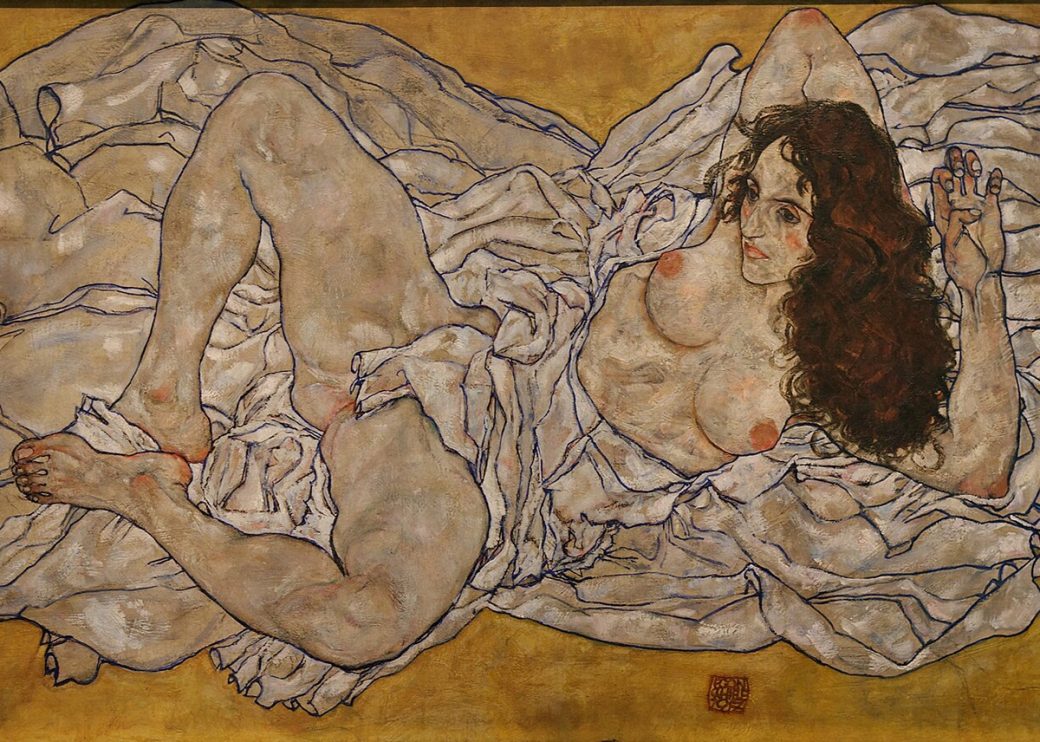
And – Reclining Woman, 1917
Last summer, I went to Vienna for my birthday. I was five years older than Schiele when he died of the flu at 28. I was pregnant. My body was undeniably present and growing. I was weighed down by first trimester exhaustion and the heat seemed to get in between my joints. On that trip and in the days afterwards, I was hungry all of the time. Not just hungry but craving the sweet sharp taste of sugar.
My partner asked me what I wanted to do, and it was to go to the city’s museums. We started with the Leopold Museum. I wanted to seek out a piece of Schiele’s later work. In Reclining Woman, a female figure sprawls on a white sheet. I remembered the background being gold, like a Chinese screen. But it is in fact only a deep ochre. As before, her mouth, nipples and labia are all flushed. So are her elbows and the corners of her ankles. Her gaze is steady and serious, looking at something beyond the viewer. What is remarkable is that her flesh is, well, fleshy. Her thighs fold, her calves bulge, there is a weight and a softness to her forearms. She has the sort of majesty a Dove soap campaign could only dream of. It reminds you that the thing that makes Schiele’s portraits powerful is not their emaciation. Starvation was not his only route into beauty. He painted this a year before he died. There are other paintings of around the same time which begin to explore this weightier body. We do not know what he might have done had he lived longer, had he lived even until 33.
I am not proposing that this painting is some grand feminist statement on the emancipated body. The Leopold Museum’s curators believe the body was modelled on his wife, Edith, but that the head was altered. I have often thought that some of the paintings of his wife were cruel. It is largely believed that he married her for her money. The first painting I saw of her, she appears slightly cow-like, dazed, a little bit stupid. For an artist committed to expression, this must have been deliberate. It is known they argued about his desire to keep seeing his lover. In the early days of their marriage, Schiele moved away from painting other nude models to focus on Edith. I do not know whether this was perhaps out of love or for reasons of economy. After she put on weight he brought in other women. Was the change of face in Reclining Woman a disguise for Edith, in ‘deference to her wishes’ as suggested by Peter Vergo? I wonder what it would have felt like to have your body rejected for a thinner shape, and when it was actually celebrated, in all its magnificence, to have another’s face replace yours?
And yet, this painting makes me mourn his death again. I mourn because he surprises me. And surprise makes the world feel new. It allows me to see the hidden green in a wrist, the luxury of a thigh, the sorrow of a tree.
During that pregnancy I finished writing a novel about a girl who separates from her body. But she finds it is no escape. It is not a book I could have written in my hungry years. This essay was written, in part, while feeding my child. One hand scrawled in red pen while another held her head. I am now typing this conclusion while my partner holds our daughter’s tiny form. My body will never exist in only two dimensions. Nor will it ever be quite the same again. I have travelled further and further from Egon’s bony-hipped girls but also far from my own saddest years.
I have loved Schiele now for almost two decades. A longer relationship than he ever had. It is an old love now – worn, less trusting. But Schiele reminds me that beauty is not a collection of traits, it’s a way of seeing. Nor does it belong only to the good. And while I may not always have the capacity to find beauty, it does not mean it is not there. He has made me grateful for the body I have, the one that has allowed me to live long enough to see the world in new ways.
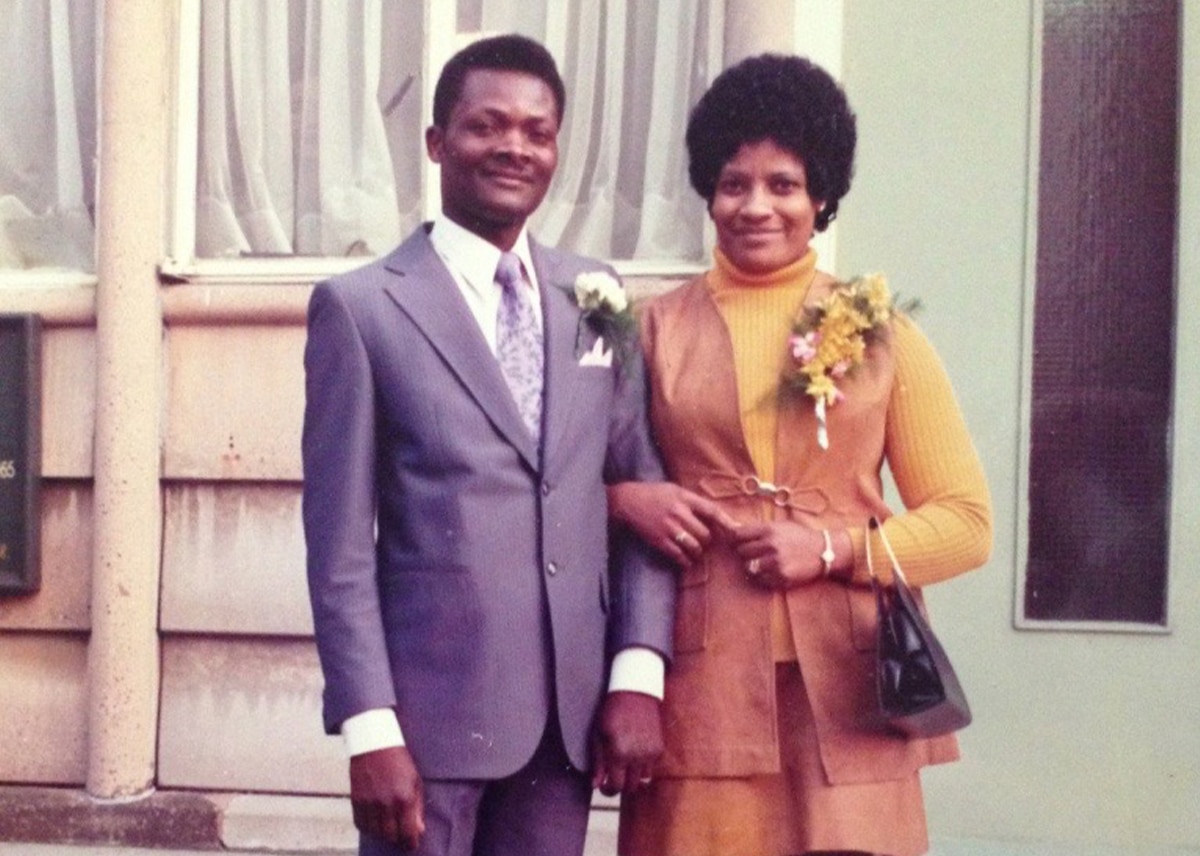
Didi
'My Grandfather did not let the world harden him. His eyes, which have greyed with his hair, shine like buttons when he laughs.'
Gentle Euphoria
A rare chance to rejoice in the collective craft of writing
Ideas are like rabbits
‘Ideas are like rabbits, you get a couple and learn how to handle them, and pretty soon you will have a dozen’

Hurvin Anderson
A meditation on the illusory nature of the reality of Britain’s entangled history
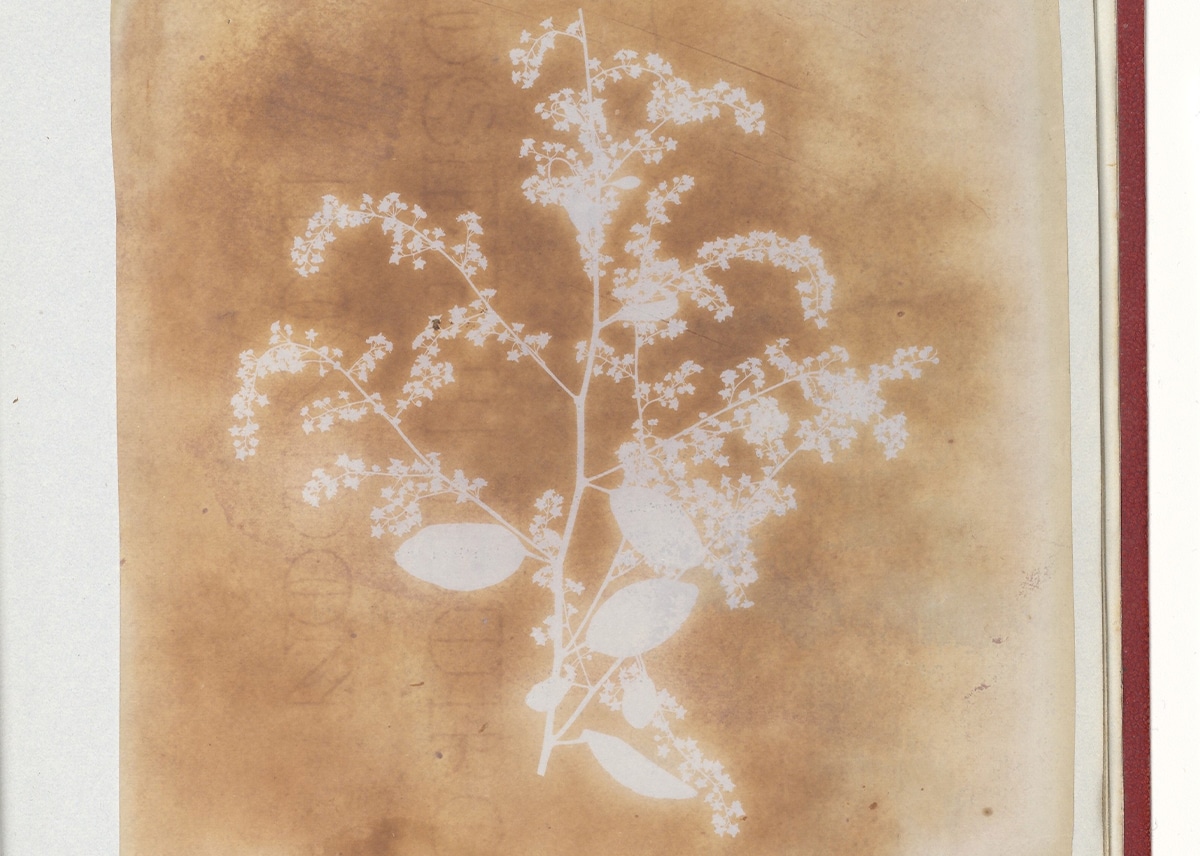
Kin
The journey of two childhood friends in the segregated South as their lives drastically diverge
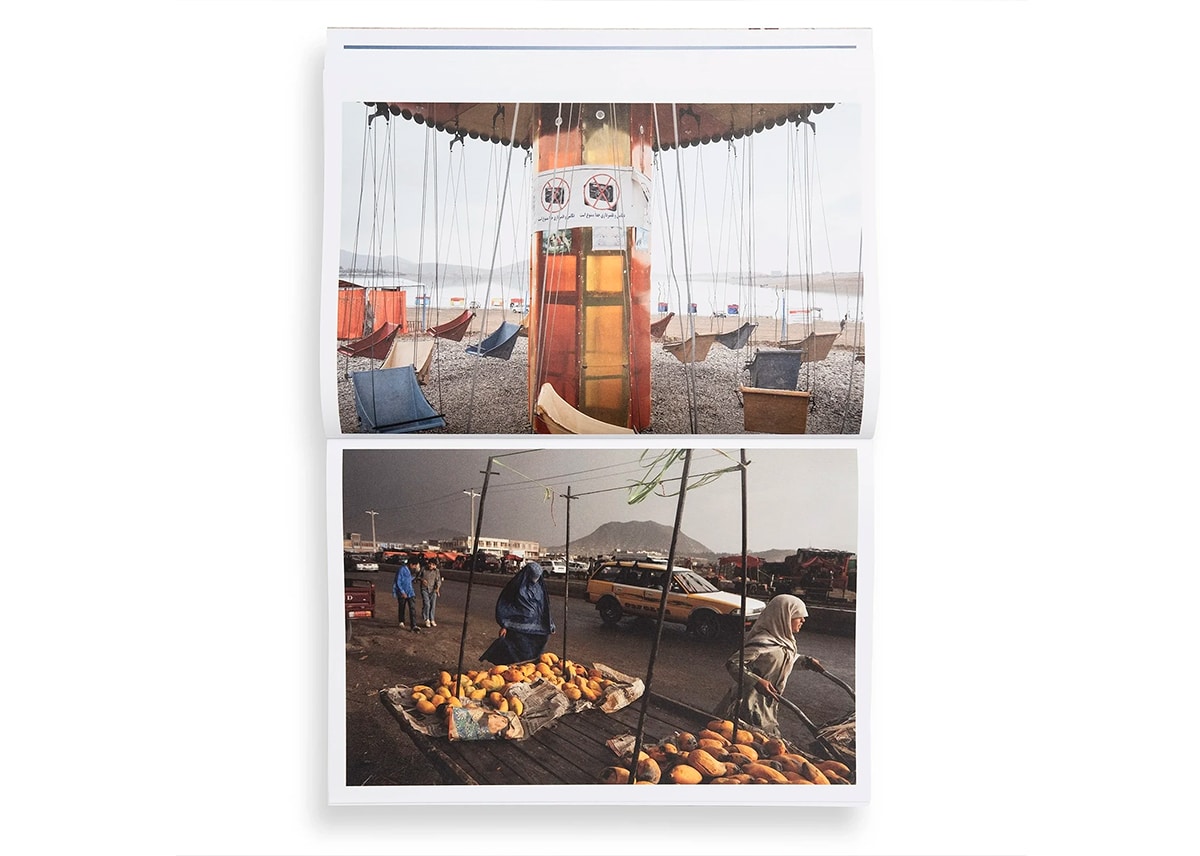
Afghanistanism
'Red is the colour of joy and beauty and also of the killing that comes in waves.'

Free Will
Will Harris reads his poem, 'Free Will'. Directed by Matthew Thompson and commissioned by the Adrian Brinkerhoff Poetry Foundation.

Half Written Love Letter
Selina Nwulu reads her poem, 'Half Written Love Letter'. Directed by Matthew Thompson and commissioned by the Adrian Brinkerhoff Poetry Foundation.

Illuminating, in-depth conversations between writers.
Listen to all episodes
SpotifyApple Podcasts
Amazon Music
YouTube
Other apps

The series that tells the true-life stories of migration to the UK.
Listen to all episodes
SpotifyApple Podcasts
Amazon Music
YouTube
Other apps
Nine writers explore the elusive emotional truth behind narratives and storytelling.
Listen to all episodes
SpotifyApple Podcasts
YouTube