
Jennie Baptiste: Rhythm & Roots
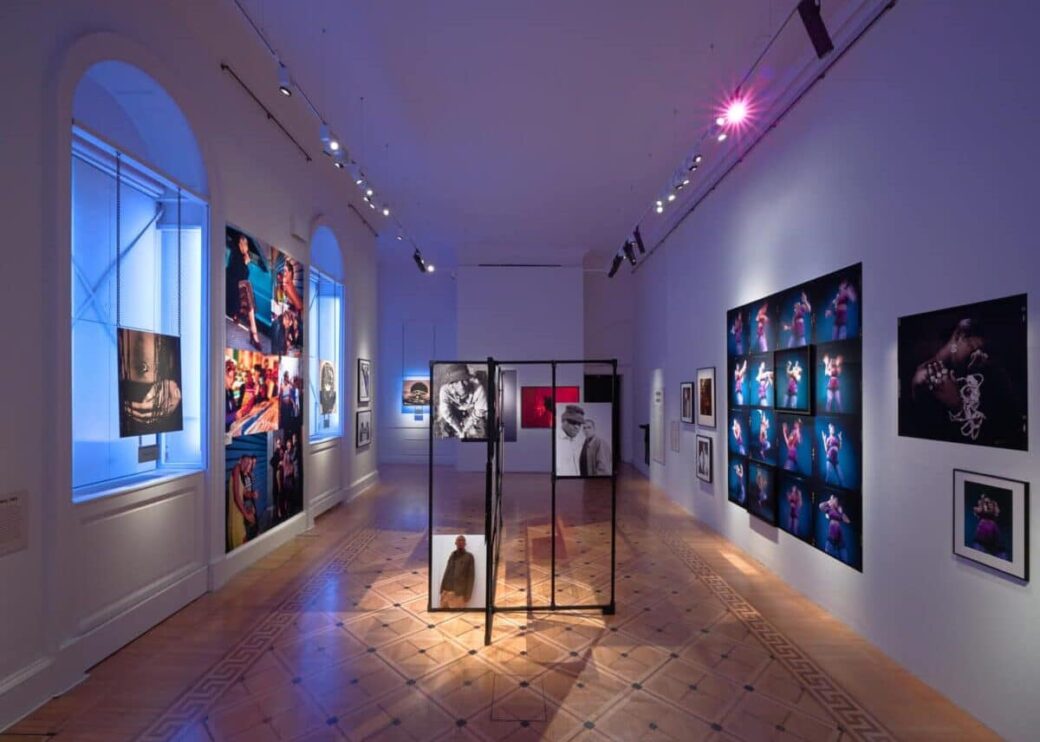
Jennie Baptiste: Rhythm & Roots
Somerset House, London
17 October 2025 – 4 January 2026
Jennie Baptiste: Rhythm & Roots is the first major solo exhibition of work by the London-born photographer, spanning from the early 1990s to today. In three thematically designed rooms at Somerset House, Baptiste’s portraits, documentary, and experimental analogue photography capture how Black British youth culture transformed London’s sonic landscape, style and identity on the cusp of the millennium. Like the rude boys and sound system culture of earlier decades, this urban vernacular included hip-hop, garage, dancehall and R&B music, street style, and a multi-ethnic language spiced with Jamaican Creole.
Born in London, of St Lucian migrant heritage, Baptiste was fascinated by visual culture from a young age, filling scrapbooks with cut-out newspaper images and studying vinyl record sleeves. Photographing artists in HMV – the landmark music retailer on Oxford Street – Baptiste trained her eye to limit herself to a few frames of film. Carrying this attention to detail into her photographic and darkroom practice, Baptiste experimented with papers and toners and, using lith printing, layered negatives and an aged developer, created images with a textured and aged archival surface like the cultural memories they embodied. Baptiste’s innovative approach speaks to the expression and authorship of Black culture, where the intersection between music, self-fashioning and style draws on what Paul Gilroy calls ‘Black Atlantic’ diaspora culture.
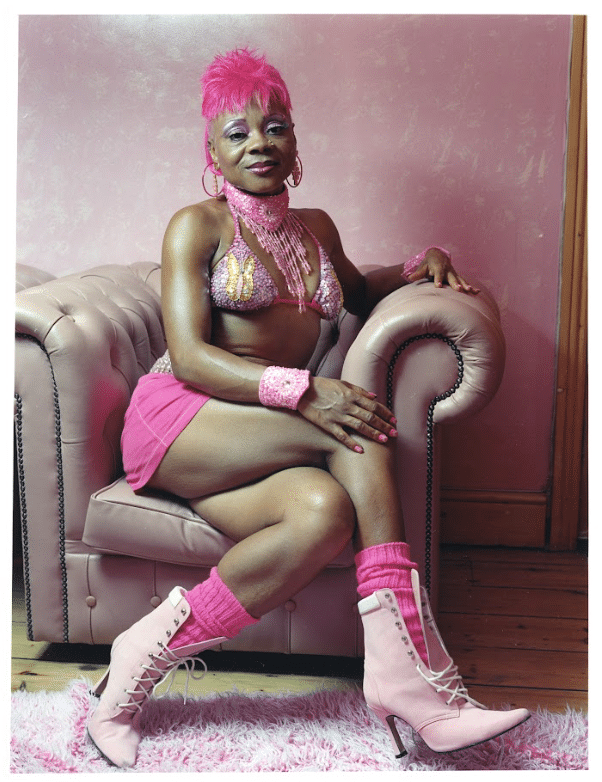
Baptiste’s Dancehall series (1993 – ongoing) captures London’s dancehall culture of bling hairstyles, bold patterns and neon colours, and the Butterfly and Bogle dance moves. One celebrated portrait, Pinky (2001), has the eponymous subject in her Brixton living room, dressed and surrounded by furniture and décor in her favourite colour: pink. Pinky’s home is an extension of her identity, and her presence as a middle-aged dancehall queen challenges clichéd portrayals of dancehall as forever-young, sexualised bodies.
Baptiste photographed rapper Jay-Z in London when his debut album Reasonable Doubt was released in 1996. In contrast with his public image, she found him reserved and almost shy. Superimposing negatives in the darkroom, Baptiste created a double image that embodied Jay-Z’s celebrity persona and the softer presence she observed. Whereas with a young Nas, Baptiste had only twenty minutes in a kitchen to shoot the rapper. Improvising, she overlaid negatives of the translucent floor tiles with his profile in the darkroom. This was inspired by the visual layering of Nas’s debut album Illmatic (1994), that went beyond documentary social realist imagery of urban deprivation.
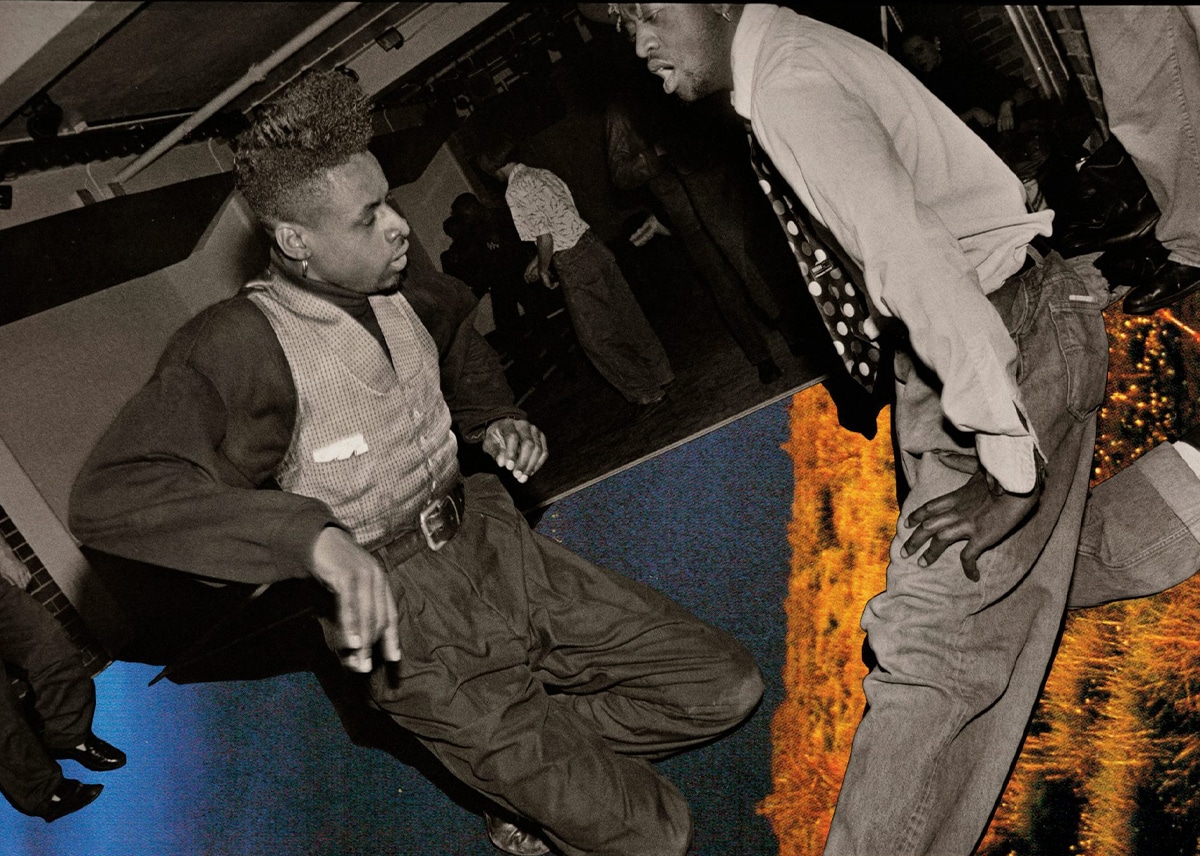
As an insider, Baptiste knew many of her photographic subjects personally, raving and socialising in the same spaces. But with an outsider observer’s gaze, Baptiste attempts to go beyond stereotypical representations of those social spaces by placing Black British youth culture in a broader Black Atlantic diaspora. The British singer and rapper Ms Dynamite is photographed for the brand Nike in a Harlesden hair shop. Brixton Boyz (2001) emerged from a similar impulse, with two young men photographed passing each other on Brixton High Street. For British-Nigerian designer Walé Adeyemi (MBE), Baptiste’s former secondary school playground at Alperton Community School, (amongst other urban settings), resonated with his brand and its tagline: ‘Somewhere between the kerb and the boutique’.
For the portraits of the musicians Estelle and Ty, Baptiste directed them to play out the humour and flirtation of a late-night encounter in a club, similar to the intimate pleasure of a young female posse on a night out on the town. In the Black Chains of Icon series (1994), created for her final year at university, Baptiste has the portrait of a young Black woman’s stomach – her belly button pierced and framed by hair extensions – juxtaposed with a quote from Diana Ross’s memoir Secrets of a Sparrow: ‘I gaze at myself and see my womanhood from the inside out.’ Carol Tulloch’s idea – ‘style-fashion-dress’ – is not simply what is worn, but how it is worn. Accessories and adornment – piercings, signet rings, or hairstyle patterning – empower a sense of self, as they did for women of the Windrush generation arriving in Britain wearing church hats and white gloves, holding handbags that matched their shoes.
In the final room, Baptiste’s Revolutions @ 33 1/3 rpm series (1998-99) features eleven London hip-hop DJs photographed in home settings, creating mixtapes listened to on headphones. The mise-en-scène is enhanced by columns of cassette tapes with handwritten labels housed in a fireplace, alongside two iconic Technics turntables. DJ Misbehavior, the only female in the series, is photographed with her record box on the bridge towards Subterania, a popular 1990s club in Portobello where hip-hop artists performed. With work in the V&A collection – including the first portrait of British hip-hop artist Roots Manuva – and in the National Portrait Gallery archive, Baptiste is one of the few female photographers documenting black British music culture. Her exhibition Rhythm & Roots is a beacon for emerging women image makers.
WritersMosaic monthly
Get new reviews in your inbox
One email monthly, unsubscribe anytime
The Disappearers
A sprawling visceral experience that drops you in head first
The Lady Imam
Is the world ready to catch up with amina wadud?
Pressure
What's missing from the latest 'untold story behind D-Day'?

Complex antihero: an interview with Arthur Hughes
Unravelling Authur Hughes' Richard III
Marlon James: a Jamaican reckoning
'A return to a home I barely knew'
The name of this wallpaper is ‘Childhood’
A luminescent bubble of memory




Illuminating, in-depth conversations between writers.
Listen to all episodes
SpotifyApple Podcasts
Amazon Music
YouTube
Other apps

The series that tells the true-life stories of migration to the UK.
Listen to all episodes
SpotifyApple Podcasts
Amazon Music
YouTube
Other apps
WritersMosaic interrogates the notion of ‘staying in your lane’ by asking writers how they attempt to think beyond the parameters of their cultural identity.
Listen to all episodes
SpotifyApple Podcasts
YouTube