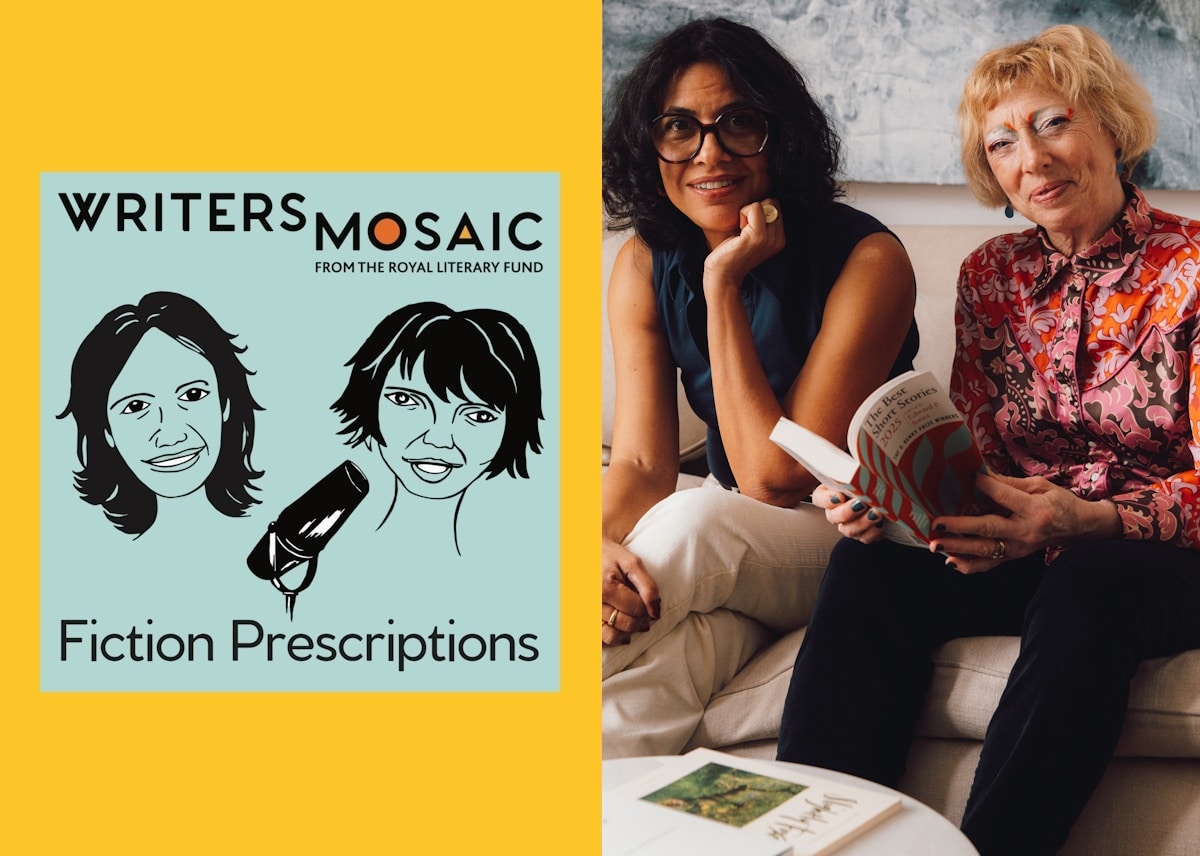
Fiction Prescriptions
Love
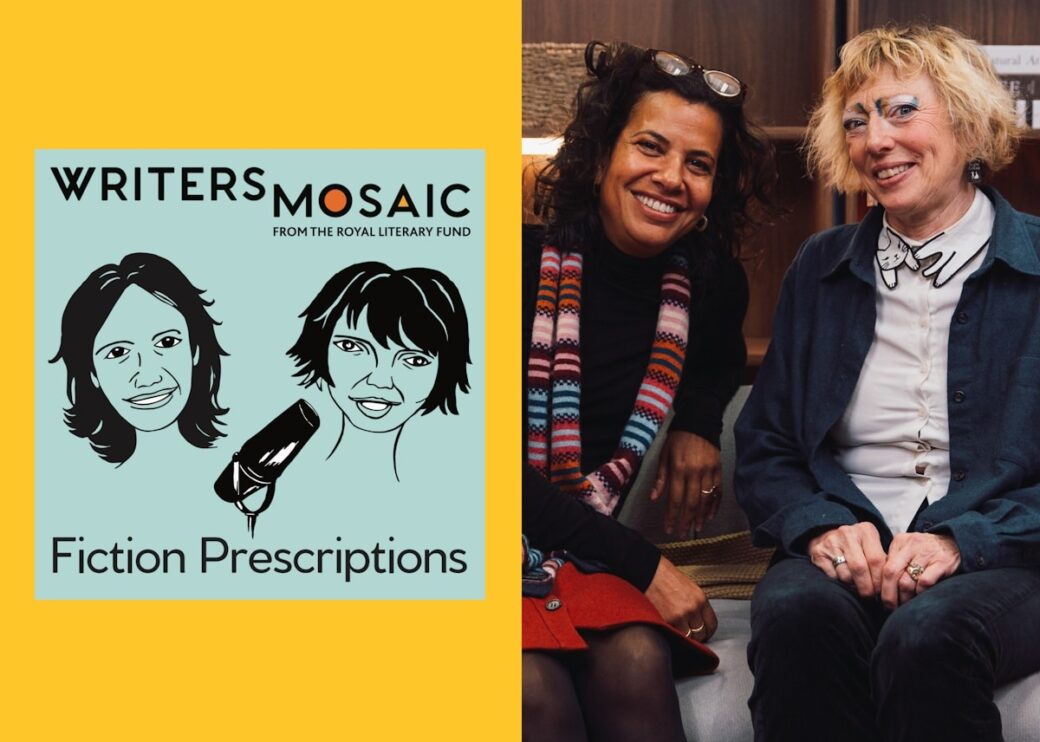

Write in with your dilemmas and our dynamic duo will suggest remedies for the head and heart, drawn from novels, poetry and prose collections.
Contact Isabelle and Ella for a literary check up here:
writersmosaic.org.uk/
Fiction prescribed in this episode:
The Unbearable Lightness of Being by Milan Kundera
Jitterbug Perfume by Tom Robbins
Big Kiss, Bye-Bye by Claire-Louise Bennett
Skin & Bones by Renée Watson
O Now (play) by Niall Williams
A Tree, A Rock, A Cloud (short story) by Carson McCullers
Love Lane by Patrick Gale
‘As I Walked Out One Evening‘ (poem) by W. H. Auden
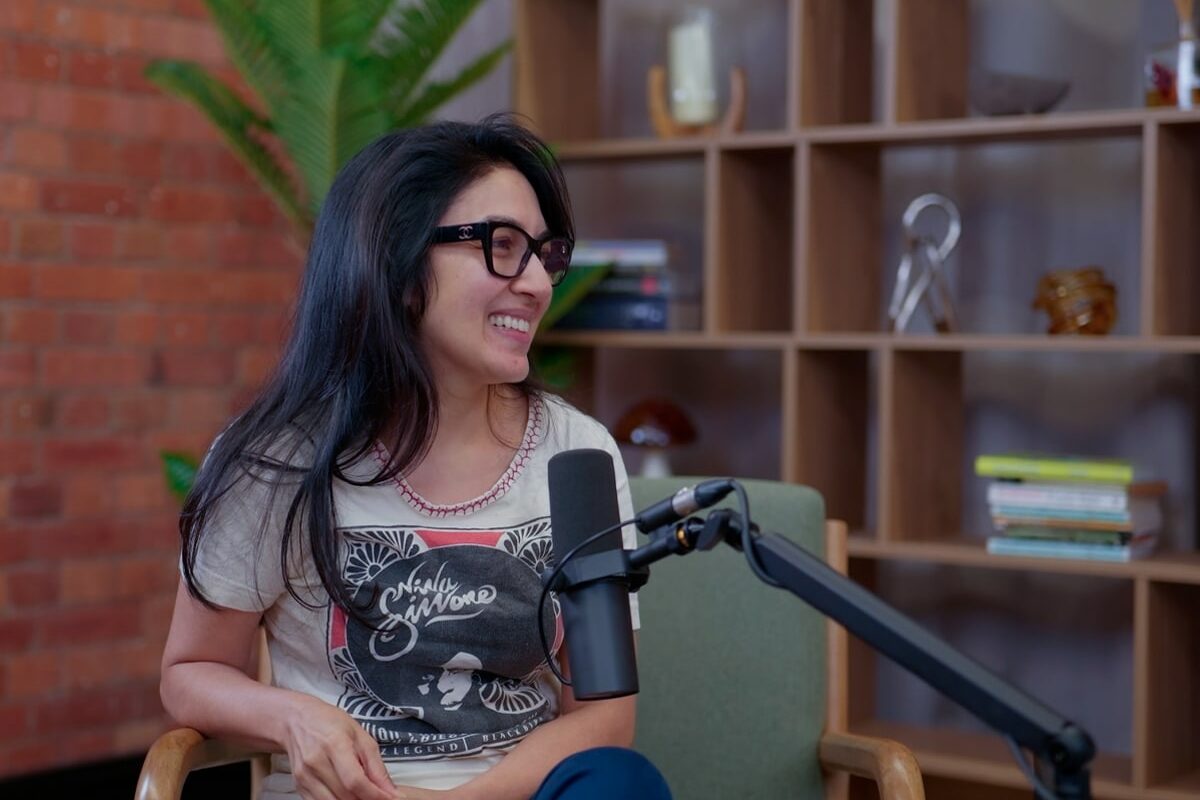
Isabelle Dupuy (ID): Hi, welcome. My name is Isabelle Dupuy, and this is our new podcast, Fiction Prescriptions. My co-host is Ella Berthoud.
Ella Berthoud (EB): Thanks, Isabelle. We’re going to be prescribing fiction to cure life’s ailments and looking at different issues every month and giving novels, short stories, and poems which relate to particular themes.
ID: And today we’re going to talk about love.
EB: So we’re going to start by thinking about what we were reading as teenagers. I was at boarding school, and I spent a lot of time reading Mills & Boon books, which were secretly brought into the school and were contraband. We actually had to go and steal them out of the staff room where they were kept, so that made it all the more exciting. But actually, what I really loved reading was Jilly Cooper. I was obsessed with Jilly Cooper. And my mum gave me all the Jilly Cooper novels, like Bella, Imogen, all those early ones that had girls’ names. And they had a really big effect on my whole psyche. What were you reading? We’ll come back to what it did to me in a minute.
ID: Well, yes, because we were saying that it would be interesting to see when we were 15, what we read and how it influenced our concept of love, of romantic love, what we thought was obtainable, desirable, what would make us happy. And I was 15, I was living in Port-au-Prince, and I had a big brace because I had scoliosis, so my movements were limited in all senses of the word. And so, I think this made me look more into fantasy. And so, I was into superheroes; I was into Spider-Man; I was into Superman and Lois Lane. And it’s very basic, actually. But I really had this draw for a superhero who could help me rise above my limitations.
EB: Funnily enough, I was also obsessed with Tarzan of the Apes. And I read all of the Edgar Rice Burroughs. There were, I think, 12 of them. My dad gave them to me. And looking back on them now, they’re quite difficult reads. They’re not easy. And of course, it’s all this mad fantasy of living in the jungle. And I’m still looking for my Tarzan [both laugh].
ID: You see, it’s funny because I grew up in Haiti, where it’s in French, and so the French have this way of either translating or doing a parallel universe of the Anglo-Saxon creations. And so, they had a cartoon called Rahan, who was the French Tarzan, who only wore a loincloth as well, but his was actually torn, so you could see—
EB: More revealing.
ID: Exactly. It was [both laugh]. But the book I also remember reading was Flowers in the Attic.
EB: Yes, which went round our boarding school like an absolute plague. Everyone was reading that. And I refused to read it because everyone else was reading it. But I know the story, and it’s incest.
ID: It’s incest, it’s dirty, and it was, of course, very titillating.
EB: Very erotic, if you’re a 14-year-old frustrated girl.
ID: Yes, exactly. So that was something that marked me. But on the other extreme of it, I used to love [The] Lord of the Rings.
EB: Oh, yeah.
ID: The Tolkien trilogy, and I was—
EB: That had a strange romantic effect on you.
ID: Yes, and I kept rereading this romantic story between Aragorn, who was the human warrior, and the elf princess, Arwen. I read this probably 10 times.
EB: Yeah. And do you think that informed your attitude to love ever since?
ID: I think that—
EB: Are you looking for your Aragorn still?
ID: I’m looking for my Aragorn still. I mean, I thought I, as you, we think we find them, and then they last a little bit, and then we have to [EB laughs] be back on the drawing board again. Yes.
EB: Exactly. But Jilly Cooper, I think she had a really good effect on me because, actually, those early books were very thought-provoking. I read them very quickly and saw them as romances with happy endings, but actually looking back on them, they are stories of becoming, and they have quite a feminist message. They’re not as, oh, everyone ends up happily married.
ID: Mills & Boon.
EB: Exactly. They’re quite thought-provoking, and many of the characters in those books end up learning a lot through their experiences and possibly ending up man free, interestingly.
ID: Interestingly indeed.
EB: Yeah, so I’m gonna go back and read them again and see what I learn.
ID: Yeah, I should read them. I’ve never read them. So now you’re making me quite interested. Because for a while, I thought they were just romantic novels.
EB: Easy reads.
ID: Yes, exactly.
EB: Yeah, no. Jilly. We love Jilly.
ID: Oh, thank you. Thank you, Ella. So, from there, we’re moving on to a book that we’ve both re-read for this topic.
EB: And we read first in our 20s.
ID: And read first in the ‘80s. It’s an old book from ‘84, and it is this one: The Unbearable Lightness of Being by Milan Kundera. It is a stunning book in every sense of the word and so current to what we’re living today.
EB: Yeah, I recommend it to anyone.
ID: It’s basically a love story that is flawed from the beginning, between a surgeon and a waitress. And the surgeon cannot give up on womanising, although he is in love with the waitress, and the waitress cannot get over her jealousy over the surgeon’s womanising. And this happens around the time when the tanks roll into Prague in ‘68, and all freedom and even sense of reality in the Czech Republic is warped by the Russians and their totalitarian take on this small country. And it’s about how love survives in such an environment, when everything that made you who you are is stripped away. The surgeon becomes a window cleaner.
This is a preview of the show. The full text is available as a PDF here: Fiction Prescriptions: Love
Next time on Fiction Prescriptions: The state of the world. Bibliotherapy for the head and heart. Ella and Isabelle reflect on, and provide prescriptions for, the state of the world. How can fiction help us to understand what we are living through, how to handle it and continue to fight for values, for a world we want to live in?
(Playful book chat only – not medical advice. If you need serious support, contact samaritans.org)

Fiction Prescriptions
Money
Ella Berthoud & Isabelle Dupuy
Superstitions
Ella Berthoud & Isabelle Dupuy
Food
Ella Berthoud & Isabelle Dupuy
The manosphere
Ella Berthoud & Isabelle Dupuy
Parenting
Ella Berthoud & Isabelle Dupuy
The state of the world
Ella Berthoud & Isabelle Dupuy

New Year’s resolutions
Ella Berthoud & Isabelle Dupuy
WritersMosaic monthly
Get new episodes by email
One email monthly, unsubscribe anytime

Illuminating, in-depth conversations between writers.
Listen to all episodes
SpotifyApple Podcasts
Amazon Music
YouTube
Other apps

The series that tells the true-life stories of migration to the UK.
Listen to all episodes
SpotifyApple Podcasts
Amazon Music
YouTube
Other apps
In the first series of poems commissioned by Hannah Lowe, six poets explore how ritual gives meaning to our lives.
Listen to all episodes
SpotifyApple Podcasts
YouTube
WritersMosaic interrogates the notion of ‘staying in your lane’ by asking writers how they attempt to think beyond the parameters of their cultural identity.
Listen to all episodes
SpotifyApple Podcasts
YouTube


It’s being published I get paid for; the writing I would do for free
‘Any advance [...] for your novel is to compensate you for the horrors of being published'
Complex antihero: an interview with Arthur Hughes
Unravelling Authur Hughes' Richard III
Marlon James: a Jamaican reckoning
'A return to a home I barely knew'


Haunting the Black Air
Poetic freedom across space and time
The Disappearers
A sprawling visceral experience that drops you in head first