
There Is No Meant to Be
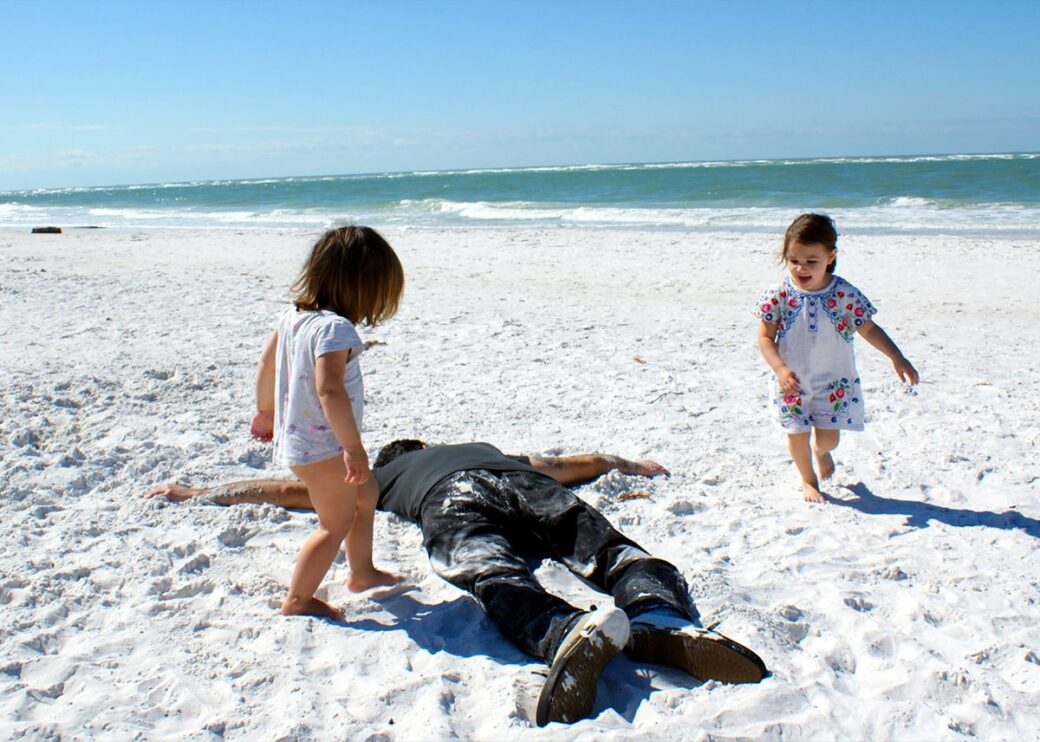
Jarred McGinnis
Harville, 2026
Jarred McGinnis is descended from Irish horse thieves. Specifically, from one of three brothers who fled County Down for Appalachia, where they worked on the railroads, before being shot dead and thrown down a well. They’d annoyed the locals with their drinking. Before their demise, one of them had impregnated a village girl, who gave birth to Jarred’s great-great-great-grandfather.
Two hundred years of abusive, alcoholic McGinnis men followed, culminating in Jarred, the seventh generation of first-born sons, who broke with this bruising family tradition. He did so by leaving America, becoming a writer, and fathering daughters. He is also ‘a guy on wheels’.
We first met a version of Jarred in his debut, The Coward (2021), a novel in which the main character, called Jarred McGinnis, outlines how he became a wheelchair user after being crushed under a truck in his twenties. In There Is No Meant to Be, his second book, the first two-thirds are more of a straightforward memoir, albeit with some details changed (IRL his two daughters are not twins, and are not called Zed and Maude).
He tells us how the accident that left him paraplegic happened around the same time Princess Di died: ‘the only tragedy that mattered’. His anger is still palpable. ‘Surprisingly often strangers ask me, “What happened to you?” as if I owe them an explanation for my disabled body. My daughters too have asked.’ He’s still not keen to talk about it: ‘I don’t owe anyone my pain, not even my daughters.’
Instead, he writes about the grief and rage that followed the accident. How his mother would hear him screaming from his room, grieving for his former self. Life did not seem more precious: ‘No diems were carped.’ Instead, outside the hospital, ‘shame awaited’. He became depressed in a country where ‘sadness is a failure’.
It was the consistent, unerring love of two women – his wife and his mother – which saved him. He’d been dating Sarah, then aged 21, for six months at the time of his accident; she drove a thousand miles to see him. He imagines the advice he’d have given his future daughters had they been in Sarah’s position: ‘Leave him. The boy is cute and all but don’t be charmed by his humour and excellent parking options.’
But Sarah stuck around. ‘Without her I know, not suspect, that I would not have survived the injuries I sustained,’ he writes. Describing how she liked to collect dying plants chucked out on the street and bring them back to life, he wonders, ‘Maybe I was her first trash-heap orchid. There is no meant to be, but the love I’ve known has made it hard to believe that.’
Jarred was sustained from childhood by the love of his mother, Momo. A perfume-drinking, suicidal alcoholic trapped in an abusive marriage to Jarred’s alcoholic dad – until he left her – Momo got sober thanks to the wily, battle-scarred women of AA pulling her to safety. ‘She was a young mother […] and we grew up together,’ he writes, their relationship ‘an aged friendship worn smooth’. He acknowledges that actually it was Momo who broke the cycle of seven generations of abuse, despite being on the wrong end of generation six, with Jarred’s dad. ‘She did it, not me,’ he writes. ‘That scared and abused little girl […] gave me the safety and certainty to grow up intact enough to be the man, the husband and the father that I am.’
Sarah and Jarred left the US for Bethnal Green in London, and had two daughters by IVF, ‘a brutality of needles and false hope’, before moving again, to Marseille. He wasn’t prepared for the overwhelm of ‘emotional rawness’ of parenthood, which left him frequently in tears, sometimes from pure joy and other times from ‘old grievances thought forgotten’.
It’s not all tears and grievances, however. Although essentially a story of someone overcoming significant challenges – parenting two small kids from a wheelchair, while decommissioning intergenerational trauma – the book has moments of hilarity. Like when he gives his little niece nightmares about Joan Rivers, or when he hangs out with Kevin, the Pernod-drinking orangutan, in a Brick Lane pub, who supports Watford FC and only likes matcha-flavoured doughnuts.
Perhaps the most moving aspect of the book is the reconciliation between Jarred and his long-term sober dad, who has swapped toxic masculinity for t’ai chi. Jarred writes about the succession of male violence poisoning generations of McGinnis sons: ‘Seven heavy knuckled hands holding seven boys by their throats. Each man holding a whiskey […] but never once was a drop spilled.’
Of not carrying this forward, he writes: ‘It feels like an easy parenting decision. My father didn’t make that decision. His father didn’t make that decision. His father […] and so on. I suppose the first mistake is to think it is a decision at all.’ Of how his own life turned out, he adds wryly, ‘I wouldn’t recommend a spinal cord injury or alcoholic parents, but it worked out for me.’
The final third of the book takes ‘the realisation that after they [his parents] are gone, you’re next’, and runs with it, as Jarred imagines his daughters as adults, and himself and Sarah growing old and dying. Readers will be divided as to whether this leap into fiction works or not, but it does make you think. After all, who hasn’t imagined their own funeral?
WritersMosaic monthly
Get new reviews in your inbox
One email monthly, unsubscribe anytime
Ever Land
A layered and haunting view of daily life in occupied Palestine
Mahsa Salali’s Naqqāli
'Salali positions the female body... as an active agent'

At Sea
Bearing witness in the face of dismissal
Triage
A response to the endless spiral of worldwide conflict and tragedy
My tomorrow is today
'I clasped my hands together, not in prayer but to stop them from shaking'
Ballet Black at 25
Cassa Pancho: 'It’s a miracle that we are still here in some way'

Free Will
Will Harris reads his poem, 'Free Will'. Directed by Matthew Thompson and commissioned by the Adrian Brinkerhoff Poetry Foundation.

Half Written Love Letter
Selina Nwulu reads her poem, 'Half Written Love Letter'. Directed by Matthew Thompson and commissioned by the Adrian Brinkerhoff Poetry Foundation.

Illuminating, in-depth conversations between writers.
Listen to all episodes
SpotifyApple Podcasts
Amazon Music
YouTube
Other apps

The series that tells the true-life stories of migration to the UK.
Listen to all episodes
SpotifyApple Podcasts
Amazon Music
YouTube
Other apps
WritersMosaic interrogates the notion of ‘staying in your lane’ by asking writers how they attempt to think beyond the parameters of their cultural identity.
Listen to all episodes
SpotifyApple Podcasts
YouTube
In the first series of poems commissioned by Hannah Lowe, six poets explore how ritual gives meaning to our lives.
Listen to all episodes
SpotifyApple Podcasts
YouTube