And the winner is...
Hoard / Archive
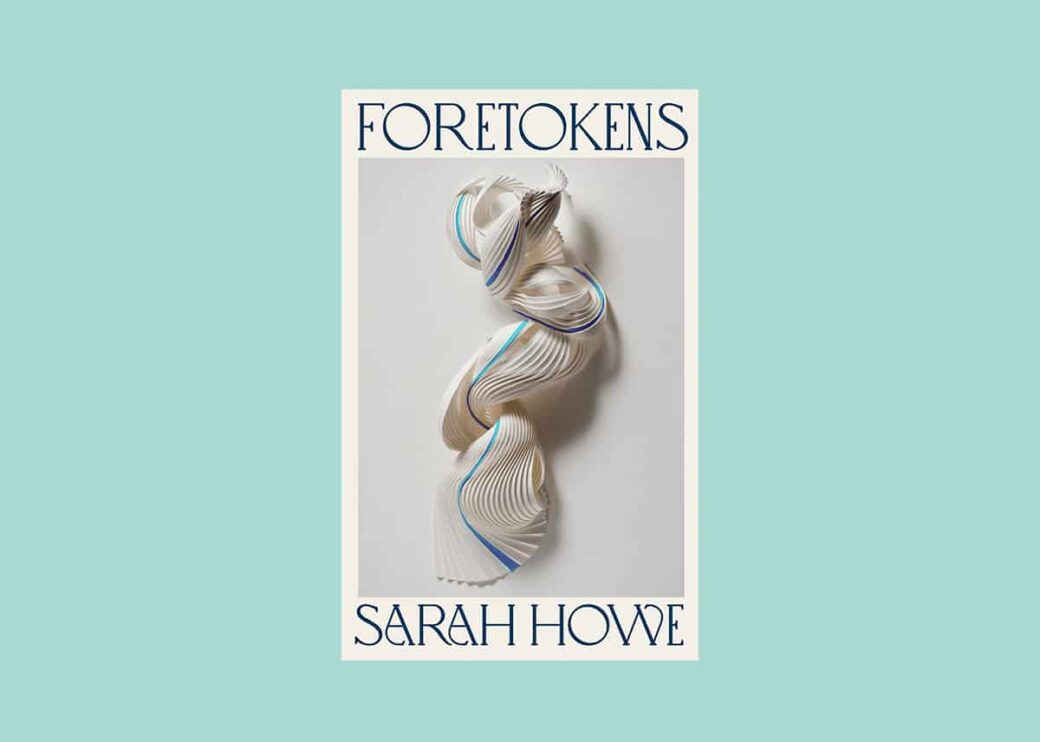
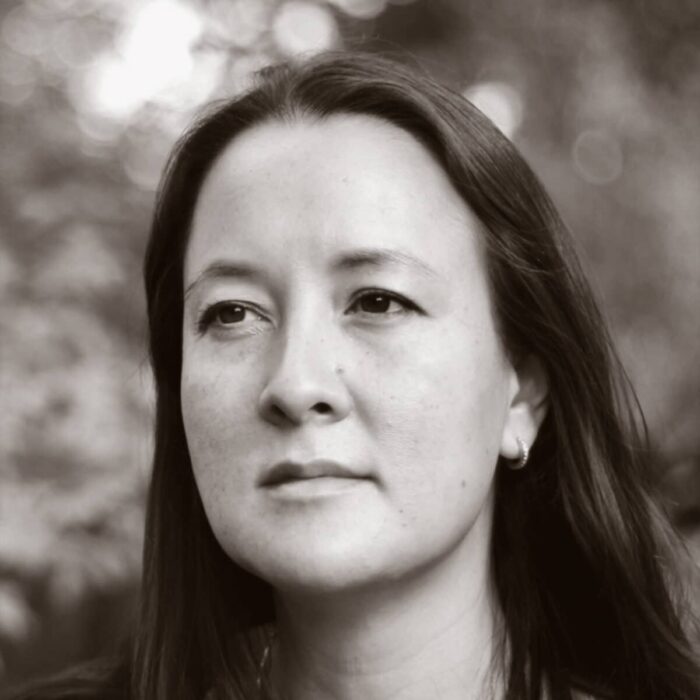
Although I would do no actual writing for years yet, I would say the writing of Foretokens, my second book of poems, truly began when my husband and I moved back in with my parents, who still lived in the house I’d grown up in, with our newborn son in tow. We’d meant to stay a few weeks and ended up staying two years. Having never clashed with my mother as a child or adolescent – all my rows in those days were with my dad – I was surprised to find how fraught that period of guest-like return to my childhood home was, how it left me turning over the settled ideas I’d had about my own childhood. I realise in saying this I might sound ungrateful, unfilial. But after years of being stuck creatively, of writing practically nothing, encountering once again my mother and her hoarding, her psychic burden and barricade, close up, as if for the first time: it set me in motion.
*
And if I break it now – will I be saved?
*
What should be thrown away and what should be saved? Who gets to say what is or isn’t rubbish? What does or doesn’t have value? These were unhappily contested questions in the home where I grew up. In the decades-long war of definition waged on this front between my Hong Kong-Chinese mother and white English father, which therefore came to feel like a proxy intercultural struggle of sorts, my mum learned to resort to passive sorties, usually by night. The battleground was our pebble-dashed suburban house just beyond London. ‘He thinks this house is a museum,’ she would complain, about what must have felt to her like my father’s obsession with tidiness, with outward show – the way he’d run a finger, aghast, through the dust on the mantlepiece. Along with all other domestic labour, tidying and dusting were demarcated as female pursuits in our household. My mum would manage to evade his prohibitions and half-joking threats by squirreling things away on the sly, rescuing stuff from bins.
*
I started to find neat piles of folded pastel sleepsuits pressed to perfection, or strung up in the airing cupboard on tiny hangers saved, it seemed, since my own babyhood, boxed and shipped halfway across the world, and something tugged in my stomach that wasn’t about laundry.
*
‘It’s no wonder psychoanalysts have found hoarders so fascinating,’ writes Adam Phillips in his essay ‘Clutter: A Case History’. Foretokens is a book I now see is preoccupied, to use Phillips’ terms, with ‘mess and meaning, and the links between them’. If lives and psyches, as much as houses, have a tendency to ‘get cluttered’, psychoanalysis – like poetry – offers the prospect of combing through the jumbled flotsam of personal history, discerning pattern and meaning in the chaos. When our baby son arrived on the scene, it didn’t occur to me to wonder why my mum had chosen not to save the clothes of my own babyhood, but rather the diminutive yellow plastic hangers, probably purchased for cents at a Hong Kong street market, that she used to dry them on.
*
Anything bearing words was particularly tempting to her: leaflets and flyers, bagged-up newspapers (‘I didn’t have time to read them yet …’), envelopes, instruction manuals, not to mention books – though on that count I can hardly talk. Packaging too: she had a genius for folding flat the glossy cardboard boxes things had come in (‘in case it breaks and we need to send it back’) and tucking them behind or under visible surfaces. In addition to the usual Tupperware, the kitchen of my childhood sported a legion of pillbox-sized cloudy plastic containers ready to be deployed in the event a piece of boiled carrot or a finger-depth of gravy were left over after a meal, stashed safe in the fridge for some future occasion, often to moulder.
*
I can never know this place. Its scoop of rice in a chink-rimmed bowl, its daily thinning soup.
*
The fascination with ‘disorder’, Phillips explains, is shared between patient and analyst alike, speaking to their ‘mostly unconscious fantasies of what disorder might entail: something orgiastic, something violent, something inchoate, something longed for and feared’.
*
Unearthed in a clear-out, a picture calendar she’s kept –
hoarding, I’ve learnt, is a mark of the emigrant –
across continents and time.
*
As Jon Day explains in a rich essay for the LRB on his own father’s hoarding, pathological hoarding is surprisingly common, but experts disagree about its aetiology. Recent studies find no correlation between it and trauma or loss or hardship in early life, though ‘a higher proportion of hoarders report having had strained relationships with their parents’. Still, it doesn’t take a trained analyst to discern that there might be some connection between my mother’s hoarding and the story of her own origins, as they were told to her by her adoptive mother: a troubling, enigmatic figure I found myself drawn to revisit in Foretokens. This despite my struggle to access my own memories of meeting my grandmother as a young child in Hong Kong. The closest I could get to her, outside my mother’s stories, was via the doubtful mediation of a failed poem of my own I’d written some years later, as a teenager. I found myself resurrecting it, like a bad dream, from a folder in my own digital archive of should-have-burned-it juvenilia. Did that poem house a real memory, or the reconstruction of what a memory could or should have been?
*
When I got old enough to venture into town by myself, my dad would wait till my mum was out of the room and place into my hands some item he knew she would fish out if he attempted to dispose of it in the wastepaper basket. Enlisted as an ally, my mission was to take the object and deposit it in some far-off municipal bin, from which there would be no risk of its return; Hansel and Gretel abandoned deep enough in the forest.
*
Born in Guangdong province in 1948, my mother was abandoned as a baby, as so many girls in Chinese history were, and was taken in by my grandmother, a stranger, whose motivation to adopt an unrelated baby as a single woman constantly on the wrong side of poverty struck me as harder to explain once I’d had my own children. From Guangzhou, they fled across the water to Hong Kong Island in the turmoil as the Communists came to power in 1949. My grandmother had had a difficult life: she was from Shanghai, or at least spoke Shanghainese, and was ‘one of those girls who was sold by her family’, as my mother put it, probably at a time of scarcity. One way of thinking about her decision, faced with the motherless baby in Guangdong, would be that she saw her own sufferings and abandonment reflected in the child, wanting to spare her the same fate.
*
She
said she saved me from the refuse heap, from
being eaten by the dogs with other scraps.
*
Funny how, in written English, refuse is indistinguishable, without context, from refuse. In her frequent rages at her adopted daughter, my grandmother would tell her that she had saved her from ‘the refuse heap’, from being eaten by stray dogs ‘with other scraps’. My mother takes this story literally – there are certainly many like it in the oral history of twentieth-century China. I was struck by the particularity of the phrase in my mum’s mouth. Refuse heap: punctilious, slightly archaic, as if translating a phrase from Cantonese. It puts me in mind of the connection the scholar Anne Anlin Cheng draws between ‘disposable lives’ and ‘disposable objects’ in Ornamentalism (2018), her study of the ‘yellow woman’ in the Western imagination, a figure she argues is ever poised between person and thing. In this light, my mother’s hoarding might start to look like sympathy, mercy even: saving things from the refuse heap; one’s own inescapable thingness reflected back by a world of similarly disposable objects.
*
Unchecked, my mother’s hoard would periodically engulf entire rooms until my dad insisted on a clear-out and pushed the encroaching frontier back. Since that clear-out was ordered but not implemented by him, it was inevitable that many of the offending objects found sanctuary, slotted into some remote cupboard or corner of the attic beyond the reach of his everyday powers of surveillance.
*
The case study in ‘Clutter’ concerns an artist seeking help for agoraphobia. When Phillips asks the painter about his growing fear of the vast outside, the analysand has a sudden mental image of a photograph he once saw of Francis Bacon’s studio: ‘I remembered thinking when I first saw the picture, “How could he find anything in all that mess?” Then he paused and said, as an afterthought, “And his pictures are so uncluttered.”’
*
child of a hoarder
I am not immune
to this mania this malaise
this inherited dream
of an archive
so complete nothing
could ever hurt again
*
A handful of poems in Foretokens chart my wrong-headed efforts to ‘save’ my mother from her compulsions. As the I-know-better returning daughter, I seemed to believe that, if only I could remove the symptom, if only I could clear the stuff, if only I could get the mountains of ancient laundry done, if only I could sort through the boxes of my own shattered plastic toys – well on the way to becoming microplastics to contaminate breast milk and oceans – toys which our infant son would never play with, she would be magically freed from her difficulties and her past. In assuming the authority to decide what was in or out, which memories mattered and which didn’t, I had taken on the self-appointed role of archivist. I was an editor who couldn’t listen to what my author was trying to say. I’ve never seen my mum so angry as the day I tried to clear a corner of the attic – a corner full of my childhood things – to make space for our own, temporarily homeless, boxed-up possessions. It was a level of fury and devastation she’d only ever reserved for my dad. Among other things, the poems of Foretokens are an extended admission of both my dream and my failure to save my mother.
*
Phillips is interested in the creative possibilities of clutter, which he talks about in terms of losing and finding, of how mess holds the potential for felicitous re-direction, via a chance operation à la Dada or John Cage: ‘If you lose something you might find something else in the process of looking for it. Indeed, this may be the only way you can find something else.’ This feels true to me of writing poems, the accidents and consequent renewal they must involve. I find this an inherently hopeful thought.
© Sarah Howe
And the winner is...
A Portable Paradise, shared
Roger Robinson
Life after the T. S. Eliot Prize
Joelle Taylor
Change of heart
Hannah Lowe
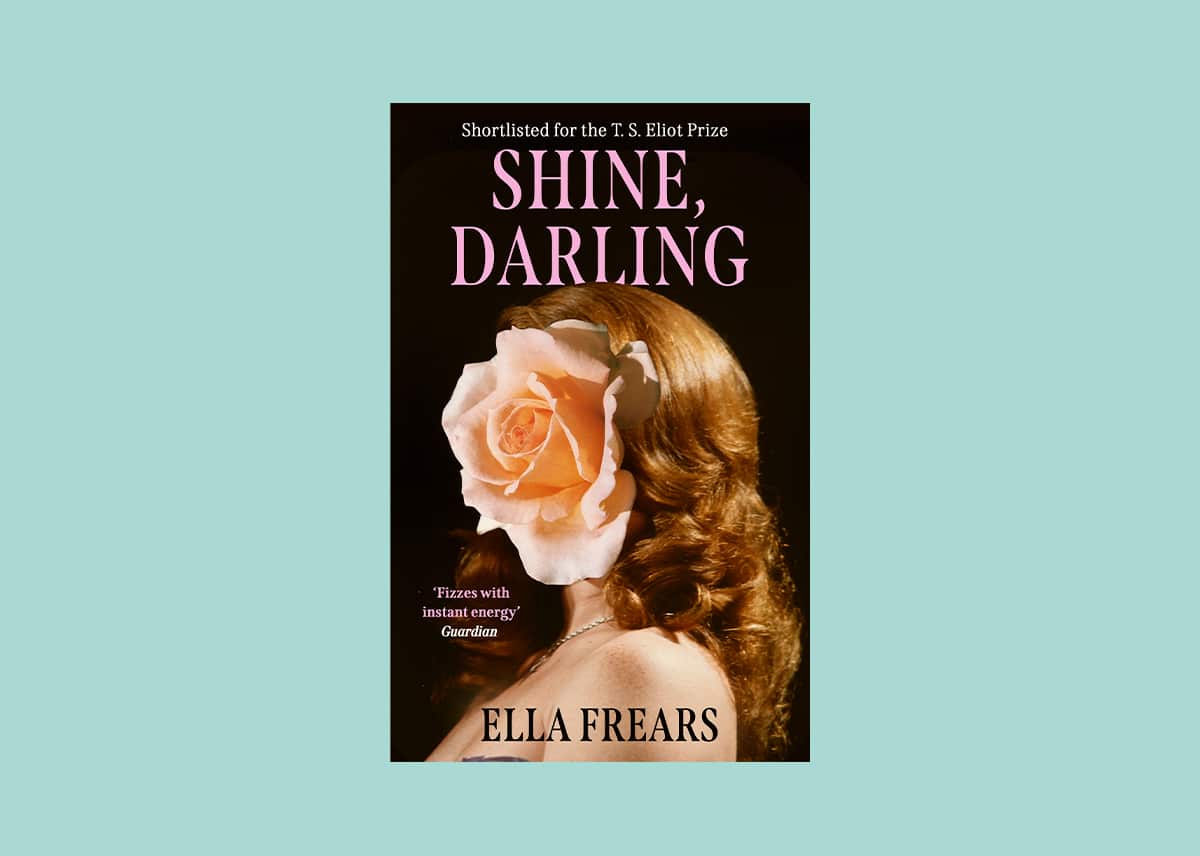
Poets en masse
Ella Frears
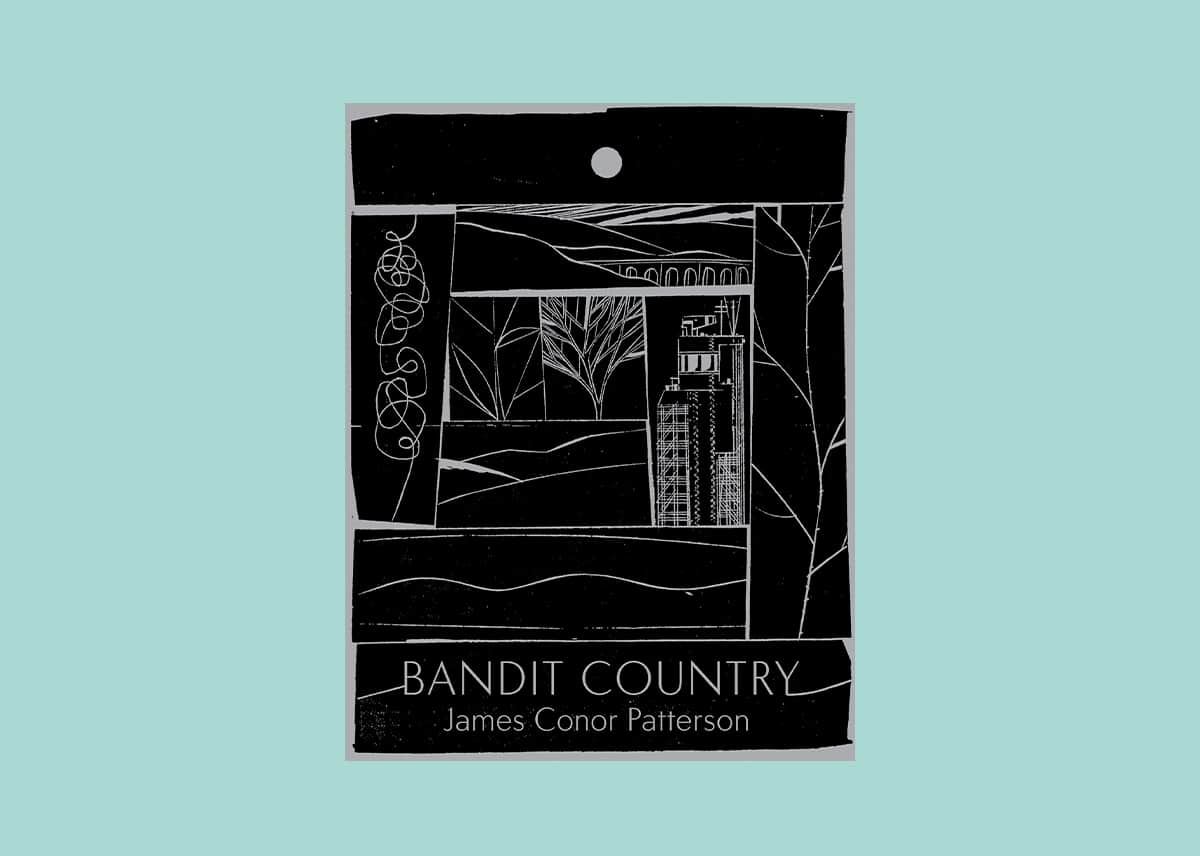
A sort of homecoming
James Conor Patterson
WritersMosaic monthly
Get new episodes by email
One email monthly, unsubscribe anytime

Illuminating, in-depth conversations between writers.
Listen to all episodes
SpotifyApple Podcasts
Amazon Music
YouTube
Other apps

The series that tells the true-life stories of migration to the UK.
Listen to all episodes
SpotifyApple Podcasts
Amazon Music
YouTube
Other apps
WritersMosaic interrogates the notion of ‘staying in your lane’ by asking writers how they attempt to think beyond the parameters of their cultural identity.
Listen to all episodes
SpotifyApple Podcasts
YouTube


Complex antihero: an interview with Arthur Hughes
Unravelling Authur Hughes' Richard III
Marlon James: a Jamaican reckoning
'A return to a home I barely knew'
The name of this wallpaper is ‘Childhood’
A luminescent bubble of memory


The Disappearers
A sprawling visceral experience that drops you in head first

The Lady Imam
Is the world ready to catch up with amina wadud?