Fiction Prescriptions
Parenting
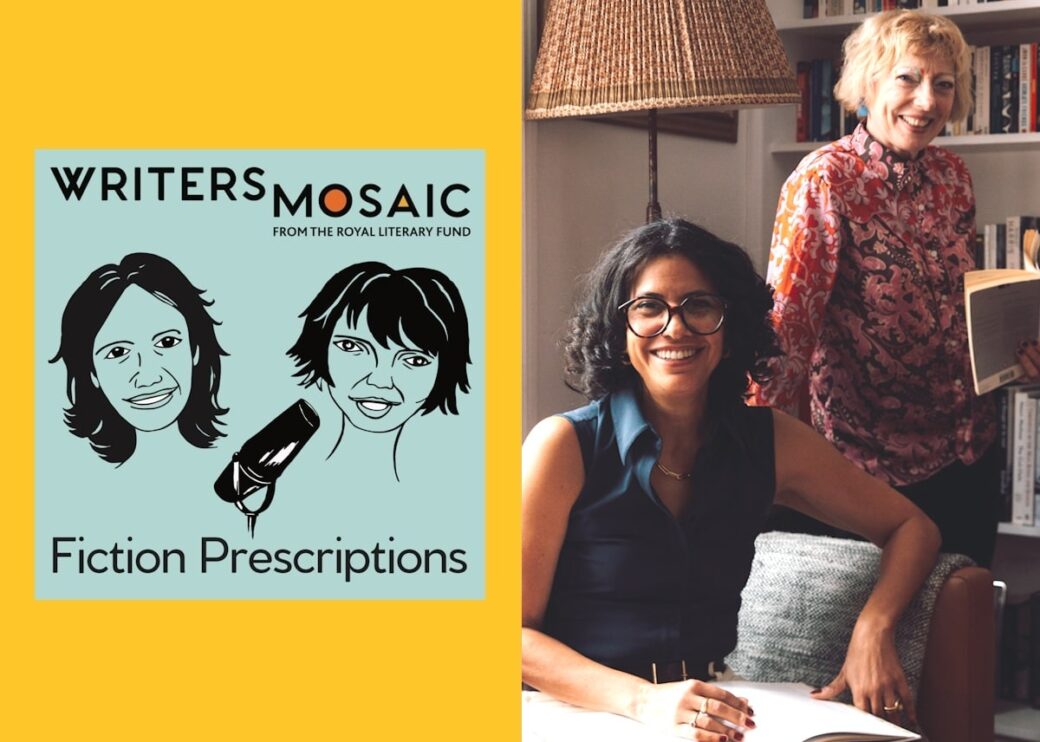

Write in with your dilemmas and our dynamic duo will suggest remedies for the head and heart, drawn from novels, poetry and prose collections.
Contact Isabelle and Ella for a literary check up here:
writersmosaic.org.uk/
Fiction prescribed in this episode:
My Family and Other Animals by Gerald Durrell
Long Island by Colm Tóibín
Good Good Loving by Yvvette Edwards
No Friend to This House by Natalie Haynes
The Last Samurai by Helen DeWitt
‘The Heavyweight of Fatherhood’ (poem) by Kwame Alexander
The Toys of Peace (short story) by Saki
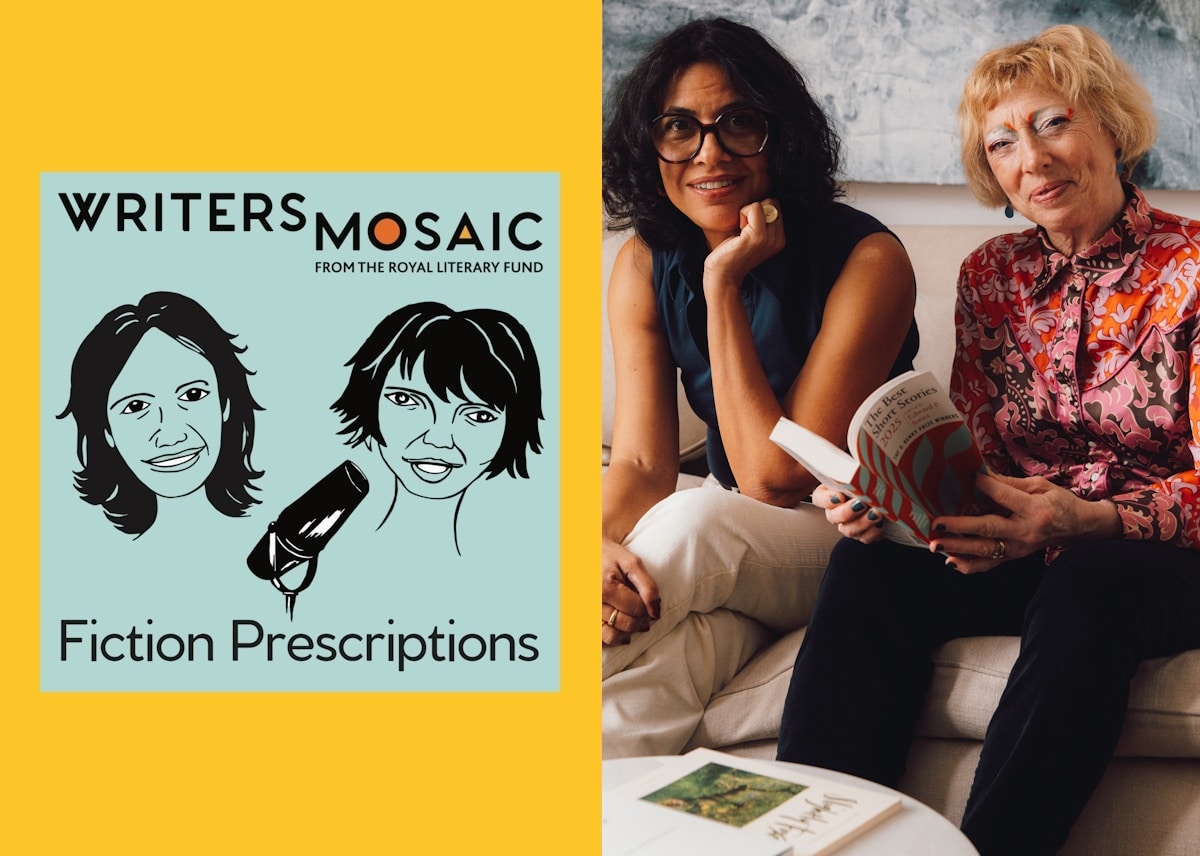
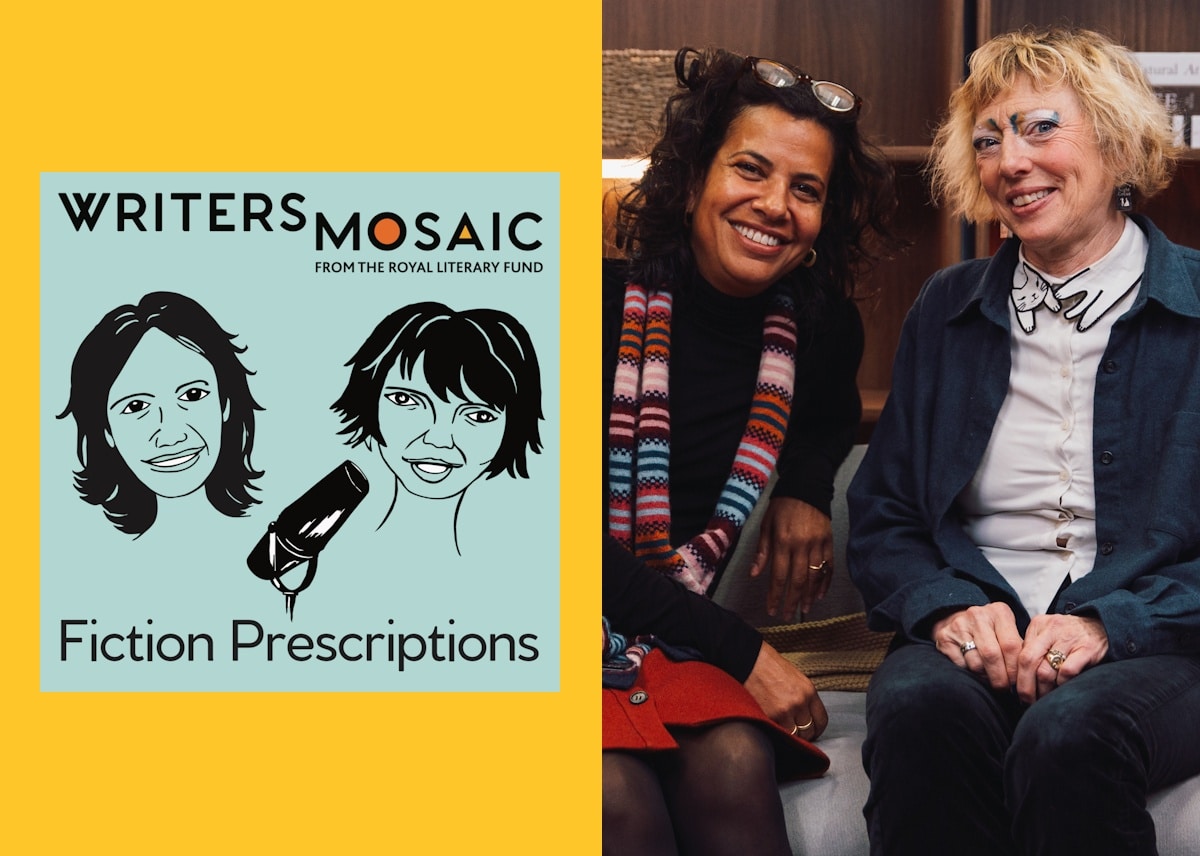
Ella Berthoud (EB): Welcome to Fiction Prescriptions. I’m Ella Berthoud, and I’m a bibliotherapist and an artist.
Isabelle Dupuy (ID): And I’m Isabelle Dupuy, and I’m a writer. Our topic today is parenting.
EB: We have a question from Jade, a listener, and she said, ‘Is parenting primarily a matter of style?’
ID: Oh, see, I think that’s interesting because it’s so easy to put parenting into some kind of a moral question, isn’t it?
EB: Absolutely, yes.
ID: And it’s wrong because parenting is what happens when you have a baby, which is a biological function.
EB: And we’re very influenced by our own parents and their parenting styles. So, my parents, I think, somewhat modeled themselves on Gerald Durrell’s My Family and Other Animals. I think my mum was basically Mrs Durrell. And if you haven’t read the book—
ID: No, I haven’t. I’d love to hear more about that.
EB: It’s a really lovely book. And Mrs Durrell is living on Corfu, on an island, her husband has died, and she has three children who run completely wild. And they are allowed to be completely free. And Gerald Durrell grew up collecting animals and putting them in his drawers, in his—down the corner of the sofa, bringing every single bug and fish and insect back home. And his mum just let him do that. The other kids were running wild in their own different ways, but Gerald wrote the book, so I completely identified with him. And I thought that was the perfect way to live and be a parent. And my mum was a bit like that. My dad was around very much, but being a diplomat, he was out a lot of the time. So, it felt like a bit of a Durrell-type adventure.
ID: Would you say that—did you ever wonder about questions of judgment and morality, thinking back to how you grew up?
EB: I think I was just living in a lovely bubble. And I also went to boarding school, so I was sent away. So, that’s another story. But when I was at home, I just really enjoyed that sense of freedom. But I mean, when I say freedom, it wasn’t like it was completely unvetted because we were living in a diplomatic world, so we actually did have a lot of rules that we were bound by. So, it was quite a complex situation, really. But no, the morality—
ID: I’m asking because in fiction, very often parenting is used as a tool by the writer to talk about morality, to talk about judgment, judgments on the character that they’re writing about, a way of explaining why the character is the way they are.
EB: That’s true. I mean, the Durrell’s adventure is a memoir, so it’s not fiction, though it often reads like that because there’s so many incredible adventures. So, it’s a little bit different, but I think that’s something that we need to explore in the books that we’re talking about. But tell me about your experience of parenthood.
ID: I grew up with Haitian parents, and I feel that my parents very much went into a Haitian way of thinking. I don’t think they made a decision, which I think is very common, that they were going to parent us in a certain way, my sister and I. I think they just thought, this is how we grew up, and this is how we were going to raise our children. And so, in a way, it didn’t prevent some emotional traumas from being passed down.
EB: What would you say is the Haitian style of parenting?
ID: Well, the Haitian style of parenting is also quite laissez-faire, I would say. But it’s an interesting one because it’s very much a village that raises a child. It’s not the nuclear family. And so, I grew up with a lot of cousins and aunts and uncles and grandparents, and they all had an impact on how I grew up. And it’s interesting because I ended up raising my kids here in London, and mainly as a single mother, and so, in a way, they had the opposite of me. They really had a nuclear family with one parent. And I mean, their father moved to a different country. We got divorced. Of course, he’s part of their lives, but the day-to-day was really just me. And I was really sad for a long time that they didn’t have the village that I had. But on the other hand, we also had a lot more freedom in determining our path and what we talked about and what we could explore. It wasn’t preset like it was for me. So, yeah.
EB: Yeah, I mean, thinking of my style of parenting, I very much wanted to be Mrs Durrell as well and let my kids run wild and have a million pets. We have ended up with a million pets, but [laughs] we live in a village in Sussex, so it’s not quite Corfu. But I think I was very much trying to parent in her style of being free, and I think I’ve succeeded in that. So, we’ve got some fantastic books to talk about this morning.
ID: So, we thought we would start with interesting situations that families will create that maybe don’t fit into what we expect when we set off maybe to have children and consciously decide that we’re going to raise a family. And so, we’re going to start off by talking about two books: Colm Tóibín, Long Island and Yvvette Edwards, Good Good Loving. They are closer to each other than may seem at first glance. I’m going to start off by reading a little excerpt from Long Island. This is a story that begins with a wife, who’s Irish and who’s married into an American-Italian family. They live on Long Island. And she’s just heard that her husband, Tony, has had an affair, and that the wife of the—the lady he had the affair with was married to someone else and is pregnant with Tony’s child.
This is a preview of the show. The full text is available as a PDF here: Fiction Prescriptions: Parenting
Next time on Fiction Prescriptions: The manosphere.
(Playful book chat only – not medical advice. If you need serious support, contact samaritans.org)
Fiction Prescriptions
Money
Ella Berthoud & Isabelle Dupuy
Superstitions
Ella Berthoud & Isabelle Dupuy
Food
Ella Berthoud & Isabelle Dupuy
The manosphere
Ella Berthoud & Isabelle Dupuy
The state of the world
Ella Berthoud & Isabelle Dupuy
Love
Ella Berthoud & Isabelle Dupuy

New Year’s resolutions
Ella Berthoud & Isabelle Dupuy
WritersMosaic monthly
Get new episodes by email
One email monthly, unsubscribe anytime

Illuminating, in-depth conversations between writers.
Listen to all episodes
SpotifyApple Podcasts
Amazon Music
YouTube
Other apps

The series that tells the true-life stories of migration to the UK.
Listen to all episodes
SpotifyApple Podcasts
Amazon Music
YouTube
Other apps
In the first series of poems commissioned by Hannah Lowe, six poets explore how ritual gives meaning to our lives.
Listen to all episodes
SpotifyApple Podcasts
YouTube
WritersMosaic interrogates the notion of ‘staying in your lane’ by asking writers how they attempt to think beyond the parameters of their cultural identity.
Listen to all episodes
SpotifyApple Podcasts
YouTube


Complex antihero: an interview with Arthur Hughes
Unravelling Authur Hughes' Richard III
Marlon James: a Jamaican reckoning
'A return to a home I barely knew'
The name of this wallpaper is ‘Childhood’
A luminescent bubble of memory

The Disappearers
A sprawling visceral experience that drops you in head first
The Lady Imam
Is the world ready to catch up with amina wadud?