
Ever Land

Hutchinson Heinemann, 2026
British-Arab writer and teacher Amy Abdelnoor had not anticipated editing and publishing her debut novel, set in Palestine, ‘during a live-streamed genocide’. Never has a novel felt so timely, even if its time frame precedes the current wave of atrocities. Ever Land is set at the turn of this century, predating social media, when people were still texting, rather than live-streaming.
It takes immense skill, subtlety and restraint to write about such bleak injustice and structural savagery, so that what emerges is a story of humanity, empathy and connection. Abdelnoor could have clobbered us with horror; instead, she illuminates, guiding us into it gradually through the eyes of Dinah, a teenage north London Jewish girl uprooted to an Israeli ‘community’ – a settlement – by her widowed mother and newish stepfather. A fresh start.
Dinah, missing her late father, doesn’t love her sterile new surroundings, where freedom is curtailed and daily life heavily guarded. She doesn’t love her controlling stepfather Lavi either, or how her mother Ruth constantly defers to him, ‘her face a disc of anxiety’. At Dinah’s new school, her Israeli-born peers unquestioningly accept their approaching stint in the IDF. Some, like Eban, a young man to whom she is initially attracted, finds the idea exciting. A career move. Soon he is on training exercises in Gaza. ‘But people live there, don’t they?’ she asks as he makes jokes about shooting rubber bullets into the air – ‘into the air of their lungs’. Soon Dinah begins having strange dreams of ‘a young child lying rigid on a thin mattress…a fearful girl holding a doll in her hands’. Images flutter in her mind that seem like memories, but not her own.
And now for the supernatural bit. Echoing the approach taken by Alice Sebold in The Lovely Bones, and by Shehan Karunatilaka in The Seven Moons of Maali Almeida, the story is narrated by someone who has been murdered. Safa, a teenage Palestinian girl killed by Israeli military in 1967, has spent 33 years floating in the barzakh, ‘the In-Between’, unable to rest until she locates her little sister Nur, who was displaced when Safa was killed. Safa recalls ‘the blank horror of villages turned into not-villages and lives turned into not-lives’.
Safa infiltrates Dinah’s subconscious – haunts her dreams, while nudging her towards awakening and awareness – in an effort to lead Dinah to Nur, now an adult in need of help. This is what drives the story. Safa describes how ‘the torrent’ of her memories rush through Dinah: ‘my thoughts flash in a flickering re-memorying’.
Which may all sound a bit Scooby-Doo, but Abdelnoor uses the device deftly and lightly to allow us to float between the past and present, to create layer upon layer of each girl’s story and to draw us into the reality of daily life of occupied Palestine. Safa may have lost her home and her life, but not her humanity or empathy; she guides Dinah to witness daily humiliations, cruelties, moments of terror: ‘You are in the other half of a story that has never been equal’. Dinah, an outsider to Israeli society, has not been conditioned to accept any of this as normal.
She witnesses checkpoints where Palestinian civilians with urgent medical needs are kept waiting for hours in the searing sun, then turned back on a whim, rather than allowed to go to their hospital appointments; Palestinian children who carry their teddy bears to school, worried their homes will be destroyed in their absence; Israeli soldiers stubbing cigarettes out on the arms of small children. The more she sees, the more her revulsion grows.
She secretly joins a Jewish human rights group, and begins taking increasingly dangerous risks – like accompanying young Palestinian girls who have never seen the sea to a local beach, travelling in a car with Israeli plates, on a road designated ‘for Israelis only’. Instructing the girls to remain silent, in case their accents are detected, she’s terrified they’ll be stopped by soldiers.
These soldiers are young and all-powerful: ‘Car checks. People checks. Number plate checks. Permit checks. Permission checks. Date checks. Time of day checks. Many checks. Any checks we decide are important,’ says an IDF soldier with an American accent, when she questions why he is keeping a family with a crying baby locked inside their car in the heat. ‘This is not your business,’ he adds. Dinah retorts, ‘This is everyone’s business.’
This book is everyone’s business. A fictionalised fly-on-the-wall view of a situation of such radical dehumanisation that, 25 years after it was set, the current genocide is shocking but not surprising. ‘Hayk hayatna,’ says Munir, the Palestinian boy Dinah is trying desperately to help. ‘This is our life.’ He wants to be a doctor, to help others. ‘If I do not dream, then really I am nothing. We survive through dreams and hopes of a better future. Without dreams, we are truly defeated.’
WritersMosaic monthly
Get new reviews in your inbox
One email monthly, unsubscribe anytime
Ai Weiwei: Button Up!
A journey through the dangerous world of human tragedy
Mahsa Salali’s Naqqāli
'Salali positions the female body... as an active agent'

At Sea
Bearing witness in the face of dismissal
Triage
A response to the endless spiral of worldwide conflict and tragedy
My tomorrow is today
'I clasped my hands together, not in prayer but to stop them from shaking'
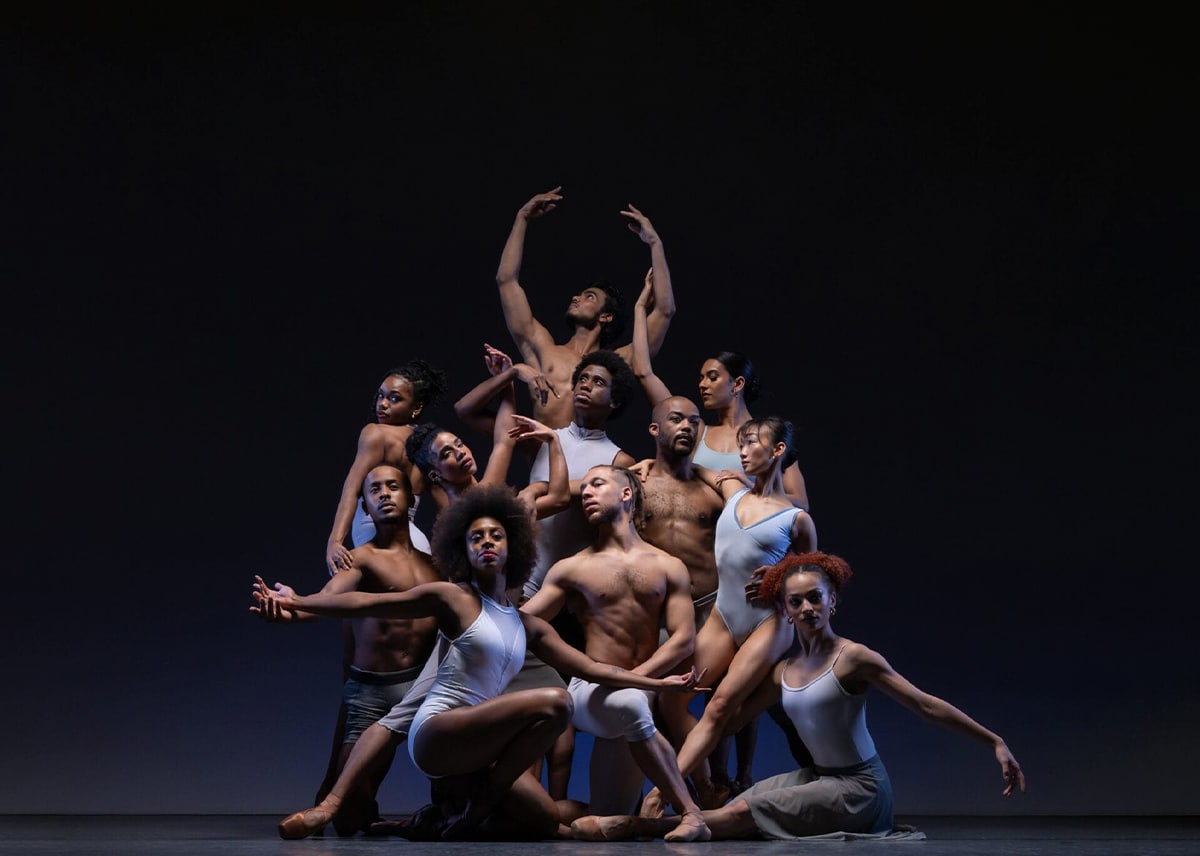
Ballet Black at 25
Cassa Pancho: 'It’s a miracle that we are still here in some way'

Free Will
Will Harris reads his poem, 'Free Will'. Directed by Matthew Thompson and commissioned by the Adrian Brinkerhoff Poetry Foundation.

Half Written Love Letter
Selina Nwulu reads her poem, 'Half Written Love Letter'. Directed by Matthew Thompson and commissioned by the Adrian Brinkerhoff Poetry Foundation.

Illuminating, in-depth conversations between writers.
Listen to all episodes
SpotifyApple Podcasts
Amazon Music
YouTube
Other apps

The series that tells the true-life stories of migration to the UK.
Listen to all episodes
SpotifyApple Podcasts
Amazon Music
YouTube
Other apps
WritersMosaic interrogates the notion of ‘staying in your lane’ by asking writers how they attempt to think beyond the parameters of their cultural identity.
Listen to all episodes
SpotifyApple Podcasts
YouTube
In the first series of poems commissioned by Hannah Lowe, six poets explore how ritual gives meaning to our lives.
Listen to all episodes
SpotifyApple Podcasts
YouTube