
A Trial
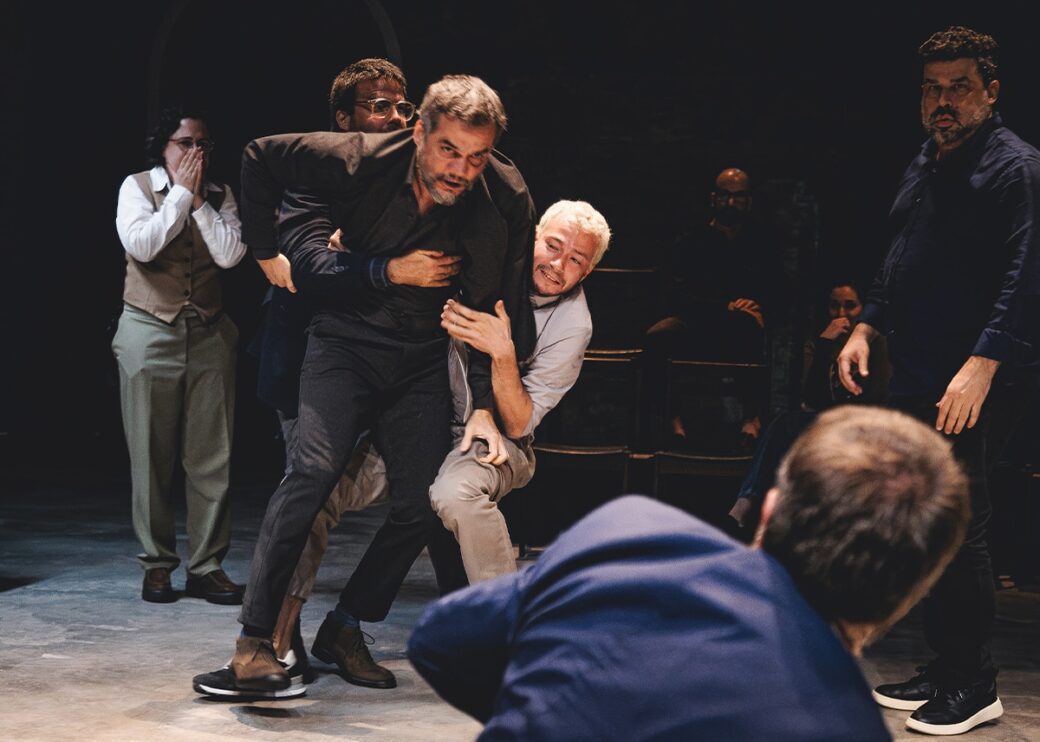
A Trial: After An Enemy of the People
Directed by Christiane Jatahy
Royal Lyceum Theatre, Edinburgh, August 2026
‘Truth is over,’ Thomas Stockmann, played by Wagner Moura, declares. These are the first words of director Christiane Jatahy’s A Trial: After An Enemy of the People, co-written by Jatahy, Moura and Lucas Paraizo. Anchored by a commanding central performance, the play offers a forceful, if imperfect, examination of theatre’s complicity in the boiling over of contemporary post-truth politics.
Billed as a sequel to Ibsen’s 1882 play, An Enemy of the People, A Trial is the Edinburgh International Festival’s flagship piece of new theatre for the year. Ibsen’s original play follows erudite small-town physician Thomas Stockmann, who discovers that the water pipeline supplying lucrative local spas is contaminated. Stockmann is pilloried for exposing this existential threat to his community’s economy and ultimately declared an enemy of the people. Jatahy’s production, recontextualised to contemporary Brazil, tells the story of Stockmann’s attempt to clear his name through a public hearing with a jury composed of volunteer audience members.
The play pits Stockmann, defended by his daughter, Petra (Julia Bernat), against his brother, Peter (Danilo Grangheia), a local bureaucrat and avid supporter of the spas. All three performances are strong. Grangheia sustains a well-oiled eloquence, bringing to mind any number of present-day political bobbleheads. Bernat and Moura work vividly to conjure a painful family history. Moura, in particular, is an inspired presence, carrying both Stockmann’s anguished grief for a half-lived existence and the steeled oratory of a general.
A Trial’s dramatic meat and drink – strings of depositions, projected video testimonies and cross-examinations – crescendo with varying effectiveness. Though the technology itself is handled with aplomb, the language of those documentary elements feels arrestingly precise, somewhat marring the play’s otherwise palpable, embodied poetics. The performed dialogue between Stockmann and Peter, particularly, carries a frenetic music, undulating between surtitled Portuguese and English. Recalling Brazilian traditions of participatory theatre and Augusto Boal’s Theatre of the Oppressed, Moura frequently offers improvised responses to questions drawn from his audience-jurors. The dramatic focus of Stockmann’s ripostes, then, relies on an audience’s capacity not only to keep up with the play’s linguistic shifts and its flitting from live performance to video documentation, but also to actively shape its narrative. It’s an impressive invitation to Moura, but one which can muddle the play’s momentum where it should be at its most propulsive.
Beats like these impede A Trial’s efforts to produce the well-made narrative towards which it seems to aspire: any jeopardy surrounding the result of Stockmann’s trial, pitched repeatedly as the play’s central question, is punctured more than once. This slight flatness is born either of improvised bloat or the simple fact that the opposition’s case only achieves any real gravity in the play’s very closing stages, when Stockmann resorts to – somewhat clumsily performed – physical violence. In a drama of such rich ideas, it’s a disappointingly simple climactic moment.
A Trial really sings when it resists the well-made and implicates the theatrical form as related to, if not directly complicit in, the political mendacity which present-day audiences experience as palpably as Stockmann. Following his lament for the death of truth in that opening monologue, Moura rises. He leaves his jacket on the back of his chair and speaks – in a seeming break from character – directly to the audience. He tells us, pointing to that now-empty blazer, that Stockmann continues to exist even as the body representing him breaks theatre’s conventional mimetic contract. In a subsequent moment, Moura, now firmly in character, is followed by a camera into his dressing room. A live feed of the recording is projected for the audience. At this point, the actor – that is to say, the conduit between real-life audience and dramatic narrative – could arguably be read as the video camera itself. Moura initially makes palpable his own separation from Stockmann, the ghostly notion of a character who follows him beyond the standard performance space. In this way, Jatahy indicates a sort of reflexive, impermanent relationship between actor and character. Moreover, throughout the play, lighting, sound and surtitling are operated by technicians doubling as the townspeople who took part in Stockmann’s original ostracization. Guest actor Louise Burke, serving as a mediator, of sorts, between the jury, defence and prosecution, reads from a script. At every turn, Jatahy’s production works to foreground the tools which generate performance and does away with the illusion of classical theatre. It seems to posit that it is not enough merely to revive a classic, but that it is necessary to dramatize the inspection of its linguistic, technological and political mechanics.
A Trial moves beyond merely representing these ideas and offers audiences the ability to participate in their embodied practice. It is biting, conceptually distinct, if flawed, work, led masterfully by Moura. Jatahy and her team merit great credit, as do EIF for what is an undeniably challenging, important piece of programming.
WritersMosaic monthly
Get new reviews in your inbox
One email monthly, unsubscribe anytime
Ever Land
A layered and haunting view of daily life in occupied Palestine

The Complex
The unraveling of a dynasty
Disappearing Images
A festival of ephemeral art and the impermanence of our current world
The name of this wallpaper is ‘Childhood’
A luminescent bubble of memory
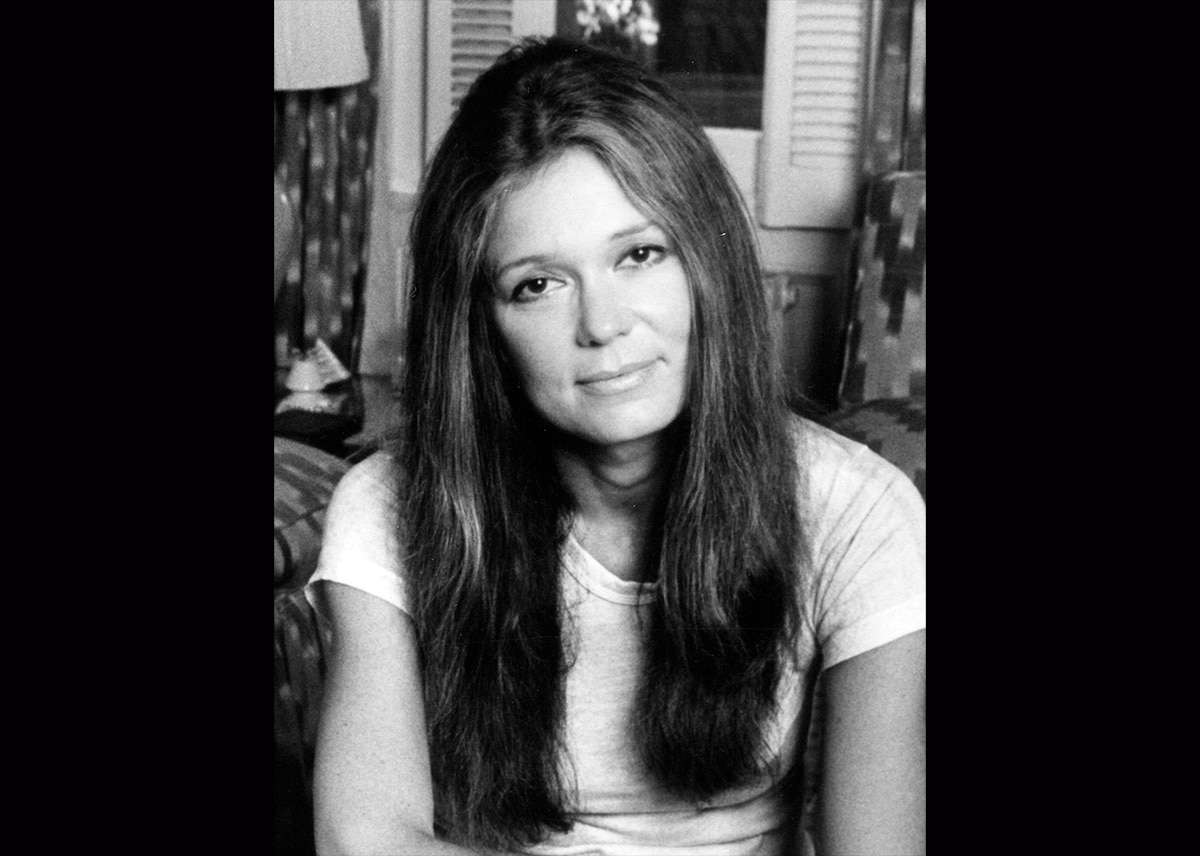
What’s in a feminist? Holding on to Gloria Steinem
Is Gloria Steinem's feminism still relevant today?
Coats
The unexpected cost of acquiring two Italian leather coats in Rome

Free Will
Will Harris reads his poem, 'Free Will'. Directed by Matthew Thompson and commissioned by the Adrian Brinkerhoff Poetry Foundation.

Half Written Love Letter
Selina Nwulu reads her poem, 'Half Written Love Letter'. Directed by Matthew Thompson and commissioned by the Adrian Brinkerhoff Poetry Foundation.

Illuminating, in-depth conversations between writers.
Listen to all episodes
SpotifyApple Podcasts
Amazon Music
YouTube
Other apps

The series that tells the true-life stories of migration to the UK.
Listen to all episodes
SpotifyApple Podcasts
Amazon Music
YouTube
Other apps
WritersMosaic interrogates the notion of ‘staying in your lane’ by asking writers how they attempt to think beyond the parameters of their cultural identity.
Listen to all episodes
SpotifyApple Podcasts
YouTube
In the first series of poems commissioned by Hannah Lowe, six poets explore how ritual gives meaning to our lives.
Listen to all episodes
SpotifyApple Podcasts
YouTube