
Haunting the Black Air
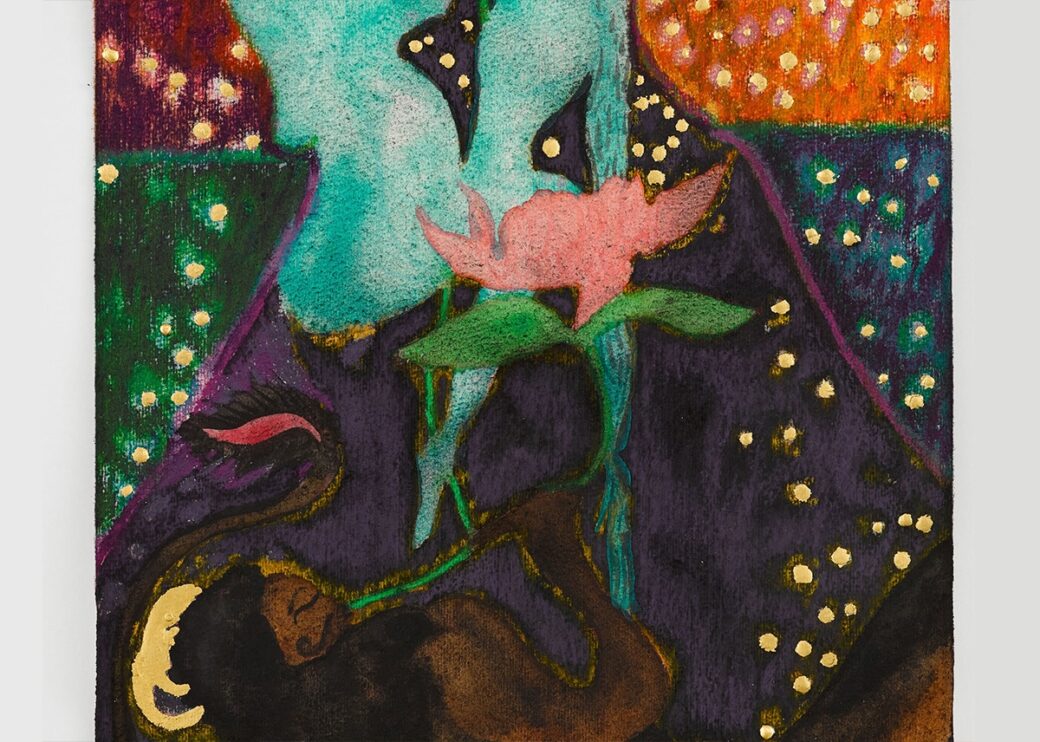
Anthony Joseph
Bloomsbury Poetry, 2026
‘You have slipped through a gap in language’, Joseph’s speaker tells me. I check the contents page again. We are in the second of Haunting the Black Air’s eight parts. Language, like people, like land in this book, is a shifting, elusive medium. In these poems, we turn page after page of sonic histories rendered differently, experimentally. Joseph masters them all.
Caribbean islands are cast as people here. Islands are figured as gods, as poets. ‘Our mother who art among the bamboo’, he writes. The lines between geography, humanity and divinity are disposable throughout.
To discover the histories of these islands, his subjects must first become them. A woman is ‘broken to water upon the banks of an inconsolable river. […] She had crept with the skin of vipers, through moss and silt, cool in the underbrush after the flood.’
Joseph’s speakers reconnect with a history denied them by ‘the lack of genealogical record’. A character hikes across his island and ‘when he arrives at the top and looks down, the landscape has changed. The station is gone. The railway is gone. The road we walked is gone. The city is gone. All has become a sprawling farm yard of chicken shit and mud.’ People in these poems become the land they live and work. In turn, the land becomes as changeable as people.
Like the ‘shotgun hand peeping through a crack in time’, we have, as Joseph tells us, ‘slipped through a gap in language […] evaporated / into air / […] returned / to the frequency / of original sound.’ Time is language, is land, everything malleable.
And what is ‘original sound’? What does it sound like? Is it a ‘whisper, like muscle / in the air’? In Haunting the Black Air, Joseph reckons with this question in changing registers and forms. Where the first part is layered with formal experimentation and chewy, even inaccessible words, the book then moves through sections of prose poetry and a more ‘vernacular’ voice. An early poem deals with ‘writing that questions / the possibility of / the natural possibility of / an unexcogitated / voice’. That ‘unexcogitated voice’ appears and reappears throughout – in ‘Liverpool Highlands’, ‘Tanty Thelma say she never expect / to see you suffer. / To leave this world so hard’ – the fondly-remembered Thelma then follows the speaker ‘through a gap in language’ to the docks in present-day Liverpool, where the memories of people with ‘Arms around their heads, their heads between their knees’ haunts the empty streets. That ‘original sound’, then, becomes nostalgic as well as ‘haunting’, becomes audible through the ‘wound in time’ created by such collective trauma.
At times, Joseph confronts head-on this reconciliation between registers. In the poem ‘Sone’, he writes ‘Gravity / is a prison of contradiction.’ Lexical gravity can, of course, become a veil to hide behind. High-handed language often obfuscates and confuses the emotional intent of a poem. No one who has journeyed through Haunting the Black Air, however, can accuse Joseph of any such cowardice.
Perhaps my favourite poem is ‘Blood in My Throat’, in which the image ‘on the outskirts of scenic time, sage bush began to burn, and on the veranda, a line of full women sat with their heads tied white, fanning flies from their syphilitic shin bones’ brings ‘gravity’ to the mirrored image of a car crash told through more monosyllabic language; ‘see blood rip out like kite-tail, shirt-tail, cut-tail, rainfly, whip snake, firefly, cutlass, blade.’
There is no contradiction between gravity and its opposite. Such is the freedom Joseph finds across language, space and time. In ‘Sone’, he attributes the contradiction of gravity to ‘The ascetics [who] have the refuge / of land and climate, but their lives / lead to eminent faith / and nothing else.’
If Joseph has aimed for something greater than ‘faith’ with this book, his subjects certainly achieve it. These narrators must instead thank the powers of this Poet, by whose hand ‘myth fulfils / the interstice / between / memory / and loss’.
Bloomsbury Publishing: Haunting the Black Air
Magnus McDowall
Magnus McDowall is a poet from London and a postgraduate student on the Creative Writing MSt at the University of Oxford.
WritersMosaic monthly
Get new reviews in your inbox
One email monthly, unsubscribe anytime
Pressure
What's missing from the latest 'untold story behind D-Day'?
The Disappearers
A sprawling visceral experience that drops you in head first

The Lady Imam
Is the world ready to catch up with amina wadud?



It’s being published I get paid for; the writing I would do for free
‘Any advance [...] for your novel is to compensate you for the horrors of being published'
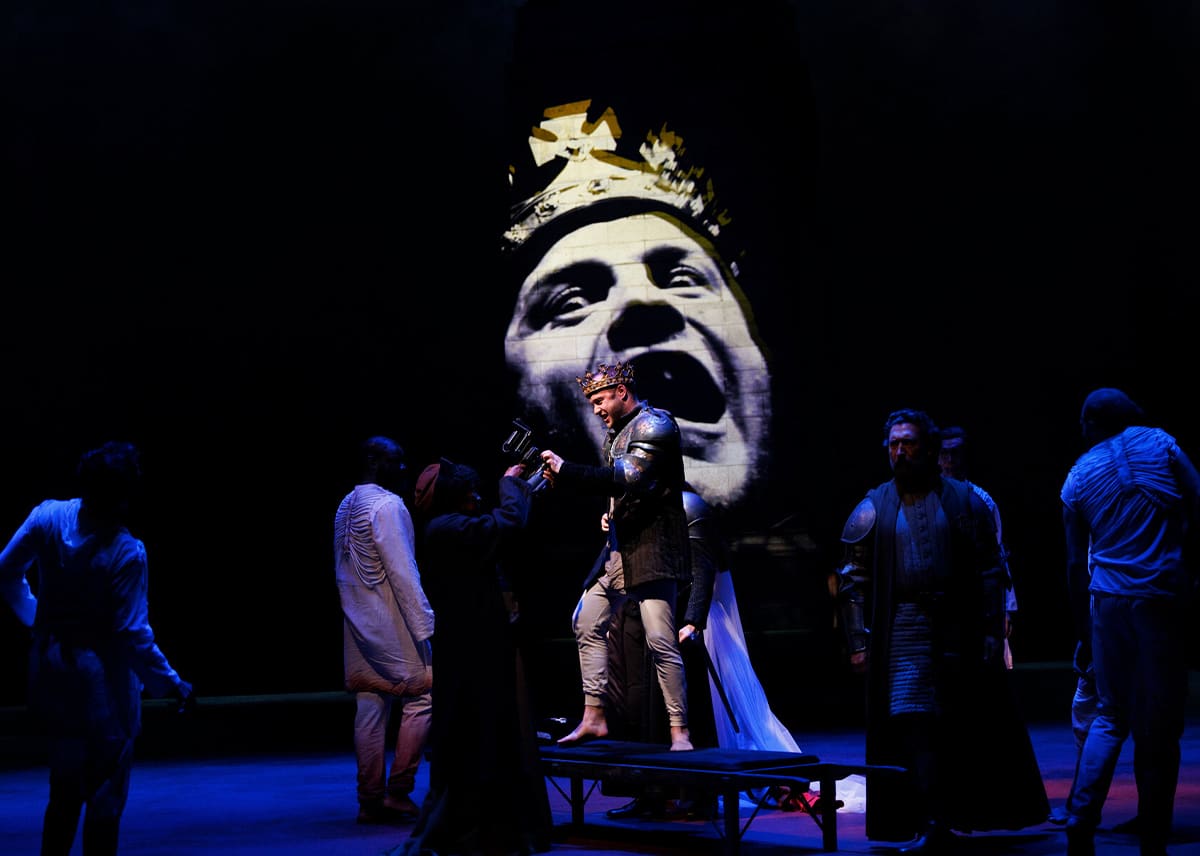
Complex antihero: an interview with Arthur Hughes
Unravelling Authur Hughes' Richard III
Marlon James: a Jamaican reckoning
'A return to a home I barely knew'



Illuminating, in-depth conversations between writers.
Listen to all episodes
SpotifyApple Podcasts
Amazon Music
YouTube
Other apps

The series that tells the true-life stories of migration to the UK.
Listen to all episodes
SpotifyApple Podcasts
Amazon Music
YouTube
Other apps
WritersMosaic interrogates the notion of ‘staying in your lane’ by asking writers how they attempt to think beyond the parameters of their cultural identity.
Listen to all episodes
SpotifyApple Podcasts
YouTube