
The Recovery House
#Merky Books, 2026
The Recovery House, Derek Owusu’s fourth full-length novel, is presented as blocks of text that mark a return to the brevity of his earlier work, having briefly departed to an airier, more conventional narrative in Borderline Fiction. These blocks feature very little punctuation, and no full stops at all, rushing through thoughts as if for fear of losing them or the chance to write them, while boldly and intentionally revealing the writing process: ‘writing without the possibility of deleting or changing anything or it being a burden or a big inconvenience to adjust things means you write with more heart and precision and intention’. The novel, to my mind his best so far, is full of such sudden insights.
Owusu, who has spent time in recovery houses like the one described here, has spoken of how one song has breathed life into each novel he has written, and for this one, at least as a narrative device, it is ‘Zombie’ by The Cranberries. This initially comes off as quite a silly song, a guilty pleasure, though I’m partial to a confident placement of lowbrow pop culture within high art. The inclusion of a pop song can be uplifting and inclusive, albeit in this case one rooted in the serious business of the Troubles, also demonstrating that the geographies of oppression are porous. Indeed, Owusu urges readers to listen to ‘Zombie’ several times before reading The Recovery House. The song’s refrain, almost yodelled by the late vocalist Dolores O’Riordan, is ‘In your head / in your head / zombie, zombie, zombie’, and could not be more apposite to soundtrack the mind-noise and episodes of mental illness experienced daily by the residents of the House.
The narrator, Jamal, spends most of his time in his room. He is allowed to have a Bible but his family have forgotten to pack his ‘writing things’. (His presence at the House, it feels important to mention, is voluntary.) Scripture provides, in a way, the theoretical subsoil. Christianity has always liked to draw a direct link between sin and suffering; in one verse quoted in the novel, a disciple asks whether a condition suffered is the result of wrongdoing by the sufferer or by those who bore him. Not that the work is necessarily autobiographical, but there is a thread running through Owusu’s work, from his 2019 debut That Reminds Me onwards, of narrators striving through the damage caused by decisions that have been made above their heads by guardians and caregivers. Borderline Personality Disorder, with which Owusu also lives, is the specificity here. Little is made of that for its own sake; indeed, BPD, as well as the narrator’s queerness, is presented as a matter of fact and moved on from. It is the extraordinariness of the quotidian within a defined point of view that gives Owusu’s writing its texture and meaning. While this reluctance to foreground identity might make Owusu’s work in some ways difficult to market – I’m not sure I’d find this novel stocked in many dedicated queer bookshops, for example – it also removes the power of ‘coming out’, which society has, for a long time, decided is the story, when in the reality of lived experience, it is not.
Society also underestimates the power of a writer’s tools for autotherapy. Writing, in the context of illness, is seen as a hobby, a distraction, and rarely key to someone’s ability to take control of their recovery by means of being able to express themselves, which you would think might be prioritised when it comes to mental health. It is deemed extraneous, and what Othello might have described as a bauble, when in fact it is a compulsion: ‘I’m always thinking about things I could write and what would make a great story or sentence or word or absence.’ This self-medication is vastly preferred by Jamal to the drugs imposed on him. While the House itself comes across as inescapable – there are uncanny parallels with the trippy movie Backrooms – Jamal’s sharp mind can bring the house down.
There are moments in the novel where Jamal, locked in his cockroach-infested room, is disturbed by one of the nurses, or someone else, trying to push paper and a biro under the door, when it seems he has recovered enough to resume his so-called hobby. His intention to start a creative writing class within the House so as to be able to help some of the patients access what has served him well is met with near-derision. It is telling that Jamal eventually retreats from this idea, and instead lends his Bible to one of the patients he is closest to, Joy (the banshee-like source of the refrain from ‘Zombie’); there is, therefore, a tension between received religious belief and the exploration of one’s own ideas.
In a sense, then, The Recovery House is a confessional, and a love letter to writing. By means of writing, one might reorganise chaotic language and images, making better sense of the world and their place within it. Perhaps it’s also a love letter to the vicissitudes of being a novelist: ‘I prefer the poison to the page’, Jamal says, at one point, intentionally contradicting an earlier statement. ‘I imagine everyone tries to sift through their memories and find the moment when everything fell apart… the moment sanity falls into insanity, and honestly for me I think it’s when I decided I wanted to write books, the moment I decided I wanted to become a novelist.’ And yet, we read Owusu’s work in our hands. His is the sort of honesty, artistry and transparency we must cherish.

WritersMosaic monthly
Get new reviews in your inbox
One email monthly, unsubscribe anytime
Kikuyu Land
A necessary, but perhaps not fully realized, insight into how colonialism and capitalism have fed into Kenya’s current political situation

The Story
A propulsive play centered on a black-run section of a mainstream newspaper

On Becoming a Guinea Fowl
A sharp, layered study of patriarchal privilege




Get in line
What does a queue have to do with anything? A lot, says Snežana Ċurčić
Ladies of the Rachmaninoff Eyes
The impact of space between what is happening on and off the page

On Snow
'The mind inevitably seeks a reenactment of the teal light I associate with home'


Becoming Home: Sight
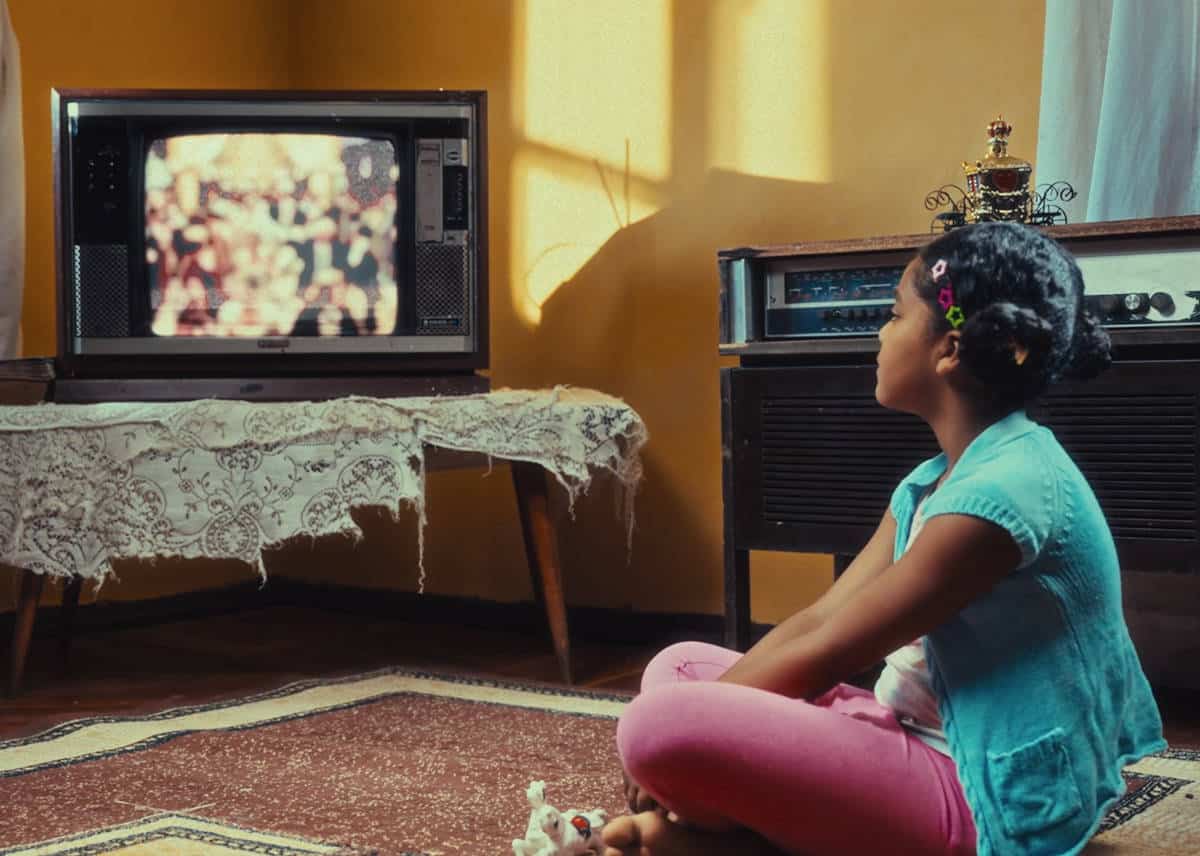
The first in Becoming Home, a series of four short films by Adïam Yemane, commissioned by WritersMosaic. This film centres on Adïam's own story, exploring the meaning of home through sight.

Fruity
A darkly comic crime short film written by and starring Delon Jessop and directed by James Baines.

Illuminating, in-depth conversations between writers.
Listen to all episodes
SpotifyApple Podcasts
Amazon Music
YouTube
Other apps

The series that tells the true-life stories of migration to the UK.
Listen to all episodes
SpotifyApple Podcasts
Amazon Music
YouTube
Other apps
In this second series of poems commissioned by Hannah Lowe, six poets explore the theme of surveillance.
Listen to all episodes
SpotifyApple Podcasts
YouTube