
A close encounter with accents

Hearing your own recorded voice for the very first time can trigger a baffling reaction. I empathise with anyone who may feel disconnected from their voice, as if it belongs to someone else. But hearing it in a foreign language is a double whammy.
Alessandra, my Italian neighbour from London, once shared this seemingly simple story. She told me how she had recorded a greeting on her answering machine and then played it back. ‘Thank you for-a calling-a. You know-a the drill after-a the beep-a.’
That single, epiphanic encounter with her own voice threw her off balance and even made her feel ashamed of her English pronunciation. ‘I sounded like an unintelligent and uneducated alien on a broken autotune,’ she said.
Alessandra confided in me how unaware she had been of her strong Italian accent. ‘No one told me how I spoke. I guess it would have been too sensitive or offensive to bring it up, similar to discussing one’s hooked nose or heavy bones. Also, I was more of a grammar Nazi than an accent one.’
As a matter of urgency, she signed up for an English elocution course run by a local voice coach. After a number of sessions and some hard work, she was pleased with herself as she started to soften her distinctive, native accent, characteristically filled with too many vowels and rolling Rs. She was getting an inch closer to the so-called ‘Received Pronunciation’ (RP) or ‘The Queen’s English’. On this journey of linguistic perfection, she got more than she expected. She felt like a worthy subject of the Queen, to whom she had solemnly sworn her allegiance. She felt that she had arrived and that she belonged. Her improved pronunciation was like finding the missing pixel of the intricate portrayal of her life in her adopted homeland.
Marcus Garvey, the charismatic Jamaican political activist who was active between the two world wars, took elocution lessons too. He believed in self-improvement and mastered his gift for public speaking in the manner of correct English. I listened to a crackly audio recording of one of the many captivating speeches he delivered to huge audiences on the streets of New York’s Harlem and London’s Speakers’ Corner: ‘Look for me in the whirlwind or a storm. Look for me all around you.’ I was mesmerised not only by what he said, but by how he said it. With a proud Jamaican twang, his English had a rich, uniquely textured pronunciation. He fully owned it, with every sound resembling one of the curved lines on his fingerprints.
Invisible and pervasive, languages, dialects and accents are like the air we breathe. They are a living thing, far more complex than the pitch of one’s voice, the stresses, rhythm of speech, or intonation. ‘I have often wondered what resides in an accent,’ Elif Shafak, the Turkish author, writes in her book How to Stay Sane in an Age of Division. ‘Is it a presence – identity, trajectory, a history? Or is it rather an absence – an estrangement, a withdrawal, a blank space refusing to be filled?’
Shafak’s conundrum was taken apart by Jhumpa Lahiri, the British-American author of Bengali heritage, in In Other Words, which she wrote in Italian and then had translated into English. I was moved by her experience of existing in different cultures. She strove to find her own identity, voice, home and mother tongue while being pulled apart by centripetal and centrifugal forces of other languages and accents:
I saw the consequences of not speaking English perfectly, of speaking with a foreign accent. I saw the wall that my parents faced in America every day. It was a persistent insecurity for them. Sometimes I had to explain the meaning of certain terms, as if I were the parent. Sometimes I spoke for them.
Similarly to Shafak and Lahiri, I resided in foreign lands and travelled to many others. At the beginning of the ‘90s, while living in Vienna, I had a shot at learning German. I would inelegantly recite sharp and precise German words, invading the language with my machine-gun but melodic Serbian accent. As I struggled, I wished I could have been miraculously struck by ‘Foreign Accent Syndrome’, a real and rare medical condition, so that I would suddenly adopt the German accent and sound exactly like a native.
My classmates and I – all of us foreigners scooped from different parts of the world – gathered under the same roof in a plain school building on the outskirts of majestic, imperial Vienna. We understood each other very well with our, at times, unintelligible accents. Sometimes, a reassuring glance was all we needed. Sticking together, we shared the same ambition – to master the language and the accent – but with different purposes: to find a warm place under the cold Germanic skies; to have a better chance of landing a decent job; to study; to grow; to understand and be understood.
In those Viennese days, I came across the work of the Austrian philosopher Ludwig Wittgenstein, who had lived in Britain for forty years. He is often remembered for his maxim: ‘The limits of my language are the limits of my world.’ Yet even the everlasting wisdom of Wittgenstein didn’t hold the power to make me a decent German speaker. I had more motivation and determination with English, Russian, and Greek.
A perpetual outlander, I belonged everywhere and nowhere. Like an odd rolling stone that did gather moss, I finally settled in London. There are over three hundred foreign languages spoken there – more than any other city in the world. In that rhapsody of accents, I realised that, between the presence or the absence of many things lurking in my accent, I see myself as a grafted tree that bears an unusual and distinctive fruit; the main character of a movie running on a split screen, with separate scenes appearing in the same frame.
I have arrived at a point where the commonly asked question, ‘Where do you come from?’ does not matter to me anymore.
WritersMosaic monthly
Get new writing in your inbox
One email monthly, unsubscribe anytime
It’s being published I get paid for; the writing I would do for free
‘Any advance [...] for your novel is to compensate you for the horrors of being published'
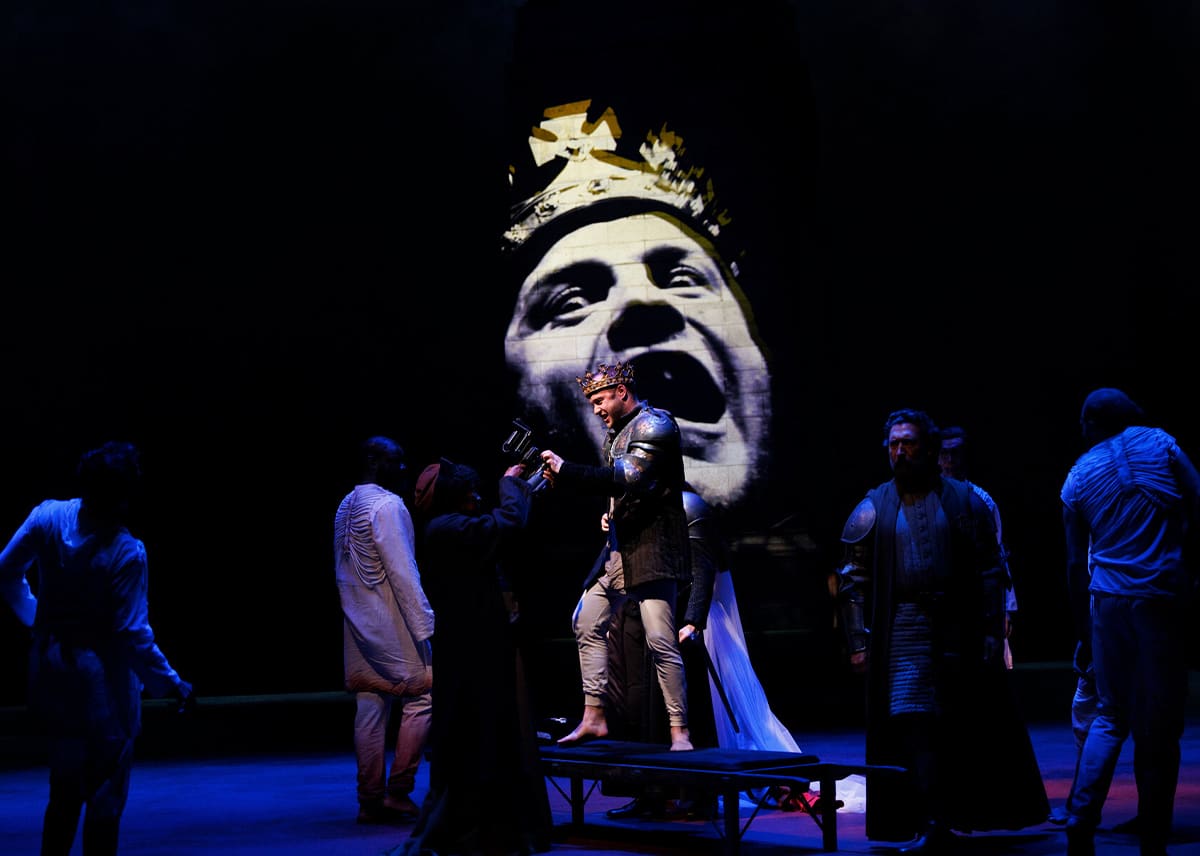
Complex antihero: an interview with Arthur Hughes
Unravelling Authur Hughes' Richard III
Marlon James: a Jamaican reckoning
'A return to a home I barely knew'





Haunting the Black Air
Poetic freedom across space and time
The Disappearers
A sprawling visceral experience that drops you in head first
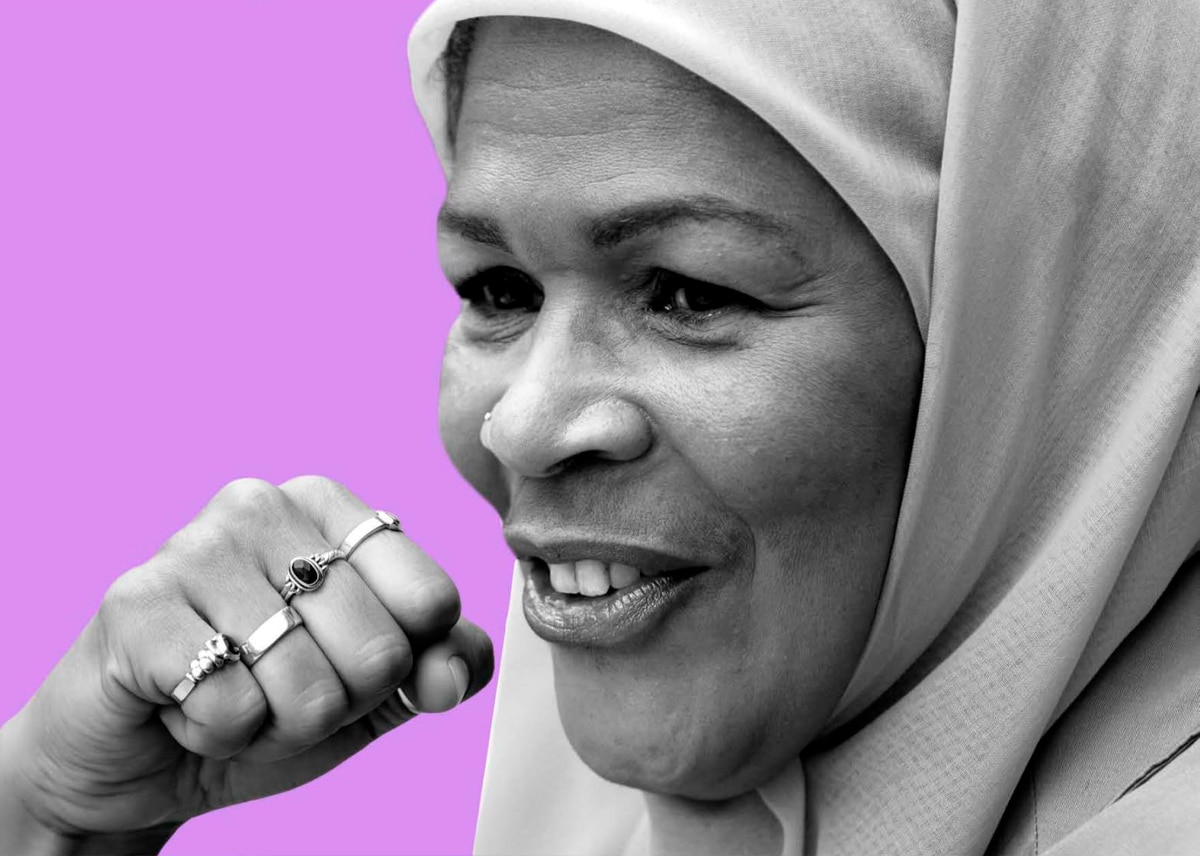
The Lady Imam
Is the world ready to catch up with amina wadud?



Illuminating, in-depth conversations between writers.
Listen to all episodes
SpotifyApple Podcasts
Amazon Music
YouTube
Other apps

The series that tells the true-life stories of migration to the UK.
Listen to all episodes
SpotifyApple Podcasts
Amazon Music
YouTube
Other apps
WritersMosaic interrogates the notion of ‘staying in your lane’ by asking writers how they attempt to think beyond the parameters of their cultural identity.
Listen to all episodes
SpotifyApple Podcasts
YouTube