
Building Literary Resistance
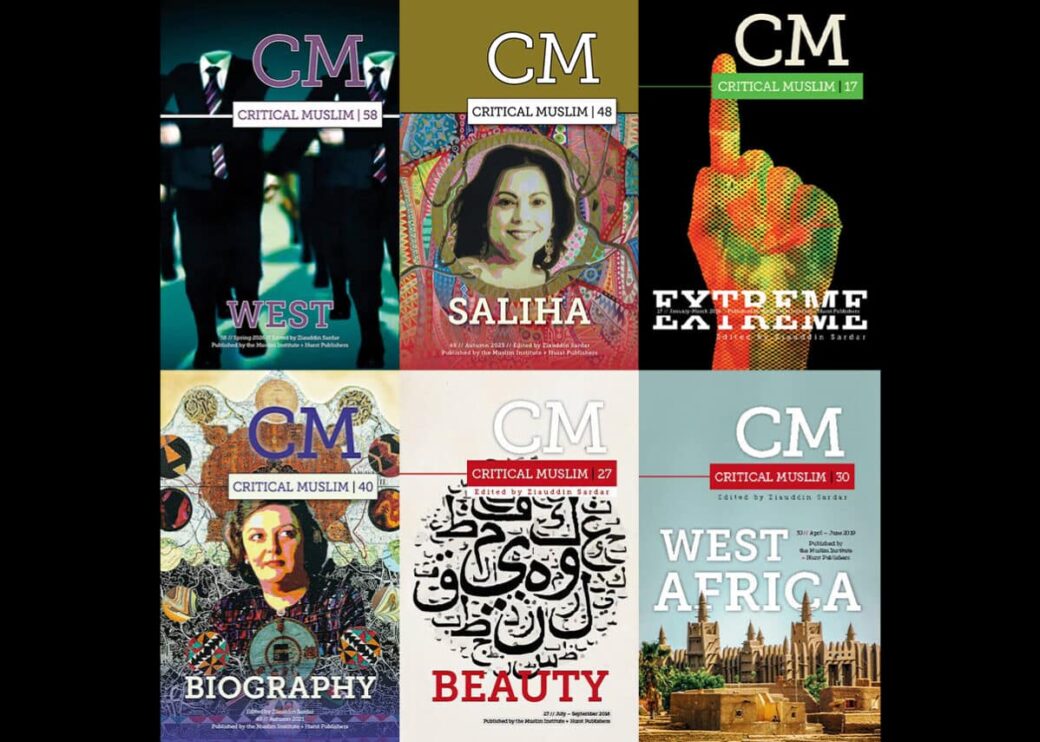
Building Literary Resistance: on editing Poetry and Fiction for Critical Muslim
In the summer of 2023, I became Poetry and Fiction Editor of Critical Muslim, the quarterly journal of the Muslim Institute UK ‒ a charitable fellowship society promoting research, creativity and community empowerment. Produced by Hurst Publishers in handsome themed issues, Critical Muslim (CM) was founded in 2011 to ‘seek new readings of religion and culture with the potential for social, cultural and political transformation of the Muslim world and beyond’. A frequent contributor to CM, and a passionate believer in Editor Ziauddin Sardar’s pluralist ethos, I was keen to accept his offer to take up a more significant role at the journal. Having now worked on ten issues, over years profoundly marked by the Israeli genocide in Gaza, I am grateful for the opportunity to engage with and platform international writers, including Palestinian poets. I have also deeply considered my role as a white, non-Muslim, middle-class editor working with mainly Muslim and brown writers. While editors are conventionally faceless, we have motivations, biases and power that ought not go unexamined. So I welcome this invitation from WritersMosaic to offer some personal reflections on my role at the journal.
All my work as a writer, educator and editor is driven by the desire to help build literary resistance to the oppressive sociopolitical forces that harm our relationships with each other and threaten all life on Earth. As the planet heats up and fascist war machines scream into overdrive, organised protest is a vital necessity. What’s happening right now in Minneapolis is a transformative political process: mass protest against ICE and collective protection of victims, generating a phenomenal culture of mutual aid. But even in such a volatile environment, literature is not a luxury. To sustain momentum towards freedom in America, Iran, Palestine, everywhere, people need to record, celebrate and carefully reflect on their political achievements. These are all functions that literature excels at.
Just as, fundamentally, the arts promote empathy. The fact that genocide starts with the systemic dehumanisation of the ‘other’ confirms the essential role of the arts in creating healthy societies. Propaganda, of course, can masquerade as art, but true art does not glamourise terror, scapegoat minorities or manipulate people into violence. The purpose of art and literature is to reflect our flawed humanity back to us in ways that give us pause: time to question, wonder, grieve and, in so doing, to recognise ourselves in others. Art can be satirical, of course, scathing even, but it always makes us think at least twice. That double vision can also be imaginative in the best sense, juxtaposing bitter realities with glimpses of a better world. Personally, I want to help nurture a vibrant, multicultural, eco-technological society capable of reconciling emotion with reason, faith with science, freedom with responsibility, individuality with solidarity. Critical Muslim, with its rich mix of political and theological essays, art and photography features, book reviews, poetry and fiction, offers a microcosmic blueprint of our vast potential as meaning-makers. While gender parity at the journal is a work in progress, submissions by women and LGBTQI+ people are always warmly invited, and to me, each issue – most recently themed Genocide, Water, Liberalism and Journalism – feels like a small haven for our shared humanity.
So, what kind of poetry and fiction am I looking for? At the start of the Gaza genocide, the journal made a commitment to discuss Palestine in every issue. I have published Palestinian poets Deema K. Shehabi, Farid Bitar and Basman Elderawi – the latter in poetic conversation with Israeli-American poet Michal Rubin – as well as poems and fiction for Gaza by other international writers. I also love to be surprised, and the diverse texts I’ve published include Muslim Chick lit, a zombie/Jinn war story set in Kashmir, translated fiction by Afghan women supported by developmental programme Untold Narratives, devotional poetry, and translations of Karakalpak and classic Indian poets. All this work seems radical to me. Art is revolutionary when it provokes the kind of political epiphanies that drive self-transformation into progressive social change. For traditionally marginalised people, that might be the empowering experience of seeing oneself fully represented in novels, films, galleries, and publishers’ lists. As an autistic older woman, I can relate to that need and am grateful to be able to help showcase Muslim voices in CM. It is an enormous delight to converse with writers over email, and I especially enjoy supporting emerging writers. Often, simply helping a non-native speaker with tense changes enables a writer’s first professional international publication.
As a white, middle-class academic, I am aware of the contradictions in my positionality. Self-transformation, though, also includes checking our own privilege. As an editor, I ask writers if non-standard English is intended, as a character’s voice, for example. More broadly, my involvement with Critical Muslim has helped me to better recognise and redress Islamophobia, both in myself and others. I was already on an anti-racist path before encountering CM, or I likely wouldn’t have been so warmly accepted by colleagues there. Growing up in a family interracialised by adoption, I saw the painful impact of racism on my brown sister. As the great-great-granddaughter of a Scottish missionary in the Raj, I was also, as a child, vaguely but uncomfortably aware of the crimes of the British Empire. Still, though my early creative writing was politically conscious, I wasn’t an activist as a young woman. Brought up a Quaker, as an adult I rejected Christianity for what I saw as its patriarchal nature, and embarked on a typical New Age spiritual journey, exploring Buddhism, the Kabbalah, yoga, astrology and the Tarot, all of which still inform my worldview. Up until my early forties, I knew very little about Islam. I certainly carried some common Western Islamophobic presumptions around the hijab and homophobia in Muslim societies. That ignorance, however, was soon to be challenged.
Shocked by ‘Operation Cast Lead’, the three-week Israeli assault on Gaza over the Christmas/New Year period of 2008-2009, during which 13 Israelis and up to 1,417 Palestinians were killed, I joined the Gaza Freedom March in Cairo at the end of 2009. Within two days I was completely relaxed about the hijab. Surrounded by women in headscarves, I became fascinated by the different styles and soon realised that my ‘feminist’ judgement about covering was ridiculous and patronising. The hijab is a garment: the only issue of concern is that of choice. Muslim and other women forced to cover are the ones to lead resistance to such laws ‒ as they do with tremendous courage in Iran. I am nowhere near that brave. Being pushed onto a pile of other protestors by an Egyptian policeman was enough direct confrontation with an oppressive regime for me. But my resolve was steeled. Inspired in particular by South African activists, I came home committed to supporting cultural resistance to Israeli apartheid and occupation.
In 2010, I co-founded the organisation British Writers in Support of Palestine (BWISP), which ran letter-writing campaigns to the national press in support of the academic and cultural boycott of Israeli institutions. In 2011, gripped by images of Tahrir Square, I wrote a poem about the Arab Spring. BWISP member Robin Yassin-Kassab, Deputy Editor at CM, read it on Facebook and asked to publish it in the first issue of the journal, The Arabs Are Alive. A book review followed in 2015, ‘Seeking Ilm on the Silk Road’, an essay about my eco-science fantasy series The Gaia Chronicles, a post-apocalyptic epic set in a parallel Mesopotamia. Ilm, I had learned, is the Arabic word for knowledge, the pursuit of which is a fundamental requirement for all Muslims. This theological framing helped me feel more comfortable about my creative interest in the Muslim world. Islam, as a religion, speaks to universal humanity. While not a convert, I felt welcomed by CM as a spiritual pilgrim.
My curiosity deepened into recognition at the Muslim Institute’s annual Winter Gathering in Salisbury. Attending in 2015 for the first time, but not for the last, I met MI Fellows: a convivial group of writers, scholars, artists, community workers and business professionals, variously expressing faith-based values of social justice, environmentalism, and feminist and LGBTQI+ liberation I recognised from my parents’ Quaker community. Now an aunt to three brown young people, I also felt at home in the culturally mixed milieu. I don’t want to live in a white supremacist world and am energised by global majority events, where, frankly, the most amazing and necessary work is happening!
And now I am helping to create such a space. Undeniably, I am a gatekeeper. Some work submitted will inevitably be rejected. I am also aware of my own fallibility – emails go astray, decisions are taken that cannot please everyone. But I do my best to help create an inclusive environment, publishing writers of various faiths and, for all I know or care, none. If you’ve got creative or critical work you think fits the remit of Critical Muslim, check out the call for submissions.
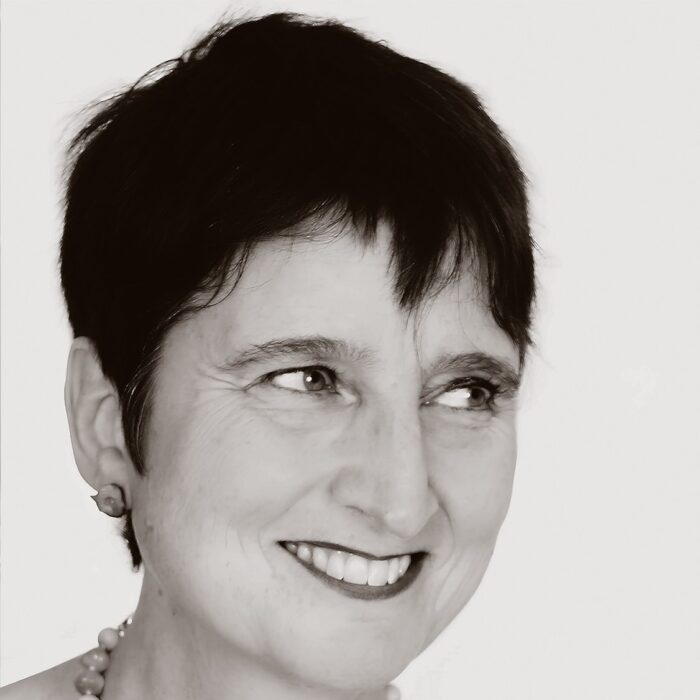
Naomi Foyle
Naomi Foyle is a British-Canadian poet, science fantasy novelist, essayist and dramatist.
WritersMosaic monthly
Get new writing in your inbox
One email monthly, unsubscribe anytime
It’s being published I get paid for; the writing I would do for free
‘Any advance [...] for your novel is to compensate you for the horrors of being published'
Complex antihero: an interview with Arthur Hughes
Unravelling Authur Hughes' Richard III
Marlon James: a Jamaican reckoning
'A return to a home I barely knew'
Haunting the Black Air
Poetic freedom across space and time
The Disappearers
A sprawling visceral experience that drops you in head first
The Lady Imam
Is the world ready to catch up with amina wadud?


Illuminating, in-depth conversations between writers.
Listen to all episodes
SpotifyApple Podcasts
Amazon Music
YouTube
Other apps

The series that tells the true-life stories of migration to the UK.
Listen to all episodes
SpotifyApple Podcasts
Amazon Music
YouTube
Other apps
WritersMosaic interrogates the notion of ‘staying in your lane’ by asking writers how they attempt to think beyond the parameters of their cultural identity.
Listen to all episodes
SpotifyApple Podcasts
YouTube